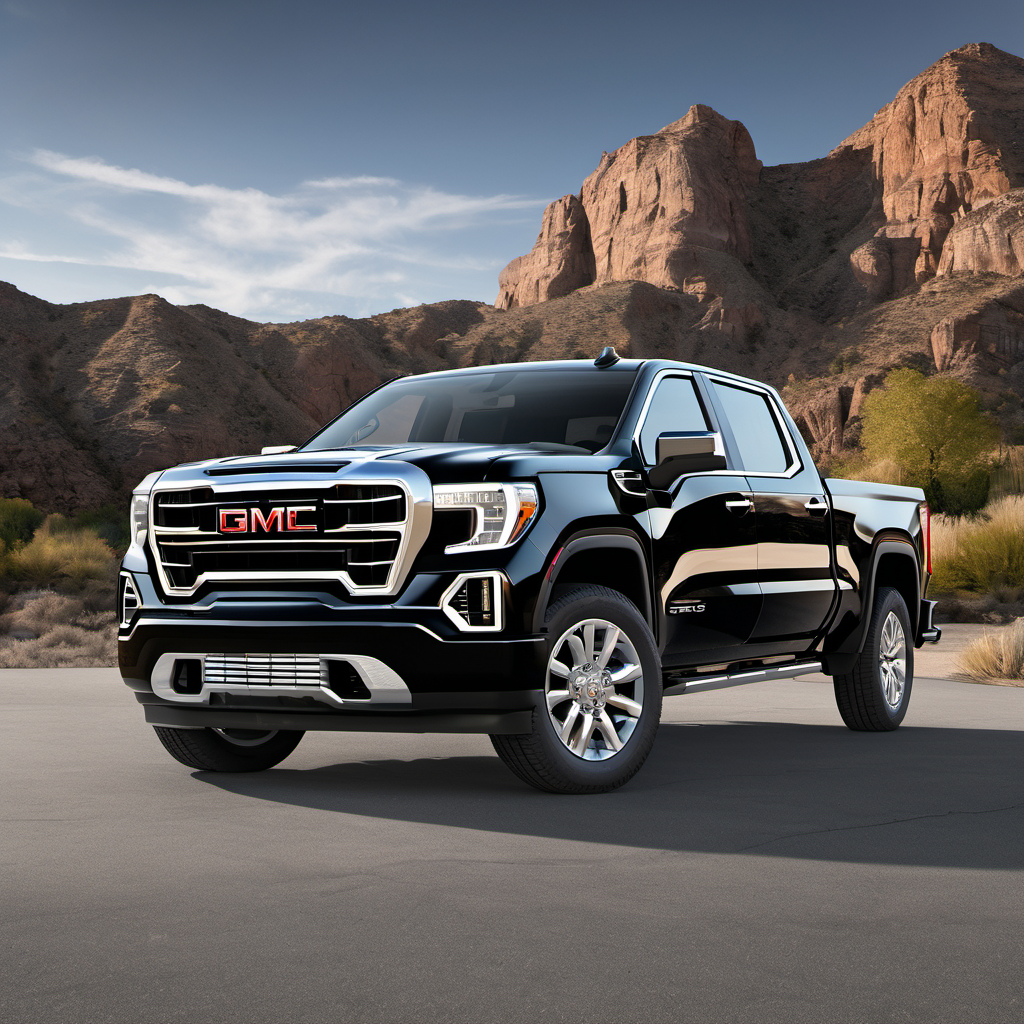
2022 GMC Sierra 1500 Limited Crew Cab Pickup

2022 GMC

Sierra 1500 Limited Crew CabPickup

5.3L V8 EcoTec3 · Pickup

The 2022 GMC Sierra 1500 Limited Crew Cab is a carryover of the T1-platform Sierra before the refreshed 2022 standard model arrived. It pairs the proven 5.3L EcoTec3 V8 with a 10-speed automatic and full-size crew cab practicality, targeting buyers who want max towing and hauling without stepping up to a heavy-duty truck. With an 11,200-lb tow rating and nearly 2,000-lb payload, it handles most real-world work duties comfortably. GMC positions the Sierra above the Chevrolet Silverado with slightly more premium interior trims and styling, but the two trucks share their platform, powertrain, and most mechanical components. The Active Fuel Management (AFM) cylinder deactivation system is the biggest long-term reliability concern on the 5.3L, as lifter failures on high-mileage examples have become a well-documented issue across the GM truck lineup. For Lake Geneva-area buyers, this truck's 4WD capability, solid ground clearance, and strong resale value make it a practical choice. Just plan for salt-belt undercoating and watch the frame and wheel wells closely through Wisconsin winters.

Reliability
3/5
Verified data
Engine
[object Object]
Drivetrain
4WD
Fuel
Gasoline
MPG
15 city / 20 hwy / 17 combined
Seats
6
Doors
4
Body
Pickup
MSRP
$47,000

Overview

AI-curated

The 2022 GMC Sierra 1500 Limited Crew Cab is a carryover of the T1-platform Sierra before the refreshed 2022 standard model arrived. It pairs the proven 5.3L EcoTec3 V8 with a 10-speed automatic and full-size crew cab practicality, targeting buyers who want max towing and hauling without stepping up to a heavy-duty truck. With an 11,200-lb tow rating and nearly 2,000-lb payload, it handles most real-world work duties comfortably. GMC positions the Sierra above the Chevrolet Silverado with slightly more premium interior trims and styling, but the two trucks share their platform, powertrain, and most mechanical components. The Active Fuel Management (AFM) cylinder deactivation system is the biggest long-term reliability concern on the 5.3L, as lifter failures on high-mileage examples have become a well-documented issue across the GM truck lineup. For Lake Geneva-area buyers, this truck's 4WD capability, solid ground clearance, and strong resale value make it a practical choice. Just plan for salt-belt undercoating and watch the frame and wheel wells closely through Wisconsin winters.

Known for
  • Strong 5.3L V8 towing and hauling capability
  • Spacious, comfortable crew cab interior
  • Solid 4WD system for year-round use
  • Proven GM truck platform with widespread parts availability
  • Strong resale value in the full-size truck segment
Best for
  • Towing boats, trailers, or campers up to ~11,000 lbs
  • Families needing a full-size backseat with truck utility
  • Contractors or tradespeople with regular payload needs
  • Buyers in snow and salt-belt climates needing capable 4WD
Watch for
  • AFM lifter failures on the 5.3L V8 — common past 80k miles
  • Transmission shudder at low speeds (TSB 21-NA-183 applies)
  • Infotainment freezing and reboots (TSB 21-NA-177 applies)
  • Frame and underbody rust in salt-belt states like Wisconsin
  • Exhaust manifold cracks on higher-mileage examples

Common issues by mileage

6 known

AFM/Lifter Failure (5.3L V8)

high
Typically appears
80–150k mi
Estimated repair
$2,000 – $4,500

Transmission Shudder at Low Speed

medium
Typically appears
30–70k mi
Estimated repair
$150 – $400

Infotainment System Freezing / Rebooting

medium
Typically appears
0–40k mi
Estimated repair
$100 – $350

Exhaust Manifold Crack / Leak

low
Typically appears
60–120k mi
Estimated repair
$800 – $1,500

VVT / Camshaft Actuator Solenoid Fault

medium
Typically appears
60–120k mi
Estimated repair
$200 – $600

Frame and Underbody Rust (Salt Belt)

high
Typically appears
40–100k mi
Estimated repair
$300 – $2,000

Maintenance schedule

  1. 1
    Every 7,500 miles or 6 months Engine Oil Change — 0W-20 Full Synthetic, 8 qts with filter

    The AFM system creates extra stress on oil. Fresh full-synthetic is cheap insurance against lifter wear. Don't stretch intervals.

  2. 2
    Every 7,500 miles (same visit as oil change) Tire Rotation

    4WD trucks wear tires unevenly. Staying on schedule maximizes tire life and keeps the 4WD system happy.

  3. 3
    Every 60,000–75,000 miles (earlier than the 97,500-mile factory spec if towing regularly) Transmission Fluid Change — DEXRON-VI, 12 qts total

    The 10-speed AT runs hotter under load. Fresh fluid can resolve mild shudder and prevents more costly internal wear. Use DEXRON-VI only.

  4. 4
    Every 45,000 miles or sooner in dusty conditions Air Filter Replacement

    A clogged air filter hurts fuel economy and puts extra load on the MAF sensor.

  5. 5
    Every 30,000 miles Cabin Air Filter Replacement

    Wisconsin roads kick up road dust and debris year-round. A clean cabin filter keeps the HVAC blowing strong — important for defrost performance.

  6. 6
    Every 5 years or 150,000 miles DEX-COOL Coolant Flush — 15.4 qts

    DEX-COOL degrades over time and can cause silicate deposits. Staying on schedule prevents water pump and thermostat issues.

  7. 7
    Every 100,000 miles Spark Plug Replacement (iridium)

    OEM iridium plugs are long-life, but worn plugs on a DI V8 with AFM can contribute to rough idle and misfires. Don't go past the factory interval.

  8. 8
    Every spring and fall in Wisconsin Undercarriage Wash and Undercoating Inspection

    Salt accumulation accelerates frame rust and attacks brake lines, fuel lines, and wheel well seams. Catching it early is far cheaper than frame repair.

Always defer to the manufacturer's service manual for warranty-mandated intervals.

Cost of ownership

Annual maintenance
$600 – $1,200
Fuel
At ~17 MPG combined and 15,000 miles/year, expect roughly $2,400–$3,000/year at current mid-grade fuel prices. Towing drops real-world fuel economy to 10–13 MPG, which adds up quickly on long hauls.
Insurance
Expect $1,400–$2,000/year for full coverage in the Lake Geneva area depending on driving history and trim. Crew cab full-size trucks run higher than average due to repair costs and theft rates.

Day-to-day ownership costs are reasonable for a full-size truck. Routine maintenance is straightforward and parts are easy to source. The big budget risk is an AFM lifter failure — if that happens out of warranty, plan for $2,000–$4,500 at an independent shop. Proactive transmission fluid changes and regular oil changes with full synthetic are the best ways to defer major repair bills.

Seasonal care

Lake Geneva, WI
Winter
  • Switch to winter-rated tires — all-season truck tires lose significant grip below 45°F on Wisconsin roads. Studded or dedicated winter tires make a real difference.
  • Check the battery before first hard freeze. Cold-cranking a 5.3L V8 at -10°F demands a strong battery. Replace any battery over 4 years old proactively.
  • Top off washer fluid with a -20°F or colder rated fluid. Standard fluid freezes in the lines and on the windshield at Wisconsin temps.
  • Inspect wiper blades and consider winter-style blades to prevent ice bridging that leaves streaks.
  • Flush and inspect brake fluid — DOT 3 absorbs moisture over time, and moisture lowers the boiling point while also contributing to corrosion inside brake lines.
  • Wash the undercarriage every 2–3 weeks during heavy salting season, especially wheel wells, frame rails, and around the trailer hitch receiver.
Summer
  • Check tire pressure monthly — tires gain roughly 1 PSI per 10°F increase. Overinflated tires reduce traction and wear the center of the tread.
  • Inspect the A/C system before summer heat — the Sierra's compressor has a history of issues past 80k miles, and a failure in July is an expensive emergency.
  • Check coolant concentration — the 15.4-qt DEX-COOL system should be at a 50/50 mix for adequate heat protection above 260°F.
  • Inspect the serpentine belt for cracking — heat accelerates belt degradation, and a belt failure can strand you.
  • Keep the bed and cab ventilated when parked — heat soak in dark-colored trucks can stress the battery and electronics over time.

Comparable vehicles

If you're shopping for one

Red flags
  • Any lifter tick or engine rattle at warm idle — AFM lifter repair is $2,000–$4,500 and should be reflected in price.
  • Check engine light or recent code clear — connect a scanner and look at freeze-frame data, not just current codes.
  • Infotainment screen with burn-in, persistent freezing, or modules that won't wake up — may need a module replacement.
  • Heavy frame rust or bubbling paint along the frame rails and lower body panels — salt-belt trucks rust from the inside out.
  • Service records showing only oil changes and nothing else — on a high-mileage example, deferred transmission and cooling system service is a red flag.
  • Signs of consistent heavy towing (wear on trailer hitch, transmission cooler lines, rear suspension sag) without corresponding transmission service records.
What to inspect
  • Pull codes before buying — check for P0012, P0015, P0022, P0025 (VVT/AFM issues) and U0100/U0101 (network/infotainment faults).
  • Warm the engine fully and listen for a tick or lifter rattle at idle — early sign of AFM lifter collapse.
  • Test drive with light throttle at 25–45 mph; any shudder or vibration points to the known transmission shudder issue.
  • Check the infotainment system thoroughly — test navigation, Bluetooth, backup camera, and reboot the system to see if it hangs.
  • Inspect the frame rails, crossmembers, and wheel wells for rust, especially on any truck from the northern Midwest.
  • Check underneath for evidence of exhaust manifold repair or discoloration near the cylinder head manifold joints.
  • Verify the transmission fluid condition and color — dark or burnt-smelling fluid signals deferred maintenance or hard use.
AI profile generated 1 hr ago · claude-sonnet-4-6 · v2.