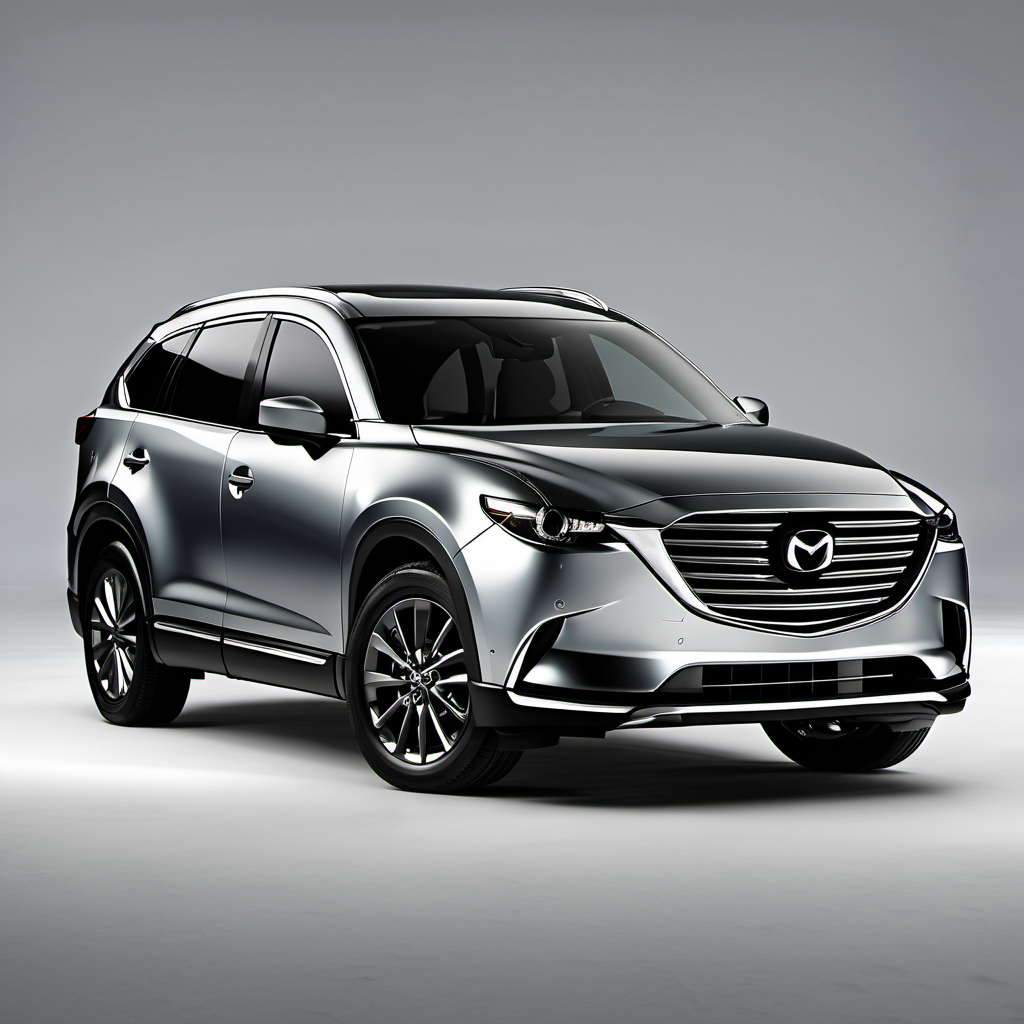
2017 MAZDA CX-9 SUV

2017 MAZDA

CX-9SUV

SUV

The 2017 Mazda CX-9 is a three-row midsize crossover that stands out in a crowded segment for its driver-focused feel, upscale interior quality, and remarkably efficient turbocharged four-cylinder engine. Mazda redesigned the CX-9 from the ground up for 2016, ditching the old V6 in favor of a 2.5L SKYACTIV-G turbocharged four that produces up to 250 hp on premium fuel — a bold move that paid off in fuel economy and refinement. Inside, the CX-9 punches well above its price class with quality materials, a well-organized dash, and a genuinely usable third row for kids or occasional adult use. The driving dynamics are sharper than most three-row family haulers, earning it a loyal following among buyers who don't want to feel like they gave up fun the day they needed a third row. For Lake Geneva area families, the available i-ACTIV AWD system is a strong consideration over the base FWD — Wisconsin winters will test any family crossover. The turbocharged engine also requires consistent oil change intervals to protect the turbocharger, which is the single most important maintenance habit for long-term ownership.

Reliability
4/5
Verified data
Specs shown for CX-9 2WD — the most common configuration. Other trims may vary in engine, drivetrain, or fuel economy. Sign in to see your vehicle's exact specs.
Engine
[object Object]
Drivetrain
FWD
Fuel
Gasoline
MPG
22 city / 28 hwy / 24 combined
Seats
Doors
Body
Small Sport Utility Vehicle 2WD

Overview

AI-curated

The 2017 Mazda CX-9 is a three-row midsize crossover that stands out in a crowded segment for its driver-focused feel, upscale interior quality, and remarkably efficient turbocharged four-cylinder engine. Mazda redesigned the CX-9 from the ground up for 2016, ditching the old V6 in favor of a 2.5L SKYACTIV-G turbocharged four that produces up to 250 hp on premium fuel — a bold move that paid off in fuel economy and refinement. Inside, the CX-9 punches well above its price class with quality materials, a well-organized dash, and a genuinely usable third row for kids or occasional adult use. The driving dynamics are sharper than most three-row family haulers, earning it a loyal following among buyers who don't want to feel like they gave up fun the day they needed a third row. For Lake Geneva area families, the available i-ACTIV AWD system is a strong consideration over the base FWD — Wisconsin winters will test any family crossover. The turbocharged engine also requires consistent oil change intervals to protect the turbocharger, which is the single most important maintenance habit for long-term ownership.

Known for
  • Sharp, car-like driving dynamics for a three-row SUV
  • Premium interior quality relative to its price point
  • Fuel-efficient 2.5L turbocharged four-cylinder
  • Stylish Kodo design language inside and out
  • Strong safety ratings and standard safety tech
Best for
  • Families needing a third row without sacrificing driving enjoyment
  • Buyers who want near-luxury interior quality at a mainstream price
  • Commuters who prioritize fuel efficiency in a larger SUV
  • Drivers who want a stylish alternative to the typical minivan or bland crossover
Watch for
  • Third-row space is tight for adults on longer trips
  • Cargo behind the third row is minimal
  • Turbo engine demands strict oil change discipline — neglect accelerates wear
  • Base FWD trim is a liability in serious Wisconsin winter conditions
  • Infotainment rotary controller has a learning curve and no touchscreen in motion

Common issues by mileage

6 known

Turbocharger wear from infrequent oil changes

medium
Typically appears
60–120k mi
Estimated repair
$1,200 – $3,500

VVT / camshaft timing system faults (oil sludge in VVT solenoids)

medium
Typically appears
50–100k mi
Estimated repair
$150 – $900

Oxygen sensor / A/F sensor heater circuit failure

low
Typically appears
80–130k mi
Estimated repair
$200 – $550

Infotainment / MZD Connect software freezes or reboot loops

medium
Typically appears
Any mileage
Estimated repair
$0 – $300

Third-row seat latch stiffness or failure to fold flat

low
Typically appears
40–90k mi
Estimated repair
$50 – $300

Brake noise / premature front brake wear

medium
Typically appears
30–70k mi
Estimated repair
$180 – $450

Maintenance schedule

  1. 1
    Every 5,000 miles or 6 months, whichever comes first Engine oil and filter change — use full synthetic 0W-20

    The turbocharger depends on clean oil to cool and lubricate its bearings. Stretching intervals is the number-one cause of premature turbo and VVT solenoid failure on this engine. Do not rely on the oil life monitor alone if the vehicle sees a lot of short trips.

  2. 2
    Every 30,000 miles or at each major service Engine air filter inspection and replacement

    A clogged air filter forces the turbo to work harder and can affect boost response. Wisconsin gravel roads accelerate filter loading.

  3. 3
    Every 60,000 miles Spark plug replacement — use OEM iridium plugs

    Worn plugs on a turbocharged engine cause misfires that can damage the catalytic converter and stress the ignition coils.

  4. 4
    Every 45,000–60,000 miles for normal use; every 30,000 if frequent towing or hilly driving Transmission fluid change

    Mazda's 6-speed automatic is durable but benefits from fresh fluid. The manufacturer 'lifetime' fill recommendation is optimistic for high-use or high-mileage scenarios.

  5. 5
    Every 5 years / 100,000 miles Coolant flush

    SKYACTIV engines run warm; degraded coolant accelerates corrosion in the aluminum block and head — a bigger concern in a region with extreme temperature swings.

  6. 6
    Every 2 years regardless of mileage Brake fluid flush

    Brake fluid absorbs moisture over time, lowering its boiling point. Wisconsin winters involve heavy braking on slippery surfaces — fresh fluid is cheap insurance.

  7. 7
    Every 15,000–20,000 miles or annually Cabin air filter replacement

    A restricted cabin filter strains the HVAC blower and reduces defrost effectiveness — critical during Wisconsin winter.

  8. 8
    Every 5,000–7,500 miles; check pressure monthly in winter Tire rotation and pressure check

    Tire pressure drops roughly 1 PSI for every 10°F drop in temperature. Under-inflated tires on a 4,150-lb crossover significantly increase stopping distance on icy roads.

Always defer to the manufacturer's service manual for warranty-mandated intervals.

Cost of ownership

Annual maintenance
$500 – $950
Fuel
At 24 MPG combined and average Wisconsin fuel prices, expect roughly $1,800–$2,400/year for 12,000–15,000 miles of mixed driving. The engine is rated for regular 87 octane but produces full 250 hp only on 93 premium — most owners are fine on regular.
Insurance
Typically $1,200–$1,700/year for a family driver in the Lake Geneva area, depending on driving record and coverage level. The CX-9's strong safety ratings generally keep rates reasonable for its size.

The CX-9 is one of the more affordable three-row crossovers to own. Parts are reasonably priced, and Mazda's dealer network is solid. The main financial risk is turbo or VVT damage from skipped oil changes — a $20 oil change skipped can turn into a $2,500 repair. Keep up with the 5,000-mile oil change interval and this vehicle is unlikely to surprise you.
Seasonal care

Lake Geneva, WI
Winter
  • Switch to dedicated winter tires before temps drop below 40°F — all-season tires lose significant grip on ice and packed snow, and the CX-9's weight makes stopping distances long on slick roads.
  • Test the battery in October; cold cranking amps drop sharply below 20°F and a marginal battery that starts fine in fall will fail in January. Replace any battery older than 4 years proactively.
  • Top off washer fluid with a -20°F or -30°F rated formula before the first freeze. The standard reservoir is large but gets used fast on salty Wisconsin roads.
  • Inspect wiper blades and consider dedicated winter blades — the CX-9's curved windshield can cause standard blades to skip and streak in freezing conditions.
  • Check all underbody and wheel well areas for road salt accumulation at each oil change; rinse the undercarriage after winter storms when temps allow to prevent accelerated corrosion on brake lines and subframe.
  • If AWD-equipped, confirm the i-ACTIV system is functioning at each service — a rear wheel speed sensor fault in winter can leave you effectively in FWD without warning.
Summer
  • Check tire pressure monthly — pressure rises about 1 PSI per 10°F increase, and over-inflated tires on hot pavement reduce contact patch and increase blowout risk.
  • Inspect and recharge A/C refrigerant if cooling performance is weak; the CX-9's dual-zone climate system works hard in July humidity and a marginally charged system won't keep the rear passengers cool.
  • After a hard winter, inspect brake rotors for surface rust pitting and pad wear — Wisconsin salt accelerates both.
  • Check coolant concentration with a tester strip to confirm adequate boil-over protection for summer; aim for protection to at least 265°F.

Comparable vehicles

If you're shopping for one

Red flags
  • Oil change stickers showing intervals longer than 6,000 miles — turbo and VVT damage risk rises sharply.
  • Any sign of turbo boost hesitation, surging, or audible bearing noise under load.
  • Active CEL or recently cleared codes with no documented repair — sellers sometimes clear codes before sale.
  • Rust bubbling around the rear wheel arches or along the rocker panels on high-mileage Midwest examples.
  • Third-row seat that won't latch flat or shows signs of forced operation — expensive to repair and a safety issue.
  • Mismatched tires across axles, especially a mix of all-seasons and winters — signals an owner who cut corners on maintenance.
What to inspect
  • Pull the oil filler cap and dipstick — look for milky or sludgy oil which signals neglected changes or a head gasket concern.
  • Warm the engine fully and listen for turbo whine, excessive wastegate chatter, or hesitation under boost (2,000–4,000 RPM acceleration test).
  • Scan for stored and pending DTCs before purchase — P0012/P0015 or VVT-related codes indicate oil maintenance neglect and potential expensive repair.
  • Test all three rows of seating, all seat fold/latch mechanisms, and all HVAC zones including rear vents.
  • Inspect the MZD Connect infotainment for freeze or reboot behavior during the test drive; software issues can be difficult to resolve cheaply.
  • Check all four wheel wells and the undercarriage for rust, especially on vehicles that spent their life in the upper Midwest — brake line and subframe corrosion is a real concern.
AI profile generated 1 mo ago · claude-sonnet-4-6 · v2.