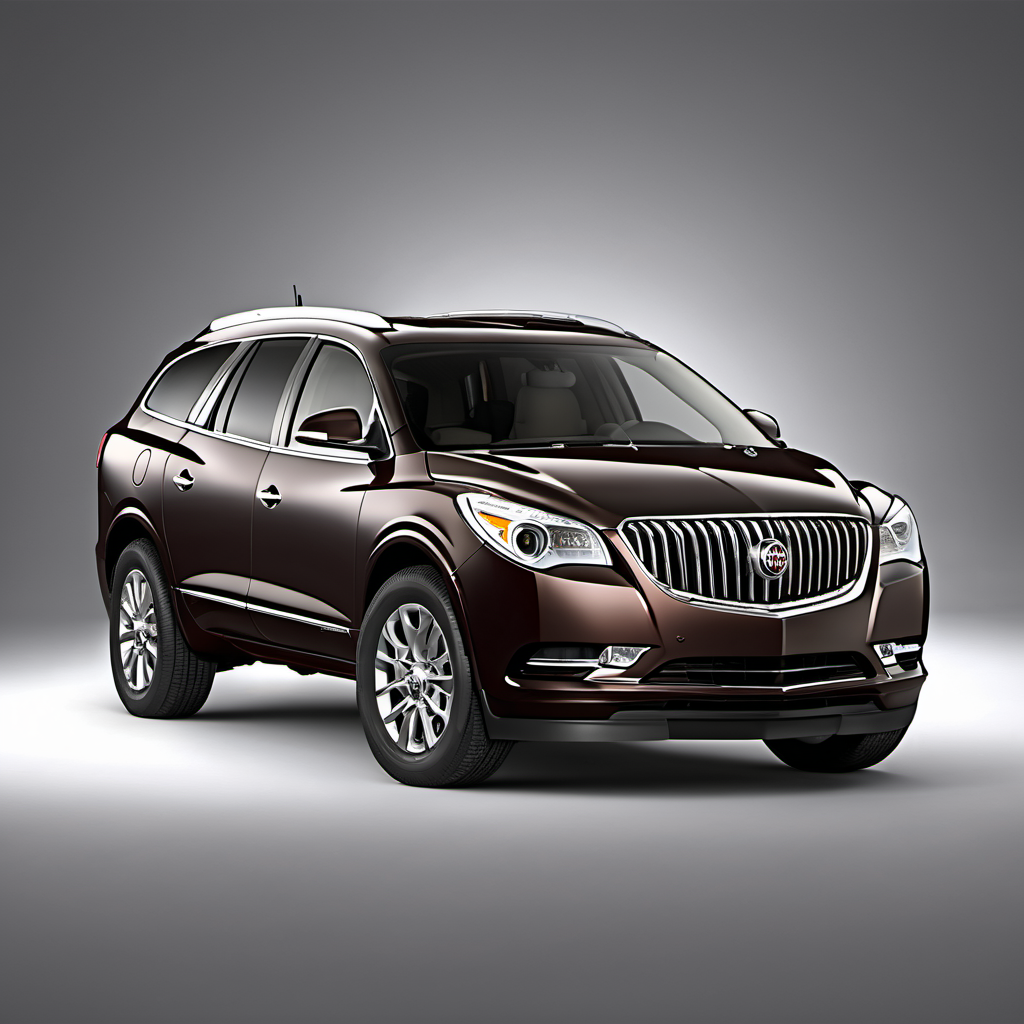
2017 Buick Enclave SUV

2017 Buick

EnclaveSUV

3.6L V6 · SUV

The 2017 Buick Enclave is a large, three-row luxury crossover SUV built on GM's Lambda platform and sharing its bones with the Chevrolet Traverse, GMC Acadia, and Saturn Outlook. It seats up to eight passengers and is powered exclusively by GM's 3.6L V6 paired with a 6-speed automatic — a refined, capable combo for family hauling. Buick pitches the Enclave toward buyers who want near-luxury comfort without a German price tag, and for the most part it delivers: the cabin is quiet, the ride is smooth, and standard features are generous for the model year. The 2017 is the final year of the first-generation Enclave before a full redesign arrived for 2018, so parts availability is excellent and the platform is well-understood by independent shops. That said, this generation does carry some well-documented quirks — particularly around the timing chain system and water ingestion — that buyers and owners need to stay on top of.

Reliability
3/5
Verified data
Specs shown for Enclave AWD — the most common configuration. Other trims may vary in engine, drivetrain, or fuel economy. Sign in to see your vehicle's exact specs.
Engine
[object Object]
Drivetrain
AWD
Fuel
Gasoline
MPG
17 city / 24 hwy / 20 combined
Seats
8
Doors
4
Body
SUV
MSRP
$43,065

Overview

AI-curated

The 2017 Buick Enclave is a large, three-row luxury crossover SUV built on GM's Lambda platform and sharing its bones with the Chevrolet Traverse, GMC Acadia, and Saturn Outlook. It seats up to eight passengers and is powered exclusively by GM's 3.6L V6 paired with a 6-speed automatic — a refined, capable combo for family hauling. Buick pitches the Enclave toward buyers who want near-luxury comfort without a German price tag, and for the most part it delivers: the cabin is quiet, the ride is smooth, and standard features are generous for the model year. The 2017 is the final year of the first-generation Enclave before a full redesign arrived for 2018, so parts availability is excellent and the platform is well-understood by independent shops. That said, this generation does carry some well-documented quirks — particularly around the timing chain system and water ingestion — that buyers and owners need to stay on top of.

Known for
  • Quiet, well-insulated cabin for the class
  • Spacious three-row seating with generous headroom
  • Smooth 3.6L V6 power delivery
  • Upscale interior materials at a lower price than German rivals
Best for
  • Large families needing three rows of real seat space
  • Buyers wanting near-luxury comfort at mid-market pricing
  • Light towing duties (up to 4,500 lbs)
  • Highway commuters who value ride quality over sportiness
Watch for
  • Timing chain stretch and VVT system issues — oil changes must be on time
  • Sunroof drain clogs leading to water intrusion and interior damage
  • Transmission shudder on high-mileage examples
  • Front lower control arm bushings wear faster than expected in pothole country
  • High-mileage examples with deferred maintenance can be expensive to bring back to spec

Common issues by mileage

6 known

Sunroof Drain Clog / Water Intrusion

high
Typically appears
40–120k mi
Estimated repair
$150 – $600

Water Pump Failure (internal, coolant-fed)

medium
Typically appears
70–120k mi
Estimated repair
$400 – $900

Transmission Shudder / TCC Slip

medium
Typically appears
90–150k mi
Estimated repair
$200 – $2,800

Front Lower Control Arm Bushing Wear

medium
Typically appears
60–100k mi
Estimated repair
$300 – $700

Oxygen Sensor / HO2S Heater Circuit Fault

low
Typically appears
80–130k mi
Estimated repair
$150 – $400

Maintenance schedule

  1. 1
    Every 5,000–6,000 mi or 6 months (do not stretch to GM Oil Life Monitor's maximum on older engines) Engine oil & filter change

    The 3.6L VVT system relies entirely on clean, correctly pressurized oil. Dirty or low oil is the #1 cause of timing chain and VVT solenoid damage on this engine. Treat this interval as non-negotiable.

  2. 2
    Every 45,000 mi regardless of 'lifetime fluid' labeling Transmission fluid service

    The 6-speed automatic is prone to shudder and TCC issues on high-mileage vehicles with never-changed fluid. Fresh fluid is cheap insurance against a costly rebuild.

  3. 3
    Every 5 years or 60,000 mi Coolant system inspection & flush

    The internal (timing cover-mounted) water pump runs off the timing chain. A failing pump can contaminate oil and is a labor-intensive job — catching coolant degradation early extends pump life.

  4. 4
    Every 12 months, ideally each fall Sunroof drain clearing

    Clogged drains are the most common cause of water intrusion into the cabin and headliner on this generation. A shop can clear and flush all four drains in under an hour — far cheaper than water damage remediation.

  5. 5
    Every 60,000 mi Spark plug replacement

    The iridium plugs on the 3.6L are rated for 60k mi. Running worn plugs causes misfires that the VVT system can misinterpret, generating false cam-timing codes.

  6. 6
    Every 30,000 mi or annually Front suspension inspection (control arm bushings & ball joints)

    Wisconsin road salt and frost-heave potholes accelerate bushing wear on this platform. Catching worn bushings early prevents ball joint and tire wear from compounding the repair cost.

  7. 7
    Every 2–3 years Brake fluid flush

    Moisture-absorbed brake fluid lowers boiling point and accelerates caliper corrosion — a real concern in a salt-belt state like Wisconsin.

  8. 8
    Every 45,000 mi Transfer case and differential fluid (AWD models)

    Often overlooked on crossovers. Degraded fluid in the PTU (power transfer unit) is a known failure point on GM Lambda-platform AWD vehicles and a replacement PTU is expensive.

Always defer to the manufacturer's service manual for warranty-mandated intervals.

Cost of ownership

Annual maintenance
$700 – $1,600
Fuel
At ~20 MPG combined and Wisconsin gas prices, expect $2,200–$2,900/year for 12,000 mi of driving. Premium fuel is not required — regular 87 octane is spec.
Insurance
Typically $1,200–$1,800/year for a Wisconsin driver with a clean record; the Enclave's safety scores and luxury classification can push premiums slightly above average for the segment.

A well-maintained 2017 Enclave is not an expensive vehicle to operate day-to-day — oil, tires, brakes, and fluids are the main recurring costs. The risk category is deferred maintenance: an Enclave that hasn't had regular oil changes can surprise you with a $1,500–$2,500 timing chain bill. Budget on the higher end of annual maintenance if buying used and the service history is incomplete.
Seasonal care

Lake Geneva, WI
Winter
  • Switch to a full synthetic 0W-30 or 0W-40 for easier cold starts and faster VVT oil pressure buildup in sub-zero temperatures — the timing chain thanks you.
  • Test the battery every fall; the 3.6L is a large engine and weak batteries struggle hard below 10°F. Replace any battery showing less than ~500 CCA before December.
  • Fill the washer fluid reservoir with a rated -25°F or colder fluid. The Enclave's tall windshield and large mirrors eat through fluid fast on salty Wisconsin roads.
  • Inspect and treat all door and liftgate rubber seals with a silicone lubricant before freeze-up to prevent them from sticking or tearing.
  • Check tire pressure weekly in January and February — AWD gives traction confidence but underinflated tires still reduce handling and braking on ice.
  • Clear sunroof drains each fall before snow season so meltwater has a path out instead of pooling inside the headliner.
Summer
  • Check tire pressure after the first hot weeks of June — pressure rises with heat and over-inflated tires wear unevenly and reduce wet-road grip.
  • Have the A/C system inspected if cooling is weak; the Enclave has a large cabin to cool and a low refrigerant charge struggles noticeably in a Wisconsin July.
  • Check coolant concentration (should handle at least -34°F, which also means it's good to ~265°F) before summer heat stresses the system.
  • After spring salt season, rinse the undercarriage thoroughly — focus on the PTU, brake lines, and fuel lines where salt packs in on the Lambda platform.

Comparable vehicles

If you're shopping for one

Red flags
  • Persistent engine rattle on startup or at idle — walk away or demand a timing chain inspection in writing before purchase.
  • Any signs of water intrusion in the headliner, carpet, or electronics — water damage on this platform can be extensive and costly.
  • No service records and over 80,000 miles — the risk of deferred VVT/timing chain damage is too high without documentation.
  • Transmission shudder at highway speeds — fluid change may help, but a rebuild or replacement could be on the horizon.
  • PTU leaking or making noise — replacement can exceed $1,500 at an independent shop.
What to inspect
  • Pull a full service history — look specifically for oil change records. Any gap longer than 7,500 mi is a red flag for the timing chain system.
  • Scan for active or stored P0012/P0015/P0022/P0025 or VVT solenoid codes before buying. These point to timing chain wear that may already require immediate repair.
  • Check the headliner near the sunroof corners for water stains or sagging — clear evidence of clogged drains and potential mold.
  • With the engine warm and at idle, listen for a rattle from the front of the engine on startup. A brief rattle that disappears is normal; one that persists indicates timing chain wear.
  • Test the transmission for shudder at light throttle between 35–50 mph — a light vibration can indicate TCC slip or fluid degradation.
  • Inspect the PTU (power transfer unit, left front of engine bay) for oil seepage — a common failure point on Lambda AWD models that's expensive if ignored.
AI profile generated 20 days ago · claude-sonnet-4-6 · v2.