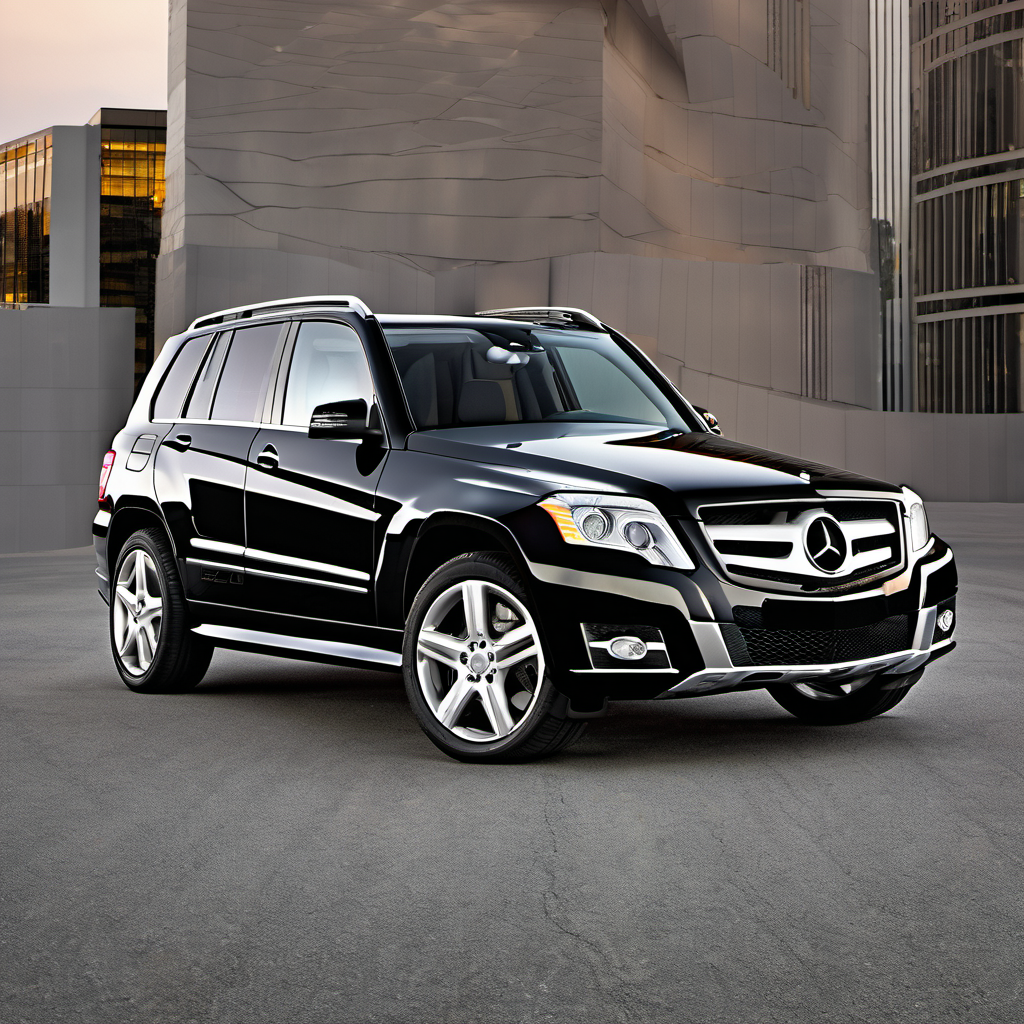
2010 Mercedes-Benz GLK-Class SUV

2010 Mercedes-Benz

GLK-ClassSUV

3.5L V6 · SUV

The 2010 Mercedes-Benz GLK350 is a compact luxury SUV built on the C-Class platform. It was the first generation of the GLK in North America, arriving for the 2010 model year with a 3.5L V6 engine and standard 4MATIC all-wheel drive. It sits below the ML-Class in Mercedes' SUV lineup and targets buyers who want a smaller, more car-like footprint without giving up AWD capability or luxury appointments. For its segment and era, the GLK350 offers a composed highway ride, a solid all-weather AWD system, and a well-appointed interior. It's not particularly sporty to drive, but it is predictable and refined. Cargo space is modest compared to some competitors due to the upright body style and the intrusion of the spare tire well. Ownership costs on a 15-year-old GLK can run meaningfully higher than a mainstream SUV of the same age. Parts and labor rates are European luxury levels. Deferred maintenance — especially on the balance shaft and oil consumption issues — can turn a seemingly affordable used buy into an expensive repair project quickly.

Reliability
2/5
Verified data
Specs shown for GLK350 4matic — the most common configuration. Other trims may vary in engine, drivetrain, or fuel economy. Sign in to see your vehicle's exact specs.
Engine
[object Object]
Drivetrain
AWD
Fuel
Gasoline
MPG
16 city / 22 hwy / 18 combined
Seats
5
Doors
4
Body
SUV
MSRP
$35,800

Overview

AI-curated

The 2010 Mercedes-Benz GLK350 is a compact luxury SUV built on the C-Class platform. It was the first generation of the GLK in North America, arriving for the 2010 model year with a 3.5L V6 engine and standard 4MATIC all-wheel drive. It sits below the ML-Class in Mercedes' SUV lineup and targets buyers who want a smaller, more car-like footprint without giving up AWD capability or luxury appointments. For its segment and era, the GLK350 offers a composed highway ride, a solid all-weather AWD system, and a well-appointed interior. It's not particularly sporty to drive, but it is predictable and refined. Cargo space is modest compared to some competitors due to the upright body style and the intrusion of the spare tire well. Ownership costs on a 15-year-old GLK can run meaningfully higher than a mainstream SUV of the same age. Parts and labor rates are European luxury levels. Deferred maintenance — especially on the balance shaft and oil consumption issues — can turn a seemingly affordable used buy into an expensive repair project quickly.

Known for
  • Car-based platform delivering a composed, car-like ride
  • Standard 4MATIC AWD — well-suited to Wisconsin winters
  • Upright, boxy styling with good outward visibility
  • Premium interior materials and Mercedes build quality
  • Higher-than-average ownership and repair costs for the segment
Best for
  • Buyers wanting a small luxury AWD SUV for daily commuting and winter driving
  • Drivers transitioning from a C-Class who want more cargo space
  • Someone who can perform or budget for European luxury maintenance costs
  • Urban and suburban use where the compact footprint is an advantage
Watch for
  • Balance shaft module failure on the 3.5L V6 — expensive and well-documented
  • High oil consumption between services if not monitored
  • Expensive electronic and sensor repairs due to complex Mercedes systems
  • Rust on undercarriage and brake lines — especially critical in road-salt states like Wisconsin
  • Air conditioning compressor failures in this generation

Common issues by mileage

6 known

Balance Shaft Module Wear / Camshaft Timing Faults

high
Typically appears
60–120k mi
Estimated repair
$1,800 – $4,500

Camshaft Adjuster / VVT Solenoid Failure

high
Typically appears
70–130k mi
Estimated repair
$400 – $1,200

Oxygen Sensor / Heater Circuit Failure

medium
Typically appears
80–150k mi
Estimated repair
$200 – $600

Air Conditioning Compressor Failure

medium
Typically appears
60–120k mi
Estimated repair
$900 – $2,000

Brake Caliper Seizure / Premature Brake Wear (Corrosion-Accelerated)

high
Typically appears
40–90k mi
Estimated repair
$300 – $1,200

Maintenance schedule

  1. 1
    Every 7,500 mi or annually — do not stretch to the full OBD service indicator on a used example Engine oil change with Mercedes-approved 229.5 or 229.51 spec oil

    The M272 V6 is oil-sensitive. Low or degraded oil accelerates balance shaft and camshaft adjuster wear dramatically. On a used GLK, shortening the interval is cheap insurance.

  2. 2
    Confirm at purchase and at any timing fault Balance shaft inspection / repair verification

    This is the single most important item on a 2010 GLK. If there is no documented history of balance shaft module replacement or the updated design, budget for it proactively. Neglecting it risks catastrophic engine damage.

  3. 3
    Every 40,000 mi Transmission fluid service (7G-Tronic)

    Mercedes often lists this as 'lifetime' fluid, but real-world use in cold climates stresses the fluid. Independent shops in the Midwest consistently see smoother shifting and longer transmission life with a 40k service interval.

  4. 4
    Every 60,000 mi Spark plug replacement

    The V6 uses iridium plugs. Extended plug life is real, but worn plugs on this engine can mask early misfires that mimic more expensive VVT faults.

  5. 5
    Every 2 years regardless of mileage Brake fluid flush

    Mercedes specifies a 2-year brake fluid interval. Wisconsin winters and road salt accelerate caliper corrosion; contaminated fluid worsens this.

  6. 6
    Every spring after winter season Undercarriage and brake line inspection for corrosion

    Lake Geneva roads are heavily salted November through March. Brake lines, fuel lines, and suspension mounting points are the first casualty. Catching surface rust early is far cheaper than replacement.

  7. 7
    Every 20,000 mi or annually Cabin air filter and engine air filter replacement

    Dirty air filters are often skipped on European luxury vehicles. A clogged cabin filter strains the HVAC blower motor — a costly Mercedes replacement — and a dirty engine filter can affect MAF sensor readings.

  8. 8
    Test every fall; replace proactively at 4–5 years Battery test and replacement

    The GLK has a high electrical load from its many modules. A weak battery in sub-zero Wisconsin starts can trigger cascading CAN bus and module faults that look expensive but often resolve with a fresh battery.

Always defer to the manufacturer's service manual for warranty-mandated intervals.

Cost of ownership

Annual maintenance
$1,200 – $2,800
Fuel
At ~18 MPG combined and ~15,000 mi/year, expect roughly $1,800–$2,400/year in fuel at current Midwest gas prices. Premium 91-octane fuel is recommended.
Insurance
Typically $1,400–$2,000/year in the Lake Geneva area for a driver with a clean record, depending on coverage level. Slightly higher than mainstream SUVs due to the luxury parts cost.

A well-maintained 2010 GLK350 can be affordable to own at the pump, but maintenance and repair costs are firmly in European luxury territory. Routine service at an independent shop runs $1,200–$1,600 in a normal year. Any year involving a major repair — balance shaft, A/C compressor, suspension — can push annual costs to $3,000–$5,000. Budget accordingly and avoid deferred maintenance on this vehicle.

Seasonal care

Lake Geneva, WI
Winter
  • Test the battery every October — sub-zero starts are hard on an aging battery and a dead battery can trigger multiple electronic fault codes across the GLK's modules.
  • Switch to a winter-rated washer fluid rated to at least -20°F; the GLK's low cowl design can ice over washer nozzles quickly.
  • Inspect and treat brake calipers before winter — road salt accelerates the caliper seizure issue that is already a known weak point on this generation.
  • Verify 4MATIC system engagement before first snowfall; listen for unusual noises from the transfer case and front differential.
  • Check tire tread depth and consider dedicated winter tires — the car-based platform and relatively low ground clearance make tire quality more critical than raw AWD capability.
  • Flush brake fluid in the fall if it has not been done within 2 years — absorbed moisture in the fluid lowers boiling point and promotes internal corrosion in cold-weather braking cycles.
Summer
  • Check A/C system operation and refrigerant charge each spring — the compressor is a known failure item and a marginal system will fail during a July heat wave.
  • Inspect coolant level and condition; the V6 cooling system should be flushed every 3–4 years and summer heat stress will expose a weak hose or aging thermostat faster.
  • Check and adjust tire pressure — tires inflated to winter levels will be over-inflated as temperatures rise, causing uneven wear and a harsher ride.
  • Inspect the undercarriage for salt corrosion after winter — a post-winter undercarriage wash and inspection in April or May can catch surface rust before it attacks brake lines and suspension hardware.

Comparable vehicles

If you're shopping for one

Red flags
  • No service records or receipts — this engine punishes deferred oil changes with expensive internal damage.
  • Any active camshaft timing or VVT codes (P0012, P0015, P0022, P0025) without a clear diagnosis and repair estimate in hand.
  • Ticking or rattling noise from the engine on cold start — this is often the balance shaft or camshaft adjusters and signals an expensive repair.
  • Transmission that hesitates, slips, or clunks on the 1–2 shift — the 7G-Tronic can be repaired but not cheaply.
  • Rust bubbling around the rear wheel arches, rocker panels, or any brake line fittings — cosmetic rust is manageable, structural or brake line rust is a safety issue and a deal-breaker.
What to inspect
  • Ask for documented proof that the balance shaft module has been inspected or replaced — this is non-negotiable on a 2010.
  • Pull codes with a Mercedes-capable scanner (not just a generic OBD reader) before purchase; the GLK stores body, chassis, and network codes that a standard scanner misses.
  • Check oil level and color at the dipstick — this engine consumes oil, and low or dirty oil tells you a lot about how it was maintained.
  • Test the A/C on max cold for at least 10 minutes; compressor failures often show up as slow cooling rather than no cooling in early stages.
  • Have a shop put it on a lift and inspect brake lines, fuel lines, and undercarriage for road salt corrosion — Lake Geneva winters are brutal on undercarriages.
AI profile generated 21 days ago · claude-sonnet-4-6 · v2.