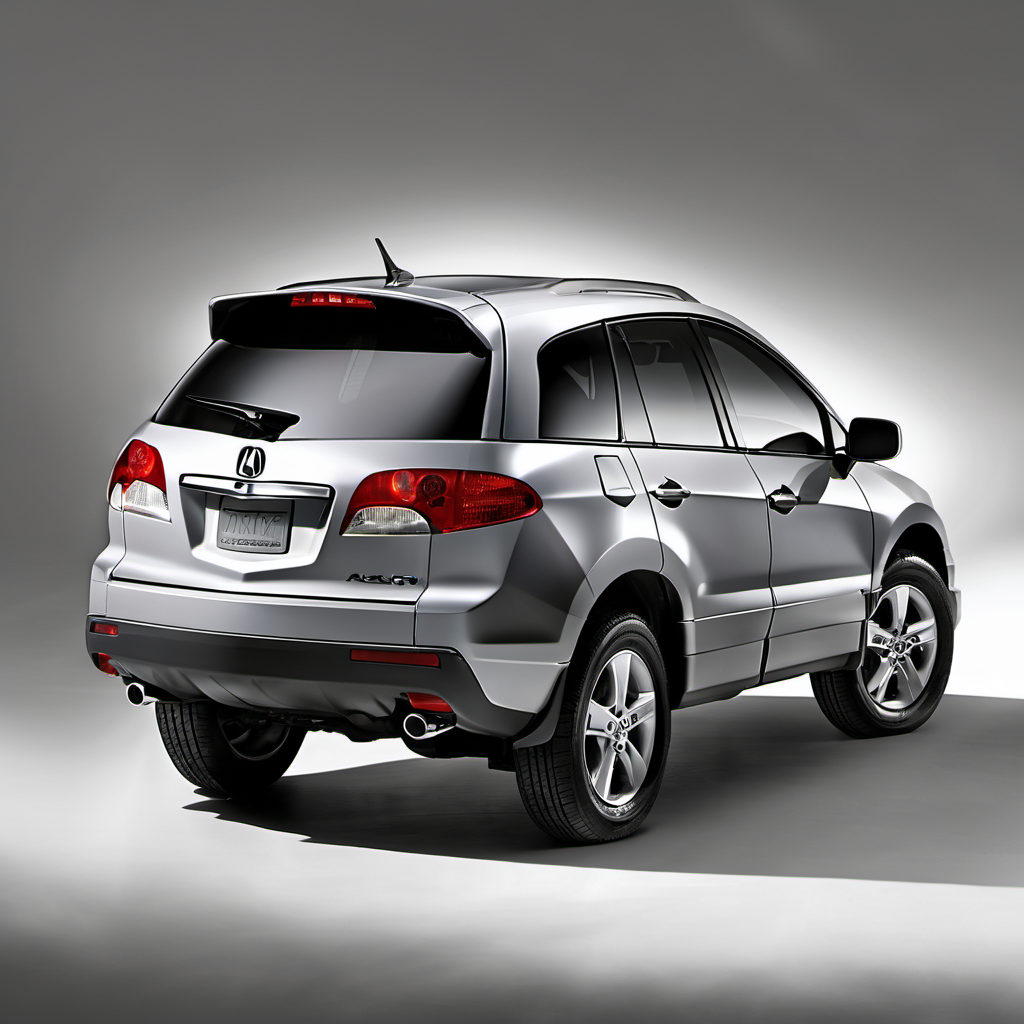
2010 Acura RDX SUV

2010 Acura

RDXSUV

2.3L Turbocharged I4 (K23A1) · SUV

The 2010 Acura RDX is a compact luxury SUV built on Honda's car-based platform, making it more crossover than traditional truck-SUV. It's powered by a turbocharged 2.3L inline-4 — a relatively unusual choice for a luxury SUV at the time — paired with a 5-speed automatic and standard Super Handling All-Wheel Drive (SH-AWD). It was Acura's entry into the compact luxury SUV space and competed directly with the BMW X3 and Volvo XC60. The turbocharged engine delivers strong mid-range pull and better-than-average highway fuel economy for its class, but it demands strict oil change discipline. The VTC (Variable Timing Control) system is oil-pressure dependent, and sludged or degraded oil is the root cause of most expensive repairs on this generation. Owners who stay on top of oil changes routinely see 200k+ miles; those who don't often face a much shorter and more expensive ownership experience. For Lake Geneva drivers, the SH-AWD system is a genuine winter asset — it actively distributes torque to the rear wheels that have the most grip, not just passively splitting power. Ride quality is car-like and comfortable, interior quality is solid, and the rear cargo area is practical without being huge.

Reliability
3/5
Verified data
Specs shown for RDX 4WD — the most common configuration. Other trims may vary in engine, drivetrain, or fuel economy. Sign in to see your vehicle's exact specs.
Engine
[object Object]
Drivetrain
AWD
Fuel
Gasoline
MPG
17 city / 22 hwy / 19 combined
Seats
5
Doors
4
Body
SUV
MSRP
$35,170

Overview

AI-curated

The 2010 Acura RDX is a compact luxury SUV built on Honda's car-based platform, making it more crossover than traditional truck-SUV. It's powered by a turbocharged 2.3L inline-4 — a relatively unusual choice for a luxury SUV at the time — paired with a 5-speed automatic and standard Super Handling All-Wheel Drive (SH-AWD). It was Acura's entry into the compact luxury SUV space and competed directly with the BMW X3 and Volvo XC60. The turbocharged engine delivers strong mid-range pull and better-than-average highway fuel economy for its class, but it demands strict oil change discipline. The VTC (Variable Timing Control) system is oil-pressure dependent, and sludged or degraded oil is the root cause of most expensive repairs on this generation. Owners who stay on top of oil changes routinely see 200k+ miles; those who don't often face a much shorter and more expensive ownership experience. For Lake Geneva drivers, the SH-AWD system is a genuine winter asset — it actively distributes torque to the rear wheels that have the most grip, not just passively splitting power. Ride quality is car-like and comfortable, interior quality is solid, and the rear cargo area is practical without being huge.

Known for
  • Turbocharged 2.3L K23 engine — punchy but oil-change sensitive
  • Super Handling AWD (SH-AWD) — one of the best AWD systems of its era
  • Car-like ride quality and sporty handling for a compact SUV
  • Premium Honda reliability when properly maintained
  • Relatively tight rear-seat and cargo space versus competitors
Best for
  • Commuters who want AWD traction without truck-like fuel economy
  • Wisconsin winters — SH-AWD is genuinely capable in snow
  • Buyers wanting luxury features at a used-market value price
  • Drivers who keep a strict maintenance schedule
Watch for
  • VTC actuator and oil control valve failures from infrequent oil changes
  • Turbo wastegate actuator wear causing boost issues
  • High-mileage examples with unknown or stretched oil change history
  • AC compressor failures are not uncommon on this generation
  • Timing chain stretch if oil changes were neglected

Common issues by mileage

6 known

VTC Actuator Failure (Variable Timing Control)

high
Typically appears
60–120k mi
Estimated repair
$400 – $900

Turbocharger Wastegate Actuator Wear

medium
Typically appears
70–130k mi
Estimated repair
$300 – $1,200

A/C Compressor Failure

medium
Typically appears
80–140k mi
Estimated repair
$700 – $1,500

Oxygen / Air-Fuel Sensor Heater Circuit Faults

medium
Typically appears
90–160k mi
Estimated repair
$150 – $400

SH-AWD Rear Differential Fluid Degradation

low
Typically appears
60–100k mi
Estimated repair
$150 – $300

Maintenance schedule

  1. 1
    Every 5,000 miles or 6 months — no exceptions Engine oil and filter change (5W-30 API SN, 4.5 qt capacity)

    This is the single most important service on this vehicle. The turbocharger and VTC system are directly dependent on clean, properly viscous oil. Stretching oil changes even slightly accelerates VTC actuator wear and timing chain sludge buildup. Use full synthetic and do not wait for the Maintenance Minder if you're doing hard driving or short trips.

  2. 2
    Every 30,000 miles or at purchase if unknown SH-AWD rear differential fluid change (use Honda-specified fluid only)

    The SH-AWD rear differential is a precision torque-vectoring unit. Using the wrong fluid or running degraded fluid causes shudder and premature wear. This is cheap insurance on a complex and expensive-to-repair system.

  3. 3
    Every 30,000 miles Transmission fluid change (Honda ATF-Z1 or DW-1)

    The 5-speed automatic is generally reliable but benefits from clean fluid. Honda does not recommend flushing — drain-and-fill is the correct method. Use Honda-specified ATF only.

  4. 4
    Every 30,000 miles or as needed Inspect and clean oil control valves (OCVs)

    On turbocharged VTC engines, the OCVs that control cam timing are prone to sludge clogging. Cleaning them during oil service intervals can prevent VTC actuator and timing chain faults.

  5. 5
    Every 2 years or 30,000 miles Coolant system flush (Honda Type 2 coolant)

    The turbocharged engine runs hotter than a naturally aspirated unit. Degraded coolant loses corrosion inhibitors faster, which can damage the water pump and heater core — an expensive repair on this platform.

  6. 6
    Every fall (before first freeze) Inspect turbo boost hoses and intercooler connections

    Wisconsin's freeze-thaw cycles stress rubber couplings and plastic intercooler end tanks. A loose boost hose causes immediate and noticeable power loss. A quick visual and squeeze-test in the fall catches these before they strand you.

  7. 7
    Every 2 years or at brake inspection Brake fluid flush

    Brake fluid is hygroscopic — it absorbs moisture over time, lowering the boiling point. In a vehicle that sees Wisconsin winters and repeated hard stops, fresh fluid keeps the brake system reliable and corrosion-free.

  8. 8
    Every fall Battery load test and terminal cleaning

    The RDX's turbocharged engine and SH-AWD electronics place a higher-than-average electrical load on the battery. Sub-zero Lake Geneva mornings expose any battery weakness fast. Test and replace proactively — a battery that passes a basic voltage test can still fail a load test.

Always defer to the manufacturer's service manual for warranty-mandated intervals.

Cost of ownership

Annual maintenance
$600 – $1,400
Fuel
At 19 MPG combined and Wisconsin average gas prices, expect roughly $1,800–$2,400/year for a typical 12,000-mile driver. The turbo requires premium fuel for best performance, though the engine is not knock-limited on regular — using regular consistently may affect long-term turbo health.
Insurance
Expect $900–$1,400/year for a 2010 RDX in the Lake Geneva area for a clean-record adult driver. Luxury SUV classification pushes rates slightly above a comparable Honda CR-V.

A properly maintained 2010 RDX is a reasonably affordable luxury SUV to own. The main cost wildcard is the VTC/timing system — a single neglected oil change history can turn a $500 actuator job into a $2,000+ timing chain repair. Budget $800–$1,200/year if you're buying used with unknown history and plan to get it caught up on all fluids. Once current, annual costs drop to the lower end of the range for routine services.

Seasonal care

Lake Geneva, WI
Winter
  • Switch to a full synthetic 5W-30 if not already — it flows faster on sub-zero starts, which matters enormously for the VTC actuator that needs immediate oil pressure on cold cranking.
  • Load-test the battery every fall. The SH-AWD control unit and turbo electronics are a significant parasitic draw; a marginal battery will fail faster here than in a simpler vehicle.
  • Top off windshield washer fluid with a -20°F or colder rated mix. Wisconsin road salt film builds up fast and a weak mix will freeze on the windshield.
  • Inspect the turbo wastegate actuator linkage for corrosion — road salt from Hwys 12 and 50 gets into the undercarriage quickly and accelerates actuator rod wear.
  • Check the SH-AWD rear differential fluid if it hasn't been done — cold-weather operation with degraded fluid causes shudder on turns in parking lots and on ice.
  • Install winter tires if you do significant driving on county roads — the SH-AWD is excellent but works best with tires that can actually bite in snow. All-seasons on a good AWD system lose to dedicated winters on a FWD vehicle.
Summer
  • Check tire pressure monthly — Lake Geneva summer heat causes significant pressure swings. The 2010 RDX spec is typically 32–35 PSI cold; check in the morning before driving.
  • Inspect A/C operation early in the season. If the compressor cycles on and off rapidly or blows only slightly cool air, have it checked before peak heat — compressor failures are more common on this generation.
  • Check intercooler and boost hoses after winter. Freeze-thaw cycling can crack rubber couplers, and summer heat-soak will make small leaks worse under boost.
  • Flush and inspect the coolant if it hasn't been done in 2 years — the turbo runs hot and summer heat adds to that load. A weak water pump or clogged radiator shows up fastest in July.

Comparable vehicles

No comparable vehicles documented yet.

AI profile generated 21 days ago · claude-sonnet-4-6 · v2.