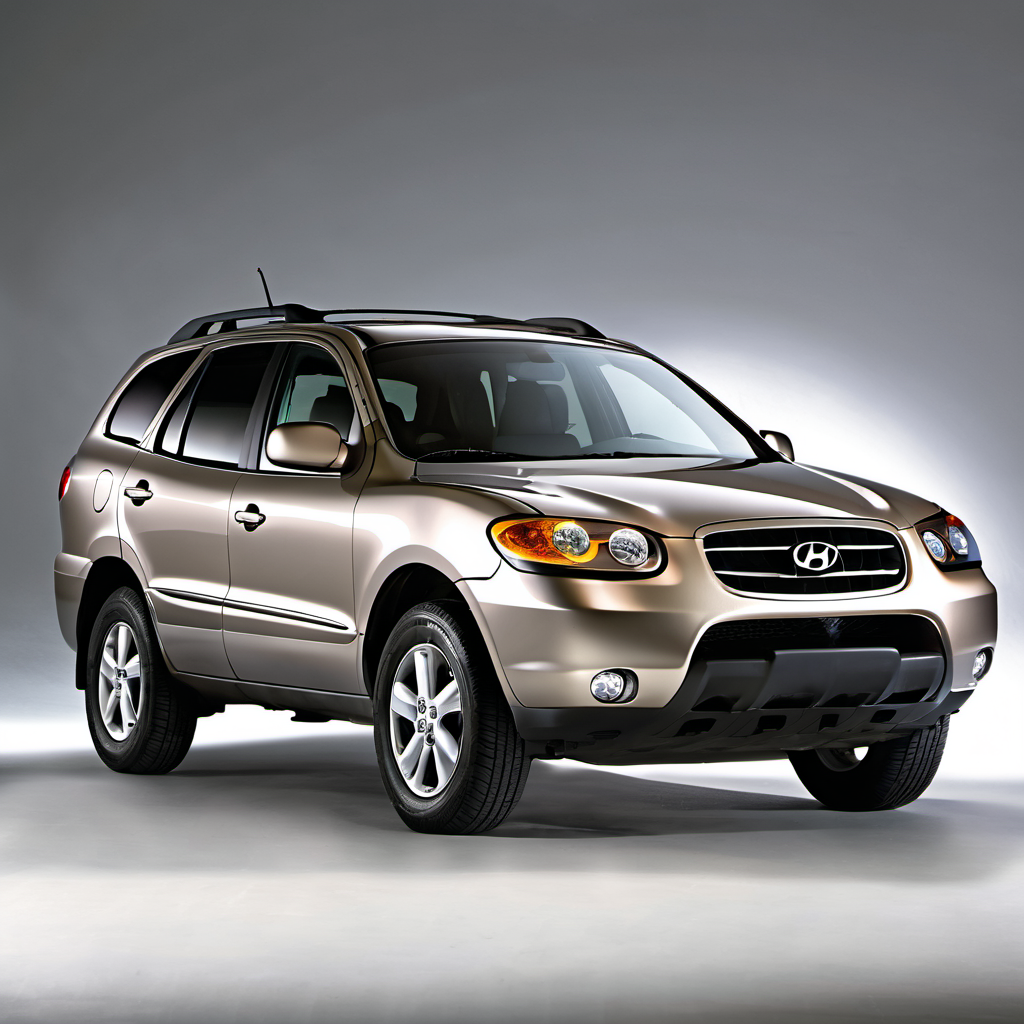
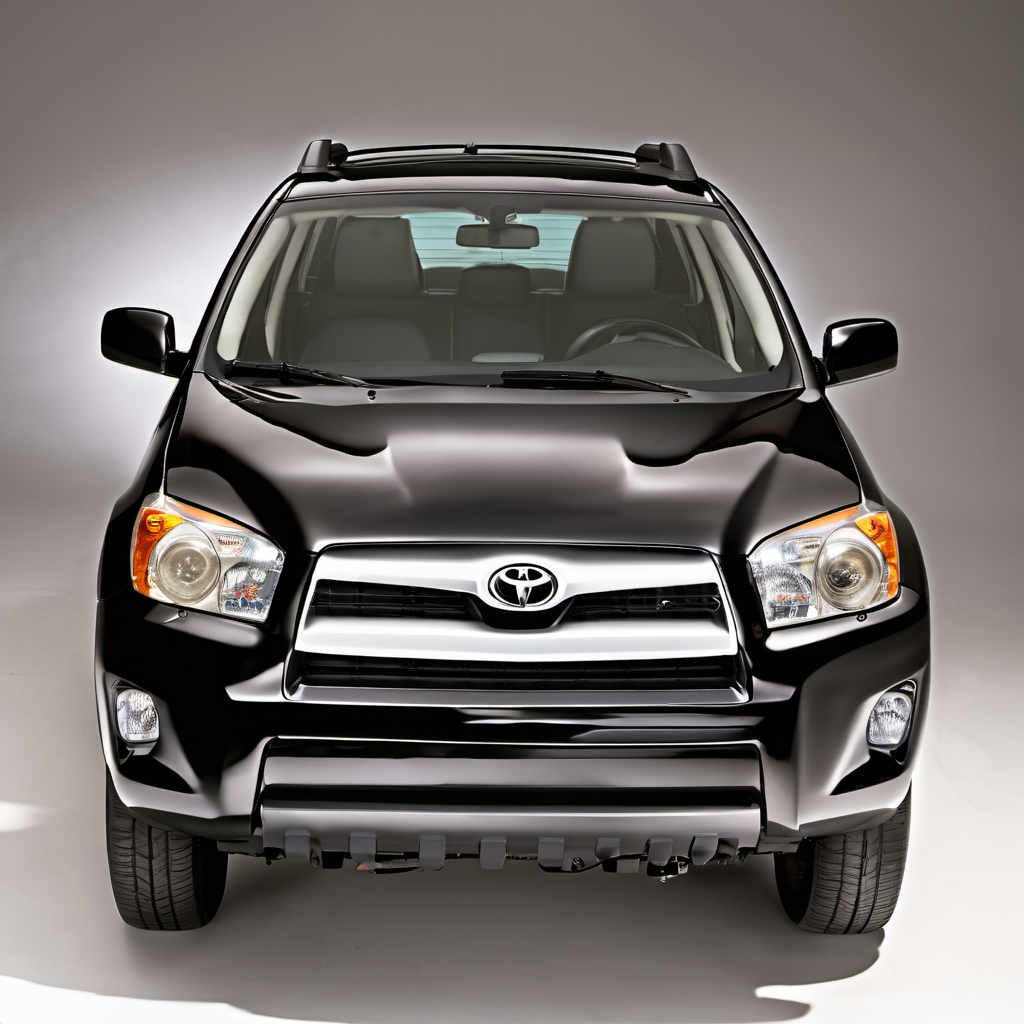
2007 Hyundai Santa Fe SUV

2007 Hyundai

Santa FeSUV

SUV

The 2007 Hyundai Santa Fe was a significant step forward for Hyundai — it was the second-generation model, larger and more refined than the original. Built on a car-based platform, it offered comfortable on-road manners, a roomy interior for its class, and a choice of a 2.7L V6 or a 3.3L V6. It competed squarely with the Toyota RAV4 and Honda CR-V but offered more interior space and a lower price of entry. At 17 years old, most of these are well into high-mileage territory. The 2.7L Delta V6 in this trim is a durable engine when oil is changed regularly, but it has real Achilles heels — the timing chain system and sludge sensitivity are the two biggest concerns. FWD models skip the added complexity of the AWD transfer case, which cuts some maintenance cost but limits off-pavement usefulness. For a Wisconsin buyer, the body and undercarriage salt exposure after 17 Wisconsin winters is a primary concern. Rust on subframe mounting points, brake lines, and suspension components should be inspected carefully before purchase. These vehicles can still be solid daily drivers if they've been maintained, but deferred maintenance at this age compounds quickly.

Reliability
3/5
Verified data
Specs shown for Santa Fe 2WD — the most common configuration. Other trims may vary in engine, drivetrain, or fuel economy. Sign in to see your vehicle's exact specs.
Engine
[object Object]
Drivetrain
FWD
Fuel
Gasoline
MPG
18 city / 24 hwy / 21 combined
Seats
Doors
Body
Sport Utility Vehicle - 2WD

Overview

AI-curated

The 2007 Hyundai Santa Fe was a significant step forward for Hyundai — it was the second-generation model, larger and more refined than the original. Built on a car-based platform, it offered comfortable on-road manners, a roomy interior for its class, and a choice of a 2.7L V6 or a 3.3L V6. It competed squarely with the Toyota RAV4 and Honda CR-V but offered more interior space and a lower price of entry. At 17 years old, most of these are well into high-mileage territory. The 2.7L Delta V6 in this trim is a durable engine when oil is changed regularly, but it has real Achilles heels — the timing chain system and sludge sensitivity are the two biggest concerns. FWD models skip the added complexity of the AWD transfer case, which cuts some maintenance cost but limits off-pavement usefulness. For a Wisconsin buyer, the body and undercarriage salt exposure after 17 Wisconsin winters is a primary concern. Rust on subframe mounting points, brake lines, and suspension components should be inspected carefully before purchase. These vehicles can still be solid daily drivers if they've been maintained, but deferred maintenance at this age compounds quickly.

Known for
  • Spacious interior for its segment
  • Smooth, comfortable ride quality
  • Competitive price when new; budget-friendly used
  • Reliable 2.7L V6 with proper oil change discipline
Best for
  • Budget-conscious families needing SUV space
  • Mostly-highway commuters
  • Buyers who prioritize interior comfort over off-road capability
Watch for
  • Engine sludge from infrequent oil changes — the 2.7L V6 is sensitive
  • Timing chain stretch and VVT solenoid failures
  • Rust on brake lines, subframe, and suspension components in salt-belt states
  • Transmission shudder or slipping on high-mileage examples
  • Power steering rack leaks

Common issues by mileage

6 known

Engine Oil Sludge (2.7L V6)

high
Typically appears
60–120k mi
Estimated repair
$300 – $2,500

Oxygen Sensor / Heater Circuit Failure

medium
Typically appears
80–130k mi
Estimated repair
$150 – $400

Automatic Transmission Solenoid / Shudder

medium
Typically appears
100–160k mi
Estimated repair
$250 – $1,500

Power Steering Rack Leak

medium
Typically appears
90–140k mi
Estimated repair
$400 – $900

Brake Line and Subframe Rust (Salt-Belt)

high
Typically appears
Any mileage on WI/Midwest vehicles
Estimated repair
$300 – $2,000

Maintenance schedule

  1. 1
    Every 5,000 miles — do not stretch to 7,500+ Engine oil and filter change

    The 2.7L Delta V6 is prone to sludge if oil changes are deferred. Conventional or full-synthetic, either works, but the interval must be honored. Sludge damage is expensive and often not reversible.

  2. 2
    Inspect at 90k miles; replace solenoid screens/filters if not already done Timing chain inspection and VVT solenoid service

    The VVT oil control solenoids have small screens that clog with sludge. Dirty screens cause cam timing codes and, if ignored, chain wear. Cleaning or replacing them is cheap insurance.

  3. 3
    Every 60,000 miles Transmission fluid change

    Hyundai listed this as 'lifetime' fluid in some markets, but real-world experience shows the transmission benefits from fresh fluid at 60k intervals — especially on vehicles that tow or operate in stop-and-go traffic.

  4. 4
    Every 60,000 miles or 5 years Coolant flush

    Degraded coolant becomes acidic and attacks aluminum engine components and the water pump. Critical on any 17-year-old vehicle — confirm the coolant has been changed at least once.

  5. 5
    Annually — every fall before Wisconsin winter Brake line inspection

    Salt-belt brake lines on this generation are a known rust failure point. A brake line rupture is a safety emergency. Inspect every year and replace proactively at any sign of surface rust through the outer coating.

  6. 6
    Every 60,000–80,000 miles Serpentine belt and tensioner replacement

    At this vehicle's age, the belt and tensioner are high-wear items. A failed belt strands the vehicle and can damage other components.

  7. 7
    Every 60,000 miles (platinum plugs) Spark plugs replacement

    Worn plugs on the 2.7L V6 cause rough idle, reduced fuel economy, and can trigger misfires. Access to the rear bank plugs is awkward — confirm they've been changed.

  8. 8
    Test every fall; replace every 4–5 years Battery test and replacement

    Wisconsin sub-zero temperatures dramatically reduce battery cranking capacity. A battery that tests marginal in October will likely fail in January. Don't wait for a no-start.

Always defer to the manufacturer's service manual for warranty-mandated intervals.

Cost of ownership

Annual maintenance
$700 – $1,800
Fuel
At 21 MPG combined and ~15,000 miles/year, expect roughly $2,100–$2,500/year at current Wisconsin gas prices.
Insurance
Typically $900–$1,400/year for full coverage on a vehicle this age in Wisconsin, depending on driver profile and city.

A well-maintained 2007 Santa Fe is a low-cost daily driver on paper, but at 17 years old the maintenance budget must account for age-related repairs — not just routine service. Budget for brake line inspection/replacement, timing chain system work, and potential cooling system service. Deferred maintenance items on used examples can push first-year costs well above the $1,800 high estimate.
Seasonal care

Lake Geneva, WI
Winter
  • Test and replace the battery before first freeze — cold cranking amps drop sharply below 0°F and this era's 2.7L needs a strong battery for cold starts.
  • Switch to a full-synthetic 5W-30 oil if not already used — it flows faster on sub-zero cold starts and reduces timing chain wear during warm-up.
  • Inspect and treat brake lines for rust before salt season. Confirm brake fluid is not moisture-saturated (fluid absorbs water over time, lowering boiling point and accelerating internal corrosion).
  • Use a winter-rated washer fluid rated to at least -20°F — Lake Geneva winters regularly hit those temperatures and summer fluid freezes instantly on the windshield at highway speed.
  • Install winter wiper blades to prevent conventional blades from skipping and streaking in packed snow and ice.
  • Inspect the AWD/FWD system: on FWD models, confirm tires have adequate tread depth (4/32" minimum for snow). Consider dedicated winter tires — the Santa Fe's FWD has no all-wheel traction aid in icy conditions.
Summer
  • Check tire pressure monthly — pressure drops roughly 1 PSI per 10°F of temperature change, and summer heat fluctuations cause under-inflation that increases tire wear.
  • Inspect the A/C system for refrigerant leaks and confirm the cabin air filter is clean — a clogged filter chokes airflow and makes the compressor work harder in heat.
  • Check coolant level and condition after winter — confirm the overflow reservoir isn't cracked and the coolant hasn't turned brown, which signals contamination.
  • Inspect the undercarriage for salt damage after winter roads clear — hose down the underside thoroughly in early spring and check subframe mounting points, suspension arms, and exhaust hangers for rust.

Comparable vehicles

If you're shopping for one

Red flags
  • Sludge visible inside the valve cover or oil filler cap — walk away
  • Any active cam timing or VVT solenoid codes (P0012, P0015, P0022, P0025, P0026–P0029) without a clear, recent repair invoice
  • Brake lines with visible rust perforation or repair patches — safety-critical, budget accordingly
  • Transmission that slips, shudders, or hesitates on acceleration — rebuilt transmissions run $1,500–$3,000
  • Visible rust bubbling through the rocker panels or floor — structural rust on a 17-year-old Midwest vehicle can be a total-loss situation
  • No service records whatsoever — at this age, that's a gamble on a sludge-sensitive engine
What to inspect
  • Pull the engine oil cap and look for sludge (brown mayo-like residue) — on the 2.7L V6, this is a go/no-go item
  • Request a full service history with oil change records; any gap over 6 months or 6,000 miles is a red flag on this engine
  • Have the timing chain system scanned for cam timing codes (P0012, P0015, P0022, P0025) before purchase
  • Inspect all visible brake lines under the vehicle for rust, especially near rear axle and fuel tank crossover areas
  • Check the subframe mounting points and rear control arm attachment points for structural rust
  • Drive the vehicle through all transmission gears and watch for shudder, harsh shifts, or delayed engagement
  • Test the A/C for cold output and listen for any compressor noise
  • Check the power steering fluid level and look for leaks at the rack boots
AI profile generated 3 hr ago · claude-sonnet-4-6 · v2.