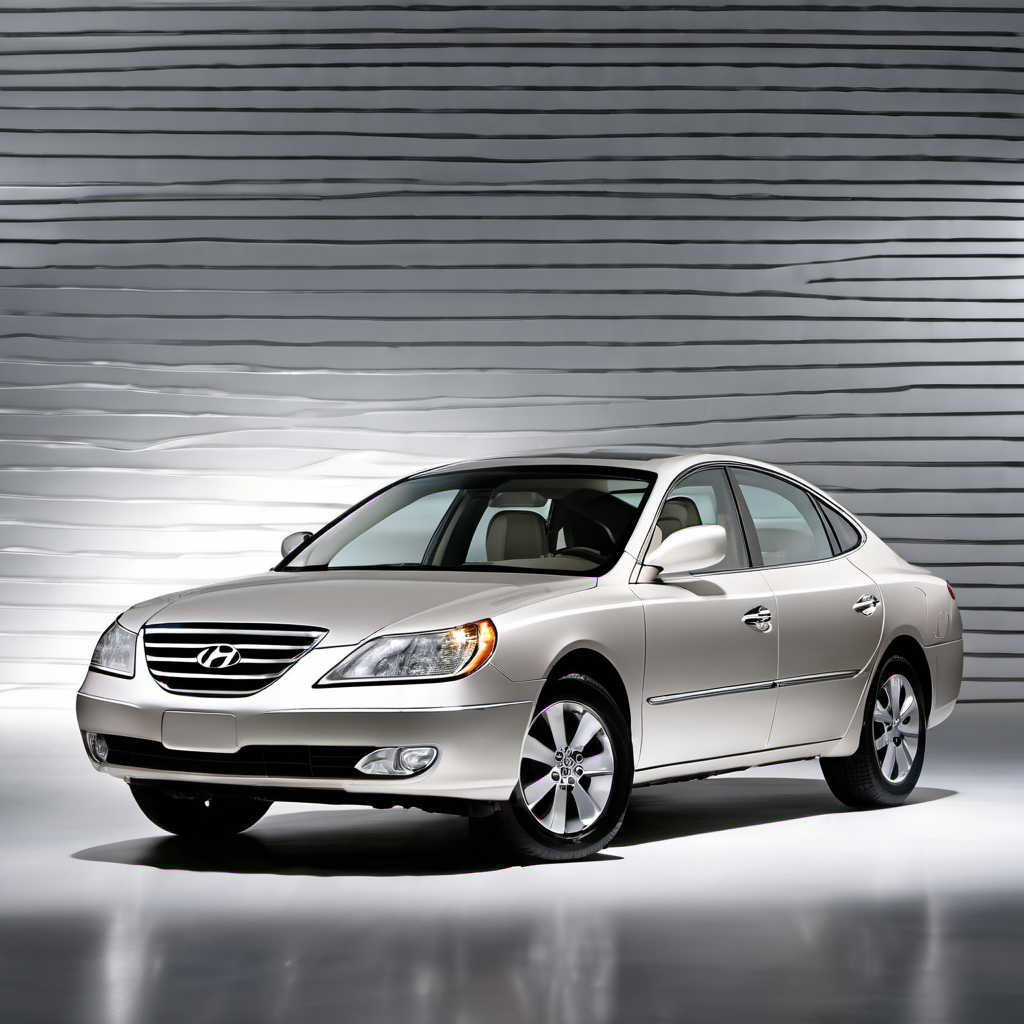
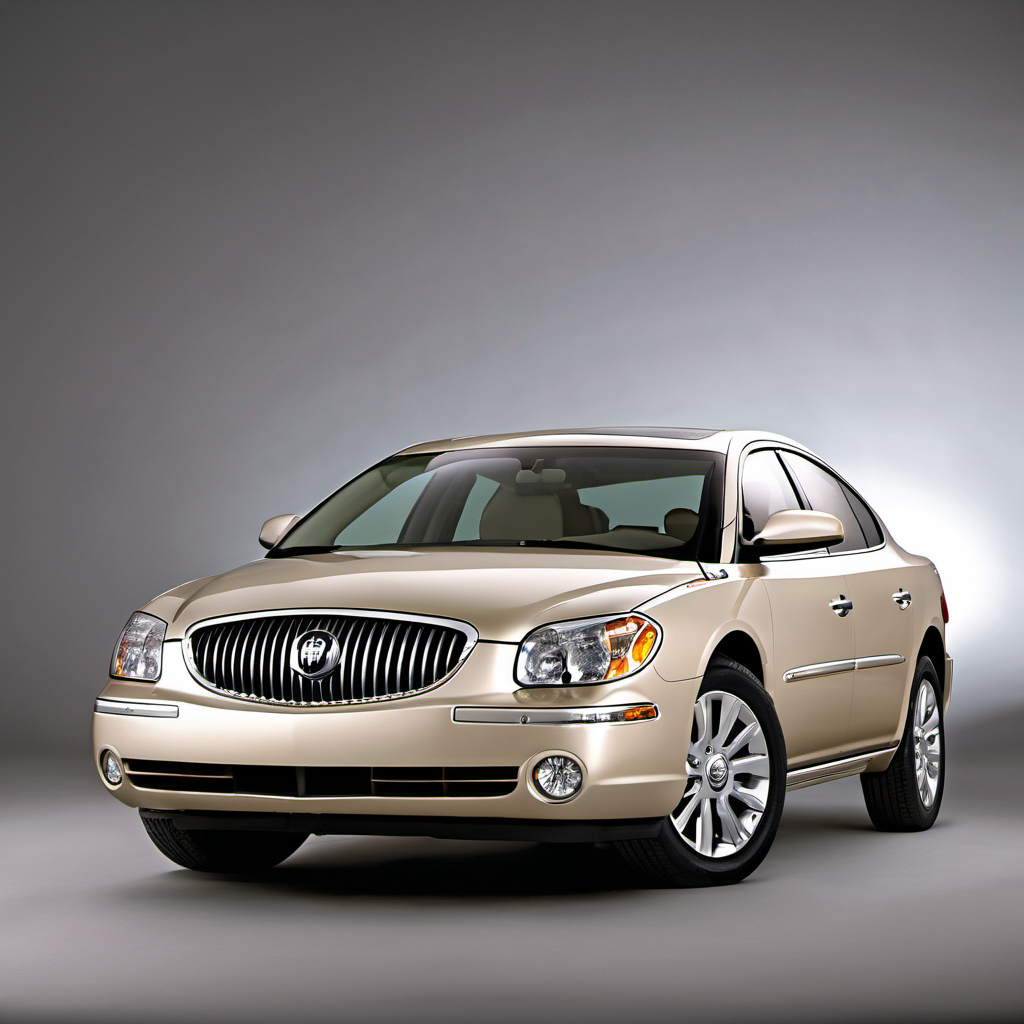
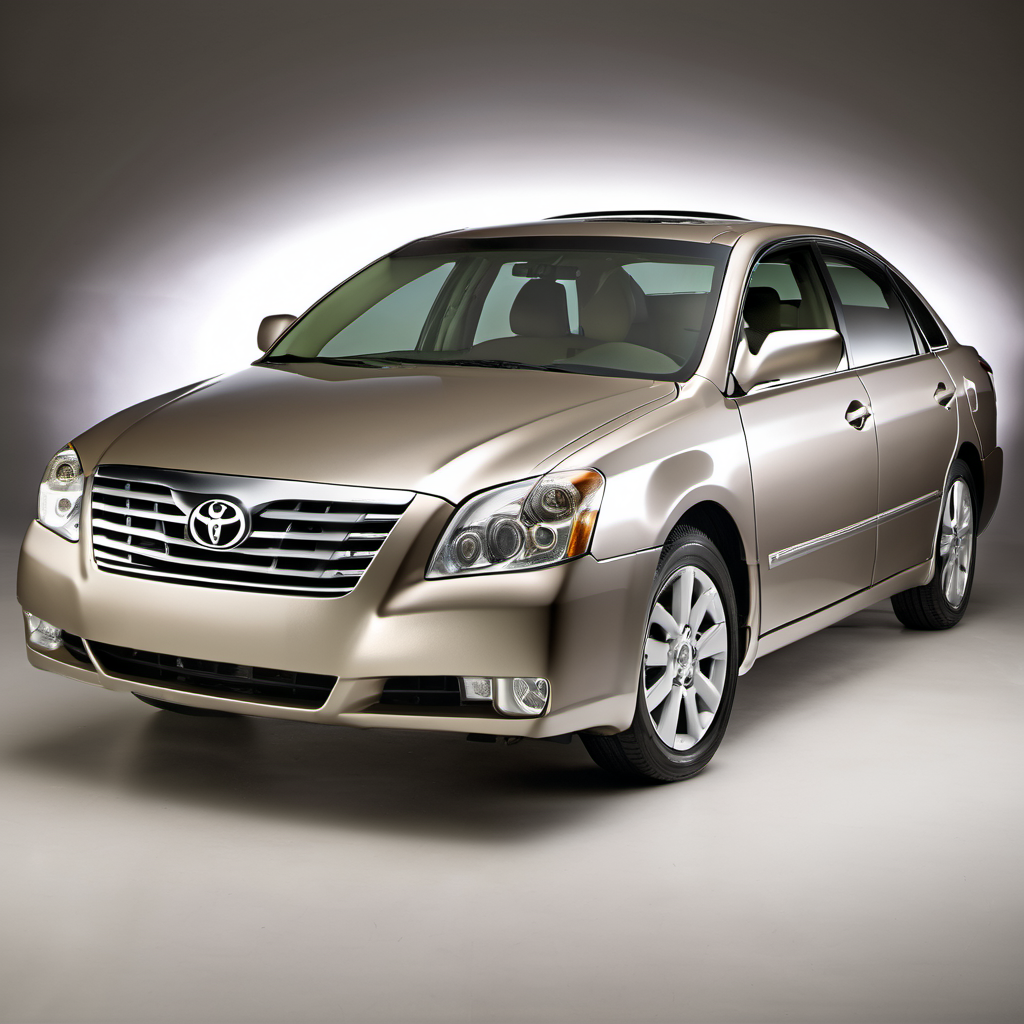
2007 Hyundai Azera Sedan

2007 Hyundai

AzeraSedan

Sedan

The 2007 Hyundai Azera is a full-size front-wheel-drive sedan that Hyundai built to challenge the Toyota Avalon and Buick LaCrosse crowd. It offered a lot of car for the money — a standard 3.8L V6, leather seating, and a long list of features at a price well below its Japanese and domestic competitors. First-generation Azera (2006–2011) buyers were typically cross-shoppers who wanted luxury-adjacent comfort without the premium price tag. Under the hood sits Hyundai's Lambda 3.8L V6, a smooth, relatively willing engine that pairs with a 5-speed automatic. Ride quality is soft and comfortable, interior space is generous, and refinement for the price point was genuinely impressive. It was never a driver's car, but it was a competent, comfortable highway cruiser. By 2007 the Azera was largely sorted out, but like all first-gen Azeras it carries some age-related concerns now. Variable valve timing hardware, transmission fluid maintenance, and the usual wear items on a nearly 20-year-old sedan deserve attention when buying used.

Reliability
3/5
Verified data
Specs shown for Azera — the most common configuration. Other trims may vary in engine, drivetrain, or fuel economy. Sign in to see your vehicle's exact specs.
Engine
[object Object]
Drivetrain
FWD
Fuel
Gasoline
MPG
17 city / 26 hwy / 20 combined
Seats
Doors
Body
Large Cars

Overview

AI-curated

The 2007 Hyundai Azera is a full-size front-wheel-drive sedan that Hyundai built to challenge the Toyota Avalon and Buick LaCrosse crowd. It offered a lot of car for the money — a standard 3.8L V6, leather seating, and a long list of features at a price well below its Japanese and domestic competitors. First-generation Azera (2006–2011) buyers were typically cross-shoppers who wanted luxury-adjacent comfort without the premium price tag. Under the hood sits Hyundai's Lambda 3.8L V6, a smooth, relatively willing engine that pairs with a 5-speed automatic. Ride quality is soft and comfortable, interior space is generous, and refinement for the price point was genuinely impressive. It was never a driver's car, but it was a competent, comfortable highway cruiser. By 2007 the Azera was largely sorted out, but like all first-gen Azeras it carries some age-related concerns now. Variable valve timing hardware, transmission fluid maintenance, and the usual wear items on a nearly 20-year-old sedan deserve attention when buying used.

Known for
  • Strong value proposition — near-luxury features at a mainstream price
  • Smooth, refined 3.8L Lambda V6
  • Spacious, comfortable cabin with generous standard equipment
  • Soft, highway-tuned ride quality
  • Solid long-term durability when maintained
Best for
  • Highway commuters and long-distance drivers
  • Buyers wanting full-size comfort on a budget
  • Low-mileage used car shoppers prioritizing space and features
  • Retired or older drivers who prioritize comfort over sport
Watch for
  • VVT system (CVVT) issues — neglected oil changes accelerate wear on timing components
  • Transmission performance if fluid has never been changed
  • Age-related rust on underbody and subframe — critical in the upper Midwest
  • Aging rubber: engine and transmission mounts, coolant hoses, suspension bushings
  • Power window regulators and blower motor resistors are known weak points on this era Hyundai

Common issues by mileage

6 known

Timing Chain Stretch / Tensioner Wear

medium
Typically appears
100–160k mi
Estimated repair
$800 – $1,800

Oxygen Sensor / O2 Sensor Heater Circuit Fault

medium
Typically appears
80–130k mi
Estimated repair
$150 – $400

Automatic Transmission Shudder / Delayed Engagement

medium
Typically appears
90–150k mi
Estimated repair
$150 – $2,800

Power Window Regulator Failure

high
Typically appears
70–130k mi
Estimated repair
$120 – $300

Blower Motor Resistor Failure (A/C & Heat Fan Speed Loss)

medium
Typically appears
60–120k mi
Estimated repair
$60 – $180

Maintenance schedule

  1. 1
    Every 5,000 miles or 6 months — use full synthetic 5W-20 or 5W-30 per cap label Engine oil and filter change

    The Lambda V6's CVVT actuators and timing chain tensioners are highly sensitive to oil viscosity and cleanliness. Stretching intervals is the single fastest way to generate expensive timing system problems on this engine.

  2. 2
    Every 45,000–60,000 miles, drain-and-fill (not flush) Automatic transmission fluid change

    Hyundai originally listed this as a lifetime fluid, but owners see shudder and delayed shifts when fluid is never changed. Most independent shops recommend a drain-and-fill at 60k and every 45k after that.

  3. 3
    Every 60,000 miles or 5 years Coolant system inspection and flush

    On a nearly 20-year-old vehicle, coolant hoses, the thermostat, and the coolant itself should all be assessed. Degraded coolant accelerates corrosion in the aluminum engine.

  4. 4
    Every 60,000 miles (iridium plugs) Spark plug replacement

    Worn plugs on the Lambda V6 cause misfires, reduced fuel economy, and can mask underlying VVT or coil issues. The rear bank is more labor-intensive to access — do all six at once.

  5. 5
    Every 60,000 miles or at any sign of squealing Serpentine belt and tensioner inspection

    At this vehicle's age the belt and tensioner spring are both due regardless of mileage. A snapped belt in a Wisconsin winter is a tow call.

  6. 6
    Annually, every fall before winter season Underbody / subframe rust inspection

    Lake Geneva road salt is brutal on underbody steel. Inspect subframe mounting points, brake lines, fuel lines, and exhaust hangers every fall. Treat exposed metal early.

  7. 7
    Every 15,000–20,000 miles Cabin air filter and engine air filter replacement

    Often skipped on older vehicles. A clogged cabin filter strains the blower motor — already a known weak point. A dirty engine filter hurts fuel economy on an already thirsty V6.

  8. 8
    Every fall, before temperatures drop below 20°F Battery load test

    Wisconsin winters expose weak batteries fast. The 3.8L V6 is a larger engine that demands a strong battery on cold cranks. Test and replace proactively — don't wait for a no-start at -10°F.

Always defer to the manufacturer's service manual for warranty-mandated intervals.

Cost of ownership

Annual maintenance
$700 – $1,600
Fuel
At 20 MPG combined and ~12,000 miles/year, expect roughly $1,500–$1,800/year at current mid-grade Midwest gas prices. The 3.8L V6 requires regular unleaded.
Insurance
Generally low — the Azera's low theft rate, low popularity score, and full-size sedan classification keep premiums modest. Expect $900–$1,400/year for full coverage on a vehicle this age depending on driver profile.

The Azera is an inexpensive car to own on paper, but its age is the cost wildcard. A well-maintained example with documented service history should stay in the $700–$1,200/year maintenance range. An unknown-history car could front-load costs with timing system work, transmission service, and suspension refresh — budget $1,600–$2,500 in the first year if history is unclear. Parts availability from Hyundai dealerships and independent suppliers is still reasonable.
Seasonal care

Lake Geneva, WI
Winter
  • Load-test the battery every October — the 3.8L V6 draws hard on cold cranks and a marginal battery will fail at the worst time in a Wisconsin winter.
  • Switch to full synthetic 5W-20 or 5W-30 if not already using it; conventional oil thickens significantly below 0°F and starves the CVVT system on cold starts.
  • Inspect brake lines and fuel lines for rust perforation before winter — salt accelerates existing corrosion and a pinhole brake line leak is dangerous.
  • Use -40°F rated washer fluid. The Azera's low hood line means road spray hits the windshield constantly — you will go through fluid fast.
  • Install proper winter wiper blades; the standard blades ice up in slush and leave dangerous streaks.
  • Check antifreeze concentration — should be rated to at least -40°F for southern Wisconsin winters.
Summer
  • Inspect the A/C system charge and cabin filter before hot weather; the blower motor resistor is a known weak point and a partially failed one makes the A/C feel inadequate on hot days.
  • Check tire pressure monthly — pressure drops roughly 1 PSI for every 10°F temperature swing, and underinflated tires hurt fuel economy on an already thirsty engine.
  • Inspect coolant hoses and clamps for soft spots or cracking; heat soak in stop-and-go traffic accelerates aging on rubber that's now nearly 20 years old.
  • Check the power steering fluid level and condition — the Azera uses hydraulic power steering and fluid breakdown is common on high-mileage examples.

Comparable vehicles

If you're shopping for one

Red flags
  • No oil change records — means the CVVT system has likely been run on degraded oil; assume timing service costs in your offer.
  • Timing chain rattle on cold start — expensive repair incoming.
  • Any active VVT-related DTCs (P0012, P0015, P0022, P0025) stored in the ECM.
  • Visible rust perforation on the subframe, floor, or brake lines — walk away on a Wisconsin car with this.
  • Transmission slipping, shuddering, or fluid that smells burnt — rebuild or replacement territory.
  • Evidence of coolant leaks around the water pump or lower hoses — on a V6 this age, a full cooling system inspection is warranted.
What to inspect
  • Pull codes before purchase — P0012/P0015/P0022/P0025 series codes indicate VVT timing issues that could mean a costly repair; walk away or negotiate hard.
  • Warm the engine fully and listen for timing chain rattle on cold start — a ticking or rattling noise in the first 10–20 seconds points to stretched chain or worn tensioner.
  • Test all four power windows repeatedly — regulators are a common failure and replacement adds up quickly on four doors.
  • Test every blower motor speed setting (1 through 4); a dead low or mid speed means a failed resistor.
  • Inspect the underbody with a flashlight — look at the subframe mounting points, floor pan seams, brake lines, and fuel lines for rust perforation. Wisconsin cars suffer here.
  • Check transmission behavior: smooth 1-2 and 2-3 shifts when cold, no shudder at highway speed cruise. Any hesitation or slip is a red flag without proof of recent fluid service.
AI profile generated 16 days ago · claude-sonnet-4-6 · v2.