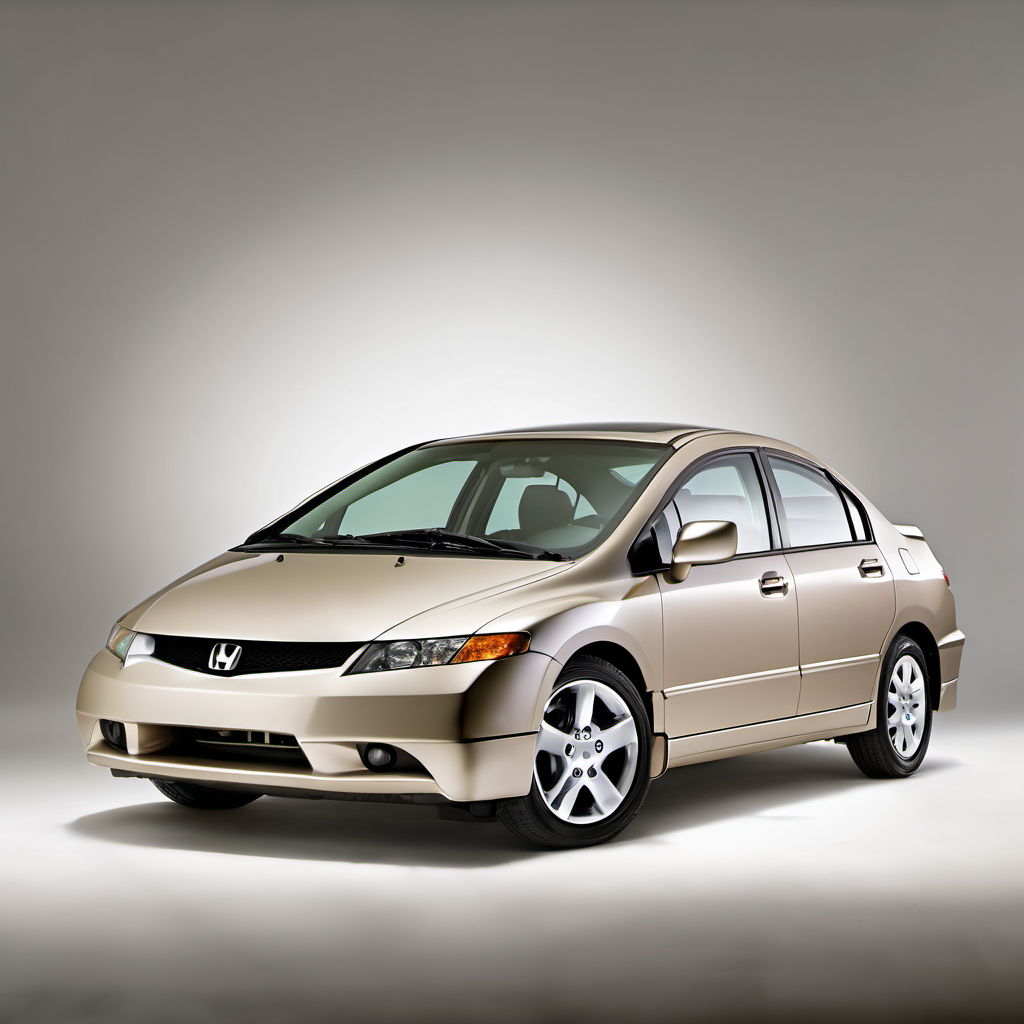
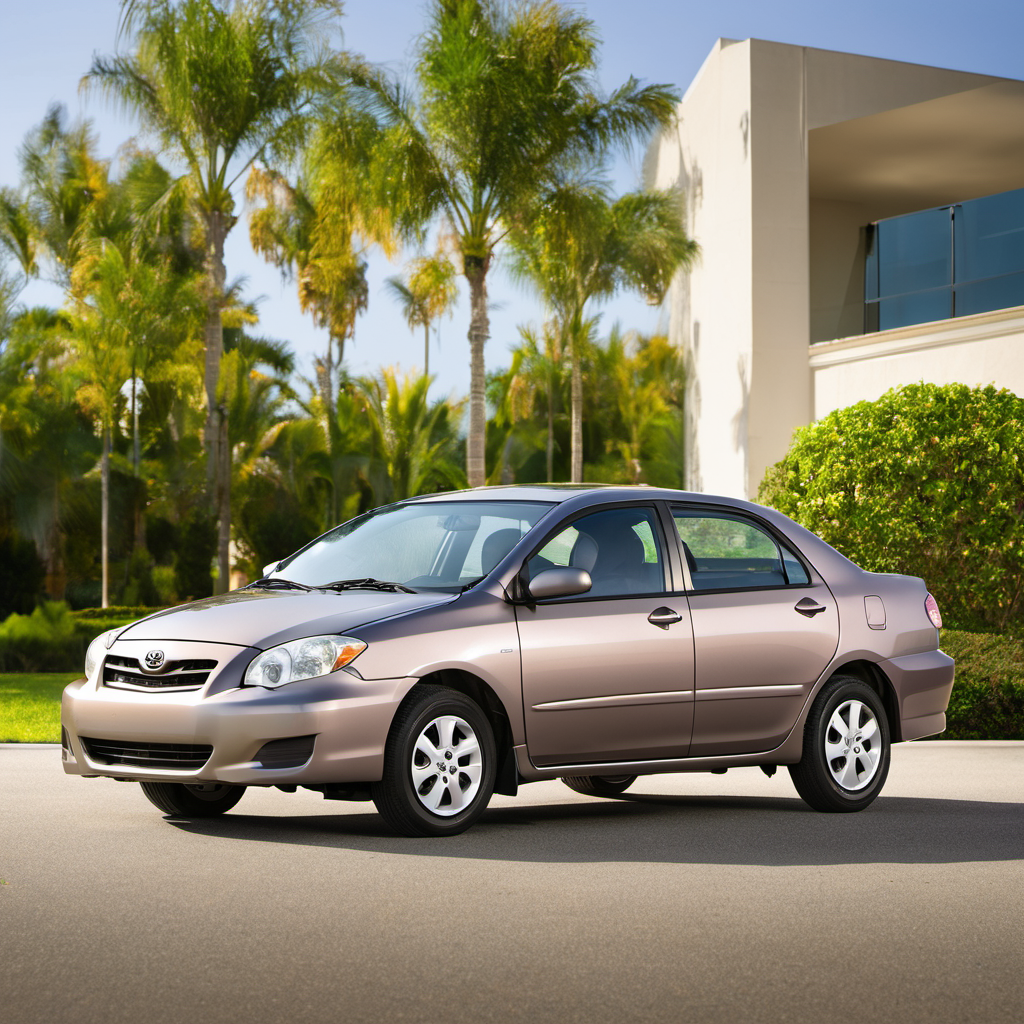
2007 Honda Civic Sedan

2007 Honda

CivicSedan

1.8L I4 i-VTEC · Sedan

The 2007 Honda Civic Sedan is part of the eighth-generation Civic (2006–2011), one of Honda's most successful redesigns. It brought a bold dual-level instrument panel, improved refinement, and a spacious-for-the-class interior. The base 1.8L i-VTEC four-cylinder is smooth, fuel-efficient, and has a long track record of reliability when maintained properly. At this point in its life, a 2007 Civic is well into high-mileage territory for most owners. That doesn't mean it's worn out — these engines routinely run past 200,000 miles — but it does mean deferred maintenance catches up fast. Oil changes, coolant flushes, and brake fluid swaps are often skipped on older Civics, and the bill comes due eventually. For a Lake Geneva driver, this is a sensible daily commuter. It's light, easy to maneuver, and gets solid fuel economy. The FWD layout handles Wisconsin winters adequately with good winter tires, though it won't match an AWD crossover in deep snow.

Reliability
4/5
Verified data
Specs shown for Civic — the most common configuration. Other trims may vary in engine, drivetrain, or fuel economy. Sign in to see your vehicle's exact specs.
Engine
[object Object]
Drivetrain
FWD
Fuel
Gasoline
MPG
26 city / 34 hwy / 29 combined
Seats
5
Doors
4
Body
Sedan
MSRP
$15,010

Overview

AI-curated

The 2007 Honda Civic Sedan is part of the eighth-generation Civic (2006–2011), one of Honda's most successful redesigns. It brought a bold dual-level instrument panel, improved refinement, and a spacious-for-the-class interior. The base 1.8L i-VTEC four-cylinder is smooth, fuel-efficient, and has a long track record of reliability when maintained properly. At this point in its life, a 2007 Civic is well into high-mileage territory for most owners. That doesn't mean it's worn out — these engines routinely run past 200,000 miles — but it does mean deferred maintenance catches up fast. Oil changes, coolant flushes, and brake fluid swaps are often skipped on older Civics, and the bill comes due eventually. For a Lake Geneva driver, this is a sensible daily commuter. It's light, easy to maneuver, and gets solid fuel economy. The FWD layout handles Wisconsin winters adequately with good winter tires, though it won't match an AWD crossover in deep snow.

Known for
  • Excellent long-term reliability with routine maintenance
  • Fuel-efficient 1.8L i-VTEC engine
  • Dual-level instrument cluster (polarizing but distinctive)
  • Strong resale value for its class
Best for
  • Daily commuters wanting low operating costs
  • First-time car owners or budget-conscious buyers
  • High-mileage drivers who prioritize efficiency
  • City and suburban driving
Watch for
  • High-mileage examples with no service records
  • Oil consumption on 2006–2009 1.8L engines (known issue)
  • Rust on underbody and wheel wells from Wisconsin road salt
  • Worn or cracked engine mounts on higher-mileage units

Common issues by mileage

6 known

Engine Oil Consumption (1.8L R18)

medium
Typically appears
60–150k mi
Estimated repair
$0 – $200

VTC Actuator Rattle on Cold Start

medium
Typically appears
80–150k mi
Estimated repair
$300 – $600

Oxygen Sensor Failure (upstream or downstream)

medium
Typically appears
100–160k mi
Estimated repair
$150 – $350

Engine / Transmission Mount Wear

high
Typically appears
100–180k mi
Estimated repair
$200 – $500

Brake Master Cylinder / ABS Module Issues

low
Typically appears
120–200k mi
Estimated repair
$300 – $700

Underbody / Subframe Rust (salt belt)

high
Typically appears
80k mi and above (age-dependent)
Estimated repair
$200 – $1,500

Maintenance schedule

  1. 1
    Every 5,000 miles or 6 months — do not stretch to Honda's oil life monitor on a high-mileage engine with known consumption tendency Engine oil & filter change

    The 1.8L R18 is sensitive to low oil level. Short intervals catch consumption before it causes damage and keep the VTC actuator clean.

  2. 2
    Monthly or every fill-up Check oil level between changes

    Oil consumption of up to 1 qt per 1,000 miles is documented on this engine. Running low is the fastest way to accelerate wear.

  3. 3
    Every 15,000–20,000 miles Air filter replacement

    Wisconsin gravel roads and fall leaves accelerate filter loading. A restricted filter hurts fuel economy noticeably on this small-displacement engine.

  4. 4
    Every 90,000 miles Spark plug replacement (iridium OEM)

    Honda specifies long-life iridium plugs. Many used Civics have skipped this — verify service records. Worn plugs cause rough idle and misfires.

  5. 5
    Every 5 years or 100,000 miles Coolant flush (Honda blue long-life)

    Degraded coolant becomes acidic and attacks the aluminum head. Use only Honda-specified blue coolant — mixing types causes gel deposits.

  6. 6
    Every 3 years Brake fluid flush

    Brake fluid absorbs moisture over time, lowering boiling point. Wisconsin winters with frequent wet roads accelerate moisture uptake.

  7. 7
    Every 30,000–45,000 miles on used/high-mileage examples Transmission fluid change (automatic)

    Honda's 'lifetime' fluid claim does not account for older vehicles already past 100k. Fresh fluid extends clutch pack life significantly.

  8. 8
    Every fall before salt season Undercarriage rust inspection & treatment

    The 8th-gen Civic's subframe and rear suspension trailing arm areas are prone to rust in salt-belt states. Catching it early prevents costly structural repairs.

Always defer to the manufacturer's service manual for warranty-mandated intervals.

Cost of ownership

Annual maintenance
$400 – $900
Fuel
At 29 MPG combined and 12,000 miles/year, expect roughly $1,500–$1,800/year at current Midwest gas prices. Premium not required — regular 87 octane only.
Insurance
Typically $900–$1,400/year for full coverage in the Lake Geneva area for a driver with a clean record. Cheap to insure due to low book value and good safety ratings.

This is one of the lower-cost vehicles to own in its class. Routine maintenance is inexpensive and most jobs are straightforward for an independent shop. The main wildcard on a 2007 with unknown history is deferred maintenance catch-up cost — budget an extra $500–$1,000 in year one if records are incomplete.
Seasonal care

Lake Geneva, WI
Winter
  • Switch to a dedicated winter tire set — the stock all-season tires are marginal below 20°F on Wisconsin roads. A set of four winter tires on steel wheels is the single biggest safety upgrade for this car.
  • Test the battery before November. Cold-cranking amps drop sharply below 0°F and a battery over 4 years old should be replaced proactively.
  • Top off washer fluid with a -20°F or colder rated formula. The reservoir is small and empties fast on salty highway miles.
  • Check all door seals and apply a silicone-based protectant to prevent freeze-ups. The Civic's rubber seals are now 17+ years old and may be cracking.
  • Inspect the undercarriage in November and treat any bare metal with rust inhibitor before the first salt application of the season.
  • Verify the defroster (front and rear) works fully before temperatures drop — rear defrost wires on aging Civics can crack.
Summer
  • Check tire pressure monthly — pressure drops ~1 PSI for every 10°F of temperature change, so spring re-inflation is needed after winter.
  • Inspect the A/C system for refrigerant charge and condenser condition. The condenser sits low and is prone to road debris damage; a weak A/C on a hot Wisconsin July is a quick diagnosis call.
  • Check coolant level and condition — overheating risk increases when A/C compressor load is added in summer stop-and-go traffic.
  • Inspect the serpentine belt for cracking or glazing before summer heat accelerates deterioration on a high-mileage belt.

Comparable vehicles

If you're shopping for one

Red flags
  • No maintenance records at all — on a 17-year-old car, undocumented history is a real risk.
  • Oil level low or oil that looks like chocolate milk (coolant intrusion — head gasket concern).
  • Visible rust perforation on underbody structural components — not cosmetic, structural.
  • VTC rattle that continues more than 30 seconds after cold start — suggests actuator near end of life or chronic low oil operation.
  • Any signs of accident repair on a unibody car this age — check panel gaps and look for overspray in door jambs.
  • Check engine light on or recently cleared (watch for readiness monitors not set on OBD scan).
What to inspect
  • Pull the oil dipstick: dark, sludgy oil or a low level without recent service is a red flag for neglect or active consumption issue.
  • Listen for a metallic rattle in the first 10–15 seconds of a cold start — that's the VTC actuator and it's a known issue on this engine.
  • Get under the car and look at the rear trailing arms, subframe mounting points, and fuel lines for rust perforation — not just surface rust.
  • Test the A/C, all power windows, and the rear defroster — these are cheap to ignore but annoying and moderately costly to fix.
  • Check all four tires for uneven wear patterns, which can indicate suspension or alignment neglect.
  • Ask for oil change records specifically — a Civic with 150k and documented oil changes is far safer than one with 100k and no records.
AI profile generated 20 days ago · claude-sonnet-4-6 · v2.