2006 Volvo V50 Wagon

2006 Volvo

V50Wagon

Wagon

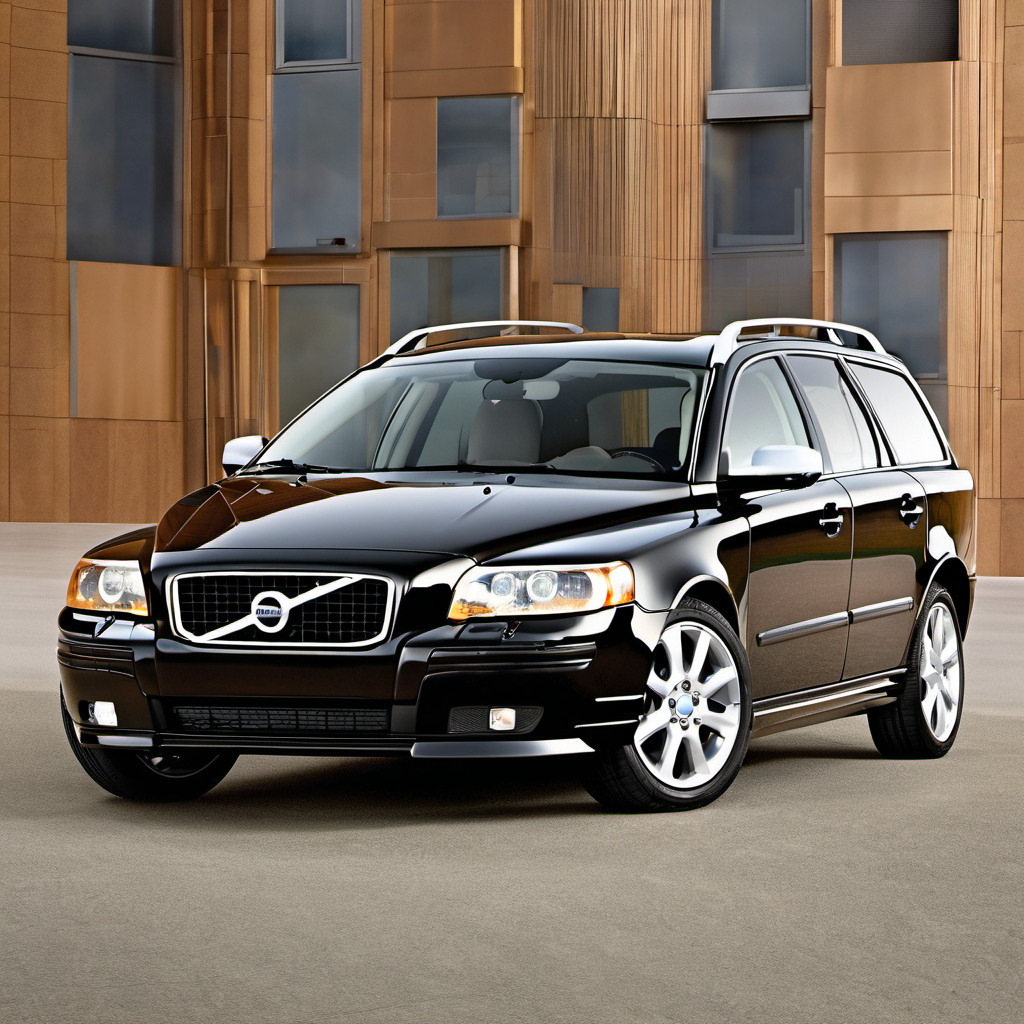
The 2006 Volvo V50 is a compact European wagon built on the Ford C1 platform — shared with the Mazda 3 and Ford Focus of the same era. It slots below the V70 in Volvo's lineup and was aimed at buyers who wanted European practicality, refinement, and safety in a smaller footprint. The T5 AWD trim pairs a turbocharged 2.5-liter inline-5 with Haldex-based all-wheel drive, making it a genuinely capable year-round car for upper-Midwest winters. Inside, the V50 punches above its class with quality materials, supportive seats, and Volvo's signature safety DNA — side curtain airbags, WHIPS whiplash protection, and DSTC stability control are all standard. Cargo room is modest by wagon standards but clever for the segment. The driving experience is taut and composed, leaning more toward sport than comfort. The V50 is a rewarding car for the right owner — someone who keeps up with maintenance schedules and budgets for European parts prices. Neglect it and it becomes expensive quickly. Find a well-documented example and it can be a genuinely practical, fun, and safe daily driver.

Reliability
2/5
Verified data
Specs shown for V50 AWD — the most common configuration. Other trims may vary in engine, drivetrain, or fuel economy. Sign in to see your vehicle's exact specs.
Engine
[object Object]
Drivetrain
AWD
Fuel
Premium gasoline
MPG
17 city / 24 hwy / 20 combined
Seats
Doors
Body
Small Station Wagons

Overview

AI-curated

The 2006 Volvo V50 is a compact European wagon built on the Ford C1 platform — shared with the Mazda 3 and Ford Focus of the same era. It slots below the V70 in Volvo's lineup and was aimed at buyers who wanted European practicality, refinement, and safety in a smaller footprint. The T5 AWD trim pairs a turbocharged 2.5-liter inline-5 with Haldex-based all-wheel drive, making it a genuinely capable year-round car for upper-Midwest winters. Inside, the V50 punches above its class with quality materials, supportive seats, and Volvo's signature safety DNA — side curtain airbags, WHIPS whiplash protection, and DSTC stability control are all standard. Cargo room is modest by wagon standards but clever for the segment. The driving experience is taut and composed, leaning more toward sport than comfort. The V50 is a rewarding car for the right owner — someone who keeps up with maintenance schedules and budgets for European parts prices. Neglect it and it becomes expensive quickly. Find a well-documented example and it can be a genuinely practical, fun, and safe daily driver.

Known for
  • Strong Volvo safety equipment as standard
  • Engaging turbocharged inline-5 with strong mid-range torque
  • Compact exterior with a usable cargo area
  • Premium interior materials and driver-focused ergonomics
  • AWD traction in poor-weather conditions
Best for
  • Small families or couples who want wagon practicality without a large footprint
  • Wisconsin winter commuters who want AWD in a car-based platform
  • Enthusiasts who appreciate European driving dynamics
  • Buyers who prioritize safety ratings and equipment
Watch for
  • Higher-than-average maintenance and repair costs for a compact car
  • Requires premium fuel — adds up over time
  • ETM (Electronic Throttle Module) failures on older examples
  • Haldex AWD coupling needs regular fluid service or it fails silently
  • Parts availability narrowing as the car ages — some items dealer-only or imported

Common issues by mileage

6 known

Electronic Throttle Module (ETM) failure

high
Typically appears
60–120k mi
Estimated repair
$400 – $900

VVT/CVVT solenoid and camshaft timing faults

medium
Typically appears
80–130k mi
Estimated repair
$300 – $800

Haldex AWD rear coupling failure from neglected fluid service

medium
Typically appears
60–100k mi
Estimated repair
$500 – $1,800

Turbocharger boost control and bypass valve issues

medium
Typically appears
90–150k mi
Estimated repair
$200 – $1,200

Oxygen sensor and heater circuit failures

medium
Typically appears
70–120k mi
Estimated repair
$150 – $450

Engine oil sludge buildup (neglected oil changes)

high
Typically appears
50–100k mi
Estimated repair
$800 – $3,000

Maintenance schedule

  1. 1
    Every 5,000 miles (do not stretch to OEM long-life intervals on used examples) Engine oil and filter change — full synthetic 0W-30 or 5W-30

    The B5254T engine is prone to severe sludge when oil changes are deferred. On a used V50 with unknown history, treat it as a 5k car. Sludge repair can run $1,000–$3,000.

  2. 2
    Every 30,000 miles or every 2 years Haldex AWD fluid service

    The Haldex coupling uses its own dedicated oil. It is not part of the transmission service. Skipping it causes the coupling to wear out, killing rear-axle engagement silently until the unit fails.

  3. 3
    Every 30,000 miles Spark plug replacement

    The turbocharged I5 is hard on plugs. Worn plugs cause misfires and can trigger VVT codes as the ECU tries to compensate for rough combustion.

  4. 4
    Every 60,000 miles or at first signs of noise/cracking Serpentine belt and tensioner inspection

    Wisconsin cold cycles cause belt materials to crack faster. A snapped belt stops the alternator and power steering simultaneously.

  5. 5
    Every 2 years regardless of mileage Brake fluid flush

    DOT 4 fluid absorbs moisture over time, lowering boiling point — critical for repeated hard braking in hilly terrain or panic stops on icy roads.

  6. 6
    Every 4 years / 60,000 miles Coolant system inspection and thermostat check

    The turbocharged engine runs hot under load. A failing thermostat or low coolant causes heat soak that accelerates sludge formation and can warp the head.

  7. 7
    Every 15,000–20,000 miles Cabin and engine air filter replacement

    A dirty air filter reduces turbo performance and fuel economy. Wisconsin road salt also clogs cabin filters faster than drier climates.

  8. 8
    Every fall before winter season Battery load test

    The V50's electronics (DSTC, TWICE, climate control) draw heavy standby current. A marginal battery that starts fine in October will strand you at -10°F in January.

Always defer to the manufacturer's service manual for warranty-mandated intervals.

Cost of ownership

Annual maintenance
$900 – $2,200
Fuel
Requires premium gasoline. At current upper-Midwest prices and ~15,000 miles/year, expect $2,200–$2,800 annually depending on driving mix.
Insurance
Typically moderate — the V50 is a low-theft compact wagon with strong safety ratings, which helps. Expect $900–$1,400/year for a typical adult driver in the Lake Geneva area.

The V50 is inexpensive to buy used but not cheap to own. Annual maintenance on a well-kept example runs $900–$1,200; a car that needs catch-up work (Haldex fluid, spark plugs, oil service) can push $2,000+ in year one. Parts are more expensive than domestic equivalents and some require ordering from Volvo or specialty suppliers. Budget for higher costs and you'll enjoy the car; underestimate them and it will frustrate you.
Seasonal care

Lake Geneva, WI
Winter
  • Load-test the battery every October — the V50's electronics draw significant standby current and a weak battery will fail hard in sub-zero temps.
  • Switch to a full synthetic 0W-30 oil if you haven't already; it flows immediately at cold start, which is when turbocharged engines see the most wear.
  • Service the Haldex AWD fluid before winter if it hasn't been done recently — AWD engagement depends on it, and you want to know it works before you need it on ice.
  • Use a winter-rated washer fluid rated to at least -30°F. Lake Geneva road salt spray will overwhelm a summer-formula fluid within days.
  • Inspect and replace wiper blades with winter-style beam blades — the V50's curved rear glass is particularly prone to streaking with worn blades.
  • Flush brake fluid if it's been more than two years — wet fluid has a lower boiling point and reduced effectiveness in cold-temperature emergency stops.
Summer
  • Check tire pressure monthly — temperatures swinging from 40°F nights to 90°F days change pressure by 4–6 PSI, affecting handling and wear.
  • Inspect the intercooler and its hoses for cracks after winter — road salt and freeze/thaw cycles degrade rubber boost hoses that feed the turbo.
  • Run the A/C system early in the season to check for refrigerant loss or compressor noise before you need it on a 95°F day.
  • Check coolant level and condition — a lean or degraded coolant mix under summer heat loads accelerates the sludge problem in the turbocharged engine.
  • Inspect the undercarriage for salt-related rust on brake lines, fuel lines, and the Haldex unit mounting hardware after the first warm wash of the year.

Comparable vehicles

If you're shopping for one

Red flags
  • No oil change records or evidence of very long oil change intervals — sludge damage may already be done.
  • Any smoke from the exhaust on startup or under boost — could indicate turbo seal failure or internal engine wear.
  • Haldex AWD that has never been serviced on a high-mileage car — a worn coupling is $500–$1,800 to fix.
  • Check engine light present at time of sale — scan for VVT/camshaft codes before walking away or factor repair into price.
  • Heavy rust on the rear subframe or trailing arms — structural corrosion is a safety issue and can be a total-loss repair on an older Volvo.
  • Mismatched or heavily worn tires across axles — indicates either AWD neglect or the previous owner running the system improperly balanced.
What to inspect
  • Pull the oil cap and look inside for brown sludge or mayonnaise-like deposits — a sludged engine is a serious red flag on this model.
  • Ask for proof of Haldex AWD fluid changes — if the owner has no records, budget for an immediate service and inspect the coupling for wear.
  • On a test drive, confirm smooth turbo spool with no hesitation or surging; ETM issues often show up as stumbling throttle response, especially from a stop.
  • Check for any camshaft or VVT warning lights (P0012/P0015 codes) with an OBD2 scanner — these indicate timing or oil delivery problems.
  • Inspect the undercarriage carefully for rust on brake lines, fuel lines, and the rear subframe — used Wisconsin examples can have significant salt corrosion.
  • Check that all electronics work: DSTC light extinguishes after start, climate control cycles properly, and power windows/mirrors operate without hesitation.
AI profile generated 24 days ago · claude-sonnet-4-6 · v2.