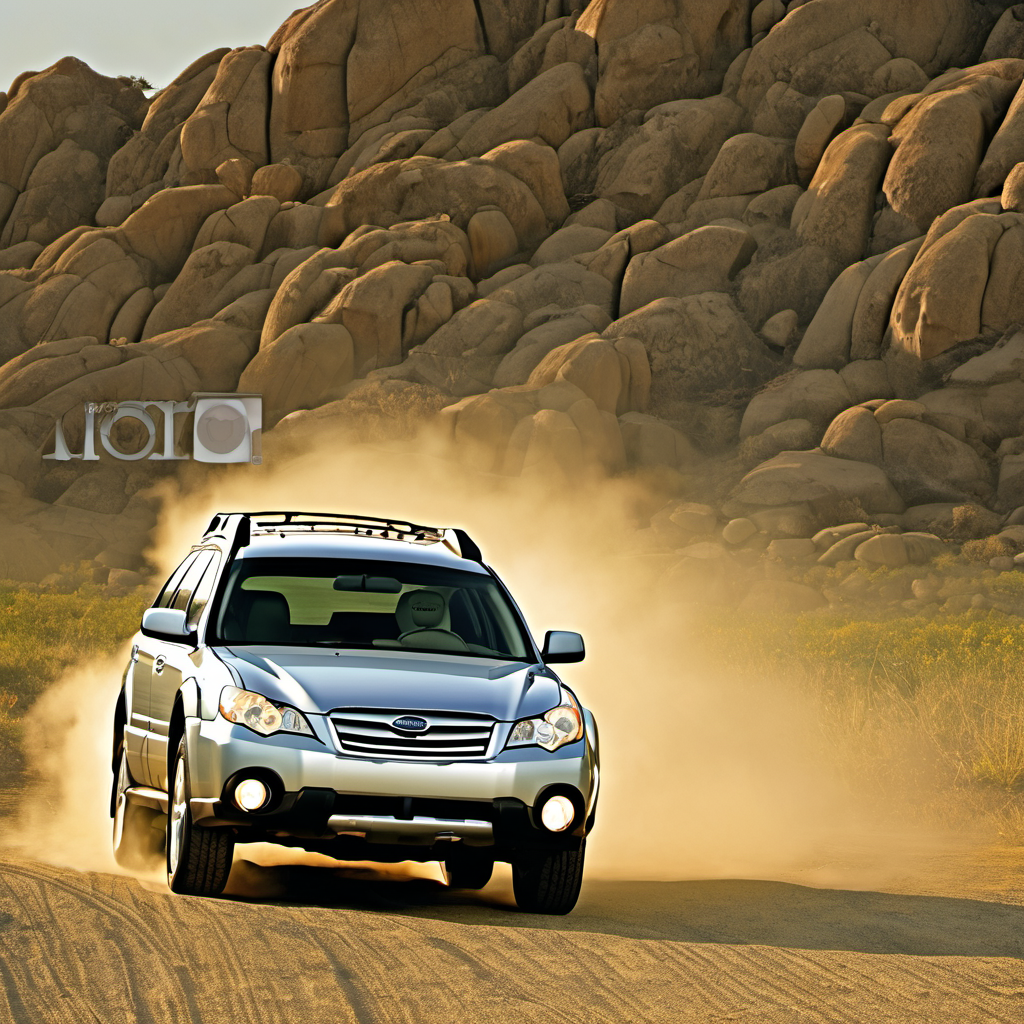
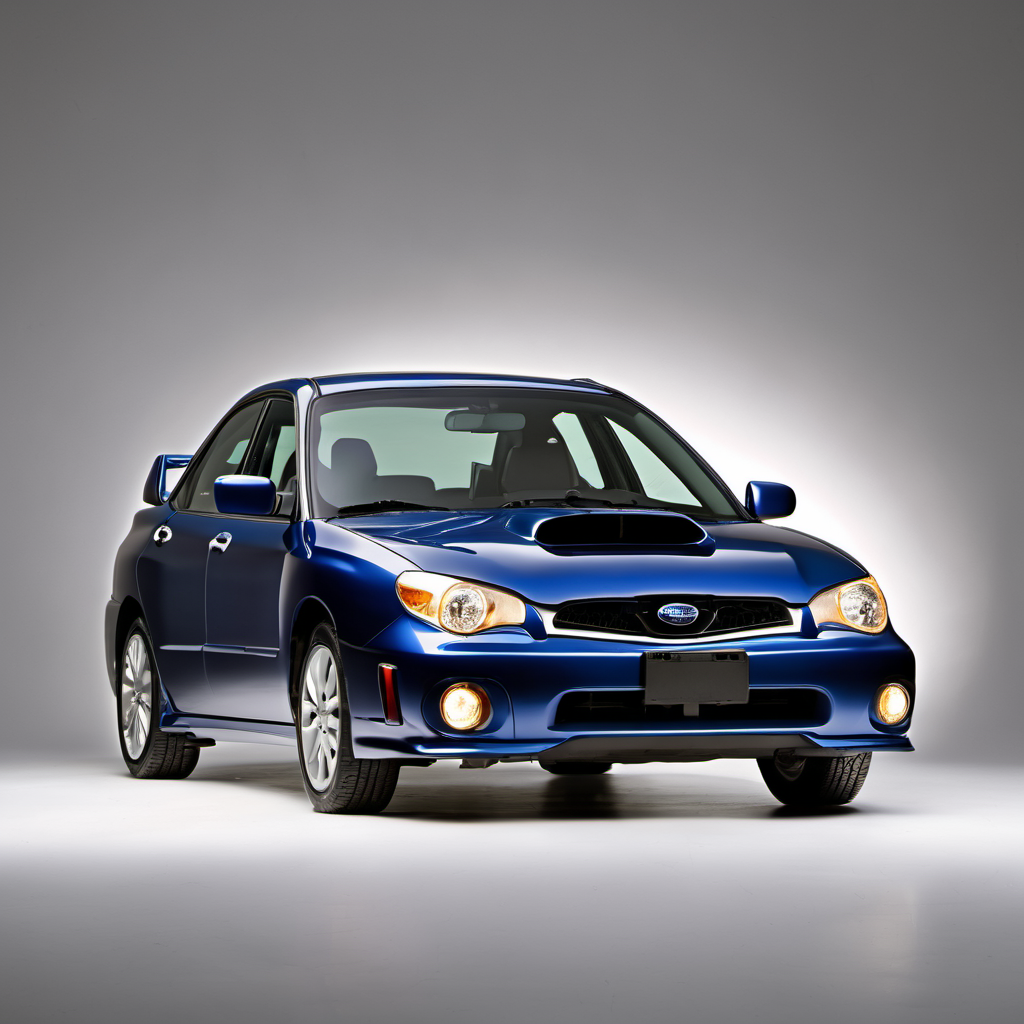
2006 Subaru Outback Sedan

2006 Subaru

OutbackSedan

2.5L H4 (Boxer) · Sedan

The 2006 Subaru Outback Sedan (also marketed as the Outback Sport in some trims) is built on the Impreza platform rather than the Legacy platform used by the wagon version — making it notably more compact. It pairs Subaru's standard symmetrical all-wheel drive with a raised ride height and added body cladding, giving it a crossover-like feel in a smaller, more maneuverable package. For Wisconsin drivers, the full-time AWD and respectable ground clearance make it a genuinely capable winter commuter. Under the hood, the 2006 Outback Sedan uses Subaru's 2.5L naturally aspirated flat-four (EJ253), paired with either a 5-speed manual or a 4-speed automatic transmission. It's not a fast car, but it's honest and predictable. The Subaru boxer engine sits low in the chassis, helping handling balance — but it also comes with well-documented head gasket vulnerabilities that any prospective buyer must treat as a near-certainty on a used example at this age. At nearly 20 years old, the 2006 Outback Sedan is deep into used-car territory. Examples in good shape are worth owning, but only after a thorough pre-purchase inspection focused on the cooling system, head gaskets, and underbody rust — all three are make-or-break items on a Wisconsin car of this vintage.

Reliability
3/5
Verified data
Engine
2.5L H4 (Boxer)
Drivetrain
AWD
Fuel
Gasoline
MPG
22 city / 28 hwy / 24 combined
Seats
5
Doors
4
Body
Sedan
MSRP
$19,995

Overview

AI-curated

The 2006 Subaru Outback Sedan (also marketed as the Outback Sport in some trims) is built on the Impreza platform rather than the Legacy platform used by the wagon version — making it notably more compact. It pairs Subaru's standard symmetrical all-wheel drive with a raised ride height and added body cladding, giving it a crossover-like feel in a smaller, more maneuverable package. For Wisconsin drivers, the full-time AWD and respectable ground clearance make it a genuinely capable winter commuter. Under the hood, the 2006 Outback Sedan uses Subaru's 2.5L naturally aspirated flat-four (EJ253), paired with either a 5-speed manual or a 4-speed automatic transmission. It's not a fast car, but it's honest and predictable. The Subaru boxer engine sits low in the chassis, helping handling balance — but it also comes with well-documented head gasket vulnerabilities that any prospective buyer must treat as a near-certainty on a used example at this age. At nearly 20 years old, the 2006 Outback Sedan is deep into used-car territory. Examples in good shape are worth owning, but only after a thorough pre-purchase inspection focused on the cooling system, head gaskets, and underbody rust — all three are make-or-break items on a Wisconsin car of this vintage.

Known for
  • Symmetrical full-time AWD that genuinely helps in snow and ice
  • Boxer engine layout for low center of gravity
  • Raised ride height over a standard Impreza
  • Strong long-term owner loyalty
  • Practical all-season utility in a compact footprint
Best for
  • Winter commuters who want AWD without an SUV's bulk
  • Budget-conscious buyers comfortable with DIY or independent-shop maintenance
  • Owners who do their own oil changes and basic upkeep
  • Light off-road or unpaved-road use
Watch for
  • Head gasket failure — extremely common on the 2.5L EJ253 at this age and mileage
  • Underbody and frame rail rust from Wisconsin road salt exposure
  • Automatic transmission wear if fluid has never been serviced
  • Timing belt service history (interference engine — skipped service is an engine killer)
  • Coolant consumption or overheating as early signs of head gasket issues

Common issues by mileage

6 known

Head Gasket Failure (EJ253 2.5L)

high
Typically appears
80–150k mi
Estimated repair
$1,400 – $2,200

Timing Belt & Water Pump Service (Interference Engine)

high
Typically appears
60–105k mi (every 105k or 7 yrs)
Estimated repair
$500 – $900

Oxygen Sensor / O2 Heater Circuit Faults

medium
Typically appears
80–150k mi
Estimated repair
$150 – $400

Underbody & Subframe Rust

high
Typically appears
Any mileage on upper-Midwest cars
Estimated repair
$200 – $2,500

Automatic Transmission Shudder / Slipping (neglected fluid)

medium
Typically appears
100–180k mi
Estimated repair
$200 – $3,500

Maintenance schedule

  1. 1
    Every 105,000 miles or 7 years, whichever comes first Timing belt, water pump, and tensioner replacement

    This is an interference engine — a snapped belt destroys the engine. Verify the last service date before purchase or driving. At this vehicle's age, it has almost certainly been due at least once.

  2. 2
    Every 3,000–5,000 miles Oil and filter change using the correct viscosity (5W-30)

    The EJ253 head gaskets are sensitive to heat and oil dilution. Fresh, full-level oil is the cheapest head gasket insurance you have. Never let it run low.

  3. 3
    Every 30,000 miles or at any sign of overheating / coolant loss Coolant flush and inspection

    Degraded coolant accelerates head gasket corrosion on the EJ series. Check for sweet smell, bubbles in the reservoir, or milky residue under the oil cap.

  4. 4
    Every 30,000 miles — do NOT skip Automatic transmission fluid change (if equipped)

    Subaru's 4-speed automatic from this era is sensitive to degraded fluid. Many used examples have never had it serviced. Fresh fluid can extend the transmission significantly; neglect causes expensive shudder and slipping.

  5. 5
    Every 30,000 miles AWD differential and front/rear gear oil service

    The center differential and rear differential oils are often overlooked. Fresh gear oil protects the AWD system that makes this car worth owning in winter.

  6. 6
    Annually, ideally before winter Underbody rust inspection and treatment

    Wisconsin road salt is aggressive on Subaru unibodies and subframe mounting points. Early treatment with rust-inhibiting coating is far cheaper than structural rust repair.

  7. 7
    Every 30,000 miles (copper) or per manufacturer spec Spark plug replacement

    The boxer engine's plug access requires more labor than most cars. Don't skip this — worn plugs stress the ignition coils, which are also a failure point on this platform.

  8. 8
    Every 2 years Brake fluid flush

    Subaru recommends this interval and it matters in Wisconsin winters — moisture-saturated fluid has a lower boiling point and can cause spongy pedal in repeated hard stops.

Always defer to the manufacturer's service manual for warranty-mandated intervals.

Cost of ownership

Annual maintenance
$700 – $1,800
Fuel
At ~24 MPG combined and typical upper-Midwest driving, expect roughly $1,800–$2,400/year at current gas prices depending on mileage driven.
Insurance
Typically $900–$1,400/year for a driver with a clean record in the Lake Geneva, WI area. Lower than average for its class due to modest MSRP and low theft rates.

Routine annual maintenance on a well-kept example runs $700–$1,100. Budget toward the higher end ($1,400–$1,800+) if the timing belt, head gaskets, or transmission fluid are overdue — all three are common on high-mileage 2006 examples. Head gasket repair alone can add $1,400–$2,200 as a one-time expense. A car that has already had these items addressed is a significantly better ownership proposition.
Seasonal care

Lake Geneva, WI
Winter
  • Install a dedicated set of winter tires — the AWD helps you go, but it doesn't help you stop; winter tires fix that
  • Test the battery before November; cold cranking amps drop sharply below 20°F and this car's age makes battery failure likely
  • Use full-strength washer fluid rated to at least -20°F; the reservoir drains fast with salt spray on Wisconsin roads
  • Flush and refill with fresh coolant if it hasn't been done recently — old coolant has a higher freeze point and corrodes the head gaskets
  • Rinse the underbody every 1–2 weeks during salting season; Subaru unibodies rust aggressively at pinch welds and subframe mounts
  • Check tire pressure monthly — pressures drop roughly 1 PSI for every 10°F drop in temperature
Summer
  • Watch the temperature gauge closely — head gasket issues often surface first during hot weather or stop-and-go driving
  • Inspect and recharge the A/C system if cooling is weak; the evaporator and compressor on an 18-year-old car may need attention
  • Check tire pressure after heat builds — overinflation in summer can reduce traction and cause uneven wear
  • Inspect radiator hoses for cracking or softness; summer heat accelerates rubber degradation on an aging cooling system
  • Park in shade when possible to reduce heat soak — the plastic trim and older seals on this generation crack with sustained UV exposure

Comparable vehicles

If you're shopping for one

Red flags
  • No cooling system or timing belt service history on a car over 100k miles
  • Milky oil or coolant with oily residue — indicates internal head gasket failure, not just seepage
  • Rust holes or soft spots at the rear subframe mounts — this can be a safety and structural write-off
  • White exhaust smoke that doesn't clear after a few minutes of warm-up
  • Transmission shudder or slipping at highway speeds — expensive repair on a car of this value
  • A seller who is vague about why the car is being sold or rushes the inspection
What to inspect
  • Pull the oil cap and look for creamy or frothy residue — a classic sign of internal head gasket failure
  • Check the coolant reservoir for oil sheen, bubbles, or a sweet burnt smell at operating temperature
  • Pressure-test the cooling system — external head gasket seepage often shows as dried white residue around the cylinder head seams
  • Get a cold-start read on the exhaust — white steam that continues after warm-up is a red flag
  • Crawl under and inspect the subframe mounting points, pinch welds, and rear trailing arm attachment points for rust perforation
  • Verify timing belt service date and mileage with receipts — no paperwork means assume it's overdue
  • Road-test the automatic transmission through all gear ranges; shudder, slipping, or delayed engagement indicates fluid neglect
  • Check for even tire wear across all four corners — uneven wear can indicate AWD system wear or alignment issues
AI profile generated 24 days ago · claude-sonnet-4-6 · v2.