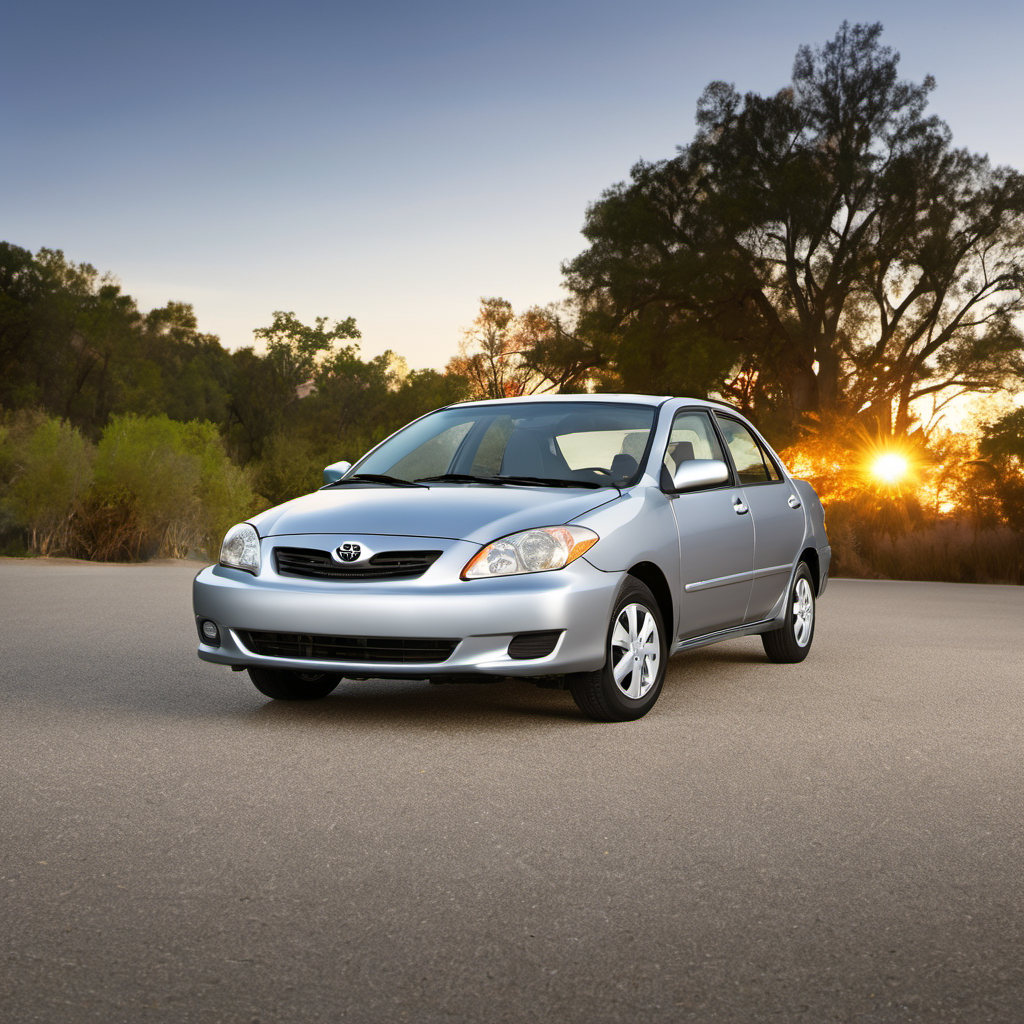
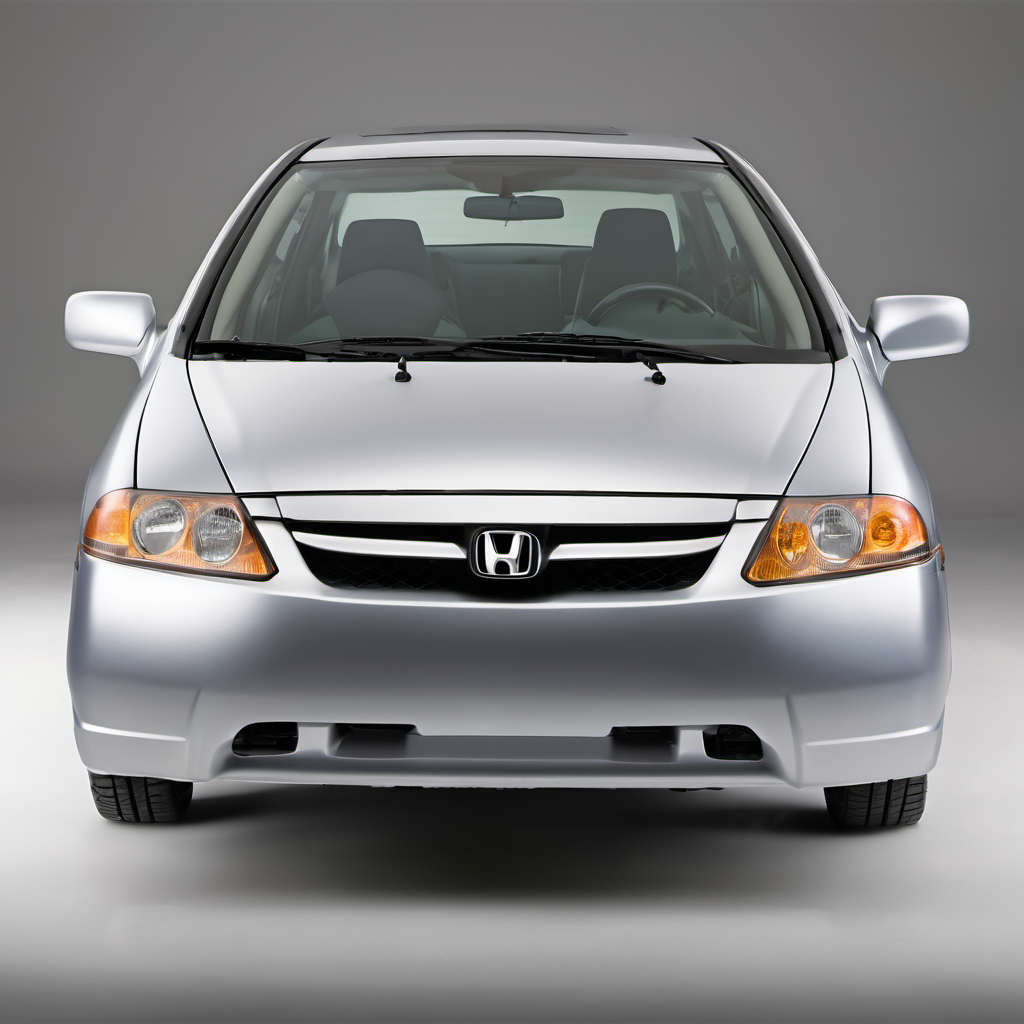
2006 Toyota Corolla Sedan

2006 Toyota

CorollaSedan

Sedan

The 2006 Toyota Corolla is a 9th-generation (E130) compact sedan that built Toyota's reputation for no-drama, long-haul reliability. Powered by a 1.8L 1ZZ-FE four-cylinder paired to either a 5-speed manual or 4-speed automatic, it's a simple car by design — and that simplicity is part of why so many are still on the road past 200,000 miles. At this age (18+ years old), the Corolla's biggest enemies are deferred maintenance and rust — not mechanical complexity. The 1ZZ-FE engine does have a known oil consumption quirk, and Wisconsin road salt will attack the undercarriage if it hasn't been addressed. But a clean, well-maintained example is still one of the most cost-effective used cars you can buy. This is a commuter's car first and foremost. It won't wow you with power or cargo room, but it will start every single morning in January and sip fuel all week long.

Reliability
4/5
Verified data
Specs shown for Corolla — the most common configuration. Other trims may vary in engine, drivetrain, or fuel economy. Sign in to see your vehicle's exact specs.
Engine
[object Object]
Drivetrain
FWD
Fuel
Gasoline
MPG
26 city / 35 hwy / 29 combined
Seats
Doors
Body
Compact Cars

Overview

AI-curated

The 2006 Toyota Corolla is a 9th-generation (E130) compact sedan that built Toyota's reputation for no-drama, long-haul reliability. Powered by a 1.8L 1ZZ-FE four-cylinder paired to either a 5-speed manual or 4-speed automatic, it's a simple car by design — and that simplicity is part of why so many are still on the road past 200,000 miles. At this age (18+ years old), the Corolla's biggest enemies are deferred maintenance and rust — not mechanical complexity. The 1ZZ-FE engine does have a known oil consumption quirk, and Wisconsin road salt will attack the undercarriage if it hasn't been addressed. But a clean, well-maintained example is still one of the most cost-effective used cars you can buy. This is a commuter's car first and foremost. It won't wow you with power or cargo room, but it will start every single morning in January and sip fuel all week long.

Known for
  • Exceptional long-term reliability when maintained
  • Frugal fuel economy for a non-hybrid
  • Low repair frequency and affordable parts
  • Comfortable highway cruiser for its class
  • Resale value that holds better than most competitors
Best for
  • Daily commuters wanting low operating costs
  • First-time car owners or college students
  • High-mileage drivers who prioritize dependability over features
  • Buyers seeking a used car with proven 200k+ potential
Watch for
  • Oil consumption on 1ZZ-FE engines — check level every fill-up on high-mileage examples
  • Undercarriage and frame rail rust from Wisconsin road salt exposure
  • Automatic transmission hesitation or harsh shifts if fluid has never been changed
  • Oxygen sensor failures triggering check engine lights on aging emissions hardware
  • Worn struts and strut mounts — very common past 100k miles

Common issues by mileage

6 known

Engine oil consumption (1ZZ-FE)

high
Typically appears
80k–200k+ mi
Estimated repair
$50 – $300

Oxygen sensor failure (upstream/downstream)

high
Typically appears
100k–180k mi
Estimated repair
$150 – $350

Front strut and strut mount wear

high
Typically appears
90k–150k mi
Estimated repair
$300 – $600

Camshaft position / VVT-i oil control valve issue

medium
Typically appears
100k–180k mi
Estimated repair
$150 – $500

Undercarriage and subframe rust (road salt)

high
Typically appears
Any mileage on upper-Midwest cars
Estimated repair
$200 – $2,000

Automatic transmission harsh shift / fluid degradation

medium
Typically appears
80k–150k mi
Estimated repair
$100 – $400

Maintenance schedule

  1. 1
    Every 5,000 miles — sooner if oil consumption is detected Engine oil and filter change

    The 1ZZ-FE tolerates neglect poorly once it starts consuming oil. Staying on top of changes and checking the level at every fill-up is the single best way to protect this engine long-term.

  2. 2
    Every 30,000 miles on used/unknown-history vehicles; every 60,000 miles if history is confirmed clean Automatic transmission fluid change

    Toyota's 'lifetime' fluid claim doesn't hold up in real-world driving. Fresh fluid prevents the harsh shifting and solenoid wear common on these transmissions past 100k.

  3. 3
    Every 50,000 miles or 5 years Coolant flush

    Aged coolant loses its corrosion inhibitors and can attack the aluminum head and water pump housing — expensive repairs that are easy to prevent.

  4. 4
    Every 60,000 miles (iridium plugs) Spark plug replacement

    Worn plugs on the 1ZZ-FE cause misfires and can slightly worsen oil consumption. Iridium plugs are OEM spec and last well when changed on schedule.

  5. 5
    Every 90,000 miles or at first check-engine light Oxygen sensor inspection

    Upstream O2 sensors affect fuel trim and mileage; downstream sensors monitor catalyst health. On an 18-year-old car, proactive replacement prevents multiple return trips.

  6. 6
    Every 60,000 miles or any time you feel shimmy, hear clunking, or notice uneven tire wear Front strut and strut mount inspection

    These are a known wear item on the E130 Corolla. Worn strut mounts are a common source of a 'clunk' over bumps in winter — the cold makes deteriorated rubber mounts very noisy.

  7. 7
    Every fall, before temperatures drop below freezing Battery load test

    A battery that tests fine in summer can fail to crank at -10°F. At 18+ years, many Corollas are on their second or third battery — verify condition before Wisconsin winter hits.

  8. 8
    Every fall; apply undercoating or rust inhibitor if bare metal is exposed Undercarriage inspection and rust treatment

    Lake Geneva roads are heavily salted. Inspect subframe mounting points, brake lines, and fuel lines for rust annually. Catching surface rust early is a $50 fix; ignoring it can become a $1,500+ structural repair.

Always defer to the manufacturer's service manual for warranty-mandated intervals.

Cost of ownership

Annual maintenance
$400 – $900
Fuel
At 29 MPG combined and ~12,000 miles/year, expect roughly $1,400–$1,700/year in fuel at current prices. The Corolla is one of the cheaper non-hybrid cars to fuel.
Insurance
Typically one of the least expensive sedans to insure — expect $900–$1,400/year for full coverage in southern Wisconsin depending on driver profile and coverage level.

This is a genuinely low-cost car to own. Routine maintenance is the main expense — parts are cheap and widely available. The risk years are when deferred maintenance catches up: a neglected transmission, a seized caliper from rust, or oil starvation can turn a $500 repair into a $2,500 one fast. Stay ahead of the schedule and total annual costs stay modest.
Seasonal care

Lake Geneva, WI
Winter
  • Load-test the battery every October — cold cranking amps drop sharply below 20°F and an aging battery will leave you stranded in a parking lot in January.
  • Switch to winter-rated wiper blades and fill the reservoir with washer fluid rated to at least -20°F. Standard fluid freezes in the lines and on the windshield at Wisconsin temps.
  • Inspect brake lines and fuel lines for rust-through before winter — salt accelerates any existing corrosion and a brake line failure in winter is dangerous.
  • Check tire pressure weekly. For every 10°F drop in temperature, tires lose roughly 1 PSI. Under-inflated tires reduce traction on ice and snow.
  • Consider dedicated winter tires if you park outside or drive rural roads. The Corolla's FWD is adequate but not exceptional in deep snow — traction control cannot overcome a worn all-season tire.
  • Flush and refill coolant if it's been more than 5 years — degraded antifreeze loses freeze-point protection and can allow ice formation in the cooling system at extreme temps.
Summer
  • Check tire pressure after the first hot week — tires gain roughly 1 PSI per 10°F increase and can run over-inflated in July, reducing contact patch and ride quality.
  • Inspect the A/C system for refrigerant leaks if cooling seems weak. On an 18-year-old car, the cabin air filter (behind the glove box) is often long overdue and restricts airflow significantly.
  • Watch the temperature gauge on hot days, especially in stop-and-go traffic. Verify coolant level and that the radiator fan is cycling on — a weak thermostat or failing fan can cause overheating.

Comparable vehicles

If you're shopping for one

Red flags
  • Any oil on the underside of the engine or around the valve cover — indicates seal leaks that worsen with age.
  • Rust scaling on the subframe, brake lines, or floor pan — surface rust is cosmetic, but flaking, pitting rust on structural metal or brake lines is a safety issue and can be a money pit.
  • A just-cleaned engine bay on an otherwise dirty car — sellers sometimes clean to hide leaks.
  • Transmission that hesitates, slips, or clunks on a cold start — fluid neglect on the 4-speed automatic is hard to reverse once damage is done.
  • Any record of overheating in the history — the 1ZZ-FE head gasket does not tolerate overheating and repair runs $900–$1,800.
What to inspect
  • Pull the oil dipstick cold — milky or frothy oil indicates coolant contamination (head gasket). Dark, low oil on a warm engine confirms active oil consumption.
  • Get under the car and look at the subframe mounting points, rear trailing arm brackets, and brake lines. On a Wisconsin car this age, these are the most likely rust failure points.
  • Drive at highway speed and check for shimmy or steering pull — worn struts and uneven tire wear are common and expensive to ignore.
  • With the engine warm, check that the A/C blows cold and the heater heats — HVAC actuators and blend doors are inexpensive but annoying to diagnose if ignored.
  • Check for a check-engine light or recent clear (use an OBD-II scanner if possible) — oxygen sensor codes are common at this age and straightforward, but VVT-i codes (P0012) suggest oil maintenance issues worth investigating.
AI profile generated 1 hr ago · claude-sonnet-4-6 · v2.