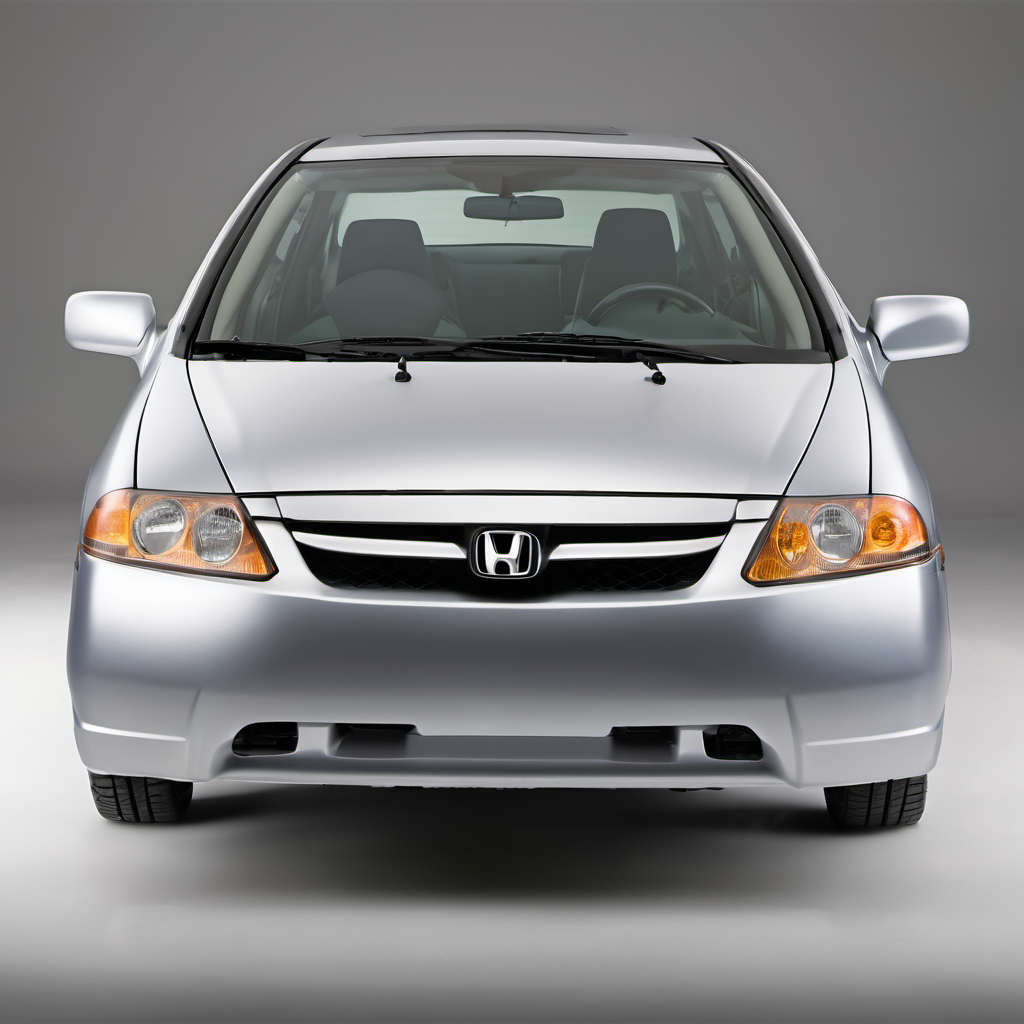
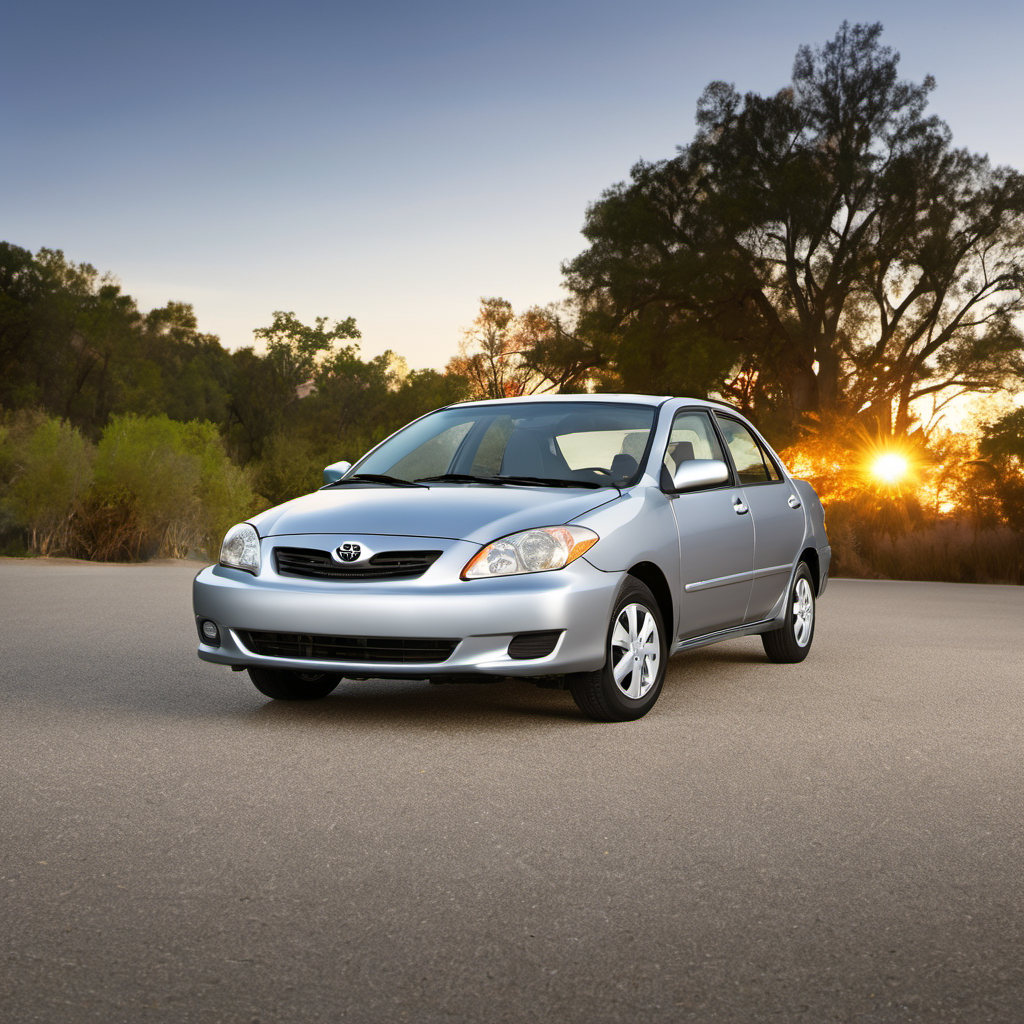
2006 Honda Civic Sedan

2006 Honda

CivicSedan

Sedan

The 2006 Honda Civic is part of the eighth generation (2006–2011) — a complete redesign that brought a larger, more refined cabin, improved fuel economy, and a split-level instrument cluster that became a Civic signature. It was an immediate hit and quickly re-established the Civic as the benchmark compact sedan in America. Powered by Honda's R18A1 1.8L four-cylinder mated to a smooth 5-speed automatic or 5-speed manual, the '06 Civic strikes a balance between peppy everyday driving and real-world fuel economy in the low 30s MPG. Build quality took a step up from the previous generation, and the chassis feels more planted than the outgoing 7th-gen. At this age (nearly 20 years old), most examples have well over 100k miles. The good news: these engines are legitimately tough and 200k+ odometers are common. The bad news: deferred maintenance, worn suspension bushings, and rust from road salt exposure are now the main concerns — especially on Wisconsin-driven examples.

Reliability
4/5
Verified data
Specs shown for Civic — the most common configuration. Other trims may vary in engine, drivetrain, or fuel economy. Sign in to see your vehicle's exact specs.
Engine
[object Object]
Drivetrain
FWD
Fuel
Gasoline
MPG
26 city / 36 hwy / 30 combined
Seats
Doors
Body
Subcompact Cars

Overview

AI-curated

The 2006 Honda Civic is part of the eighth generation (2006–2011) — a complete redesign that brought a larger, more refined cabin, improved fuel economy, and a split-level instrument cluster that became a Civic signature. It was an immediate hit and quickly re-established the Civic as the benchmark compact sedan in America. Powered by Honda's R18A1 1.8L four-cylinder mated to a smooth 5-speed automatic or 5-speed manual, the '06 Civic strikes a balance between peppy everyday driving and real-world fuel economy in the low 30s MPG. Build quality took a step up from the previous generation, and the chassis feels more planted than the outgoing 7th-gen. At this age (nearly 20 years old), most examples have well over 100k miles. The good news: these engines are legitimately tough and 200k+ odometers are common. The bad news: deferred maintenance, worn suspension bushings, and rust from road salt exposure are now the main concerns — especially on Wisconsin-driven examples.

Known for
  • Exceptional long-term reliability and 200k+ mile capability
  • Fuel-efficient 1.8L R18 engine
  • Distinctive split-level instrument cluster
  • Affordable parts and widespread independent-shop support
Best for
  • Daily commuters wanting low running costs
  • First-time or budget-conscious buyers
  • Owners who do their own maintenance
  • High-mileage commuters
Watch for
  • Rust on undercarriage and rear wheel wells on Midwest/salt-belt cars
  • Oil consumption in higher-mileage engines if maintenance was neglected
  • Worn front suspension components (ball joints, control arm bushings) past 100k
  • Aging automatic transmission fluid that's never been changed

Common issues by mileage

6 known

Front control arm bushing wear

high
Typically appears
80–130k mi
Estimated repair
$200 – $450

VTC (variable timing) actuator noise on cold start

medium
Typically appears
80–150k mi
Estimated repair
$250 – $550

Power window regulator failure (driver's side most common)

medium
Typically appears
60–120k mi
Estimated repair
$150 – $300

Rear wheel well rust / undercarriage corrosion

high
Typically appears
Any — accelerates past 80k mi on salt-belt cars
Estimated repair
$300 – $1,500

Brake master cylinder / brake booster degradation

low
Typically appears
100–160k mi
Estimated repair
$200 – $500

A/C condenser or evaporator leak

medium
Typically appears
100k+ mi
Estimated repair
$400 – $900

Maintenance schedule

  1. 1
    Every 5,000 miles or 6 months Engine oil & filter change

    Honda's R18A1 tolerates neglect poorly at higher mileage. Sticking to 5k intervals (not the oil life monitor's sometimes-stretched recommendations) keeps the VTC actuator and valve train clean.

  2. 2
    Every 30,000 miles Transmission fluid change (automatic)

    Honda ATF degrades and many owners skip this. Dark or burnt-smelling fluid accelerates clutch pack wear. Use Honda-spec ATF — third-party fluids can cause shudder.

  3. 3
    Every 60,000–90,000 miles Spark plugs (iridium OEM spec)

    Stock iridium plugs last a long time, but worn plugs increase misfires and fuel consumption. Use the OEM-spec iridium tip plugs — do not substitute copper.

  4. 4
    Every 60,000 miles or 7 years Serpentine belt & tensioner inspection

    Belt cracking is common on aged examples regardless of mileage. Tensioner pulley bearing failure can cause belt walk and sudden loss of charging and power steering.

  5. 5
    Every 5 years / 60,000 miles Coolant flush

    Honda's blue coolant has a longer life than generic green, but at this vehicle's age it's almost certainly due. Old coolant becomes acidic and attacks the water pump seal.

  6. 6
    Every 20,000 miles or annually Front & rear brake inspection

    Rear drum hardware (if equipped) corrodes quickly on salt-exposed cars. Check wheel cylinders for seeping brake fluid and drum surface for deep grooves.

  7. 7
    Every fall before road salt season Undercarriage rust inspection & treatment

    Rear subframe mounting points and rear wheel well seams are the first to rust through. Catching surface rust early and treating it costs far less than structural repairs.

  8. 8
    Every 15,000–20,000 miles Cabin air filter replacement

    Often overlooked. A clogged cabin filter reduces A/C and defrost performance — the latter is critical in Wisconsin winters.

Always defer to the manufacturer's service manual for warranty-mandated intervals.

Cost of ownership

Annual maintenance
$400 – $900
Fuel
At ~30 MPG combined and 12,000 miles/year, expect roughly $1,400–$1,700/year at current Midwest regular unleaded prices.
Insurance
Typically among the lowest in class — expect $900–$1,400/year for full coverage depending on driver profile and coverage limits.

The 2006 Civic is one of the cheapest-to-own used cars in its segment. Parts are widely available and inexpensive, labor hours are low due to the straightforward engine bay, and fuel costs are well below average. The main wildcard at this age is rust repair — a structurally compromised car can flip the economics quickly. Budget extra for a thorough pre-purchase undercarriage inspection.
Seasonal care

Lake Geneva, WI
Winter
  • Inspect the undercarriage and apply rust inhibitor to exposed metal before first salt exposure each season — the rear subframe and wheel arches are the Civic's Achilles heel in Wisconsin.
  • Swap to dedicated winter tires; the stock all-season tires perform poorly below 20°F on packed snow common to Lake Geneva roads.
  • Test the battery load before November — a battery over 4 years old is a cold-start risk at sub-zero temps; the Civic's 410–500 CCA OEM spec offers limited cold margin.
  • Fill the washer reservoir with -20°F or colder rated fluid and keep a spare jug in the trunk; the reservoir drains fast in heavy road-spray conditions.
  • Confirm the defroster (front and rear) is fully functional before freeze season — a cracked rear defroster grid is common on older glass.
  • Check coolant freeze protection with a test strip; if it hasn't been flushed in 5+ years, flush it now before temps drop.
Summer
  • Check tire pressure monthly — heat causes pressure to rise; over-inflation accelerates center tread wear and reduces wet-weather grip.
  • Inspect A/C performance early in the season; refrigerant leaks from aging condenser seams are common and a recharge without fixing the leak is money wasted.
  • Check coolant level and watch for signs of heat soak (rough idle when hot) — a marginal thermostat or partially clogged radiator shows itself in stop-and-go summer traffic.
  • Clean the pollen / debris from the cabin air filter after spring — high pollen loads in the region clog filters quickly and hurt A/C airflow.

Comparable vehicles

If you're shopping for one

Red flags
  • Any rust holes or severe scale rust on the undercarriage — structural repair costs can exceed the car's value
  • Persistent VTC rattle after warm-up, combined with P0012 or P0015 codes — indicates possible oil sludging from neglected oil changes
  • Transmission slipping, flaring between gears, or burnt-smelling ATF — a rebuild on this transmission runs $1,500–$2,500 at an independent shop
  • Oil consumption over 1 qt per 1,000 miles — check for blue exhaust smoke on hard acceleration
  • Missing or incomplete service records on a high-mileage example — maintenance history matters more than mileage on these engines
  • Collision repair to front or rear structure — frame straightening on a unibody this age creates long-term alignment and rust issues
What to inspect
  • Undercarriage — focus on rear subframe mounting points, floor pans, and rear wheel well seams for rust perforation
  • VTC actuator: start the engine cold and listen for a rattling noise in the first 2–5 seconds; it should go away immediately — if it lingers, budget for actuator replacement
  • Scan for DTCs before buying, especially P0012/P0015 (VTC timing codes) which can indicate oil maintenance neglect
  • Transmission shift quality: all 5 gears should engage smoothly with no hesitation or hunting; harsh 1–2 shifts suggest low or degraded ATF
  • Front suspension: push down on each corner and listen for clunking; check for worn control arm bushings and ball joint play during a test drive over rough pavement
  • A/C performance: run it on max cold and confirm it blows below 45°F within 2 minutes on a warm day
AI profile generated 46 min ago · claude-sonnet-4-6 · v2.