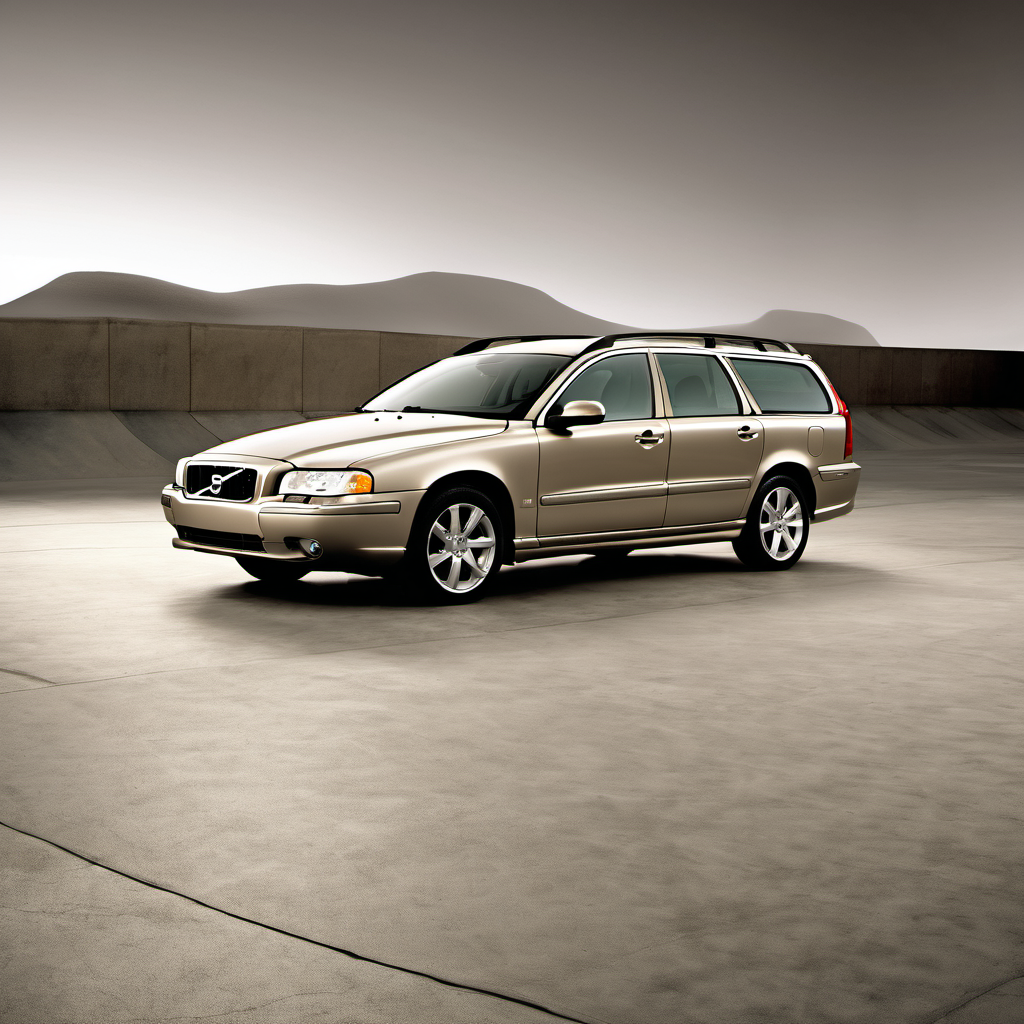
2005 Volvo V70 Wagon

2005 Volvo

V70Wagon

Wagon

The 2005 Volvo V70 is a mid-size European wagon built on Volvo's P2 platform, shared with the S60 and XC70. It pairs genuine cargo utility with a refined, composed ride — a combination that made it a favorite among families who didn't want a minivan or SUV. The turbocharged 2.5L inline-five is smooth and characterful, delivering enough punch for highway merging and confident passing. Volvo's reputation for safety is well-earned here. The 2005 V70 came standard with front, side, and curtain airbags, DSTC (Dynamic Stability and Traction Control), and Volvo's WHIPS whiplash protection system. AWD (branded as AWD or S/AWD on some trims) adds meaningful all-weather confidence — a real asset in Wisconsin winters. Ownership past 100,000 miles requires attention and budget. This is not a set-it-and-forget-it vehicle. Parts are pricier than domestic equivalents, some jobs require Volvo-specific tooling, and the ETM (electronic throttle module) and oil sludge concerns from earlier model years still lurk in neglected examples. Buy a well-documented one and maintain it properly, and it will reward you with a premium, practical experience for years.

Reliability
3/5
Verified data
Specs shown for V70 AWD — the most common configuration. Other trims may vary in engine, drivetrain, or fuel economy. Sign in to see your vehicle's exact specs.
Engine
[object Object]
Drivetrain
AWD
Fuel
Premium gasoline
MPG
17 city / 24 hwy / 20 combined
Seats
Doors
Body
Midsize Station Wagons

Overview

AI-curated

The 2005 Volvo V70 is a mid-size European wagon built on Volvo's P2 platform, shared with the S60 and XC70. It pairs genuine cargo utility with a refined, composed ride — a combination that made it a favorite among families who didn't want a minivan or SUV. The turbocharged 2.5L inline-five is smooth and characterful, delivering enough punch for highway merging and confident passing. Volvo's reputation for safety is well-earned here. The 2005 V70 came standard with front, side, and curtain airbags, DSTC (Dynamic Stability and Traction Control), and Volvo's WHIPS whiplash protection system. AWD (branded as AWD or S/AWD on some trims) adds meaningful all-weather confidence — a real asset in Wisconsin winters. Ownership past 100,000 miles requires attention and budget. This is not a set-it-and-forget-it vehicle. Parts are pricier than domestic equivalents, some jobs require Volvo-specific tooling, and the ETM (electronic throttle module) and oil sludge concerns from earlier model years still lurk in neglected examples. Buy a well-documented one and maintain it properly, and it will reward you with a premium, practical experience for years.

Known for
  • Class-leading passive safety and airbag coverage
  • Smooth, torquey 2.5L turbocharged inline-five
  • Spacious, versatile wagon cargo area
  • Composed, car-like ride with AWD all-weather capability
  • Premium Scandinavian interior quality
Best for
  • Families wanting wagon practicality without an SUV
  • Wisconsin winters with AWD traction
  • Buyers who prioritize safety ratings
  • Highway commuters needing cargo flexibility
  • Drivers who enjoy a refined European driving character
Watch for
  • Oil sludge buildup in neglected engines — always check maintenance records
  • Expensive independent repair costs compared to domestic wagons
  • ETM (electronic throttle module) failure on high-mileage examples
  • Turbo and VVT-related issues if oil changes were skipped
  • Sunroof drains clogging and causing water intrusion in the cabin

Common issues by mileage

6 known

Engine Oil Sludge Buildup

high
Typically appears
80–150k mi
Estimated repair
$500 – $2,500

VVT / Camshaft Timing Solenoid Failure

high
Typically appears
90–160k mi
Estimated repair
$250 – $900

Turbocharger Bypass (Wastegate) Valve Failure

medium
Typically appears
100–180k mi
Estimated repair
$200 – $700

Oxygen Sensor / O2 Heater Circuit Failure

medium
Typically appears
80–140k mi
Estimated repair
$150 – $450

Electronic Throttle Module (ETM) Degradation

medium
Typically appears
70–130k mi
Estimated repair
$400 – $900

Sunroof Drain Clog / Water Intrusion

medium
Typically appears
Any mileage
Estimated repair
$100 – $600

Maintenance schedule

  1. 1
    Every 5,000 miles or 6 months — do NOT stretch to OLM intervals on high-mileage examples Engine oil and filter change

    The 2.5T is highly prone to sludge when oil changes are delayed. Full synthetic 5W-30 is required. This is the single most important thing you can do for long-term engine health.

  2. 2
    Every 45,000–50,000 miles Transmission fluid service

    Volvo marks it 'lifetime,' but in practice the fluid degrades and the transmission will thank you for a drain-and-fill around 50k miles, especially with AWD in stop-and-go use.

  3. 3
    Every 30,000 miles Spark plug replacement

    The turbocharged I5 is harder on plugs than naturally aspirated engines. Running worn plugs causes misfires that stress the ignition coils and can damage the catalytic converter.

  4. 4
    Every 60,000 miles or at first sign of squealing Serpentine belt and tensioner inspection

    Belt failure leaves you stranded. The tensioner pulley is known to wear on high-mileage examples and is inexpensive to replace alongside the belt.

  5. 5
    Every 4 years or 50,000 miles Coolant flush

    Volvo uses a specific orange/pink OAT coolant. Mixing types or letting it degrade leads to corrosion in the aluminum engine and radiator — expensive repairs in a Wisconsin freeze.

  6. 6
    Every spring (annually) Sunroof drain cleaning

    The four corner drains clog with debris and route water into the cabin, soaking the floor and potentially damaging the ECU under the seat. A quick flush with compressed air or a drain snake prevents costly electrical damage.

  7. 7
    Every 2 years Brake fluid flush

    Hygroscopic brake fluid absorbs moisture over time, lowering the boiling point. In Wisconsin's stop-and-go winter driving and wet conditions, fresh fluid is a real safety item.

  8. 8
    Every 30,000 miles Front and rear differential / AWD Haldex fluid service

    The Haldex AWD coupling has its own fluid and filter that are frequently overlooked. Neglecting this leads to coupling failure — a $1,000+ repair — and reduced AWD function in the weather you actually need it.

Always defer to the manufacturer's service manual for warranty-mandated intervals.

Cost of ownership

Annual maintenance
$900 – $2,200
Fuel
Premium fuel is specified; at 20 MPG combined and 12,000 miles/year expect roughly $1,800–$2,200/year depending on fuel prices. Avoid regular-grade fuel — it can cause knock and increase wear on the turbocharged engine.
Insurance
Typically moderate — slightly above average for the segment given parts costs, but safety ratings help. Expect $900–$1,400/year for a typical Lake Geneva-area driver with a clean record.

The V70 is not a cheap car to own on a budget, but it's manageable with an independent Volvo shop. Routine years run $900–$1,200. Years with a turbo hose, VVT solenoid, or wheel bearing can push $1,800–$2,200+. Budget for premium fuel, slightly higher insurance, and Volvo-specific parts pricing. A well-maintained example with records is worth paying more for upfront — it will cost significantly less over the following years than a bargain example with a mystery maintenance history.
Seasonal care

Lake Geneva, WI
Winter
  • Switch to a dedicated winter tire set — the AWD Haldex system improves traction but cannot overcome all-season tires on ice. Lake Geneva winters demand real winter rubber.
  • Test the battery before November. Cold-start loads on a turbocharged AWD car are high; a marginal battery will fail at the worst moment. Replace anything below 450 CCA or 3 years old.
  • Use a top-tier washer fluid rated to at least -30°F. The V70's flat hood design allows road spray to hit the windshield constantly — you'll go through fluid fast.
  • Flush and refill coolant on schedule. Degraded coolant loses freeze-point protection and can cause freeze damage to the block and heater core in sub-zero temps.
  • Inspect underbody and wheel wells for salt accumulation each spring — the P2 platform cars can develop rust in the rear wheel arches and subframe mounting points if road salt is left to sit.
  • Allow the engine 60–90 seconds of idle warm-up before driving hard in sub-zero temps. The turbo needs oil pressure fully established before boost is applied.
Summer
  • Check tire pressure monthly — summer heat causes pressure to rise 4–6 PSI above a cold morning reading. The V70's load rating leaves little margin; overinflation affects handling.
  • Inspect the A/C system for refrigerant level and cabin filter condition. A clogged cabin filter dramatically reduces A/C output and can mask a slow refrigerant leak.
  • Monitor coolant temperature on hot days, especially in stop-and-go traffic with the A/C running. A weak cooling fan or low coolant level will surface in summer heat.
  • Check all four sunroof drains before the summer storm season — clogged drains and heavy rain are a combination that leads to soaked carpet and ECU damage.

Comparable vehicles

If you're shopping for one

Red flags
  • No maintenance records or oil change history
  • Sludge visible on oil cap, dipstick, or valve cover
  • Active VVT or camshaft timing DTCs (P0012, P0015, P0022, P0025)
  • Rust perforation in rear wheel arches or around subframe mounts
  • Any sign of water intrusion in the footwells or carpet (clogged sunroof drains)
  • Sluggish throttle response or surging idle — classic ETM degradation sign
  • Blue or white exhaust smoke on startup indicating oil burning
What to inspect
  • Pull the oil cap and dipstick — look for sludge (brown mayo-like gunk). Walk away from any example showing it unless the engine has been professionally cleaned and documented.
  • Ask for all maintenance records. A V70 with no paperwork is a gamble; this engine's sludge history makes records non-negotiable.
  • Scan for DTCs before purchase — VVT codes (P0012, P0015) and turbo bypass codes (P0033–P0035) indicate deferred maintenance that's now causing hardware wear.
  • Check the Haldex AWD coupling: on a flat, dry lot, do a slow tight figure-eight. You should feel the AWD engaging subtly. Clunking or grinding means the coupling or rear diff needs service.
  • Inspect the rear wheel arches and subframe area underneath for rust — this is the V70's Achilles heel in salt-belt states like Wisconsin.
  • Start the car cold and listen for turbo whistle or oil consumption smoke at startup — blue smoke on a cold start means worn piston rings or valve seals.
  • Test all electrical features: sunroof, power tailgate, climate control screens. Volvo electronics of this era can be finicky and individual module replacements are expensive.
AI profile generated 12 days ago · claude-sonnet-4-6 · v2.