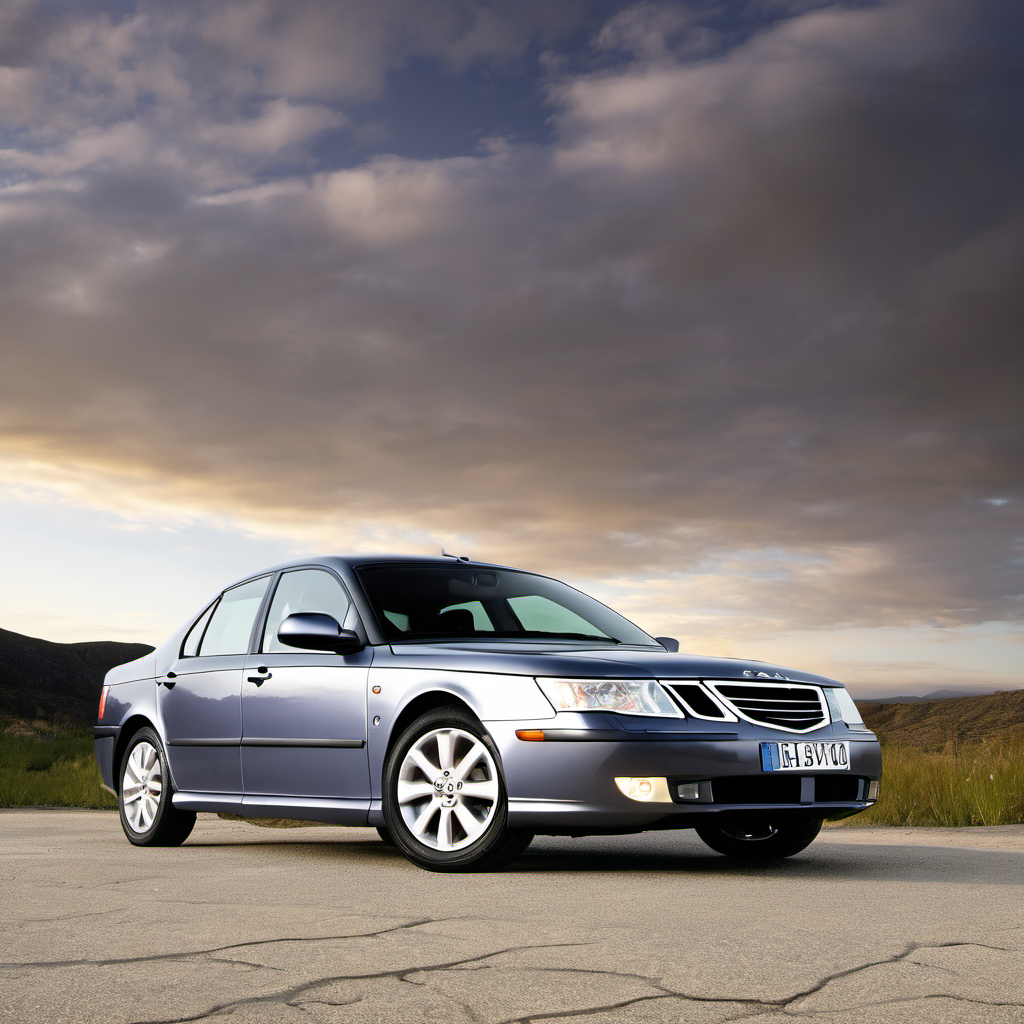
2005 Volvo XC70 Wagon

2005 Volvo

XC70Wagon

Wagon

The 2005 Volvo XC70 is a Swedish-built all-wheel-drive wagon that carved out a loyal niche as a practical, safety-forward alternative to both traditional SUVs and plain-jane family haulers. Built on the P2 platform shared with the S60 and V70, it rides on a raised, slightly softened suspension that gives genuine all-weather confidence without the body-roll penalty of a truck-based SUV. Under the hood sits Volvo's turbocharged 2.5L inline-five — a smooth, torquey engine that pulls confidently from low RPM but demands premium fuel and attentive maintenance. The AWD system (Haldex-based) is reactive rather than true full-time AWD, but in everyday Wisconsin winter driving it earns its keep. Cargo space is generous, passenger room is adult-friendly in the second row, and Volvo's passive safety reputation is well-earned for this era. By 2005 this generation was mature and relatively well-sorted, but it is now 20 years old. Age-related issues — seals, suspension bushings, electrical connectors, and cooling system components — are the primary concerns on any survivor. Maintenance history is everything on a used P2-platform Volvo.

Reliability
3/5
Verified data
Specs shown for XC70 AWD — the most common configuration. Other trims may vary in engine, drivetrain, or fuel economy. Sign in to see your vehicle's exact specs.
Engine
[object Object]
Drivetrain
AWD
Fuel
Premium gasoline
MPG
16 city / 22 hwy / 19 combined
Seats
Doors
Body
Sport Utility Vehicle - 4WD

Overview

AI-curated

The 2005 Volvo XC70 is a Swedish-built all-wheel-drive wagon that carved out a loyal niche as a practical, safety-forward alternative to both traditional SUVs and plain-jane family haulers. Built on the P2 platform shared with the S60 and V70, it rides on a raised, slightly softened suspension that gives genuine all-weather confidence without the body-roll penalty of a truck-based SUV. Under the hood sits Volvo's turbocharged 2.5L inline-five — a smooth, torquey engine that pulls confidently from low RPM but demands premium fuel and attentive maintenance. The AWD system (Haldex-based) is reactive rather than true full-time AWD, but in everyday Wisconsin winter driving it earns its keep. Cargo space is generous, passenger room is adult-friendly in the second row, and Volvo's passive safety reputation is well-earned for this era. By 2005 this generation was mature and relatively well-sorted, but it is now 20 years old. Age-related issues — seals, suspension bushings, electrical connectors, and cooling system components — are the primary concerns on any survivor. Maintenance history is everything on a used P2-platform Volvo.

Known for
  • Exceptional passive safety credentials for its era
  • Smooth, torquey turbocharged inline-five engine
  • Practical wagon versatility with raised AWD capability
  • Comfortable highway ride quality
  • Premium Swedish interior quality
Best for
  • Families wanting wagon practicality with SUV all-weather ability
  • Wisconsin and upper-Midwest winter commuters
  • Buyers who prioritize safety over performance or economy
  • Drivers who want something distinctive but still family-sensible
Watch for
  • High dealer and independent repair costs relative to mainstream brands
  • Age-related cooling system failures (plastic components degrade)
  • Expensive electronic module repairs if network faults develop
  • Haldex AWD coupling service often neglected — leads to premature failure
  • Premium fuel requirement adds to ongoing operating cost

Common issues by mileage

6 known

Cooling system failure — plastic thermostat housing, coolant hoses, and reservoir

high
Typically appears
80–150k mi
Estimated repair
$300 – $900

ETM (Electronic Throttle Module) failure — causes rough idle, hesitation, and stalling

high
Typically appears
60–120k mi
Estimated repair
$400 – $900

VVT/CVVT system faults — camshaft timing solenoids and oil passages sludge up without regular oil changes

medium
Typically appears
80–160k mi
Estimated repair
$200 – $1,200

Turbocharger bypass (diverter) valve failure — causes boost loss and possible compressor surge

medium
Typically appears
70–130k mi
Estimated repair
$150 – $450

Haldex AWD coupling — fluid never serviced leads to coupling failure and AWD loss

medium
Typically appears
60–100k mi
Estimated repair
$300 – $2,200

Oxygen sensor heater circuit faults — common on aging wiring harnesses

medium
Typically appears
90–160k mi
Estimated repair
$150 – $500

Maintenance schedule

  1. 1
    Every 5,000 miles or 6 months Engine oil change — use full synthetic 0W-30 or 5W-30 meeting Volvo VCC-RBS2AE spec

    The CVVT system's oil passages are small and clog quickly with degraded oil. More frequent changes than the Volvo 'long life' schedule are strongly recommended on a vehicle this age, especially to prevent P0012/P0015-type camshaft timing faults.

  2. 2
    Every 30,000 miles or 3 years Haldex rear differential fluid service

    This is the single most neglected item on these vehicles. Skipping it leads to Haldex coupling wear and eventual AWD failure — an expensive repair that is almost entirely preventable.

  3. 3
    Every 2 years or 30,000 miles Coolant system inspection — check thermostat housing, upper and lower hoses, reservoir

    Plastic components in the cooling system become brittle with age. On a 20-year-old vehicle, proactive replacement of the thermostat housing and reservoir is cheap insurance against a roadside failure.

  4. 4
    Every 4–5 years Coolant (antifreeze) replacement

    Degraded coolant becomes acidic and attacks the aluminum engine block and plastic cooling components. Critical in Wisconsin's sub-zero winters — verify freeze protection to at least -34°F.

  5. 5
    Every 60,000 miles Spark plug replacement

    The 2.5T inline-five has 5 plugs and is not difficult to access. Fresh plugs maintain combustion efficiency and protect the turbo and catalytic converter.

  6. 6
    Every 60,000 miles or 6 years Serpentine belt and tensioner inspection/replacement

    On a vehicle this age, rubber components are time-limited as much as mileage-limited. A snapped belt in a Wisconsin winter is a dangerous and avoidable situation.

  7. 7
    Every 2 years Brake fluid flush

    Volvo's ABS, DSTC (stability control), and STC systems are hydraulically sensitive. Moisture-absorbed brake fluid lowers boiling point and can cause corrosion in ABS modulators.

  8. 8
    Every 50,000 miles PCV (positive crankcase ventilation) system service — oil trap / flame trap

    The P2-platform Volvo PCV oil trap is famous for clogging. A blocked trap pressurizes the crankcase, pushes oil past seals, and causes oil consumption and leaks. Cheap part, significant consequences if ignored.

Always defer to the manufacturer's service manual for warranty-mandated intervals.

Cost of ownership

Annual maintenance
$900 – $2,200
Fuel
Premium fuel required. At current upper-Midwest prices and mixed driving averaging ~19 MPG combined, expect roughly $2,200–$2,800/year at 12,000 miles annually.
Insurance
Generally moderate — Volvo's strong safety ratings help offset the premium-brand surcharge. Expect mid-range premiums typical of a Volvo wagon in Wisconsin.

The XC70 is not a cheap car to own. Parts are more expensive than domestic or Japanese equivalents, and some jobs require Volvo-specific tools or software. An independent shop familiar with Volvos will save you significantly versus the dealer. Budget on the higher end of the maintenance range if the vehicle has deferred service history. The flip side: a properly maintained example depreciates slowly and holds up well structurally.
Seasonal care

Lake Geneva, WI
Winter
  • Verify Haldex AWD fluid has been serviced — this is your real winter safety net, not just the badge on the tailgate.
  • Confirm antifreeze protection to at least -34°F; the plastic coolant reservoir and thermostat housing are failure points in extreme cold.
  • Install a dedicated set of winter tires on steel wheels — the AWD system helps you go, winter tires help you stop and steer.
  • Test the battery before November; cold cranking a turbocharged inline-five at sub-zero temps demands a strong battery (600+ CCA). Replace if over 4 years old.
  • Use winter-rated washer fluid (good to -20°F or colder) — the XC70's tall hood and large windshield collect road grime fast.
  • Rinse the undercarriage every 2 weeks during salt season; the XC70's rear subframe, control arm brackets, and brake lines are rust-vulnerable at 20 years old.
Summer
  • Check tire pressure monthly — pressure drops ~1 PSI per 10°F of temperature change, and underinflated tires on a 3,600-lb AWD wagon wear unevenly and affect handling.
  • Inspect and test the A/C system before summer heat; the XC70's cabin heats up quickly and the A/C compressor and cabin filter are age-sensitive on a vehicle this old.
  • Watch coolant temperature closely during summer heat — a marginal thermostat or partially blocked radiator that gets away with it in winter will show itself in traffic on a 90°F day.
  • Check brake pads and rotors after winter — Wisconsin salt and road debris accelerate wear, and summer is the best time to address them before inspection season.

Comparable vehicles

If you're shopping for one

Red flags
  • No documented oil change history or records showing long change intervals — walk away; the CVVT system may already be damaged.
  • Any sign of overheating history (warped hood paint, residue under cap, coolant in oil) — head gasket repair on this engine is expensive.
  • DSTC warning light on or stability control disabled — these systems are complex and costly to diagnose and repair.
  • Visible rust perforation on the rear wheel arches, sills, or subframe — structural rust on a 20-year-old salt-belt car is a deal-breaker.
  • Turbo lag or boost hesitation under acceleration — could indicate turbo wear, diverter valve failure, or boost leak; none are cheap to fully diagnose and fix.
What to inspect
  • Pull the oil filler cap and check for sludge or white residue — the inline-five is sensitive to oil neglect and the PCV system clogs on poorly maintained examples.
  • Ask for Haldex fluid service records specifically; if they can't produce them, budget for service and potential coupling wear.
  • Look for coolant leaks at the thermostat housing (top front of engine) and around the reservoir — brown or orange staining means past overheating or long-deferred coolant service.
  • With the engine warm, snap the throttle from idle — hesitation, stumble, or stalling points to ETM (Electronic Throttle Module) issues.
  • Test all four powered features: DSTC (stability control), STC, sunroof, and all power windows — electrical gremlins are common at this age.
  • Inspect the undercarriage for rust on the rear subframe, trailing arm mounts, and fuel/brake lines — Wisconsin and any salt-belt car needs this checked thoroughly.
AI profile generated 12 days ago · claude-sonnet-4-6 · v2.