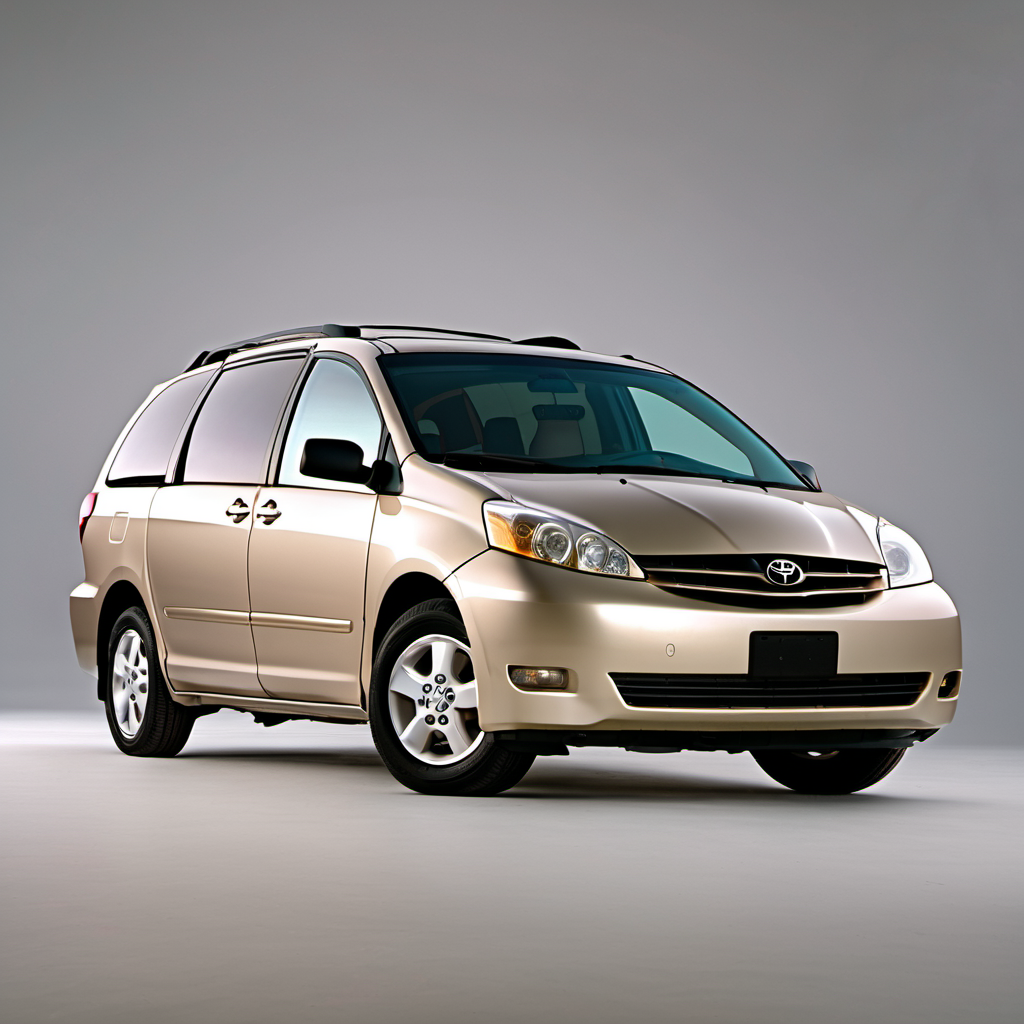
2005 Toyota Sienna Van/Minivan

2005 Toyota

SiennaVan/Minivan

Van/Minivan

The 2005 Toyota Sienna is the second-generation model (2004–2010), built on a unibody platform shared with the Camry and Avalon. It was a major step forward from the first-gen, offering a longer wheelbase, more interior room, available AWD, and a more car-like driving feel. The standard powertrain is a 3.3L V6 paired with a 5-speed automatic — smooth, adequate, and generally durable when maintained. As a family hauler, the Sienna checks most boxes: sliding rear doors (power on higher trims), a fold-flat third row, and Toyota's reputation for long-term reliability. Fuel economy is modest by modern standards, but the tradeoff is a powertrain that can realistically last 200,000+ miles with routine care. At 20 years old, these vans are now firmly in high-mileage territory. The ones that survive are usually well-cared-for family vehicles — but sloppy oil change habits on the 3MZ-FE V6 can cause VVT-related trouble that gets expensive fast. Know what you're buying.

Reliability
4/5
Verified data
Specs shown for Sienna 2WD — the most common configuration. Other trims may vary in engine, drivetrain, or fuel economy. Sign in to see your vehicle's exact specs.
Engine
[object Object]
Drivetrain
FWD
Fuel
Gasoline
MPG
17 city / 24 hwy / 19 combined
Seats
Doors
Body
Minivan - 2WD

Overview

AI-curated

The 2005 Toyota Sienna is the second-generation model (2004–2010), built on a unibody platform shared with the Camry and Avalon. It was a major step forward from the first-gen, offering a longer wheelbase, more interior room, available AWD, and a more car-like driving feel. The standard powertrain is a 3.3L V6 paired with a 5-speed automatic — smooth, adequate, and generally durable when maintained. As a family hauler, the Sienna checks most boxes: sliding rear doors (power on higher trims), a fold-flat third row, and Toyota's reputation for long-term reliability. Fuel economy is modest by modern standards, but the tradeoff is a powertrain that can realistically last 200,000+ miles with routine care. At 20 years old, these vans are now firmly in high-mileage territory. The ones that survive are usually well-cared-for family vehicles — but sloppy oil change habits on the 3MZ-FE V6 can cause VVT-related trouble that gets expensive fast. Know what you're buying.

Known for
  • Bulletproof 3.3L V6 when oil is changed on time
  • Roomy, practical interior with flexible seating
  • Smooth, car-like ride for a minivan
  • Strong long-term resale and owner loyalty
Best for
  • Families needing reliable, high-capacity daily transportation
  • Road-trip and highway driving
  • Buyers prioritizing long-term ownership over low purchase price
  • Owners who stay on top of basic maintenance
Watch for
  • VVT oil sludge issues from infrequent oil changes
  • Power sliding door motor and track failures on high-mileage examples
  • Rust on undercarriage and brake lines — a real concern in Wisconsin salt country
  • Oxygen sensor and catalytic converter wear past 120k miles

Common issues by mileage

6 known

VVT System Failure / Oil Sludge (3MZ-FE V6)

high
Typically appears
80–150k mi
Estimated repair
$600 – $2,200

VVT Solenoid Circuit Faults

medium
Typically appears
80–160k mi
Estimated repair
$150 – $500

Power Sliding Door Motor / Track Failure

high
Typically appears
100–180k mi
Estimated repair
$200 – $900

Brake Line Corrosion (Rust)

high
Typically appears
Any mileage on Wisconsin/salt-belt vehicles
Estimated repair
$300 – $1,200

Catalytic Converter Degradation

medium
Typically appears
120–200k mi
Estimated repair
$800 – $2,000

Maintenance schedule

  1. 1
    Every 5,000 miles or 6 months — do not stretch Engine oil and filter change

    The 3MZ-FE's VVT system is highly sensitive to dirty oil. Sludge buildup from long intervals is the #1 cause of expensive timing-related repairs on this engine. Use 5W-30 conventional or full synthetic.

  2. 2
    Every 60,000 miles or if P0012/P0015/P0022/P0025 codes appear VVT solenoid screen cleaning

    Small screens on the VVT solenoids clog with sludge. Cleaning or replacing them before the actuators fail can save hundreds of dollars.

  3. 3
    Every 30,000–45,000 miles (drain and fill; no flush) Transmission fluid change

    Toyota's U151E automatic is durable but benefits from fresh fluid. Use Toyota WS-spec ATF. Neglected fluid darkens and shortens transmission life significantly.

  4. 4
    Every 50,000 miles or 5 years Coolant flush

    Toyota's long-life coolant does degrade. Old coolant becomes acidic and can damage the water pump and radiator internals.

  5. 5
    Every year — especially before and after winter Brake line and undercarriage inspection

    Wisconsin road salt accelerates brake line corrosion on vehicles this age. A corroded line can fail without warning. Inspect and treat exposed lines annually.

  6. 6
    Every 60,000 miles Spark plugs replacement

    The 3.3L V6 uses iridium plugs. Worn plugs stress ignition coils and reduce fuel economy. Replacement is straightforward on the front bank; rear bank requires more labor.

  7. 7
    Every 12 months Power sliding door track lubrication

    Dry or dirty tracks wear out the door motors prematurely. Clean and lightly lubricate the tracks to extend motor life — especially important after winter grit buildup.

  8. 8
    Every fall, before Wisconsin winter sets in Battery load test

    Cold cranking demand on a V6 this size in sub-zero temps is high. A marginal battery that starts fine in October may fail hard in January.

Always defer to the manufacturer's service manual for warranty-mandated intervals.

Cost of ownership

Annual maintenance
$600 – $1,400
Fuel
At 19 MPG combined and ~15,000 miles/year, expect roughly $1,900–$2,400/year at $2.50–$3.20/gallon. Mostly highway driving improves this noticeably.
Insurance
Typically $900–$1,400/year for a vehicle this age in Wisconsin, depending on coverage level and driving record.

A well-maintained 2005 Sienna is one of the more economical used minivans to own long-term. Routine service costs are low, parts are widely available and inexpensive, and independent shops know these vehicles well. The risk is deferred maintenance — VVT repairs and brake line replacement can push a single year's costs well above $2,000. Budget a little extra for rust-related surprises on any vehicle with Wisconsin miles.
Seasonal care

Lake Geneva, WI
Winter
  • Load-test the battery every October — sub-zero starts are hard on aging batteries and the V6 draws significant cold-cranking amps
  • Switch to full synthetic 5W-30 if not already using it; it flows faster at cold startup and protects the VVT system during those critical first seconds
  • Inspect brake lines and connections for rust before winter; salt spray accelerates any existing corrosion dramatically
  • Use washer fluid rated to at least -20°F — Lake Geneva temperatures regularly hit that range
  • Check and replace wiper blades with winter-rated blades; the wide windshield on the Sienna makes poor wipers a real visibility hazard
  • Lubricate power sliding door tracks before freezing temps arrive — water in the tracks freezes and can bind or damage the door mechanism
Summer
  • Check tire pressure monthly — tires lose about 1 PSI for every 10°F drop in temperature, and summer heat causes the reverse; overinflation affects handling and wear
  • Inspect the A/C system for refrigerant level and condenser cleanliness — a 20-year-old system may need a recharge or fresh cabin air filter
  • Check coolant concentration and condition; the 3.3L runs warm under load and degraded coolant offers less heat protection
  • Inspect the undercarriage after spring for salt damage and treat any new rust spots before summer heat accelerates oxidation

Comparable vehicles

If you're shopping for one

Red flags
  • Any VVT-related DTC codes (P0012, P0015, P0022, P0025) without a documented repair — walk away or price in a full timing service
  • Missing or inconsistent oil change records on a V6 this age
  • Severely rusted brake lines — replacement is safe when done correctly, but the cost adds up fast and signals overall neglect
  • Power sliding doors that skip, grind, or fail to latch — motor and track replacements are not cheap
  • Evidence of coolant loss or white exhaust smoke — head gasket issues are uncommon but not unheard of on neglected examples
  • Any signs of undercarriage patching or spray-over rust treatment hiding deeper corrosion
What to inspect
  • Pull full oil change history — VVT damage is cumulative and won't always show codes yet; look for gaps longer than 7,500 miles
  • Scan for P0012, P0015, P0022, P0025 codes even if the check engine light is off; clear codes can hide recent VVT faults
  • Inspect all brake lines from front to rear — look for bubbling, flaking, or pinhole rust, especially along the rear axle
  • Test both power sliding doors through a full open/close cycle; listen for grinding or hesitation in the tracks
  • Check for water intrusion in the cargo area floor and under the third-row seat — sunroof drain clogs and door seal failures are common at this age
  • Look at the transmission fluid condition on the dipstick — dark brown or burnt-smelling fluid is a red flag
  • Inspect the undercarriage and subframe for structural rust, not just surface corrosion
AI profile generated 17 days ago · claude-sonnet-4-6 · v2.