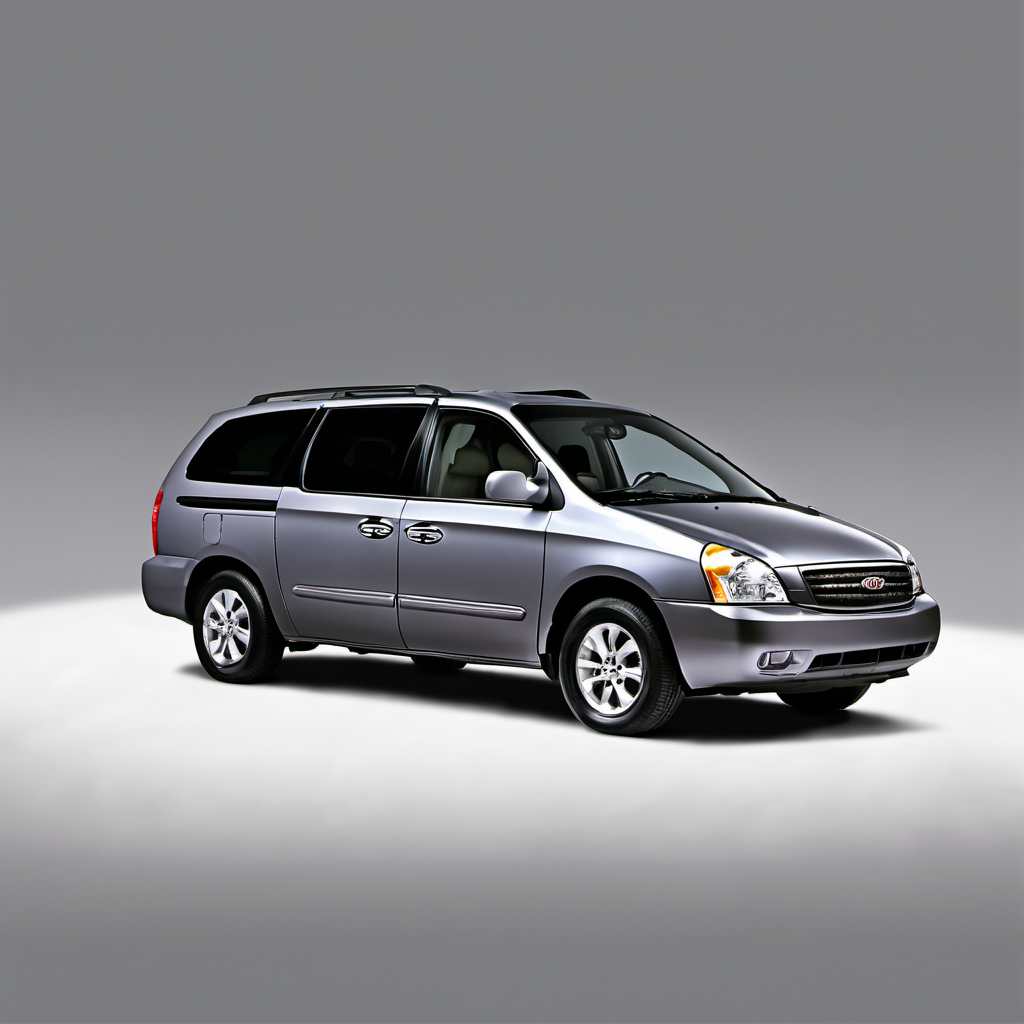
2005 Kia Sedona Van/Minivan

2005 Kia

SedonaVan/Minivan

Van/Minivan

The 2005 Kia Sedona is a full-size front-wheel-drive minivan powered by a 3.5L V6. It was Kia's entry into the family hauler segment, offering seating for up to seven passengers at a price point well below the Honda Odyssey and Toyota Sienna. For budget-conscious families, it delivered a lot of cabin space and features for the money. By 2005, the first-generation Sedona had been on sale in the US for four years without major updates. Build quality and long-term durability were not strong suits compared to Japanese rivals. Rust, transmission wear, and early oxygen sensor failures are recurring themes in real-world ownership, especially in salt-belt states like Wisconsin. If bought used today, a 2005 Sedona is likely well into high mileage territory. Expect to spend money on deferred maintenance. It can still serve as a practical family hauler if purchased cheaply and properly inspected, but budget generously for upkeep.

Reliability
2/5
Verified data
Specs shown for Sedona — the most common configuration. Other trims may vary in engine, drivetrain, or fuel economy. Sign in to see your vehicle's exact specs.
Engine
[object Object]
Drivetrain
FWD
Fuel
Gasoline
MPG
14 city / 21 hwy / 17 combined
Seats
Doors
Body
Minivan - 2WD

Overview

AI-curated

The 2005 Kia Sedona is a full-size front-wheel-drive minivan powered by a 3.5L V6. It was Kia's entry into the family hauler segment, offering seating for up to seven passengers at a price point well below the Honda Odyssey and Toyota Sienna. For budget-conscious families, it delivered a lot of cabin space and features for the money. By 2005, the first-generation Sedona had been on sale in the US for four years without major updates. Build quality and long-term durability were not strong suits compared to Japanese rivals. Rust, transmission wear, and early oxygen sensor failures are recurring themes in real-world ownership, especially in salt-belt states like Wisconsin. If bought used today, a 2005 Sedona is likely well into high mileage territory. Expect to spend money on deferred maintenance. It can still serve as a practical family hauler if purchased cheaply and properly inspected, but budget generously for upkeep.

Known for
  • Spacious cabin at a budget price point
  • Smooth V6 power for highway driving
  • Value-oriented features list for the era
  • Higher-than-average repair frequency compared to Japanese rivals
  • Significant rust vulnerability in northern/salt-belt climates
Best for
  • Budget-focused families needing minivan space
  • Short-haul family transportation
  • Buyers willing to wrench or pay for regular upkeep
  • Owners who can find a well-documented, low-deferred-maintenance example
Watch for
  • Rust on floor pans, rocker panels, and rear wheel arches from Wisconsin salt
  • Automatic transmission slipping or delayed engagement, especially on high-mileage examples
  • Oxygen sensor failures triggering check engine lights
  • Sliding door track wear and latch failures
  • Timing belt service history — interference engine, missed service is catastrophic

Common issues by mileage

6 known

Timing Belt Failure / Skipped Service

high
Typically appears
60–105k mi (then every 60k)
Estimated repair
$450 – $800

Oxygen Sensor Failure (Bank 1 and Bank 2)

high
Typically appears
80–150k mi
Estimated repair
$150 – $350

Automatic Transmission Slipping / Harsh Shifting

high
Typically appears
100–180k mi
Estimated repair
$800 – $3,200

Sliding Door Latch and Track Wear

medium
Typically appears
60–150k mi
Estimated repair
$100 – $400

Rust — Floor Pans, Rockers, Rear Wheel Arches

high
Typically appears
Any mileage on salt-belt vehicles
Estimated repair
$500 – $3,000

Valve Control Solenoid / VVT System Faults

medium
Typically appears
90–160k mi
Estimated repair
$200 – $650

Maintenance schedule

  1. 1
    Every 60,000 miles or 5 years — non-negotiable Timing Belt and Water Pump Replacement

    The 3.5L V6 is an interference engine. A snapped belt destroys the engine with no warning. On a used example, if service history is unknown, replace it immediately regardless of mileage.

  2. 2
    Every 30,000 miles on used/high-mileage examples Transmission Fluid Change

    Kia's original 'lifetime' fluid guidance does not reflect real-world longevity. Degraded fluid is the leading cause of the transmission slipping issues common on this generation.

  3. 3
    At first check engine light, or every 90–100k mi proactively Oxygen Sensor Inspection / Replacement

    Sensor failures are frequent on this engine and directly affect fuel trim and fuel economy. Ignoring them stresses the catalytic converter over time.

  4. 4
    Every spring after winter and every fall before salting season Underbody Rust Inspection and Treatment

    Wisconsin road salt accelerates corrosion on floor pans, brake lines, and subframe mounts. Catching rust early with fluid film or undercoat treatment is far cheaper than structural repair.

  5. 5
    Annually — every fall in Wisconsin Brake Line Inspection

    Steel brake lines on this generation are vulnerable to salt corrosion. A corroded line can fail without warning; inspect for bubbling, pitting, or wet spots annually.

  6. 6
    Every 15,000–20,000 miles Engine Air and Cabin Air Filter Replacement

    Wisconsin summer pollen and gravel dust load filters quickly. A restricted engine air filter hurts fuel economy noticeably on the already-thirsty V6.

  7. 7
    Every 30,000 miles (standard plugs) or 60,000 miles (platinum/iridium) Spark Plug Replacement

    Worn plugs cause rough idle and reduced fuel economy. On a V6 minivan used for family hauling, consistent ignition performance matters for reliability and fuel costs.

  8. 8
    Every 12 months or at each oil change Sliding Door Track Lubrication and Latch Check

    Track grit and dry hinges accelerate latch wear — one of the most common complaints on this generation. A tube of white lithium grease on the tracks costs almost nothing and prevents a $300+ repair.

Always defer to the manufacturer's service manual for warranty-mandated intervals.

Cost of ownership

Annual maintenance
$900 – $2,200
Fuel
At 17 MPG combined and typical Wisconsin driving patterns, expect roughly $2,200–$2,800/year at current mid-grade fuel prices depending on annual mileage.
Insurance
Typically lower than average for a minivan of this age and value — expect $800–$1,400/year for full coverage, though exact rates depend on driving record and coverage level.

The Sedona's low purchase price is appealing, but ownership costs on a 20-year-old example can surprise buyers. Fuel economy is below average for its class, and repair frequency is higher than Japanese rivals. Budget at least $1,000–$1,500 in deferred maintenance items in the first year of ownership regardless of how clean the vehicle looks. In Wisconsin, rust remediation is an ongoing annual cost, not a one-time fix.
Seasonal care

Lake Geneva, WI
Winter
  • Test and replace battery if it's over 3–4 years old — cold cranking amps drop sharply below 0°F and this V6 is a heavy electrical load on startup.
  • Switch to a full-synthetic 5W-30 oil if not already used — conventional oil thickens in sub-zero temps and starves the VVT system and valve train on cold starts.
  • Inspect and replace brake lines annually before winter — salt corrosion on the steel lines is a serious safety risk on any Wisconsin vehicle this age.
  • Use a name-brand winter washer fluid rated to at least -20°F — the Sedona's large windshield accumulates road spray fast on Wisconsin highways.
  • Install winter wiper blades — standard blades ice up and streak badly below 20°F, impairing visibility in the van's large windshield.
  • Check antifreeze concentration to at least -34°F using a test strip or refractometer — aging coolant loses freeze protection and can crack the block or heater core.
Summer
  • Check tire pressure monthly — Wisconsin summer heat causes pressure to rise 4–6 PSI, increasing blowout risk on a heavy minivan loaded with passengers.
  • Inspect the A/C system for refrigerant leaks and compressor function — the cabin is large and A/C works hard; a weak system won't keep up on 90°F days.
  • Check coolant level and inspect hoses for cracking or softness — heat soak on the 3.5L V6 in stop-and-go traffic can push a marginal cooling system into overheating.
  • Clean pollen and debris from the cabin air filter — spring pollen loads the filter quickly and reduces A/C airflow into the cabin.

Comparable vehicles

If you're shopping for one

Red flags
  • No timing belt service history on any example over 60k miles — walk away or demand a price reduction to cover immediate replacement.
  • Visible rust perforation on floor pans or rocker panels — structural rust on a 20-year-old Wisconsin vehicle can be a total-loss situation.
  • Transmission slipping, hard shifts, or delayed engagement — first-gen Sedona transmissions are expensive to rebuild and parts sourcing is not always straightforward.
  • Milky or frothy oil on the dipstick or cap — indicates coolant intrusion, likely a head gasket failure on this engine.
  • Multiple unresolved check engine codes, especially camshaft timing codes (P0012, P0015, P0022, P0025) — these indicate potential oil sludge, VVT solenoid failure, or timing belt stretch.
What to inspect
  • Timing belt service record — ask for paperwork; if unavailable, assume it's due immediately.
  • Underbody rust: crawl under and check floor pans, rocker panels, rear wheel arches, brake lines, and subframe mounts for active rust or patched rot.
  • Transmission: drive it cold and warm — note any delay in engagement from Park, slipping between gears, or shudder at highway speeds.
  • Sliding doors: cycle both doors fully open and closed multiple times; listen for grinding and check that latches engage positively.
  • Oxygen sensor / check engine light history: request an OBD-II scan before purchase to see stored and pending codes.
  • Cooling system: check for milky residue on the oil cap (head gasket) and inspect coolant for rust or brown discoloration.
AI profile generated 15 days ago · claude-sonnet-4-6 · v2.