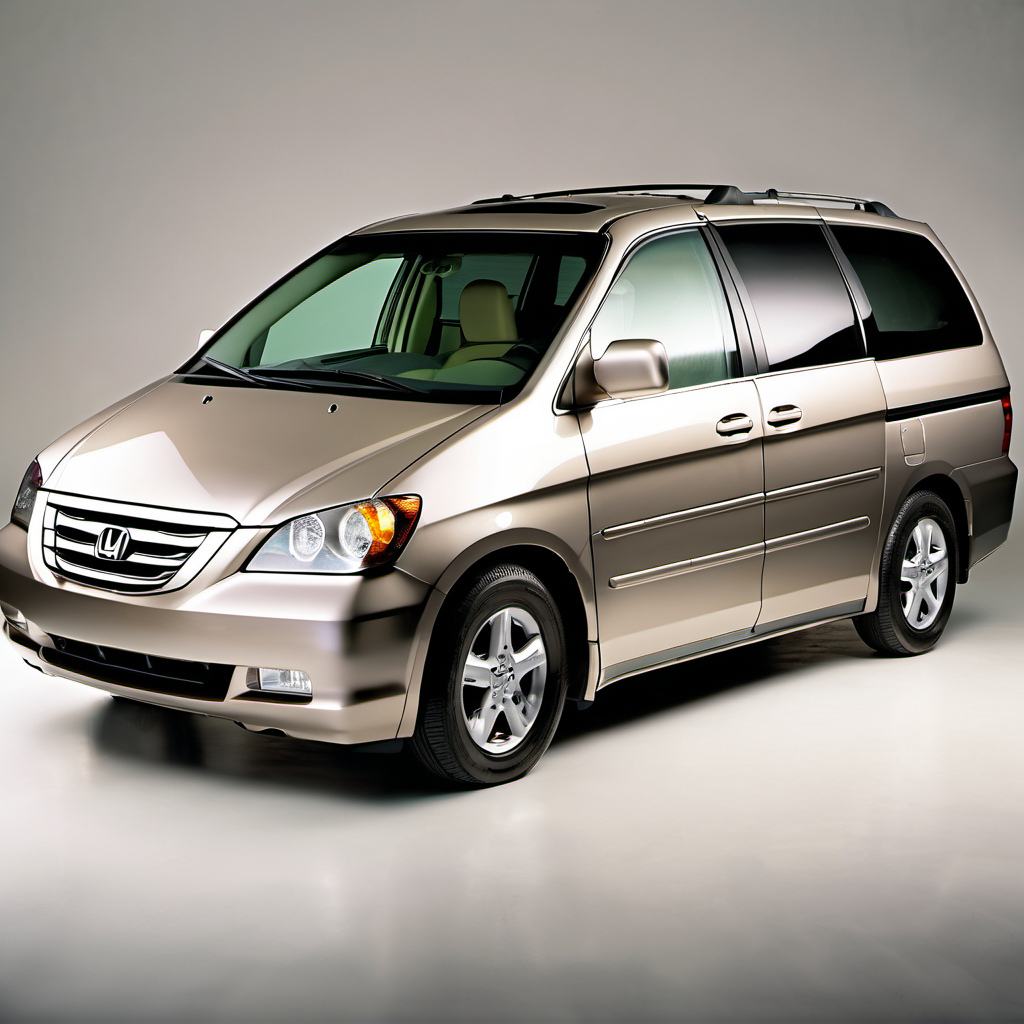
2005 Honda Odyssey Van/Minivan

2005 Honda

OdysseyVan/Minivan

Van/Minivan

The 2005 Honda Odyssey is part of the third-generation (2005–2010) redesign that made it a segment benchmark. Honda addressed many complaints from the second-gen model with a stiffer body, a more powerful 3.5L V6, and a sliding second-row seat system unique to the class. It quickly became the go-to choice for families who wanted a reliable, car-like driving experience with serious cargo versatility. The 3.5L J35A V6 paired to a 5-speed automatic is generally durable, but the transmission is the well-documented weak point of this generation — particularly on higher-mileage examples or those that skipped fluid changes. The sliding 'Magic Seat' system is clever but adds mechanical complexity that can cause headaches as the van ages. For Wisconsin families, the FWD platform handles winter adequately with good all-season or winter tires, and the low floor makes loading kids and cargo easy year-round. Expect to budget for transmission maintenance and keep an eye on the power sliding door mechanisms.

Reliability
3/5
Verified data
Specs shown for Odyssey — the most common configuration. Other trims may vary in engine, drivetrain, or fuel economy. Sign in to see your vehicle's exact specs.
Engine
[object Object]
Drivetrain
FWD
Fuel
Gasoline
MPG
17 city / 26 hwy / 20 combined
Seats
Doors
Body
Minivan - 2WD

Overview

AI-curated

The 2005 Honda Odyssey is part of the third-generation (2005–2010) redesign that made it a segment benchmark. Honda addressed many complaints from the second-gen model with a stiffer body, a more powerful 3.5L V6, and a sliding second-row seat system unique to the class. It quickly became the go-to choice for families who wanted a reliable, car-like driving experience with serious cargo versatility. The 3.5L J35A V6 paired to a 5-speed automatic is generally durable, but the transmission is the well-documented weak point of this generation — particularly on higher-mileage examples or those that skipped fluid changes. The sliding 'Magic Seat' system is clever but adds mechanical complexity that can cause headaches as the van ages. For Wisconsin families, the FWD platform handles winter adequately with good all-season or winter tires, and the low floor makes loading kids and cargo easy year-round. Expect to budget for transmission maintenance and keep an eye on the power sliding door mechanisms.

Known for
  • Car-like driving dynamics for a minivan
  • Flexible 'Magic Seat' second-row seating system
  • Strong 3.5L V6 engine with good longevity when maintained
  • Above-average resale value for the segment
Best for
  • Families needing maximum passenger and cargo flexibility
  • High-mileage commuters who want reliability over flash
  • Buyers prioritizing long-term ownership cost over entry price
Watch for
  • Automatic transmission failure, especially without regular fluid changes
  • Power sliding door motor and roller failures
  • VCM (Variable Cylinder Management) oil consumption on some trims
  • Underbody rust from Wisconsin road salt exposure on older examples

Common issues by mileage

6 known

Automatic Transmission Failure

high
Typically appears
80–140k mi
Estimated repair
$2,200 – $4,500

VTC (Variable Timing Control) Actuator Noise / Camshaft Timing Fault

medium
Typically appears
80–150k mi
Estimated repair
$400 – $950

Intake/Exhaust Valve Control Solenoid Failure (VCM / VTEC System)

medium
Typically appears
90–160k mi
Estimated repair
$200 – $600

Power Sliding Door Motor / Roller Rail Failure

high
Typically appears
70–150k mi
Estimated repair
$300 – $900

Oxygen / A/F Sensor Heater Circuit Failure

medium
Typically appears
100–180k mi
Estimated repair
$150 – $450

Underbody / Subframe Rust

high
Typically appears
Any mileage on salt-road vehicles
Estimated repair
$300 – $2,000

Maintenance schedule

  1. 1
    Every 30,000 miles — do not follow the 'maintenance minder' alone on used examples Automatic Transmission Fluid Change

    The 5-speed automatic in this generation is the #1 failure point. Fresh Honda-spec ATF (or equivalent) dramatically extends its life. If you bought this used and don't know the history, change it immediately regardless of mileage.

  2. 2
    Every 105,000 miles or 7 years, whichever comes first Timing Belt and Water Pump Replacement

    The J35A is an interference engine — a snapped timing belt causes catastrophic valve damage. Water pump is driven by the same belt; replace both together to avoid paying twice.

  3. 3
    Every 5,000 miles or per maintenance minder Engine Oil Change (full synthetic recommended)

    Clean oil is critical to VCM solenoid function and VTC actuator longevity. Low or dirty oil is the leading cause of camshaft timing codes and engine noise on this engine.

  4. 4
    Every 12 months / each fall Power Sliding Door Rail and Roller Lubrication

    Dry rails accelerate motor and roller wear. This is a 10-minute job that can prevent a $500–$900 repair. Use a silicone-based lubricant on the rails.

  5. 5
    Every fall before winter salt season Underbody Rust Inspection and Treatment

    Lake Geneva roads see heavy salt. The 2005 Odyssey's subframe and brake lines are vulnerable. Annual inspection and treatment pays for itself many times over compared to structural repair costs.

  6. 6
    Every 15,000–20,000 miles Cabin Air Filter Replacement

    With frequent passenger loads and Wisconsin summer pollen / winter road dust, a clogged cabin filter strains the HVAC blower and degrades air quality for occupants.

  7. 7
    Every 3 years Brake Fluid Flush

    Honda specifies brake fluid replacement at this interval. In Wisconsin freeze-thaw cycles, moisture-laden fluid lowers boiling point and accelerates internal caliper corrosion.

  8. 8
    Every 105,000 miles Spark Plug Replacement (Iridium OEM-spec)

    Honda's iridium plugs are long-life, but worn plugs on the rear bank (cylinders 4–6) are a known headache — access requires intake manifold removal on this engine, so don't let them go overdue.

Always defer to the manufacturer's service manual for warranty-mandated intervals.

Cost of ownership

Annual maintenance
$650 – $1,400
Fuel
At 20 MPG combined and ~15,000 miles/year, expect roughly $1,800–$2,300/year at current Wisconsin gas prices. Premium is not required — regular 87 octane is fine.
Insurance
Minivans typically carry lower insurance rates than SUVs of similar value. Expect $900–$1,400/year for a driver with a clean record in the Lake Geneva area, depending on coverage level.

A well-maintained 2005 Odyssey is a cost-effective family hauler in most years. Routine costs are reasonable, but budget separately for the transmission — if it hasn't been rebuilt or recently serviced, set aside $500–$1,000 as a reserve. Timing belt service (if overdue) is the other big-ticket item to address immediately.
Seasonal care

Lake Geneva, WI
Winter
  • Switch to winter-rated tires — the FWD platform manages well in snow but is fully dependent on tire quality. All-seasons from 2005 will have hardened and lost grip; replace them.
  • Test and replace the battery if it's more than 4 years old. Cold cranking a 3.5L V6 at sub-zero temps will expose a weak battery fast.
  • Use full-strength -40°F washer fluid. The heated washer nozzles can freeze with diluted fluid, leaving you blind on salted highways.
  • Inspect the power sliding door tracks before freeze-up — debris and ice in the rails causes motor burnout. Keep rails clean and lubricated with a winter-safe silicone spray.
  • Flush and fill coolant if it hasn't been done in 5 years; verify freeze protection to at least -40°F with a test strip.
  • Rinse the undercarriage every 1–2 weeks during heavy salt months to slow subframe and brake line corrosion — this van is old enough that rust is a real structural concern.
Summer
  • Check tire pressure monthly — for every 10°F rise in temperature, tires gain ~1 PSI. Overinflated tires on hot pavement accelerate center-tread wear.
  • Run the A/C system through a full inspection before summer. The Odyssey's rear-zone A/C evaporator can develop slow leaks on older examples; watch for reduced rear cooling.
  • Check engine coolant level and condition before any long road trips. The J35A runs warm in stop-and-go with a full passenger load.
  • Inspect the serpentine belt for cracking — heat and age accelerate belt degradation, and a broken belt kills the A/C and power steering simultaneously.
  • Clean the cabin air filter — pollen load in spring/early summer clogs filters fast, straining the blower motor.

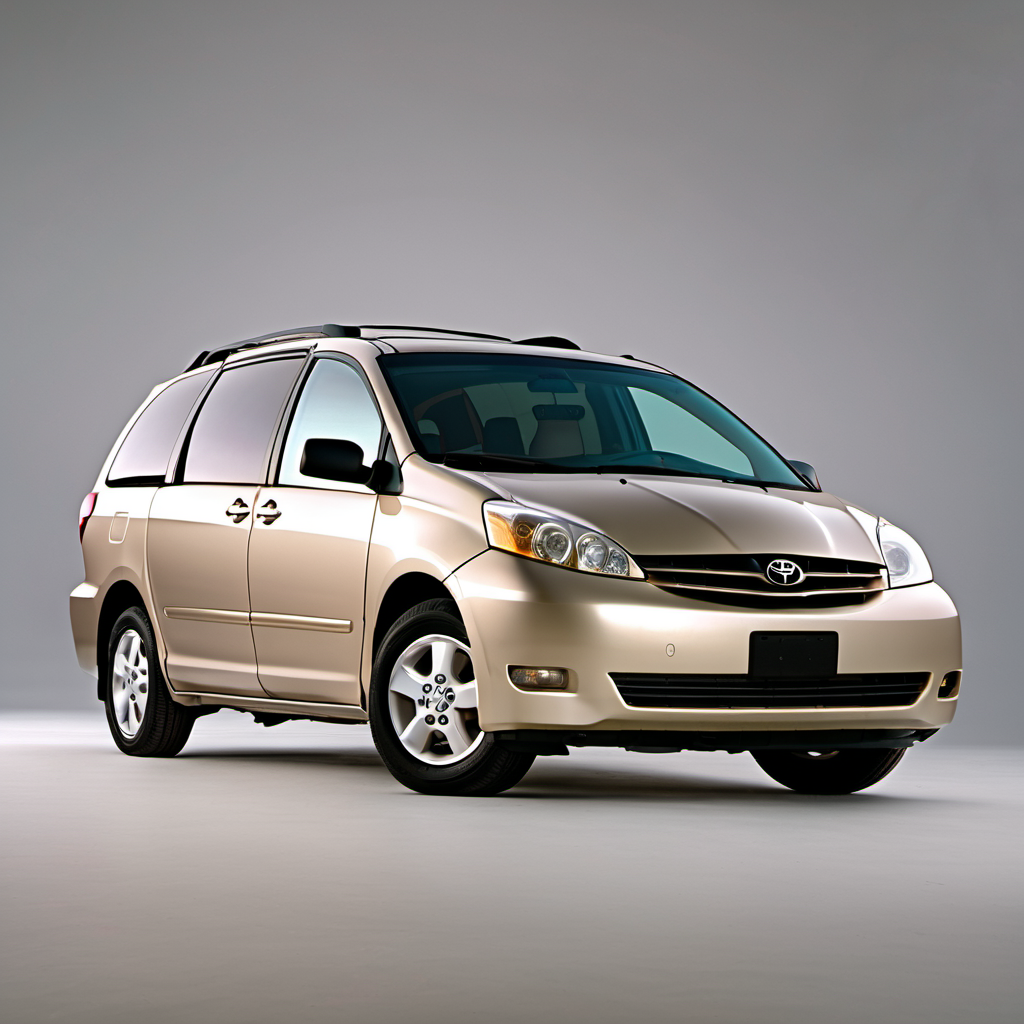
Comparable vehicles

If you're shopping for one

Red flags
  • Any slipping, flaring, or delayed engagement from the transmission — walk away or price in a $2,500+ rebuild.
  • Engine oil that is black and gritty with no service records — suggests the VCM solenoids and VTC system may already be damaged.
  • Power sliding doors that are inoperative or manually locked out by the previous owner — often a sign of expensive motor or cable repairs that were deferred.
  • Visible rust holes or flaking on the subframe or rear suspension mounts — structural rust on a 20-year-old Wisconsin van can be a total loss situation.
  • No timing belt records on a van over 105,000 miles — this is a non-negotiable safety and cost item.
What to inspect
  • Pull the transmission fluid — it should be pink/red and not smell burnt. Dark brown or black fluid means the transmission has been neglected and may be living on borrowed time.
  • With the engine cold, start it and listen for a rattling or grinding noise from the front of the engine — this is a VTC actuator issue tied to low oil pressure and is expensive if ignored.
  • Test both power sliding doors through a full open-and-close cycle. Listen for grinding, hesitation, or error lights. Test the manual override as well.
  • Get under the van and inspect the subframe, rear trailing arms, and brake lines for rust perforation — not just surface rust. In Wisconsin-used vehicles this is a potential deal-breaker.
  • Check for transmission shudder during light throttle acceleration at 35–45 mph — a classic sign of torque converter or clutch pack wear.
  • Verify timing belt service history. If undocumented and over 105k miles, budget $600–$900 to do it immediately.
AI profile generated 17 days ago · claude-sonnet-4-6 · v2.