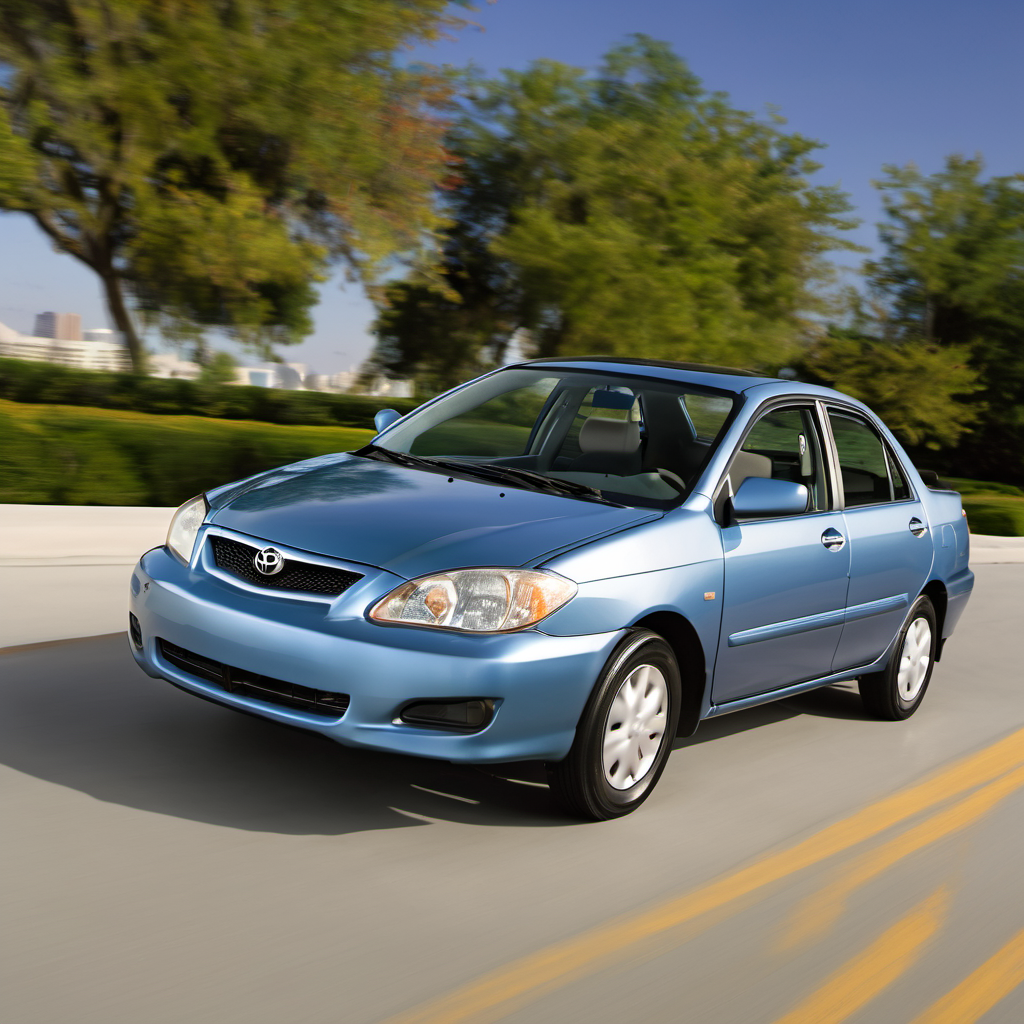
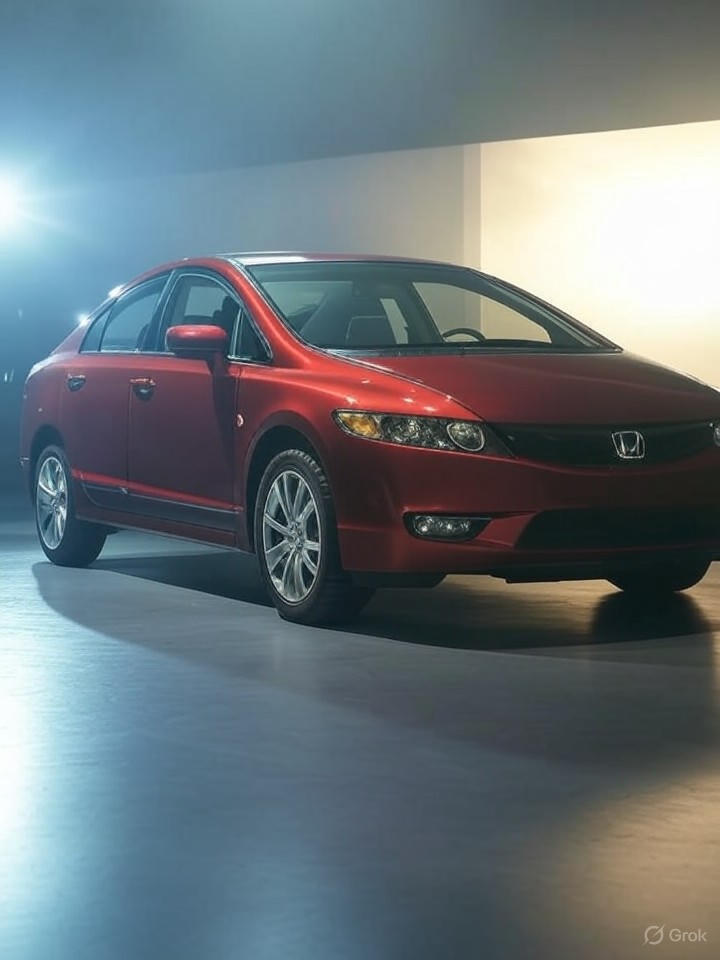
2005 Toyota Corolla Sedan

2005 Toyota

CorollaSedan

Sedan

The 2005 Toyota Corolla is the ninth generation of one of the best-selling nameplates in automotive history. Launched in 2003 and running through 2008, this generation brought a more refined interior, a larger body, and Toyota's proven 1ZZ-FE 1.8L four-cylinder under the hood. It was engineered squarely at the economy and reliability end of the spectrum — not exciting, but deeply competent. At nearly 20 years old, a well-kept 2005 Corolla is still a capable daily driver. These cars routinely see 200,000+ miles with nothing more than oil changes and wear items. The weak links are the oil-burning tendency of the 1ZZ-FE engine (especially past 100k), aging suspension bushings, and rust on the undercarriage — a real concern in Wisconsin salt country. For budget-conscious buyers, commuters, or anyone who just needs reliable point-A-to-point-B transportation, this generation Corolla remains one of the strongest used-car values in its price range. Just inspect carefully for rust and check oil consumption before buying.

Reliability
4/5
Verified data
Specs shown for Corolla — the most common configuration. Other trims may vary in engine, drivetrain, or fuel economy. Sign in to see your vehicle's exact specs.
Engine
[object Object]
Drivetrain
FWD
Fuel
Gasoline
MPG
26 city / 35 hwy / 29 combined
Seats
Doors
Body
Compact Cars

Overview

AI-curated

The 2005 Toyota Corolla is the ninth generation of one of the best-selling nameplates in automotive history. Launched in 2003 and running through 2008, this generation brought a more refined interior, a larger body, and Toyota's proven 1ZZ-FE 1.8L four-cylinder under the hood. It was engineered squarely at the economy and reliability end of the spectrum — not exciting, but deeply competent. At nearly 20 years old, a well-kept 2005 Corolla is still a capable daily driver. These cars routinely see 200,000+ miles with nothing more than oil changes and wear items. The weak links are the oil-burning tendency of the 1ZZ-FE engine (especially past 100k), aging suspension bushings, and rust on the undercarriage — a real concern in Wisconsin salt country. For budget-conscious buyers, commuters, or anyone who just needs reliable point-A-to-point-B transportation, this generation Corolla remains one of the strongest used-car values in its price range. Just inspect carefully for rust and check oil consumption before buying.

Known for
  • Exceptional long-term reliability and longevity
  • Low cost of ownership and easy DIY maintenance
  • Frugal fuel economy for a non-hybrid
  • Simple, proven 1ZZ-FE engine with wide parts availability
Best for
  • Budget-minded daily commuters
  • First-time car owners
  • High-mileage highway drivers
  • Anyone prioritizing low maintenance costs over features
Watch for
  • Oil consumption on high-mileage 1ZZ-FE engines (piston ring wear)
  • Undercarriage and rocker panel rust — serious issue in Wisconsin
  • Worn or cracked engine mounts causing vibration
  • Aging suspension bushings and strut mounts past 100k miles

Common issues by mileage

6 known

Engine Oil Consumption (Piston Ring Wear)

high
Typically appears
80–150k mi
Estimated repair
$800 – $2,500

Oxygen Sensor Heater Circuit Failure

medium
Typically appears
80–130k mi
Estimated repair
$150 – $350

Strut Mounts and Suspension Bushing Wear

high
Typically appears
100–160k mi
Estimated repair
$300 – $700

Engine Mount Deterioration

medium
Typically appears
100–150k mi
Estimated repair
$200 – $450

Underbody and Rocker Panel Rust

high
Typically appears
Any mileage — age/exposure dependent
Estimated repair
$500 – $3,000

Thermostat Failure / Coolant Temperature Issues

low
Typically appears
100–150k mi
Estimated repair
$120 – $280

Maintenance schedule

  1. 1
    Every 5,000 miles — or 3,500 miles if oil consumption is noted Engine oil and filter change

    The 1ZZ-FE is prone to consuming oil, especially past 80k. Frequent checks and timely changes prevent low-oil damage to rings and bearings. Use the manufacturer-spec viscosity (5W-30).

  2. 2
    Every fill-up or at least every 1,000 miles on high-mileage engines Check oil level between changes

    A Corolla burning oil may drop a quart or more between changes without any visible smoke. Running low accelerates ring and bearing wear dramatically.

  3. 3
    Every 30,000 miles or 2 years Coolant flush

    Toyota's long-life coolant degrades over time. Old coolant becomes acidic and attacks the water pump, radiator, and heater core — expensive fixes in a sub-zero Wisconsin winter.

  4. 4
    Every 60,000 miles Spark plug replacement

    The 1ZZ-FE uses standard plugs that wear on schedule. Neglected plugs cause misfires, rough idle, and reduced fuel economy.

  5. 5
    Every 2–3 years regardless of mileage Brake fluid flush

    Brake fluid absorbs moisture. In Wisconsin winters with heavy braking on ice and salt-soaked calipers, degraded fluid raises the risk of brake fade and caliper corrosion.

  6. 6
    Every 30,000 miles or with each brake service Inspect and lubricate brake calipers and slide pins

    Salt exposure seizes caliper slide pins, causing uneven pad wear and pulling. A stuck caliper can generate enough heat to warp rotors and waste fuel.

  7. 7
    Every 60,000 miles or if clunking/wandering is noticed Inspect front struts, strut mounts, and control arm bushings

    These wear predictably on this generation. Wisconsin potholes and frost heaves accelerate deterioration. Worn strut mounts cause handling instability and abnormal tire wear.

  8. 8
    Every fall before winter and again in spring Undercarriage rust inspection and treatment

    Salt accumulation on subframe, control arms, and brake lines is the biggest long-term threat to this 20-year-old car in Lake Geneva. Catching early surface rust prevents structural compromise.

Always defer to the manufacturer's service manual for warranty-mandated intervals.

Cost of ownership

Annual maintenance
$400 – $900
Fuel
At 29 MPG combined and ~15,000 miles/year, expect roughly $1,400–$1,700/year in fuel at current Midwest prices.
Insurance
Typically $900–$1,400/year for full coverage in Wisconsin on a vehicle this age and value; actual rates vary by driver profile.

The 2005 Corolla is one of the cheapest cars to own in its segment. Annual maintenance stays low when the car is healthy — mostly oil changes, tires, and brakes. The wildcard is a high-mileage engine with active oil consumption or a rust-compromised body; either can push repair costs past the car's market value quickly. Budget-friendly as long as you stay on top of inspections.
Seasonal care

Lake Geneva, WI
Winter
  • Test the battery before first hard freeze — cold-cranking capacity drops sharply below 0°F and this car's original battery is long gone; a weak battery will leave you stranded.
  • Switch to a winter-rated washer fluid rated to at least -20°F; Lake Geneva temps regularly hit that range and summer fluid freezes solid in lines and nozzles.
  • Install dedicated winter tires if you're driving on unplowed roads or early-morning ice — the stock all-seasons on a 20-year-old Corolla are almost certainly worn or hardened.
  • Flush and treat the cooling system with a 50/50 antifreeze mix verified to handle -34°F or lower; check with a tester, don't guess.
  • Inspect and replace worn wiper blades with winter-rated blades before the first snow — blade condition on an older car like this is often overlooked.
  • Rinse the undercarriage every 1–2 weeks during salting season, paying attention to wheel wells, brake lines, and the subframe — rust is this car's biggest enemy in Wisconsin.
Summer
  • Check tire pressure monthly — heat causes pressure to rise about 1 PSI per 10°F, which can mask low-pressure tires from winter that are now overinflated.
  • Inspect the A/C system at the start of the season; refrigerant leaks in aging systems are common, and a failing A/C compressor clutch can leave you sweltering on a humid Wisconsin August day.
  • Check coolant level and inspect hoses for cracks or soft spots — heat soak in stop-and-go traffic stresses a 20-year-old cooling system; a blown hose means an immediate roadside stop.
  • Inspect the serpentine belt for cracking or glazing; heat accelerates rubber degradation and a snap leaves you with no alternator, no power steering, and no A/C.

Comparable vehicles

If you're shopping for one

Red flags
  • Oil level significantly low at inspection — seller hasn't been checking it, which means the engine may already be damaged.
  • Any structural rust perforating the floor, subframe, or rocker panels — repair cost can easily exceed the car's value.
  • No maintenance records — on a 20-year-old car, unknown service history is a genuine risk, not just a minor inconvenience.
  • Coolant that looks brown, oily, or milky — brown suggests rust/neglect, milky suggests a head gasket leak mixing oil and coolant.
  • Smoke from the tailpipe during the test drive — blue smoke is oil burning, white smoke (sweet smell) is coolant burning, both are expensive.
What to inspect
  • Check oil level cold before starting — note the level, drive it, check again after. A half-quart drop in a short test indicates active consumption.
  • Look for blue-gray exhaust smoke at startup and under hard acceleration — signs of ring wear or valve seal failure.
  • Crawl under and inspect the subframe, control arms, brake lines, and rocker panels for rust perforation — surface rust is expected, holes or flaking structural rust is a deal-breaker.
  • Push down firmly on each corner of the car and release — struts should rebound once and stop. More than one bounce means worn struts.
  • Listen for clunking over speed bumps with the windows down — worn strut mounts and control arm bushings are loud and expensive to ignore long-term.
  • Verify the cooling system has clean, properly mixed coolant — brown or rusty coolant indicates neglected service and possible internal corrosion.
  • Check all four tires for even wear — cupped or inside-edge wear points to alignment or suspension problems.
AI profile generated 15 days ago · claude-sonnet-4-6 · v2.