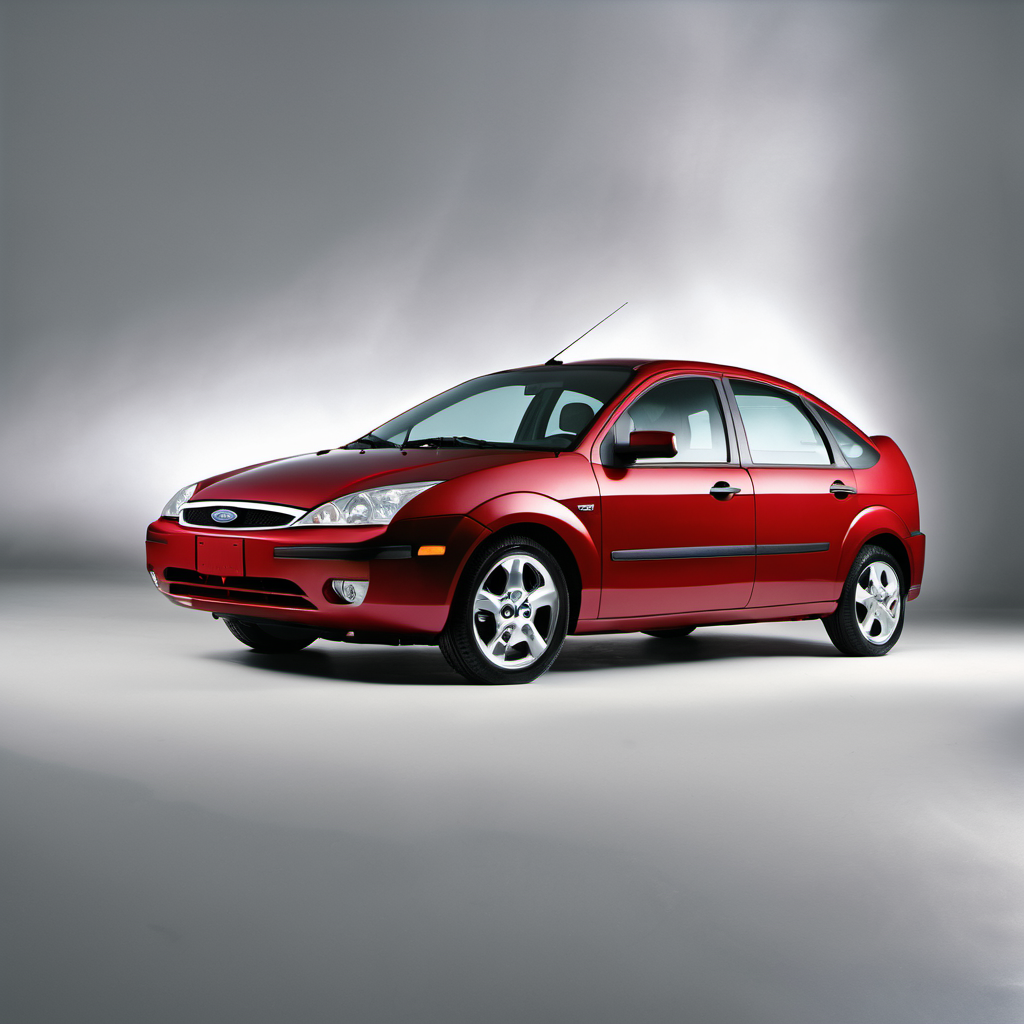
2005 Ford Focus Hatchback

2005 Ford

FocusHatchback

Hatchback

The 2005 Ford Focus hatchback is a second-generation (2000–2007) compact car that earned a strong following for its European-influenced handling, practical five-door layout, and affordable running costs. Ford sold it in massive numbers in the U.S., making parts easy to find and independent-shop labor rates very reasonable. Under the hood is Ford's 2.0L Zetec or PZEV four-cylinder, paired with either a 5-speed manual or 4-speed automatic. It's not a fast car, but it's willing, returns decent fuel economy, and fits easily into tight parking. The hatch body adds useful cargo flexibility over the sedan. By 2005 most first-year gremlins had been sorted out, but this generation still has well-documented weak spots — particularly around the ignition system, suspension bushings, and automatic transmission. A well-kept example with service records is a solid budget pick; a neglected one can become a money pit quickly.

Reliability
3/5
Verified data
Specs shown for Focus — the most common configuration. Other trims may vary in engine, drivetrain, or fuel economy. Sign in to see your vehicle's exact specs.
Engine
[object Object]
Drivetrain
FWD
Fuel
Gasoline
MPG
22 city / 29 hwy / 25 combined
Seats
Doors
Body
Compact Cars

Overview

AI-curated

The 2005 Ford Focus hatchback is a second-generation (2000–2007) compact car that earned a strong following for its European-influenced handling, practical five-door layout, and affordable running costs. Ford sold it in massive numbers in the U.S., making parts easy to find and independent-shop labor rates very reasonable. Under the hood is Ford's 2.0L Zetec or PZEV four-cylinder, paired with either a 5-speed manual or 4-speed automatic. It's not a fast car, but it's willing, returns decent fuel economy, and fits easily into tight parking. The hatch body adds useful cargo flexibility over the sedan. By 2005 most first-year gremlins had been sorted out, but this generation still has well-documented weak spots — particularly around the ignition system, suspension bushings, and automatic transmission. A well-kept example with service records is a solid budget pick; a neglected one can become a money pit quickly.

Known for
  • Nimble, European-tuned handling for the price
  • Practical five-door hatchback utility
  • Affordable parts and independent-shop labor
  • Fuel-efficient 2.0L four-cylinder
Best for
  • Budget-conscious commuters
  • Urban and suburban drivers who value maneuverability
  • First-time car owners
  • Buyers wanting a practical hatchback under $8,000 used
Watch for
  • Automatic transmission durability — the 4F27E is the weak link
  • Ignition switch and PATS (anti-theft) electrical gremlins
  • Rust on rocker panels, rear wheel arches, and subframe — critical in Wisconsin
  • Worn engine and transmission mounts causing vibration
  • Coolant leaks from the thermostat housing and water pump

Common issues by mileage

6 known

4F27E Automatic Transmission Slipping / Failure

high
Typically appears
80–130k mi
Estimated repair
$1,200 – $3,200

Ignition Switch / PATS Anti-Theft Electrical Fault — No-Start or Stall

high
Typically appears
60–120k mi
Estimated repair
$150 – $500

Oxygen Sensor Heater Circuit Failure (Bank 1 Sensor 1)

medium
Typically appears
70–120k mi
Estimated repair
$120 – $280

Thermostat Housing / Water Pump Coolant Leak

medium
Typically appears
60–100k mi
Estimated repair
$180 – $450

Front Control Arm Bushings / Ball Joints Worn

high
Typically appears
70–110k mi
Estimated repair
$250 – $650

Engine / Transmission Mount Deterioration — Vibration and Clunking

medium
Typically appears
80–140k mi
Estimated repair
$150 – $400

Maintenance schedule

  1. 1
    Every 5,000 miles or 6 months Engine oil and filter change

    The Zetec 2.0L is tolerant but deposits accumulate quickly with extended intervals, especially with lots of short cold-weather trips common in Wisconsin.

  2. 2
    Every 30,000 miles or any time you see residue near the front of the engine Coolant system inspection — hoses, thermostat housing, water pump

    Plastic thermostat housing and the water pump weep seal are known failure points. Catching a seep early is a $200 fix; ignoring it risks overheating and head gasket damage.

  3. 3
    Every 30,000 miles — do not skip Transmission fluid change (automatic)

    Ford's 4F27E is sensitive to degraded fluid. Many failures trace directly to owners following the 'lifetime fluid' myth. Fresh Mercon V fluid is cheap insurance.

  4. 4
    Every 60,000 miles Spark plugs replacement

    Stock plugs are cheap and accessible on this engine. Worn plugs cause rough cold starts — especially noticeable in sub-zero Wisconsin winters.

  5. 5
    Every 30,000 miles or any time you feel looseness in steering Front suspension inspection — control arm bushings, ball joints, tie rod ends

    Wisconsin road salt and pothole impacts accelerate bushing wear. These are load-bearing safety items.

  6. 6
    Every 2 years Brake fluid flush

    Brake fluid absorbs moisture over time, lowering its boiling point and promoting internal corrosion — a real concern given wet Wisconsin winters.

  7. 7
    Every fall, before road salt season begins Undercarriage rust inspection and treatment

    Rocker panels, rear wheel arches, and the front subframe are this car's biggest long-term threats in the upper Midwest. Catching surface rust early prevents structural failure.

  8. 8
    Every fall (before temperatures drop below freezing) Battery load test

    The Focus's electrical system is sensitive to low battery voltage. A marginal battery that starts fine in October may leave you stranded at -10°F in January.

Always defer to the manufacturer's service manual for warranty-mandated intervals.

Cost of ownership

Annual maintenance
$400 – $900
Fuel
At 25 MPG combined and ~12,000 miles/year, expect roughly $1,400–$1,700/year at current regional gas prices. Highway commuters will do better; lots of short cold-weather trips will do worse.
Insurance
Typically among the lowest in class — expect $800–$1,300/year for full coverage on a 2005 model depending on driver profile and deductibles.

The Focus is genuinely cheap to own when healthy. Parts are widely available and this engine is straightforward for any competent independent shop. The main budget wildcard is the automatic transmission — budget $1,500–$3,200 if it hasn't been serviced regularly. Rust remediation is the other surprise cost for Wisconsin-driven examples: $300–$1,500+ depending on how far it's progressed.
Seasonal care

Lake Geneva, WI
Winter
  • Load-test the battery every fall — the Focus's electrical system is fussy with a weak battery, and cold cranking a 2.0L at sub-zero temps demands full capacity.
  • Switch to a winter-rated washer fluid (rated to at least -20°F); the hatchback's large rear glass accumulates road grime and salt spray quickly.
  • Inspect and replace wiper blades before first snowfall; consider winter-style beam blades for better snow/ice clearing.
  • Check antifreeze concentration — should protect to at least -34°F for Lake Geneva winters. Flush and refill if coolant is more than 4 years old.
  • Inspect the undercarriage each spring after salt season for new rust on rockers, subframe, and brake lines — treat and seal before it spreads.
  • If equipped with all-season tires, verify tread depth is at least 4/32" before winter; this car's FWD helps in snow but only as far as tire grip allows.
Summer
  • Check tire pressure monthly — pressure drops about 1 PSI for every 10°F of temperature change, and summer heat can cause significant fluctuation.
  • Inspect the A/C system refrigerant level and cabin air filter; a clogged filter kills A/C output and is a 10-minute DIY fix on this car.
  • Watch for coolant system heat soak — if you see the temp gauge creeping up in traffic, inspect the thermostat housing and water pump immediately.
  • Check the coolant reservoir after hot drives; any milky residue or sweet smell is a head gasket warning sign.

Comparable vehicles

If you're shopping for one

Red flags
  • Any rust penetrating through the rocker panels or visible holes in the subframe — walk away.
  • Automatic transmission that hesitates, slips, or shudders — assume rebuild or replacement cost in your offer.
  • Milky or foamy oil on the dipstick or under the oil cap — possible head gasket failure.
  • A check engine light, or a freshly cleared MIL with no explanation — insist on a pre-purchase inspection scan.
  • Missing or inconsistent service records, especially on the automatic transmission fluid.
What to inspect
  • Undercarriage: rocker panels, rear wheel arches, and front subframe for rust — this is the #1 kill condition for Wisconsin-driven examples.
  • Transmission behavior: with the automatic, check for delayed engagement from a cold start, slipping between gears, or shudder at highway speeds.
  • Coolant system: look for residue or discoloration around the thermostat housing and along the front of the block.
  • Suspension: grab each front wheel at 9 and 3 o'clock and try to wiggle — any play indicates tie rod or ball joint wear. Also check for clunking over bumps (control arm bushings).
  • Electrical: verify all windows, locks, and the instrument cluster work normally. Scan for stored DTCs even if no check engine light is on — codes can be cleared before sale.
AI profile generated 16 days ago · claude-sonnet-4-6 · v2.