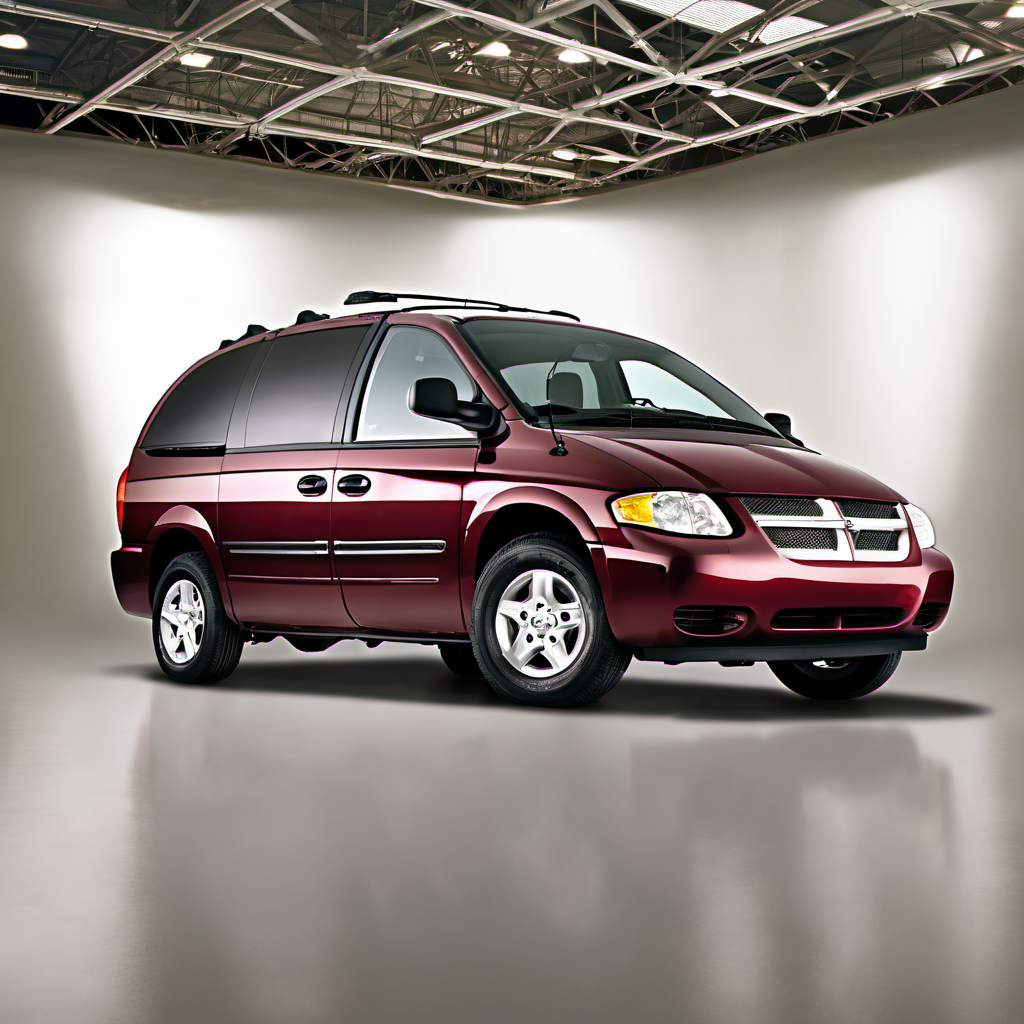
2005 Dodge Grand Caravan Passenger Van/Minivan

2005 Dodge

Grand Caravan PassengerVan/Minivan

3.3L V6 · Van/Minivan

The 2005 Dodge Grand Caravan is a third-row minivan that defined the segment Chrysler invented in the early 1980s. By 2005 it sat on the long-running RS platform and was offered in both base Caravan and uplevel Grand Caravan trim lines, with the Grand Caravan pushing seating, storage, and family-hauling features. Power came primarily from the 3.3L or 3.8L V6, both paired to a 4-speed automatic. At this mileage and age, the Grand Caravan earns its reputation as a practical, affordable family hauler — but also a van that demands diligent maintenance. The 3.3L and 3.8L engines are generally tough, but the cooling system, transmission, and sliding door hardware are known weak points that owners need to stay ahead of. For a used buy in Wisconsin, budget for rust inspection underneath and around the sliding door tracks, and plan for cooling system and transmission fluid service if the history is unknown. Parts are cheap and independent shops know these vans well, which keeps ownership costs manageable.

Reliability
2/5
Verified data
Engine
3.3L V6
Drivetrain
FWD
Fuel
Gasoline
MPG
18 city / 25 hwy / 21 combined
Seats
7
Doors
4
Body
Minivan
MSRP
$23,500

Overview

AI-curated

The 2005 Dodge Grand Caravan is a third-row minivan that defined the segment Chrysler invented in the early 1980s. By 2005 it sat on the long-running RS platform and was offered in both base Caravan and uplevel Grand Caravan trim lines, with the Grand Caravan pushing seating, storage, and family-hauling features. Power came primarily from the 3.3L or 3.8L V6, both paired to a 4-speed automatic. At this mileage and age, the Grand Caravan earns its reputation as a practical, affordable family hauler — but also a van that demands diligent maintenance. The 3.3L and 3.8L engines are generally tough, but the cooling system, transmission, and sliding door hardware are known weak points that owners need to stay ahead of. For a used buy in Wisconsin, budget for rust inspection underneath and around the sliding door tracks, and plan for cooling system and transmission fluid service if the history is unknown. Parts are cheap and independent shops know these vans well, which keeps ownership costs manageable.

Known for
  • Stow 'N Go seating that folds flat into the floor (Stow 'N Go standard on SE trim and above)
  • Spacious three-row interior with flexible cargo configurations
  • Affordable purchase price and widely available repair parts
  • Sliding rear doors on both sides standard on Grand Caravan
  • Decent towing capacity (3,600 lbs with the 3.8L)
Best for
  • Large families needing three-row seating
  • Budget-conscious buyers who want maximum interior space per dollar
  • Buyers who do city and suburban driving with frequent cargo/passenger switches
  • Drivers comfortable with DIY or independent-shop maintenance
Watch for
  • Transmission failure, especially in high-mileage examples — the 41TE is a known weak point
  • Sliding door latch and cable failures that can trap passengers or leave doors open
  • Intake manifold and lower intake gasket leaks on the 3.3L/3.8L
  • Underbody rust, especially around rear subframe and sliding door sill — critical in Wisconsin
  • Power door module failures causing erratic or non-functional power sliding doors

Common issues by mileage

6 known

41TE Automatic Transmission Failure / Slipping

high
Typically appears
80–150k mi
Estimated repair
$1,800 – $3,800

Intake Manifold / Lower Intake Gasket Leak (3.3L/3.8L)

high
Typically appears
70–130k mi
Estimated repair
$400 – $900

Power Sliding Door Latch, Cable, or Module Failure

high
Typically appears
60–120k mi
Estimated repair
$150 – $600

Cooling System — Thermostat, Water Pump, or Radiator Failure

medium
Typically appears
80–140k mi
Estimated repair
$250 – $750

Oxygen Sensor / Heater Circuit Faults

medium
Typically appears
80–160k mi
Estimated repair
$150 – $400

Maintenance schedule

  1. 1
    Every 30,000 miles or immediately if history unknown Transmission fluid service (drain and fill — NOT just flush)

    The 41TE is extremely sensitive to degraded ATF. Regular drain-and-fill extends transmission life significantly. Avoid aggressive flushes on high-mileage units with unknown history.

  2. 2
    Every 5 years / 50,000 miles Coolant flush and system inspection

    HOAT coolant breaks down and becomes acidic, accelerating water pump and radiator degradation. Inspect hoses and the overflow reservoir cap at every service.

  3. 3
    Every 60,000 miles Inspect serpentine belt and idler/tensioner pulleys

    Belt failure on these V6s can strand the vehicle and damage the cooling system. Tensioner pulleys wear quietly and should be replaced with the belt.

  4. 4
    Every 30,000 miles Spark plugs (platinum or OE-spec)

    The 3.3L responds well to fresh plugs; worn plugs increase misfires and fuel consumption. Use OE-spec plugs — the rear three on the firewall side are labor-intensive.

  5. 5
    Every 12 months / before winter Slide and lubricate power sliding door tracks and latches

    Dry or salt-contaminated tracks are the #1 cause of latch and cable failures. A clean, lubricated track prevents expensive repairs.

  6. 6
    Every spring after winter Inspect undercarriage for rust — frame rails, rear subframe, brake lines

    Wisconsin road salt attacks the rear subframe and steel brake lines. Catching surface rust early prevents structural and safety issues later.

  7. 7
    Every fall before winter Battery test and terminal cleaning

    Cold cranking demand spikes in Wisconsin winters. A marginal battery that starts fine in October will leave you stranded in January.

  8. 8
    Every 3 years Brake fluid flush

    Hygroscopic brake fluid absorbs moisture over time, lowering the boiling point and accelerating internal caliper and ABS module corrosion.

Always defer to the manufacturer's service manual for warranty-mandated intervals.

Cost of ownership

Annual maintenance
$700 – $1,800
Fuel
At 21 MPG combined and typical Wisconsin driving, expect roughly $2,000–$2,500/year at current mid-grade fuel prices, depending on mileage.
Insurance
Minivans typically insure very affordably — expect $900–$1,400/year for full coverage on a 2005 in Wisconsin, depending on driving record and coverage limits.

The Grand Caravan is one of the cheapest minivans to own on a day-to-day basis — parts are plentiful, multiple local shops know them, and insurance is low. The big financial risk is transmission replacement ($1,800–$3,800) and cumulative rust repair if underbody maintenance was neglected. A well-maintained example with documented service history can be very economical; a neglected one can quickly cost more than it's worth.
Seasonal care

Lake Geneva, WI
Winter
  • Test battery cold cranking amps every October — replace if below spec. Sub-zero starts are brutal on aged batteries.
  • Switch to a winter-rated washer fluid rated to at least -20°F; the standard reservoir on these vans is large and freezing washer lines is a common issue.
  • Lubricate sliding door tracks and latches before first freeze — salt and ice will bind them and snap cables.
  • Inspect steel brake lines along the rear underbody for rust-through, especially near the axle beam — this is a safety item.
  • Keep the fuel tank above 1/4 to prevent fuel line moisture issues and add a fuel-line antifreeze treatment if the van sits outdoors.
  • Check tire pressure weekly — these vans run 35–36 PSI and pressure drops roughly 1 PSI per 10°F temperature drop.
Summer
  • Inspect the A/C system — the evaporator drain can clog and cause water to drip on the passenger floor; clear it each spring.
  • Check coolant level and condition before hot-weather driving; the 3.3L/3.8L can run warm if the cooling system is marginal.
  • Verify tire pressure after a cold morning check — summer heat raises pressure and over-inflation causes uneven wear on these heavier vans.
  • Inspect the sliding door weatherstripping for cracking; heat degrades the rubber and allows water and noise intrusion.
  • Check the power steering fluid level — these vans use hydraulic power steering that can develop minor leaks around the rack as it ages.

Comparable vehicles

If you're shopping for one

Red flags
  • Any transmission service listed as 'flushed' on high-mileage unit with no prior drain-and-fill history — aggressive flush can trigger failure in a worn unit.
  • Rust bubbling at the lower sliding door sill or rear wheel arches — this spreads quickly and is expensive to repair properly.
  • Power sliding door that only works intermittently or requires multiple button presses — cable or latch failure is imminent.
  • Overheating history or evidence of a blown head gasket (milky oil, coolant in overflow that looks rusty/foamy).
  • U0100–U0104 codes on a pre-purchase scan — CAN bus communication faults can be expensive and difficult to diagnose.
  • Missing maintenance records on any example over 100k miles — the transmission and cooling system service history is critical on this vehicle.
What to inspect
  • Transmission: test drive for slipping, shuddering at highway speed, or delayed engagement from Park into Drive/Reverse.
  • Sliding doors: cycle both doors fully open and closed — latches should engage firmly and smoothly without grinding.
  • Underbody: get it on a lift and inspect the rear subframe, steel brake lines, and floor pan for rust perforation.
  • Cooling system: check for white residue around hose clamps, coolant overflow tank discoloration, and any sweet smell at idle.
  • Interior floor: lift the Stow 'N Go seat well covers and check for water intrusion or rust on the floor channels.
  • Check engine and ABS warning lights — scan for stored codes before purchase, especially U-codes (module communication) which can indicate electrical gremlins.
AI profile generated 16 days ago · claude-sonnet-4-6 · v2.