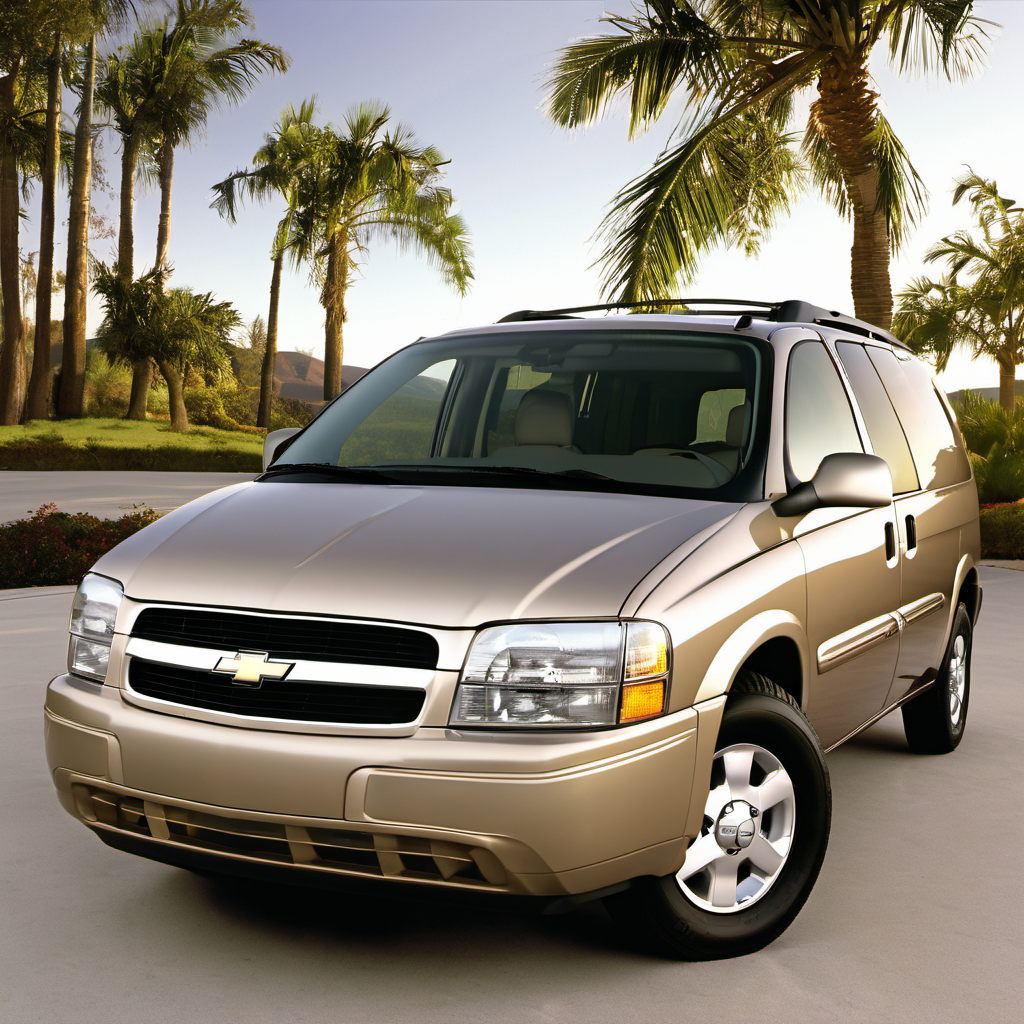
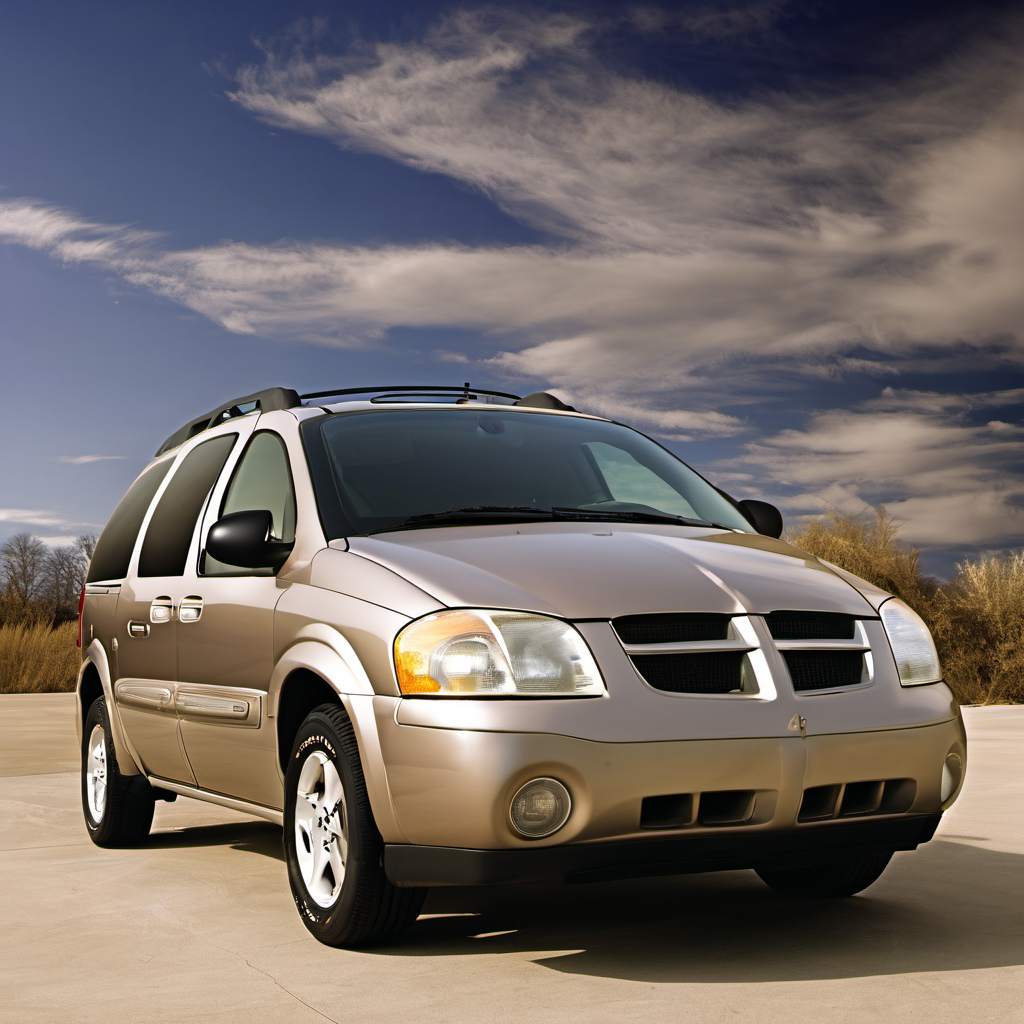
2005 Chevrolet Uplander Passenger Van/Minivan

2005 Chevrolet

Uplander PassengerVan/Minivan

3.5L V6 · Van/Minivan

The 2005 Chevrolet Uplander is GM's replacement for the long-running Venture minivan, riding on the same U-body platform shared with the Pontiac Montana SV6, Saturn Relay, and Buick Terraza. It launched to modest reviews — GM stretched the body, added a slightly sportier exterior skin, and called it new, but underneath it was a carry-over design. The Uplander was offered in standard- and extended-wheelbase configurations and seated up to eight passengers. Power came exclusively from GM's 3.5L or 3.9L pushrod V6 paired to a 4-speed automatic. Neither engine is a powerhouse, but both are straightforward to maintain and reasonably durable when oil changes are kept current. Front-wheel drive was standard; all-wheel drive was available on some trims via a Dana 44-based system. The Uplander was discontinued after the 2008 model year as GM exited the traditional minivan segment. Parts availability is good because the platform was shared across four brands, but expect an 18-year-old van to need meaningful suspension and seal work. It remains a budget-friendly hauler for families who need the space and aren't picky about prestige.

Reliability
2/5
Verified data
Engine
3.5L V6
Drivetrain
FWD
Fuel
Gasoline
MPG
18 city / 25 hwy / 21 combined
Seats
7
Doors
4
Body
Minivan
MSRP
$24,490

Overview

AI-curated

The 2005 Chevrolet Uplander is GM's replacement for the long-running Venture minivan, riding on the same U-body platform shared with the Pontiac Montana SV6, Saturn Relay, and Buick Terraza. It launched to modest reviews — GM stretched the body, added a slightly sportier exterior skin, and called it new, but underneath it was a carry-over design. The Uplander was offered in standard- and extended-wheelbase configurations and seated up to eight passengers. Power came exclusively from GM's 3.5L or 3.9L pushrod V6 paired to a 4-speed automatic. Neither engine is a powerhouse, but both are straightforward to maintain and reasonably durable when oil changes are kept current. Front-wheel drive was standard; all-wheel drive was available on some trims via a Dana 44-based system. The Uplander was discontinued after the 2008 model year as GM exited the traditional minivan segment. Parts availability is good because the platform was shared across four brands, but expect an 18-year-old van to need meaningful suspension and seal work. It remains a budget-friendly hauler for families who need the space and aren't picky about prestige.

Known for
  • Shared U-body platform with Pontiac Montana SV6, Saturn Relay, and Buick Terraza
  • Standard- and extended-wheelbase options with up to 8-passenger seating
  • Simple pushrod V6 engines that are relatively easy to service
  • Available AWD — uncommon in minivans of this era
Best for
  • Budget-minded families needing minivan utility
  • High-passenger-count hauling on a tight budget
  • Buyers who can do basic DIY maintenance
  • Short-distance commuters who need cargo flexibility
Watch for
  • Intake manifold gasket leaks — a recurring GM 3.5L/3.9L V6 issue
  • Power sliding door mechanisms that fail with age
  • AWD transfer case and front differential wear on higher-mileage examples
  • Subframe and underbody rust accelerated by road salt in Wisconsin winters
  • 4-speed automatic (4T65-E) prone to hard shifts and solenoid wear past 100k miles

Common issues by mileage

6 known

Intake Manifold Gasket Leak

high
Typically appears
60–130k mi
Estimated repair
$400 – $750

4T65-E Transmission Shift Solenoid / Hard Shift

high
Typically appears
90–150k mi
Estimated repair
$300 – $1,800

Power Sliding Door Motor or Latch Failure

high
Typically appears
60–120k mi
Estimated repair
$200 – $600

Oxygen Sensor / O2 Heater Circuit Failure

medium
Typically appears
80–130k mi
Estimated repair
$150 – $400

Subframe and Underbody Rust (Wisconsin/Salt-Belt)

high
Typically appears
Any mileage on a salt-belt vehicle
Estimated repair
$300 – $2,500

Maintenance schedule

  1. 1
    Every 5,000 miles or 6 months Engine oil and filter change

    The 3.5L/3.9L V6 intake manifold gaskets are sensitive to coolant and oil degradation. Fresh oil is the single best way to extend engine life on this platform.

  2. 2
    Every 30,000 miles — do NOT rely on 'lifetime' fluid claims on a 20-year-old van Transmission fluid change (4T65-E)

    Old fluid accelerates solenoid wear and clutch pack degradation. A drain-and-fill at this interval is cheap insurance against a $1,500+ transmission repair.

  3. 3
    Every 5 years / 50,000 miles Coolant flush and pressure test

    Degraded coolant attacks the intake manifold gaskets from the inside. A pressure test also catches early gasket seep before it becomes a full coolant-in-oil event.

  4. 4
    Every 12 months Inspect and lubricate power sliding door tracks and latches

    Dry tracks and corroded latches are the top cause of sliding door motor failures. A simple cleaning and white-grease application can prevent a $400+ repair.

  5. 5
    Every fall before road-salt season Inspect underbody, subframe, and brake lines for rust

    Wisconsin road salt aggressively attacks the U-body's subframe, brake lines, and fuel lines. Catching surface rust before it perforates a brake line is a safety issue.

  6. 6
    Every 60,000 miles or at first sign of squealing Serpentine belt and tensioner inspection

    Tensioner springs weaken with age and heat cycles. A failed belt on a cold Wisconsin morning leaves you stranded with no power steering or charging.

  7. 7
    Every 60,000 miles Spark plugs (platinum or iridium)

    The V6 is not particularly difficult to access, but rear-bank plugs require patience. Staying on schedule prevents misfires that stress the catalytic converter.

  8. 8
    Every fall / before sub-zero temperatures Battery load test

    A marginal battery that starts fine in October will fail at -10°F in January. The 4T65-E also needs strong cranking voltage to initialize properly in cold weather.

Always defer to the manufacturer's service manual for warranty-mandated intervals.

Cost of ownership

Annual maintenance
$800 – $2,000
Fuel
Expect roughly $2,000–$2,600/year at current Wisconsin fuel prices based on ~15,000 miles/year and 21 MPG combined.
Insurance
Typically $900–$1,400/year for full coverage in the Lake Geneva area on a vehicle this age; actual rate depends heavily on driver history.

The Uplander is inexpensive to buy used, but budget honestly for maintenance on a 20-year-old van. Routine upkeep runs $800–$1,200/year on a well-maintained example; if deferred maintenance needs catching up (intake gaskets, transmission fluid, brake lines), first-year costs can easily hit $2,000 or more. Fuel economy is mediocre for a family vehicle. The real ownership risk is hidden rust — a Wisconsin van with rotted brake or fuel lines can produce a repair bill that exceeds the vehicle's value.
Seasonal care

Lake Geneva, WI
Winter
  • Load-test the battery every October — the 4T65-E transmission draws heavy current during cold starts and a weak battery causes no-start and erratic shift behavior at -10°F to -20°F.
  • Inspect all rubber brake lines and steel brake/fuel lines for salt corrosion before the season; a corroded line can fail without warning on icy roads.
  • Switch to a full-synthetic 5W-30 if not already using one — the 3.5L/3.9L benefits from faster cold-start oil circulation below 0°F.
  • Top off washer fluid with a -20°F or lower rated concentrate rated for Wisconsin winters; the Uplander's tall windshield collects road spray quickly.
  • Check sliding door seals and tracks — water that freezes inside the door track can burn out the sliding door motor trying to open against ice.
  • Keep the fuel tank above the half-full mark to reduce condensation in the tank and add a bottle of fuel-line antifreeze in November.
Summer
  • Check tire pressure monthly — Wisconsin summer heat causes pressure to rise 4–6 PSI from cold inflation; overinflation accelerates center-tread wear on the Uplander's wide tires.
  • Inspect the A/C refrigerant charge and cabin air filter before summer — on a van this age, the evaporator drain often clogs and causes water to drip onto the passenger floor.
  • Watch coolant temperature gauge on hot days, especially with a full passenger load; a marginal radiator or a slow intake gasket leak will show up first as a temp spike at highway speeds.
  • Check the serpentine belt for cracking — summer heat accelerates rubber degradation and a failed belt means no power steering and no A/C simultaneously.
  • Inspect the sliding door weather seals for cracking that lets heat into the cabin and allows water intrusion during summer storms.

Comparable vehicles

If you're shopping for one

Red flags
  • Any evidence of coolant in the oil or oil in the coolant — intake gasket failure that was ignored often causes warped heads.
  • Visibly rotted subframe or brake lines — repair costs frequently exceed the vehicle's value on a salt-belt example.
  • A sliding door that binds, grinds, or operates only intermittently — motor replacement is $300–$600 and the mechanism may have deeper damage.
  • Transmission that slips, shudders at cruise speed, or has never had a fluid change — 4T65-E rebuilds run $1,200–$2,000 at an independent shop.
  • Any scan codes related to VVT camshaft actuators (P0012, P0015, P0022, P0025) without a clear recent repair history — these can indicate sludge from infrequent oil changes.
  • Missing maintenance records on a van over 100k miles — the intake gasket and transmission service intervals are critical and there is no good way to verify they were done without records.
What to inspect
  • Put the van on a lift and inspect the subframe, rear suspension cradle, and all brake/fuel lines for salt perforation — this is a pass/fail item in Wisconsin.
  • Pull the oil dipstick and look for a milky or frothy residue that signals coolant mixing with oil (intake manifold gasket failure).
  • Check the coolant overflow reservoir for a brown oily film — another early indicator of internal coolant loss.
  • Operate both power sliding doors through 5–10 full open/close cycles and listen for grinding, hesitation, or motor strain.
  • Connect an OBD-II scanner and check for stored or pending codes, especially P0012/P0015/P0022/P0025 (VVT solenoids) and any P003x O2 sensor codes.
  • Test drive and note any transmission shudder, delayed engagement from a stop, or harsh 1-2 shift — signs of 4T65-E wear.
  • Inspect all door seals, the headliner at the D-pillar, and the cargo floor for signs of water intrusion.
AI profile generated 17 days ago · claude-sonnet-4-6 · v2.