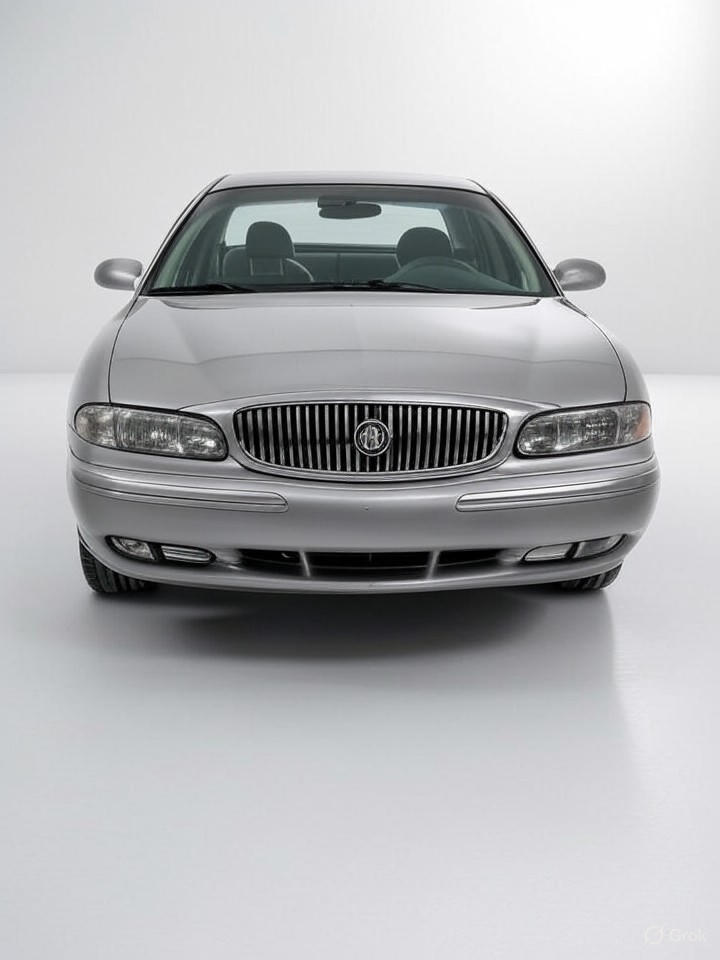
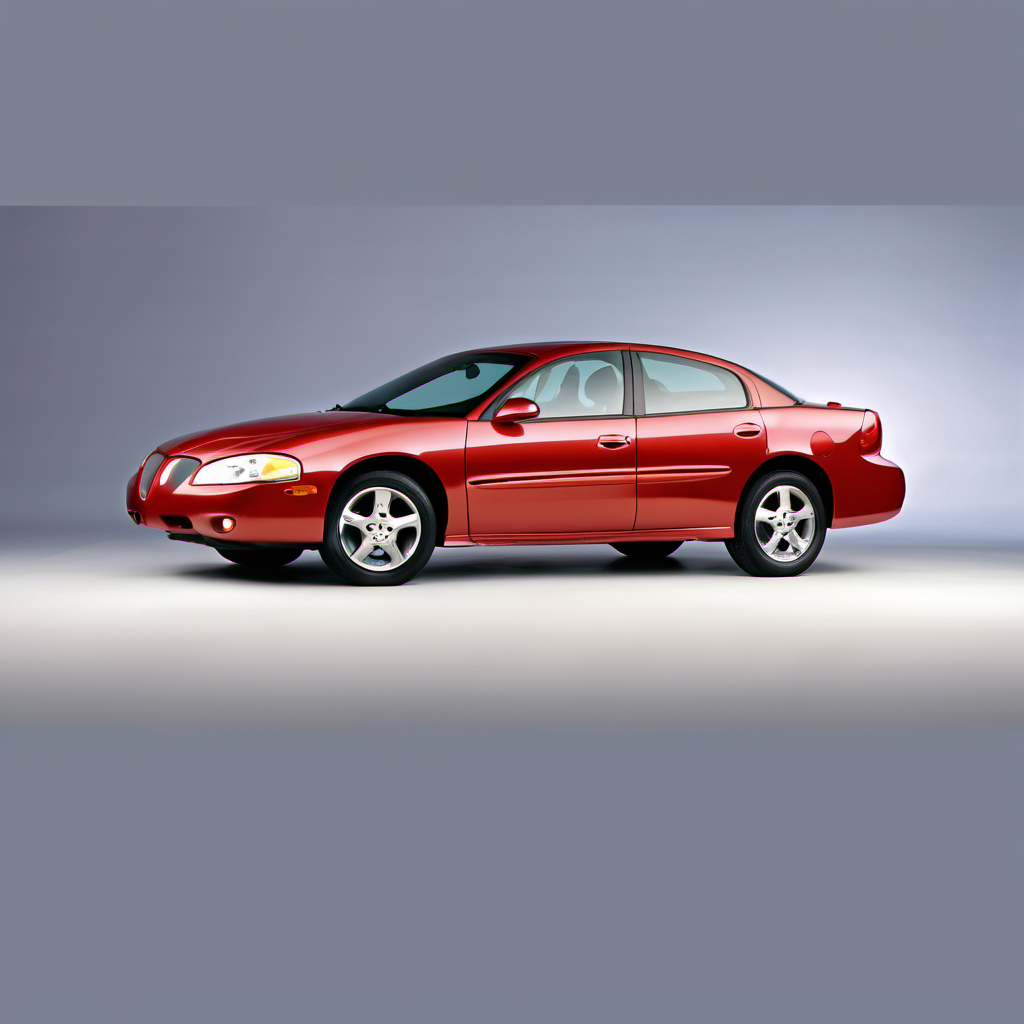
2004 Buick Century Sedan

2004 Buick

CenturySedan

Sedan

The 2004 Buick Century is a full-size front-wheel-drive sedan built on GM's W-body platform, shared with the Pontiac Grand Prix and Chevrolet Impala. It was one of the last model years for the Century nameplate, which was discontinued after 2005. The Century carved out a loyal following among buyers who wanted a roomy, comfortable American sedan with a smooth ride and straightforward mechanicals. Powered by GM's 3.1L V6, the Century is a simple, proven machine — not exciting, but dependable when maintained. Parts are cheap and widely available, and any independent shop in the Midwest knows this engine cold. At 20 years old, most surviving examples have well over 100,000 miles, so condition matters far more than the nameplate. This is a car for practical transportation, not driving thrills. Expect soft handling, a cushy highway ride, adequate power, and a very affordable cost of ownership — as long as you stay on top of cooling system and intake manifold gasket maintenance.

Reliability
3/5
Verified data
Specs shown for Century — the most common configuration. Other trims may vary in engine, drivetrain, or fuel economy. Sign in to see your vehicle's exact specs.
Engine
[object Object]
Drivetrain
FWD
Fuel
Gasoline
MPG
18 city / 27 hwy / 21 combined
Seats
Doors
Body
Midsize Cars

Overview

AI-curated

The 2004 Buick Century is a full-size front-wheel-drive sedan built on GM's W-body platform, shared with the Pontiac Grand Prix and Chevrolet Impala. It was one of the last model years for the Century nameplate, which was discontinued after 2005. The Century carved out a loyal following among buyers who wanted a roomy, comfortable American sedan with a smooth ride and straightforward mechanicals. Powered by GM's 3.1L V6, the Century is a simple, proven machine — not exciting, but dependable when maintained. Parts are cheap and widely available, and any independent shop in the Midwest knows this engine cold. At 20 years old, most surviving examples have well over 100,000 miles, so condition matters far more than the nameplate. This is a car for practical transportation, not driving thrills. Expect soft handling, a cushy highway ride, adequate power, and a very affordable cost of ownership — as long as you stay on top of cooling system and intake manifold gasket maintenance.

Known for
  • Smooth, comfortable highway ride
  • Simple, well-understood 3.1L V6 powertrain
  • Affordable parts and independent-shop-friendly mechanicals
  • Spacious interior with generous trunk space
  • Loyal senior/value-buyer following
Best for
  • Budget-conscious daily drivers
  • Highway commuters who prioritize comfort over sport
  • Buyers who want cheap, predictable repair costs
  • Retirees or low-mileage local drivers
Watch for
  • Intake manifold gasket failure — the single biggest known issue on the 3.1L
  • Lower intake coolant leaks leading to overheating if ignored
  • At 20 years old, expect deferred maintenance and rust on suspension/brake hardware
  • Transmission fluid neglect on 4T65-E automatic can shorten its life significantly
  • Worn struts and strut mounts are common at this age and mileage

Common issues by mileage

6 known

Intake Manifold Gasket Failure (Lower Intake Coolant Leak)

high
Typically appears
70–130k mi
Estimated repair
$400 – $750

Coolant Bypass Hose / Thermostat Housing Leak

high
Typically appears
80–150k mi
Estimated repair
$150 – $350

Upstream Oxygen Sensor Failure

medium
Typically appears
90–140k mi
Estimated repair
$150 – $300

4T65-E Transmission Slipping / TCC Shudder

medium
Typically appears
100–160k mi
Estimated repair
$300 – $2,200

Struts, Strut Mounts, and Sway Bar Links Worn

high
Typically appears
80–130k mi
Estimated repair
$400 – $900

Maintenance schedule

  1. 1
    Every 2 years or 30k miles Engine coolant flush and full cooling system inspection

    The 3.1L's intake manifold gaskets are highly sensitive to coolant degradation. Old coolant becomes acidic and accelerates gasket failure. Use the correct Dex-Cool or a compatible extended-life coolant — never mix types.

  2. 2
    Every 30k miles (regardless of 'lifetime' fluid claims) Transmission fluid and filter change

    The 4T65-E automatic is durable but does not tolerate neglected fluid. Dark or burnt-smelling fluid is a warning sign. Fresh fluid is the cheapest insurance against a $1,500+ rebuild.

  3. 3
    Every 60k miles Spark plugs and wires replacement

    The 3.1L uses a distributorless ignition. Worn plugs or cracked wires cause misfires that can be mistaken for bigger engine problems. The rear bank (firewall side) plugs are harder to access — budget extra labor time.

  4. 4
    Every 60k miles Serpentine belt and tensioner inspection

    Belt failure on a FWD GM V6 of this era can happen without warning. Tensioner spring fatigue causes slipping before full failure. Inspect both at the same time.

  5. 5
    Every 2–3 years Brake fluid flush

    Brake fluid absorbs moisture over time, lowering its boiling point and accelerating corrosion in calipers and ABS modulators — a real concern on Wisconsin salt-exposed vehicles.

  6. 6
    Every fall, before road salt season Undercarriage rust inspection

    At 20 years old, look closely at brake lines, fuel lines, strut towers, subframe mounting points, and exhaust hangers. Rust-compromised brake or fuel lines are a safety issue, not a cosmetic one.

  7. 7
    Every fall Battery load test

    Wisconsin sub-zero temps expose marginal batteries. A battery that starts the car fine in October may leave you stranded in January. Load-test, not just voltage-check.

  8. 8
    Every 60k miles or if rough idle develops PCV valve replacement

    A stuck-closed PCV valve builds crankcase pressure and accelerates oil leaks past aging seals. Cheap part, easy access on the 3.1L, and commonly overlooked.

Always defer to the manufacturer's service manual for warranty-mandated intervals.

Cost of ownership

Annual maintenance
$600 – $1,400
Fuel
At 21 MPG combined and ~12,000 miles/year, expect roughly $1,500–$1,900/year at $2.60–$3.30/gal. Regular 87 octane only.
Insurance
Among the cheapest sedans to insure — low theft rate, low repair cost profile. Expect $700–$1,200/year for full coverage depending on driver profile and deductibles.

Day-to-day ownership costs are low. Parts are inexpensive and widely stocked. The risk is deferred maintenance — specifically the intake gaskets and transmission fluid. Budget $400–$750 for an intake gasket job if it hasn't been done, and treat that as a near-certainty on high-mileage examples. Outside of that known item, annual maintenance on a well-kept Century is very affordable for an upper-Midwest driver.
Seasonal care

Lake Geneva, WI
Winter
  • Load-test the battery every October — this 3.1L cranks hard in sub-zero temps and a weak battery will fail fast once the cold sets in.
  • Switch to a winter-rated washer fluid rated to at least -20°F. Lake Geneva winters will freeze standard fluid in the lines.
  • Inspect and replace wiper blades before first snowfall; consider winter-specific blades to handle ice and heavy wet snow.
  • Check tire tread depth and cold-weather pressure — FWD helps traction but worn tires on packed snow are still dangerous. Inflate to door-placard spec after temps drop, as pressure drops ~1 PSI per 10°F.
  • Flush and inspect brake fluid — moisture-saturated fluid combined with road salt attacking caliper slides is a common winter brake problem on these.
  • Rinse the undercarriage regularly through the salt season. Pay attention to brake line routing, fuel lines, and the subframe on a 20-year-old car.
Summer
  • Inspect the cooling system before hot weather — the 3.1L runs warm and a compromised intake gasket or low coolant level becomes an overheating event much faster in July than in April.
  • Check A/C refrigerant charge and cabin filter if equipped. A weak A/C on a hot Wisconsin summer day often just needs a refrigerant top-up and a clean condenser.
  • Monitor tire pressure weekly in summer — heat increases pressure and overinflated tires wear unevenly and reduce wet-road grip.
  • Check serpentine belt condition — heat accelerates belt cracking. Look for glazing and small cracks on the underside.

Comparable vehicles

If you're shopping for one

Red flags
  • Milky oil or coolant — walk away unless the intake gaskets have already been replaced with documented proof.
  • Transmission that slips, shudders, or hesitates between gears — repairs start at $300 and can reach $2,200+ for a rebuild.
  • Visible rust on brake lines or fuel lines — a safety issue that can cost more to fix than the car is worth.
  • No service history at all on a car over 100k miles — on these platforms, 'I just drove it' maintenance is a ticking clock on the cooling system and transmission.
  • Overheating history — even one overheating event on the 3.1L can warp a head. Ask directly and look for signs of recent head gasket work.
What to inspect
  • Pull the oil dipstick and radiator cap (cold engine) — look for milky/foamy residue indicating coolant mixing with oil, the classic sign of a failed lower intake manifold gasket.
  • Check the coolant reservoir for oily film or dark discoloration — another intake gasket telltale.
  • With the engine running, watch for white smoke from the exhaust at operating temp, which can indicate coolant burning internally.
  • Check the transmission: cold start, let it warm up fully, then drive through all gears. Any slipping, shuddering at highway cruise (TCC lockup), or delayed engagement is a red flag.
  • Inspect all four corners of the undercarriage for rust — specifically brake lines, fuel lines, strut towers, and subframe mounting points. Surface rust is normal; flaking or bubbling structural rust is a deal-breaker.
  • Push down firmly on each corner of the car and release — if the car bounces more than once, the struts are worn and need replacement.
  • Check tire wear pattern — uneven wear across a tire face indicates alignment or suspension issues; edge wear suggests chronic under/overinflation.
AI profile generated 11 days ago · claude-sonnet-4-6 · v2.