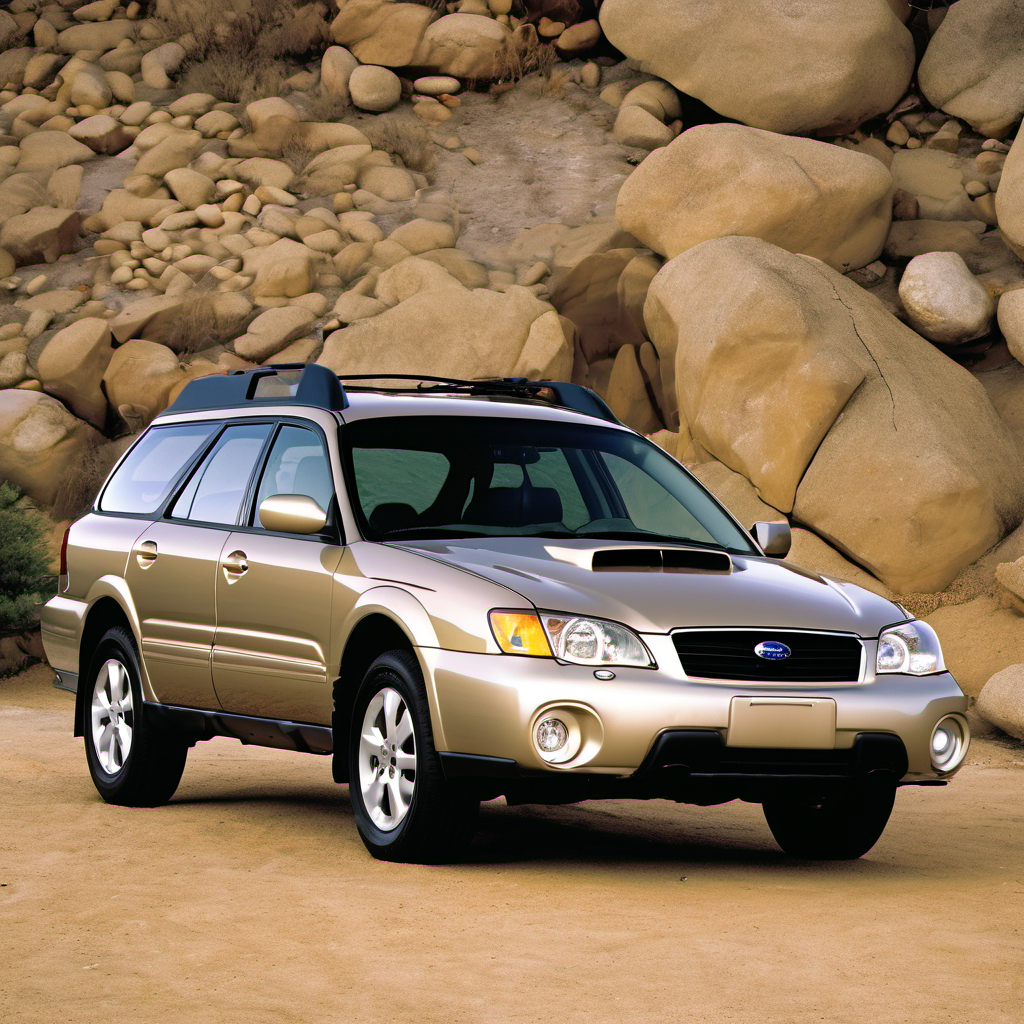
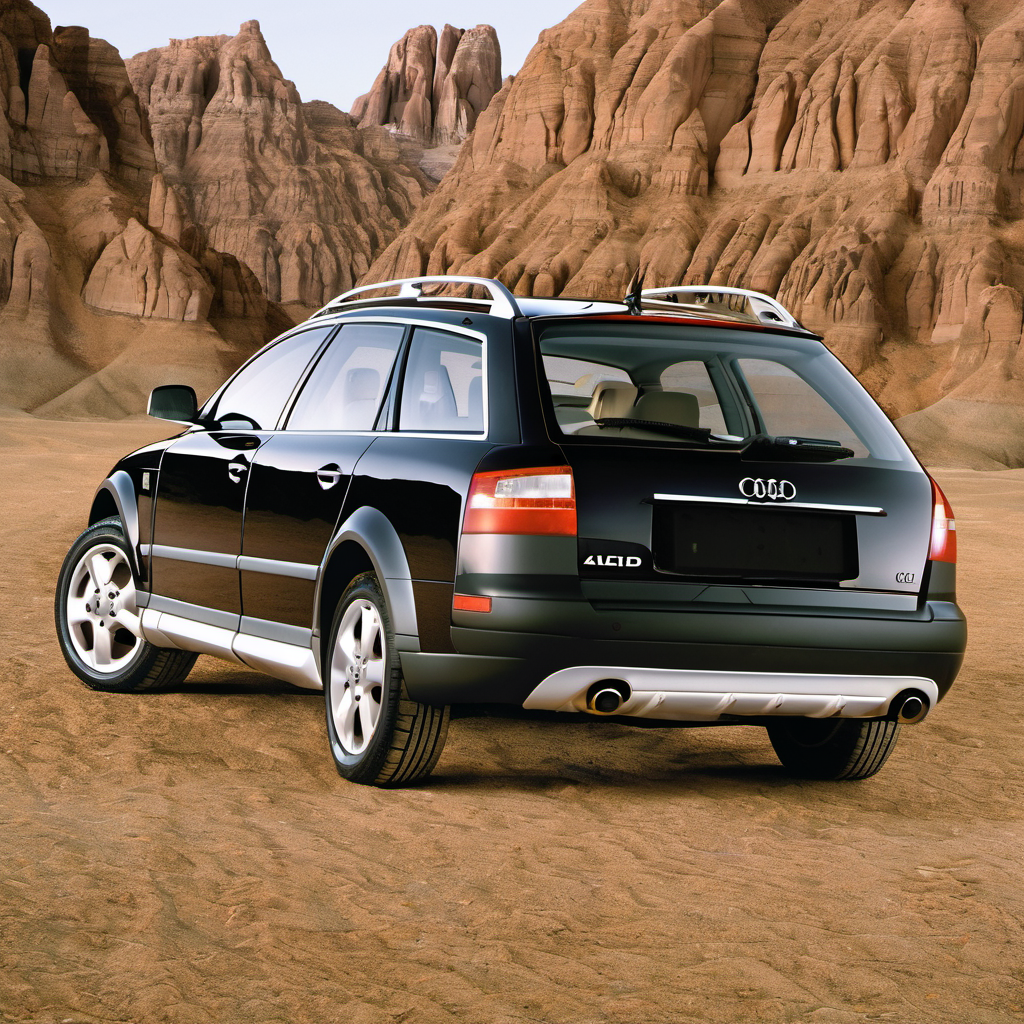
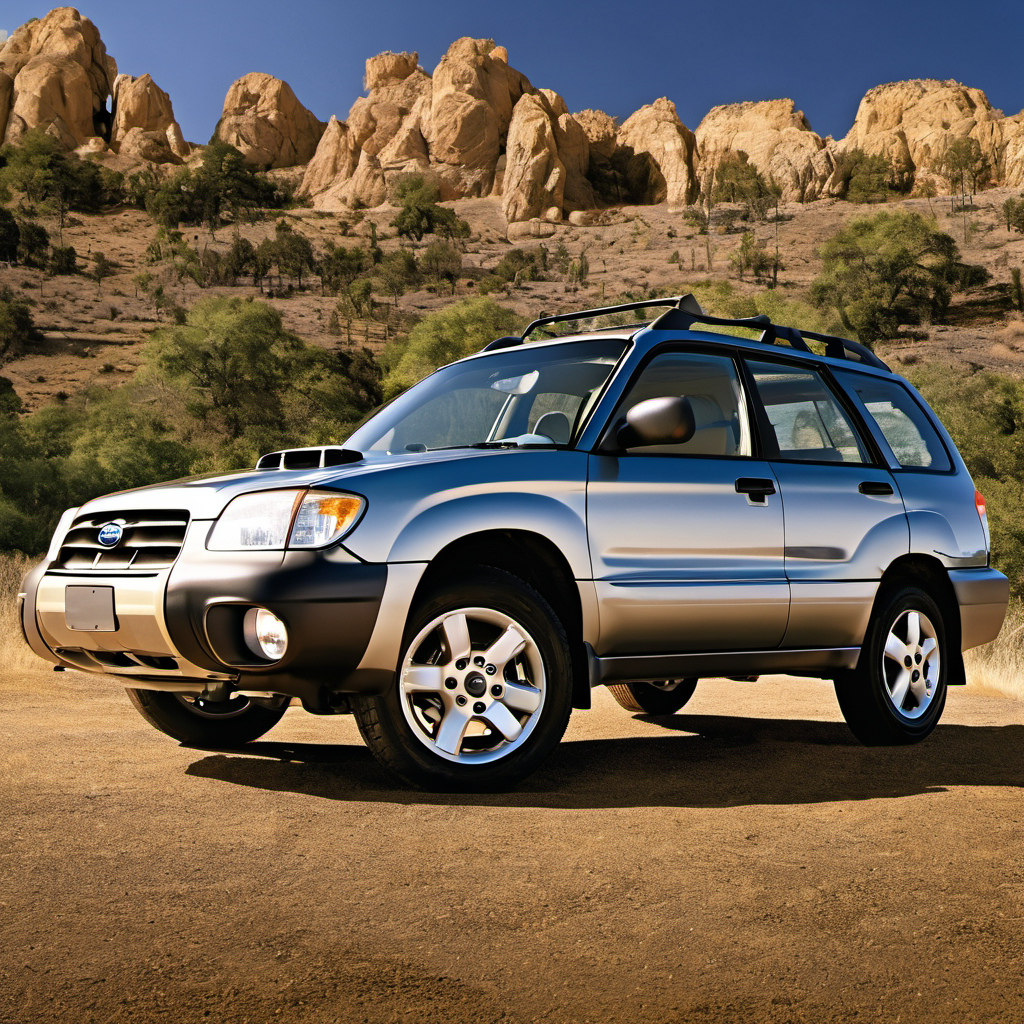
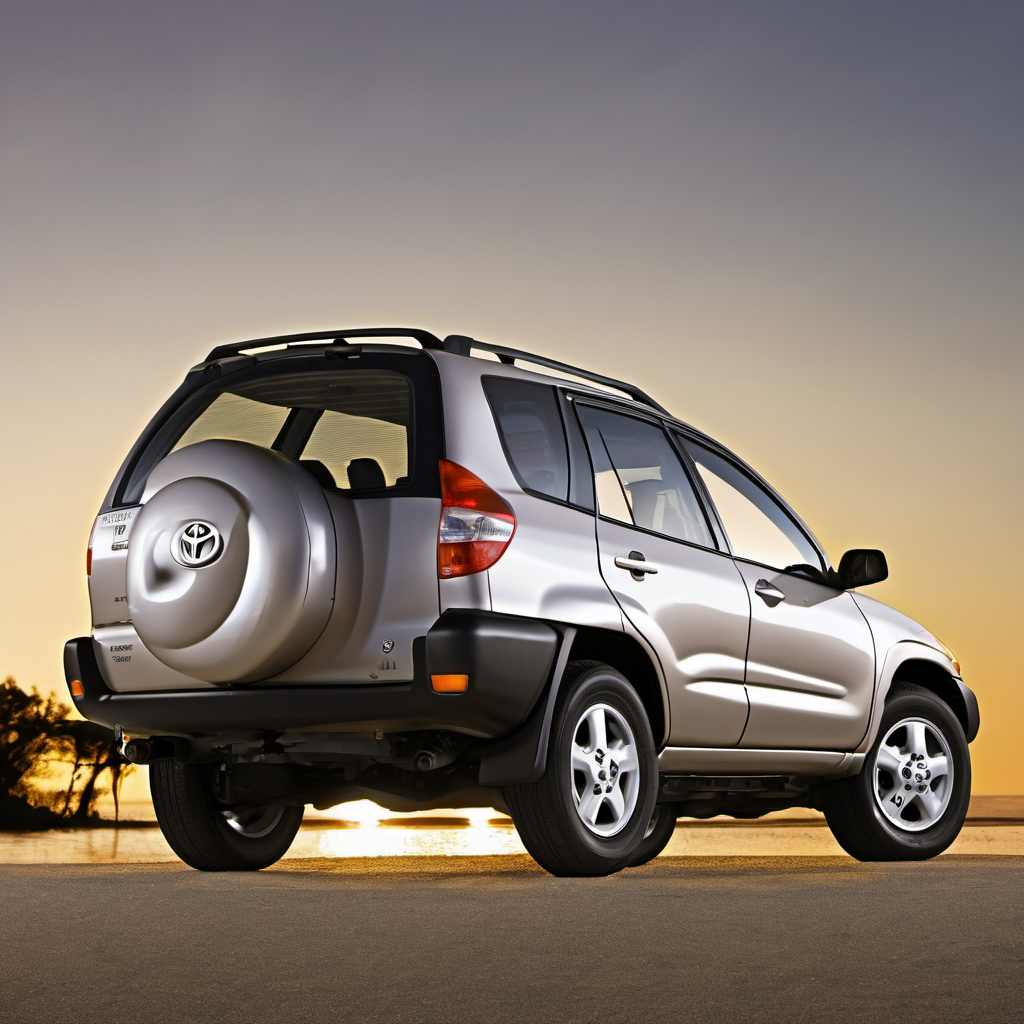
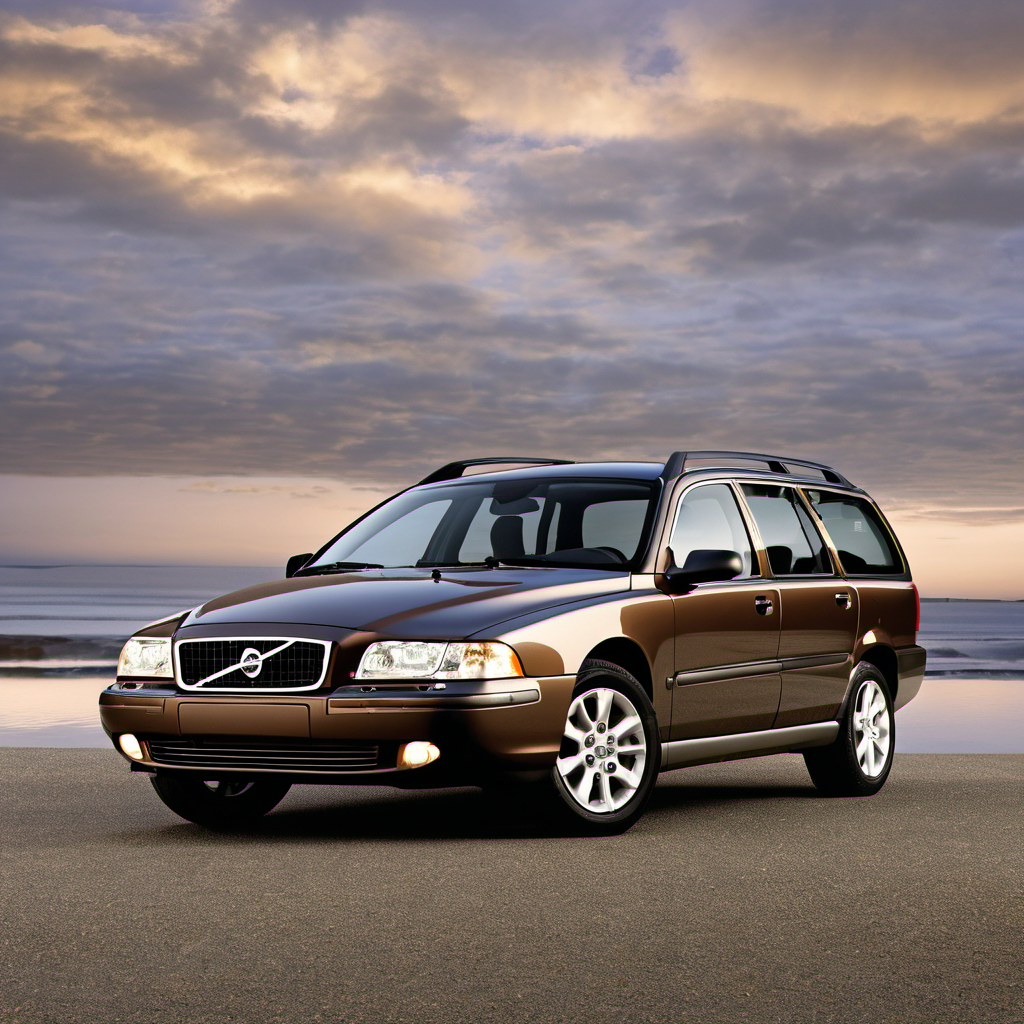
2003 Subaru Outback Wagon

2003 Subaru

OutbackWagon

2.5L H4 (EJ25) · Wagon

The 2003 Subaru Outback Wagon is a raised all-wheel-drive wagon that carved out a unique niche between traditional station wagons and SUVs. Built on Subaru's Legacy platform with extra ground clearance, it appeals to drivers who want genuine AWD capability with car-like handling and fuel economy. By 2003 it was a well-established model with a loyal following, particularly in snowy or rural regions. The standard engine is Subaru's 2.5L horizontally opposed four-cylinder (EJ25), known for delivering a low center of gravity and solid low-end torque. A turbocharged VDC (Vehicle Dynamics Control) variant was also available. The symmetrical AWD system is always-on — no mode switching required — which makes it genuinely capable in Wisconsin winters without driver intervention. At 20+ years old, these wagons can still be found in running condition, but head gasket history is the defining factor in value. Units that have had the head gaskets done with updated parts and fresh coolant are worth considerably more than those where the work is unknown or overdue.

Reliability
3/5
Verified data
Engine
2.5L H4 (EJ25)
Drivetrain
AWD
Fuel
Gasoline
MPG
20 city / 26 hwy / 22 combined
Seats
5
Doors
4
Body
Wagon
MSRP
$25,495

Overview

AI-curated

The 2003 Subaru Outback Wagon is a raised all-wheel-drive wagon that carved out a unique niche between traditional station wagons and SUVs. Built on Subaru's Legacy platform with extra ground clearance, it appeals to drivers who want genuine AWD capability with car-like handling and fuel economy. By 2003 it was a well-established model with a loyal following, particularly in snowy or rural regions. The standard engine is Subaru's 2.5L horizontally opposed four-cylinder (EJ25), known for delivering a low center of gravity and solid low-end torque. A turbocharged VDC (Vehicle Dynamics Control) variant was also available. The symmetrical AWD system is always-on — no mode switching required — which makes it genuinely capable in Wisconsin winters without driver intervention. At 20+ years old, these wagons can still be found in running condition, but head gasket history is the defining factor in value. Units that have had the head gaskets done with updated parts and fresh coolant are worth considerably more than those where the work is unknown or overdue.

Known for
  • Symmetrical full-time AWD — genuinely capable in snow and mud
  • Flat-four 'boxer' engine layout for low center of gravity
  • Practical wagon body with raised ground clearance (~8.7 in)
  • Loyal ownership community with strong DIY support
Best for
  • Wisconsin winter commuters needing real AWD without an SUV
  • Light off-road and gravel-road duty
  • Families wanting wagon practicality over SUV bulk
  • Outdoor enthusiasts hauling gear on a budget
Watch for
  • Head gasket failure — extremely common on 2.5L EJ25; treat as 'when, not if' on unknown examples
  • Coolant system neglect — overheating accelerates head gasket damage quickly
  • Rust on rocker panels, frame rails, and rear wheel arches (salt-belt cars)
  • Automatic transmission fluid neglect leading to early ATF failure
  • Timing belt service history — interference engine; skipped belt = engine damage

Common issues by mileage

6 known

Head Gasket Failure (EJ25 External Coolant Leak)

high
Typically appears
80–150k mi
Estimated repair
$1,200 – $2,200

Timing Belt & Water Pump Service (Interference Engine)

high
Typically appears
60–105k mi (every 105k or 7 yr)
Estimated repair
$450 – $750

Automatic Transmission Wear / Harsh Shifting

medium
Typically appears
100–160k mi
Estimated repair
$300 – $3,500

Oxygen Sensor Heater Circuit Failure

medium
Typically appears
80–130k mi
Estimated repair
$150 – $350

Rear Wheel Bearing Wear

medium
Typically appears
100–160k mi
Estimated repair
$250 – $500

Rust — Rocker Panels, Rear Wheel Arches, Subframe (Salt-Belt Cars)

high
Typically appears
Any mileage on Wisconsin/salt-road cars
Estimated repair
$500 – $3,000

Maintenance schedule

  1. 1
    Every 2 years or 30k miles Cooling system inspection and coolant flush with Subaru-spec coolant

    EJ25 head gaskets are extremely sensitive to coolant chemistry and pH. Use Subaru Super Coolant or a compatible low-silicate formula; avoid generic green antifreeze. Subaru coolant conditioner additive is recommended if not already in the system.

  2. 2
    Every 105k miles or 7 years, whichever comes first Timing belt, tensioner, idler, and water pump replacement

    This is an interference engine — a snapped belt destroys the valvetrain. Always replace the water pump at the same time; it's a few dollars of parts for labor already on the car.

  3. 3
    Every 30k miles Automatic transmission fluid change (drain and fill)

    Subaru specifies ATF-HP fluid. These 4EAT automatics degrade faster than their service intervals suggest; more frequent changes preserve the transmission on high-mileage units.

  4. 4
    Every 30k miles Differential and front/rear differential fluid change

    AWD cars in Wisconsin see hard use. Fresh gear oil in both diffs protects the transfer and viscous coupling, which are expensive to repair.

  5. 5
    Every 30k miles Spark plug replacement

    The boxer layout makes plugs harder to access than a conventional four-cylinder; don't let them go long. Misfires stress the catalytic converter and can trigger coolant temperature swings.

  6. 6
    Every spring after salt season Underbody and rocker panel rust inspection

    Wisconsin road salt aggressively attacks Outback rocker panels, subframe mounting points, and brake lines. Catching surface rust early and treating it is far cheaper than structural repair.

  7. 7
    Every 2 years Brake fluid flush

    Brake fluid absorbs moisture over time, lowering boiling point. Important on a car used in both wet summers and salty winter conditions.

  8. 8
    Every 15–30k miles Air filter and PCV system inspection

    A clogged PCV on the EJ25 pushes crankcase pressure past gaskets — another contributor to oil and coolant seeps that already plague this engine.

Always defer to the manufacturer's service manual for warranty-mandated intervals.

Cost of ownership

Annual maintenance
$700 – $1,800
Fuel
At ~22 MPG combined and average Wisconsin driving, expect roughly $1,800–$2,400/year at current pump prices using 87 octane (base 2.5L).
Insurance
Typically $900–$1,400/year for a driver with clean record in the Lake Geneva area; actual rates vary by carrier and driver profile.

On a well-maintained, head-gasket-done example, annual costs are reasonable. Budget $700–$1,000/year for routine upkeep. If the head gaskets or timing belt are unknown or overdue, set aside $1,500–$3,000 immediately for deferred maintenance. A surprise head gasket job on a neglected car can easily exceed the vehicle's market value — know the history before you buy or budget accordingly.
Seasonal care

Lake Geneva, WI
Winter
  • Switch to a full synthetic 5W-30 or 0W-20 oil before temperatures drop below 0°F — the EJ25's horizontal oil passages are slow to pressurize on thick cold oil, and bearing wear happens in those first seconds of startup
  • Test the battery every fall; a battery that tests marginal in October will fail in January. Cold-cranking amps drop sharply below 20°F.
  • Use -40°F rated washer fluid — standard summer fluid freezes in the reservoir and lines; Lake Geneva winters regularly hit those temps
  • Install a dedicated set of winter tires — AWD gets you moving but does not help you stop; four winter tires dramatically improve braking on packed snow
  • Inspect and treat rocker panels and undercarriage before salt season; touch up any bare metal to slow rust progression
  • Keep the gas tank at least half full — it adds weight over the rear axle, reduces moisture condensation in the tank, and ensures you're never stranded in a cold snap
Summer
  • Check tire pressure monthly — tire pressure drops ~1 PSI per 10°F change, and summer heat in a dark parking lot can cause overinflation; stick to door-jamb spec
  • Inspect the A/C system for refrigerant charge and cabin filter condition — the Outback's HVAC is effective but the cabin filter is often overlooked on older cars
  • Monitor coolant temperature closely — any climbing toward the high end of the gauge on a hot day is an early warning sign of head gasket seep reducing system pressure; address immediately
  • Check radiator and intercooler (if turbo) for bug and debris buildup blocking airflow, especially after highway driving
  • Inspect brake dust and rotor condition after winter — salt season accelerates rotor corrosion and pad wear

Comparable vehicles

If you're shopping for one

Red flags
  • No head gasket replacement record on a car with 100k+ miles — budget for it immediately or walk away
  • Overheating history noted in records or by seller — even one overheating event can warp heads and cause permanent sealing damage
  • Mismatched tires of different sizes or significantly different tread depths — potential AWD diff damage already done
  • Visible rust perforation on rockers or floor — structural rust in Wisconsin salt-belt cars is common and expensive
  • No timing belt documentation past 100k miles — this is a non-negotiable safety item on an interference engine
  • Transmission shudder, slip, or delayed engagement — used Subaru automatics are expensive to rebuild or replace
What to inspect
  • Coolant condition and color — brown, oily, or milky coolant is a head gasket red flag; also check for oil in the coolant reservoir
  • White smoke or sweet smell from the exhaust on a warm engine — classic external head gasket leak symptom on the EJ25
  • Timing belt sticker or service records — if no documentation exists past 100k miles, assume it's due
  • Undercarriage rust — lift the car and inspect rocker seams, subframe mounting points, and brake lines; structural rust can make an otherwise sound car uneconomical to repair
  • ATF condition and color — pull the dipstick; dark brown or burnt-smelling fluid indicates neglected transmission service
  • All four tires must be the same brand, model, AND size — Subaru AWD center differentials are damaged by mismatched tire circumferences; check for this on any used example
AI profile generated 13 days ago · claude-sonnet-4-6 · v2.