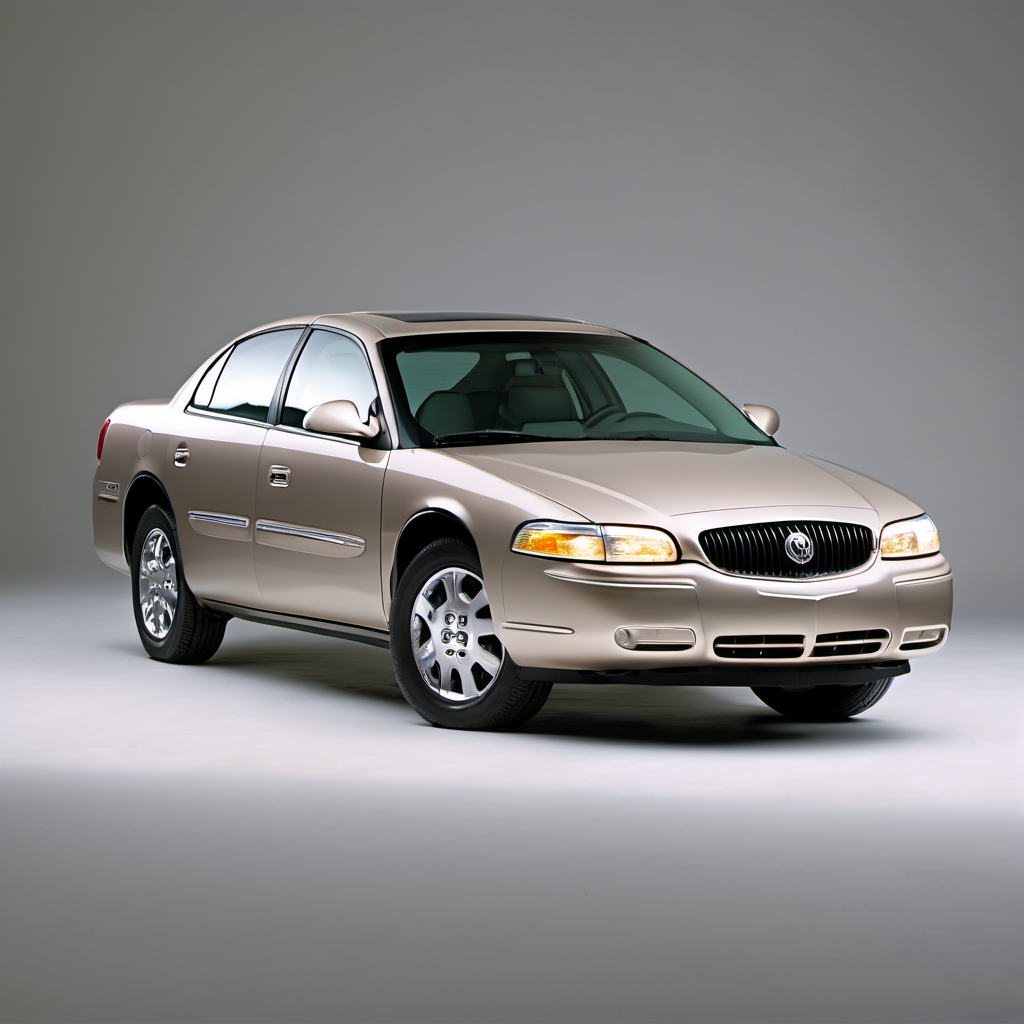
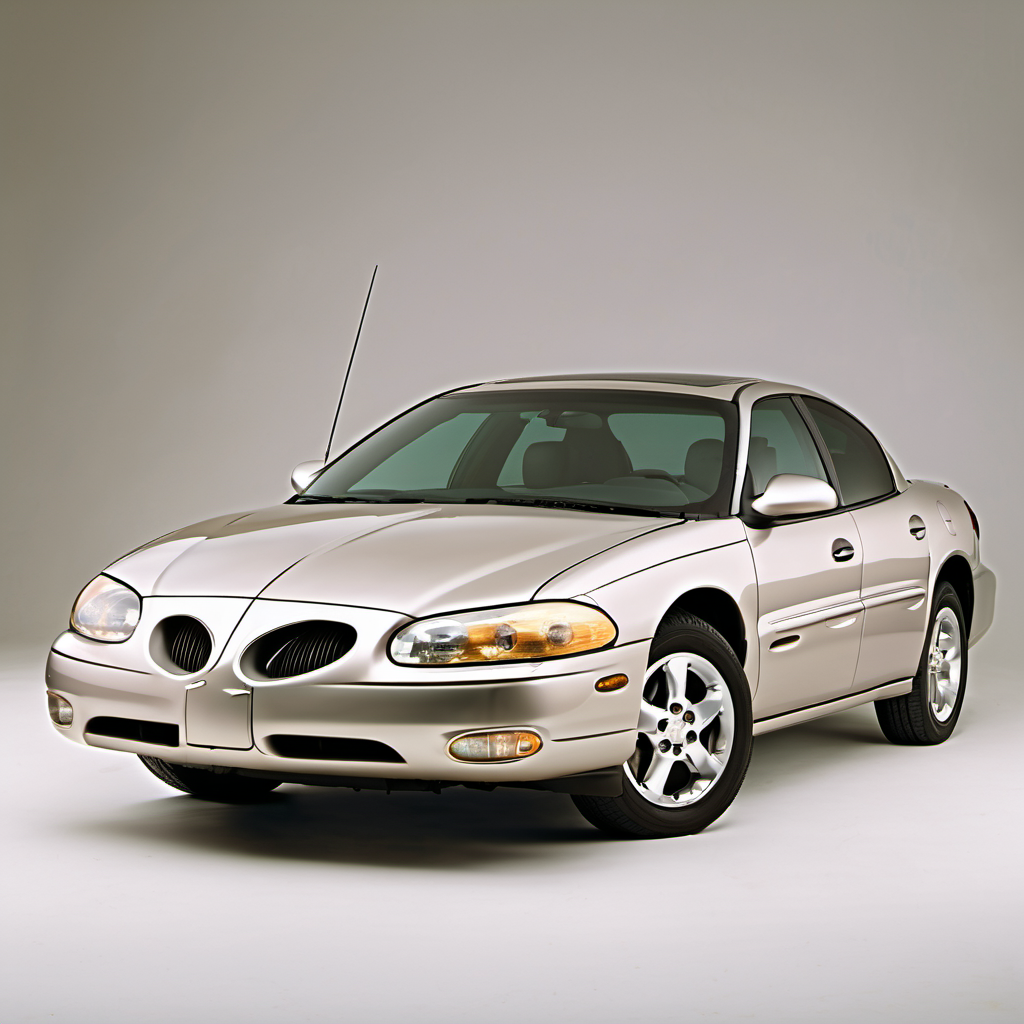
2003 Buick Regal Sedan

2003 Buick

RegalSedan

Sedan

The 2003 Buick Regal is a front-wheel-drive full-size sedan built on GM's W-body platform, sharing its bones with the Pontiac Grand Prix and Chevrolet Impala. It was one of the last model years for the Regal nameplate before Buick discontinued it after 2004. The 3800 Series II V6 (3.8L) under the hood is widely regarded as one of GM's most bulletproof engines — it's not uncommon to see these engines push 200,000+ miles with proper maintenance. By 2003, the Regal was a mature, fully sorted design offering a comfortable, quiet ride with a solid highway cruising personality. It's not a sporty car, but it is predictable, reasonably roomy, and easy to live with. The GS trim added a supercharger, but the base LS with the naturally aspirated 3800 is the more common and arguably more reliable choice. At 20+ years old, any surviving Regal is well into 'maintenance matters' territory. Rust from Wisconsin road salt is the single biggest threat to longevity. The mechanicals are forgiving; the body and subframe are not.

Reliability
4/5
Verified data
Specs shown for Regal — the most common configuration. Other trims may vary in engine, drivetrain, or fuel economy. Sign in to see your vehicle's exact specs.
Engine
[object Object]
Drivetrain
FWD
Fuel
Premium gasoline
MPG
16 city / 25 hwy / 19 combined
Seats
Doors
Body
Midsize Cars

Overview

AI-curated

The 2003 Buick Regal is a front-wheel-drive full-size sedan built on GM's W-body platform, sharing its bones with the Pontiac Grand Prix and Chevrolet Impala. It was one of the last model years for the Regal nameplate before Buick discontinued it after 2004. The 3800 Series II V6 (3.8L) under the hood is widely regarded as one of GM's most bulletproof engines — it's not uncommon to see these engines push 200,000+ miles with proper maintenance. By 2003, the Regal was a mature, fully sorted design offering a comfortable, quiet ride with a solid highway cruising personality. It's not a sporty car, but it is predictable, reasonably roomy, and easy to live with. The GS trim added a supercharger, but the base LS with the naturally aspirated 3800 is the more common and arguably more reliable choice. At 20+ years old, any surviving Regal is well into 'maintenance matters' territory. Rust from Wisconsin road salt is the single biggest threat to longevity. The mechanicals are forgiving; the body and subframe are not.

Known for
  • GM's legendary 3800 Series II V6 — one of the most durable pushrod engines ever built
  • Smooth, compliant highway ride typical of Buick's character
  • Simple, proven drivetrain that independent shops can service easily
  • Quiet, well-insulated cabin for the era
Best for
  • Budget-conscious buyers who want reliable transportation over style
  • Highway commuters who value fuel economy over performance
  • Owners comfortable doing basic maintenance themselves or at a local shop
Watch for
  • Intake manifold gasket failure on the 3800 — a known, common, and costly problem
  • Undercarriage rust from Wisconsin salt exposure on a 20+ year old car
  • Power window regulators and switches that fail with age
  • Cooling system neglect leading to overheating and head gasket damage

Common issues by mileage

6 known

Intake Manifold Gasket Failure (Lower)

high
Typically appears
60–120k mi
Estimated repair
$350 – $650

Oxygen Sensor / HO2S Heater Circuit Failure

medium
Typically appears
80–150k mi
Estimated repair
$150 – $300

Power Window Regulator / Switch Failure

high
Typically appears
80–150k mi
Estimated repair
$100 – $250

Cooling System Deterioration (Thermostat, Hoses, Coolant)

high
Typically appears
75–130k mi
Estimated repair
$150 – $400

Undercarriage / Subframe Rust

high
Typically appears
Any mileage on a salt-belt car
Estimated repair
$200 – $2,000

Supercharger Coupler Wear (GS trim only)

medium
Typically appears
80–120k mi
Estimated repair
$200 – $500

Maintenance schedule

  1. 1
    Every 5 years or 50k miles — sooner if unknown history Coolant flush and system inspection

    Degraded Dex-Cool coolant becomes acidic and attacks the plastic/rubber intake manifold gaskets and lower hose connections. This is the single most important preventive step on a 3800 engine.

  2. 2
    At every major cooling service; inspect for external oil or coolant seepage at the gasket rail Intake manifold gasket inspection

    Lower intake gasket failure is the most common expensive repair on this engine. Catching external seepage early prevents coolant contamination of the crankcase.

  3. 3
    Every 5,000 miles or 6 months with conventional oil Oil and filter change

    The 3800 is a high-volume, pushrod engine that tolerates conventional oil well. Regular changes are cheap insurance against sludge, especially with short-trip Wisconsin driving.

  4. 4
    Every 30,000 miles if unknown history Transmission fluid change

    The 4T65-E automatic is durable but heat-sensitive. Fresh fluid extends life significantly on a vehicle this age.

  5. 5
    Every 60k miles or at time of purchase if unknown Spark plugs and wires

    Original wires on a 20-year-old car are overdue. Worn plugs or cracked wires cause misfires and rough cold starts, especially in Wisconsin winters.

  6. 6
    Every fall before salt season Undercarriage rust inspection and treatment

    At 20+ years old on Wisconsin roads, subframe and brake line rust is a genuine structural and safety concern. Annual inspection catches issues before they become failures.

  7. 7
    Annually — especially on the rear lines near the fuel tank Brake line inspection

    Steel brake lines on salt-belt cars of this era are a known failure point. A corroded line can fail without warning.

  8. 8
    Every fall before winter Battery load test

    Cold Wisconsin temps dramatically cut battery output. A battery that starts the car fine in October may leave you stranded in January.

Always defer to the manufacturer's service manual for warranty-mandated intervals.

Cost of ownership

Annual maintenance
$600 – $1,500
Fuel
At 19 MPG combined and typical Wisconsin driving, expect roughly $1,800–$2,400/year in fuel at current mid-grade prices. The 3800 will run on regular but was designed for premium — using regular long-term is acceptable but may slightly reduce performance.
Insurance
Full coverage on a vehicle this age and value is often not cost-effective. Liability-only is common and typically runs $400–$800/year depending on driving history.

A well-maintained Regal is one of the cheapest reliable sedans to own per mile. The 3800 engine is simple and parts are inexpensive. The main wildcard is deferred maintenance catch-up costs on a used example — budget $1,000–$2,000 up front to address fluids, gaskets, and any rust mitigation on a newly purchased car.
Seasonal care

Lake Geneva, WI
Winter
  • Load-test the battery every fall — cold starts at -10°F are hard on a weak battery and the 3800 cranks slowly when cold.
  • Switch to a full-synthetic or synthetic-blend 5W-30 oil before winter for better cold-start lubrication.
  • Inspect and replace wiper blades with winter-rated blades; top off washer fluid with a -20°F or lower rated fluid.
  • Check antifreeze concentration — target -34°F or lower for Lake Geneva winters. A 50/50 Dex-Cool mix achieves this.
  • Inspect brake lines, caliper slides, and parking brake cables for rust and corrosion before snow season.
  • Rinse the undercarriage every 2 weeks during heavy salt use — a coin-op car wash on the undercarriage does real work on a 20-year-old car.
Summer
  • Check tire pressure monthly — tires lose pressure in winter and gain it in summer heat; over-inflation causes uneven wear.
  • Inspect the A/C system — the R-134a system on these cars is old enough that slow refrigerant leaks are common. A weak A/C system also stresses the engine more in stop-and-go heat.
  • Check coolant level and condition before summer — the 3800 is most vulnerable to overheating with a compromised cooling system.
  • Inspect serpentine belt and tensioner — heat accelerates belt aging, and belt failure strands the car and can cause overheating.

Comparable vehicles

If you're shopping for one

Red flags
  • Any sign of overheating history — warped thermostat housing, stained overflow tank, or repair records showing a head gasket job.
  • Heavy surface rust or holes in the floorboards, subframe, or wheel wells — rust repair on a $3,000–$5,000 car rarely makes financial sense.
  • Slipping, shuddering, or delayed engagement in the 4T65-E transmission — rebuilds run $1,500–$2,500 at an independent shop.
  • No maintenance records on a high-mileage example — assume worst-case fluid condition and budget accordingly.
  • Check engine light that the seller can't explain — get a scan before purchase.
What to inspect
  • Pull the oil dipstick and look for a milky or foamy residue — signs of coolant in the oil from an intake or head gasket leak.
  • Check the coolant reservoir for oil contamination (oily film or brown sludge).
  • Look underneath for rust on the subframe crossmember, rear trailing arm mounts, and brake lines — these are structural and safety-critical.
  • Test all four power windows — regulators are a common failure and repairs add up quickly.
  • Start the engine cold and listen for ticking that disappears after warm-up (normal) vs. persistent knock (not normal).
  • Check for coolant smell from the heater — a sign of slow coolant loss often tied to the intake manifold gasket.
AI profile generated 11 days ago · claude-sonnet-4-6 · v2.