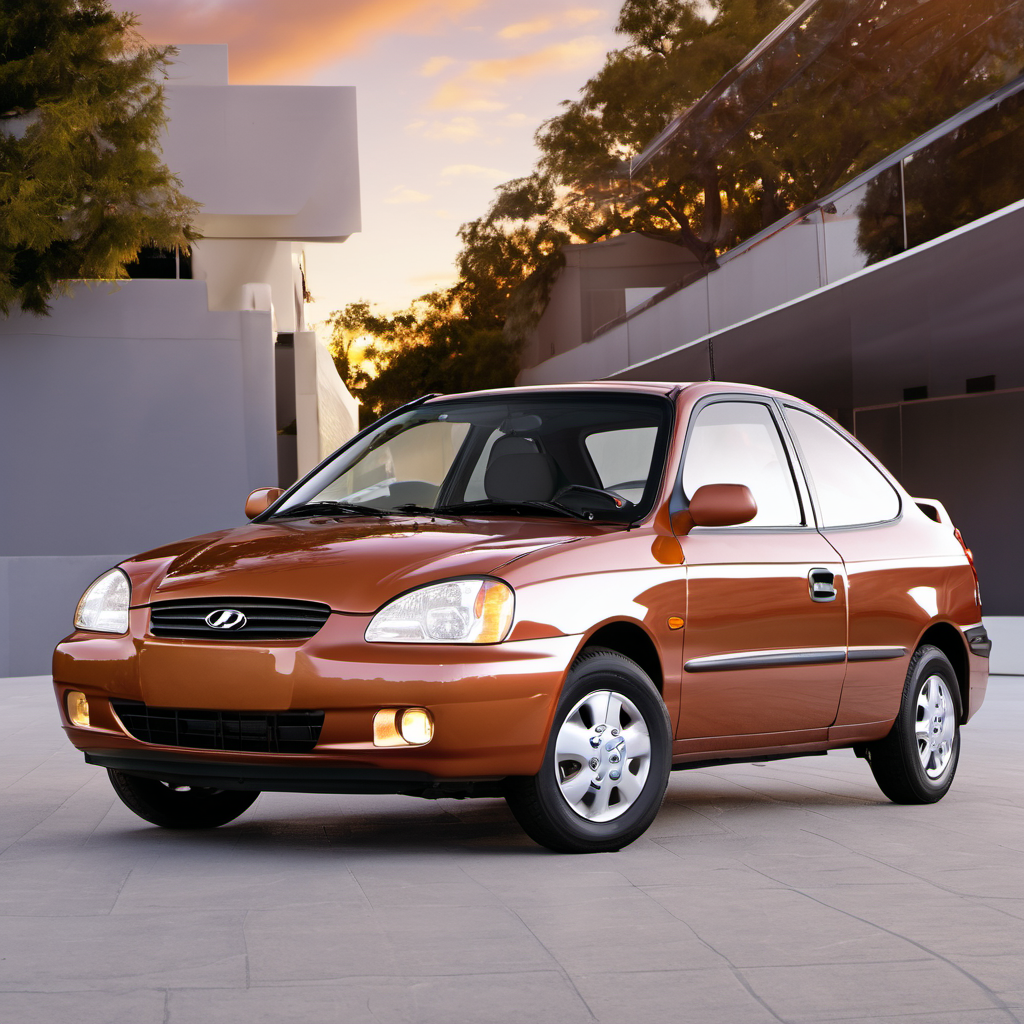
2002 Kia Rio Sedan

2002 Kia

RioSedan

Sedan

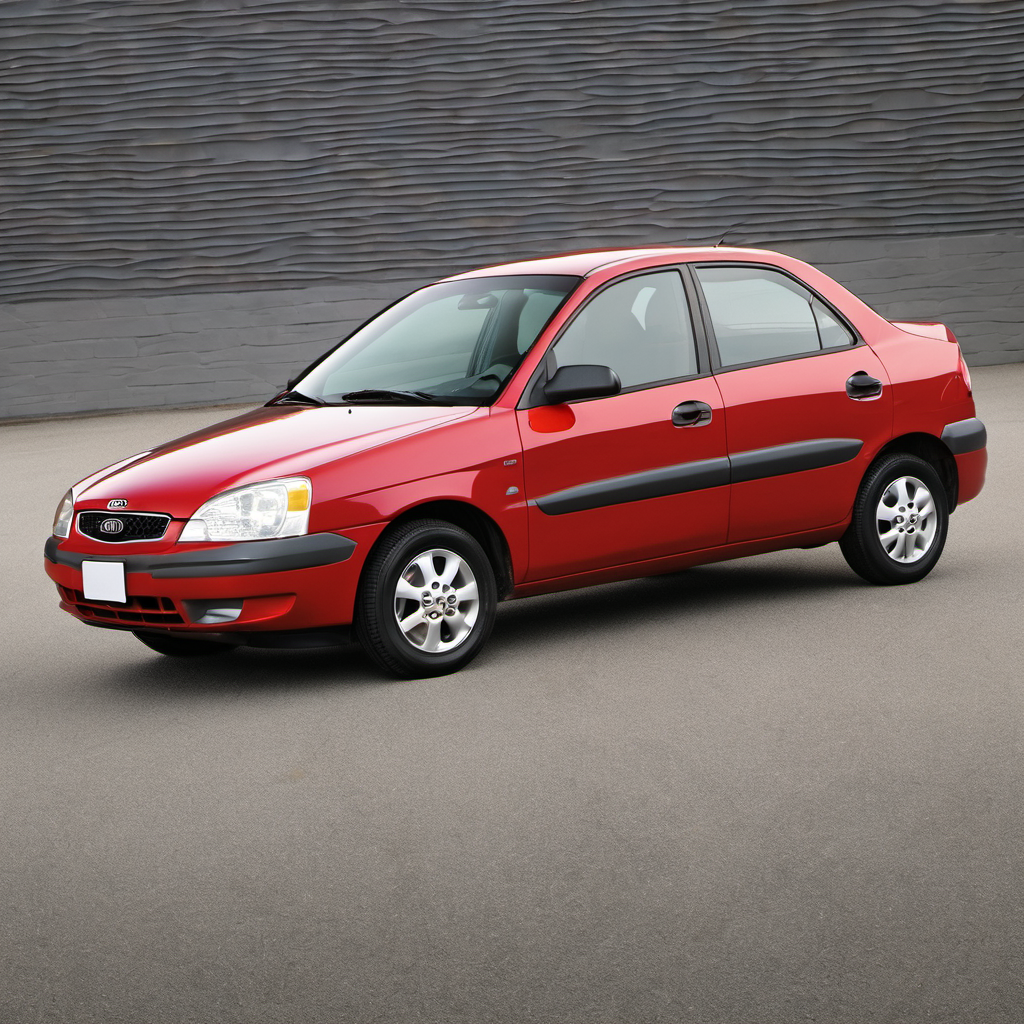
The 2002 Kia Rio is a subcompact economy sedan from Kia's early days in the U.S. market. Built in South Korea, it was positioned as one of the most affordable new cars available, prioritizing low purchase price and fuel economy over refinement or performance. The 1.5L four-cylinder makes just enough power for city driving and the occasional highway cruise, but it's not a car that rewards spirited driving. At over two decades old, any surviving Rio is deep into used-car territory. Parts availability is adequate but narrowing, and build quality from this era was below average even when new — squeaks, rattles, and premature wear were common complaints. Think of it as reliable basic transportation when well-maintained, but not a vehicle that tolerates deferred maintenance. For a Lake Geneva driver, the Rio's light curb weight and FWD setup are manageable in moderate winter conditions, but it was never a cold-weather specialist. Sub-zero starts, road salt corrosion, and thin body panels are the primary winter concerns on a car this age.

Reliability
2/5
Verified data
Specs shown for Rio — the most common configuration. Other trims may vary in engine, drivetrain, or fuel economy. Sign in to see your vehicle's exact specs.
Engine
[object Object]
Drivetrain
FWD
Fuel
Gasoline
MPG
22 city / 27 hwy / 24 combined
Seats
Doors
Body
Compact Cars

Overview

AI-curated

The 2002 Kia Rio is a subcompact economy sedan from Kia's early days in the U.S. market. Built in South Korea, it was positioned as one of the most affordable new cars available, prioritizing low purchase price and fuel economy over refinement or performance. The 1.5L four-cylinder makes just enough power for city driving and the occasional highway cruise, but it's not a car that rewards spirited driving. At over two decades old, any surviving Rio is deep into used-car territory. Parts availability is adequate but narrowing, and build quality from this era was below average even when new — squeaks, rattles, and premature wear were common complaints. Think of it as reliable basic transportation when well-maintained, but not a vehicle that tolerates deferred maintenance. For a Lake Geneva driver, the Rio's light curb weight and FWD setup are manageable in moderate winter conditions, but it was never a cold-weather specialist. Sub-zero starts, road salt corrosion, and thin body panels are the primary winter concerns on a car this age.

Known for
  • Rock-bottom purchase price when new
  • Decent fuel economy for its era
  • Simple, mostly accessible mechanicals
  • Light and easy to maneuver in tight spaces
  • Spartan interior with minimal features
Best for
  • Budget-conscious commuters with short daily drives
  • Drivers who do their own basic maintenance
  • Low-mileage in-town use
  • Someone needing a second car on a tight budget
Watch for
  • Significant rust on underbody, frame rails, and wheel wells — especially in Wisconsin
  • Timing belt neglect — this engine is interference-type, meaning belt failure destroys the engine
  • Early Kia build quality: door seals, window regulators, and interior plastics age poorly
  • Limited crash safety ratings by modern standards
  • Dwindling dealer and OEM parts support for this generation

Common issues by mileage

6 known

Timing Belt Failure

high
Typically appears
60–100k mi
Estimated repair
$250 – $500

Coolant Leaks / Overheating (Water Pump, Radiator Hoses)

high
Typically appears
80–130k mi
Estimated repair
$150 – $600

Oxygen Sensor Heater Circuit Failure

medium
Typically appears
70–120k mi
Estimated repair
$150 – $350

Underbody and Rocker Panel Rust (Wisconsin Salt Exposure)

high
Typically appears
Any mileage on Midwest roads
Estimated repair
$500 – $3,000

Window Regulator Failure (Power Windows)

medium
Typically appears
80–150k mi
Estimated repair
$100 – $250

Suspension Bushing and Ball Joint Wear

high
Typically appears
90–140k mi
Estimated repair
$200 – $600

Maintenance schedule

  1. 1
    Every 60,000 miles or 5 years — whichever comes first Timing Belt Replacement

    This is an interference engine. A snapped timing belt means bent valves and a destroyed cylinder head. If the service history is unknown, replace it immediately regardless of mileage.

  2. 2
    Every 30,000 miles or 2 years Engine Coolant Flush

    Aging coolant loses its corrosion inhibitors, accelerating water pump and radiator deterioration — already weak points on this engine.

  3. 3
    Every 30,000 miles Spark Plug Replacement

    Standard copper plugs, not iridium. Worn plugs on this small engine cause noticeable power loss and rough cold starts — especially relevant in Wisconsin winters.

  4. 4
    Every 2 years Brake Fluid Flush

    Hygroscopic fluid absorbs moisture over time. On an older vehicle in a wet/salty climate, degraded fluid accelerates caliper and line corrosion.

  5. 5
    Every fall before road salt season Underbody Rust Inspection and Treatment

    Thin gauge steel and minimal factory corrosion protection make this generation Rio extremely vulnerable to Wisconsin road salt. Catching rust early is the difference between a $50 treatment and a $2,000 repair.

  6. 6
    Every fall, or if battery is 3+ years old Battery Load Test

    A weakened battery that starts fine at 50°F may refuse to crank at 0°F. A battery load test before winter is cheap insurance.

  7. 7
    Every 15,000–20,000 miles Air Filter Replacement

    A clogged filter noticeably hurts fuel economy and throttle response on a 96 hp engine that has no power to spare.

  8. 8
    Every oil change CV Axle Boot Inspection

    Torn CV boots let in road grit and moisture. On a high-mileage FWD car in a salt environment, this accelerates to joint failure quickly. Early detection is a $50 boot job vs. a $300+ axle replacement.

Always defer to the manufacturer's service manual for warranty-mandated intervals.

Cost of ownership

Annual maintenance
$600 – $1,800
Fuel
At 24 MPG combined and Wisconsin pump prices, expect roughly $1,400–$1,800/year for a typical 12,000-mile driver. The small tank (11.9 gal) means frequent fill-ups.
Insurance
Liability-only coverage is common on vehicles this age and value. Full coverage rarely makes financial sense on a car worth under $3,000. Expect $400–$700/year for liability in the Lake Geneva area.

The Rio's low acquisition cost is its main appeal, but at 20+ years old the annual maintenance budget needs to account for aging rubber, cooling system components, and the ever-present rust threat. A year with no surprises runs $600–$800. A year with a timing belt service plus one other repair can easily hit $1,500–$1,800. Budget for unexpected repairs — they will come.
Seasonal care

Lake Geneva, WI
Winter
  • Load-test the battery every fall — cold cranking a tired battery at Wisconsin temps is a recipe for a no-start on the coldest morning of the year.
  • Switch to a full-synthetic 5W-30 or 5W-20 oil if not already used — it flows faster on sub-zero cold starts and reduces dry-start wear on this high-mileage engine.
  • Flush and refill washer fluid with a -20°F or lower rated formula — the stock reservoir and lines can freeze solid mid-commute.
  • Inspect and replace wiper blades with winter-style blades before first snowfall — standard blades ice up and streak badly.
  • Rinse the underbody at a touchless car wash every 1–2 weeks during heavy salt season. This car's rust protection is minimal; salt sitting in seams accelerates rot fast.
  • Check tire tread depth and consider dedicated winter tires — the Rio's light weight and narrow tires can lose traction quickly on packed snow or ice.
Summer
  • Inspect the cooling system (hoses, clamps, coolant level) before summer heat arrives — an already-marginal cooling system works hardest in stop-and-go summer traffic.
  • Check tire pressure monthly; summer heat causes inflation pressure to rise, and the Rio's narrow tires have little margin for overinflation affecting handling.
  • Test the A/C system early in the season — the refrigerant charge on a 20+ year old car may be low, and recharging before a heat wave is easier than doing it in a rush.
  • Inspect the cabin air filter if equipped, or at minimum check fresh air intake for debris — a blocked intake makes the A/C work harder on an already-small system.

Comparable vehicles

If you're shopping for one

Red flags
  • Any underbody rust that has perforated the floor pan or rocker panels — structural integrity is compromised and repair cost exceeds car value.
  • No timing belt service history on a high-mileage car — you're buying an engine failure waiting to happen.
  • Oil that is black and sludgy, or a milky film under the oil cap — signs of severe neglect or a head gasket issue.
  • Smoke from the exhaust on startup that doesn't clear — blue smoke means oil burning, white smoke may indicate coolant in the combustion chamber.
  • Asking price near or above $3,000 — at this age and reliability level, that's rarely justified unless the car is truly pristine with full documentation.
What to inspect
  • Lift the car and inspect all rocker panels, floor pan, and frame rails for rust perforation — not just surface rust. Structural rust is a deal-breaker.
  • Ask for timing belt service records. If there are none and mileage is over 60k, budget for immediate replacement before purchase.
  • Start the engine cold and listen for ticking or rattling — worn cam followers and low oil pressure are common on neglected examples.
  • Check all four wheel wells for rust bubbling under the paint — this car rusts from the inside out.
  • Test heat and A/C function. HVAC blower motors and blend doors fail on aging examples and parts are harder to source.
  • Inspect CV axle boots at all four corners for cracking or grease sling-out marks on the inner fender.
AI profile generated 11 days ago · claude-sonnet-4-6 · v2.