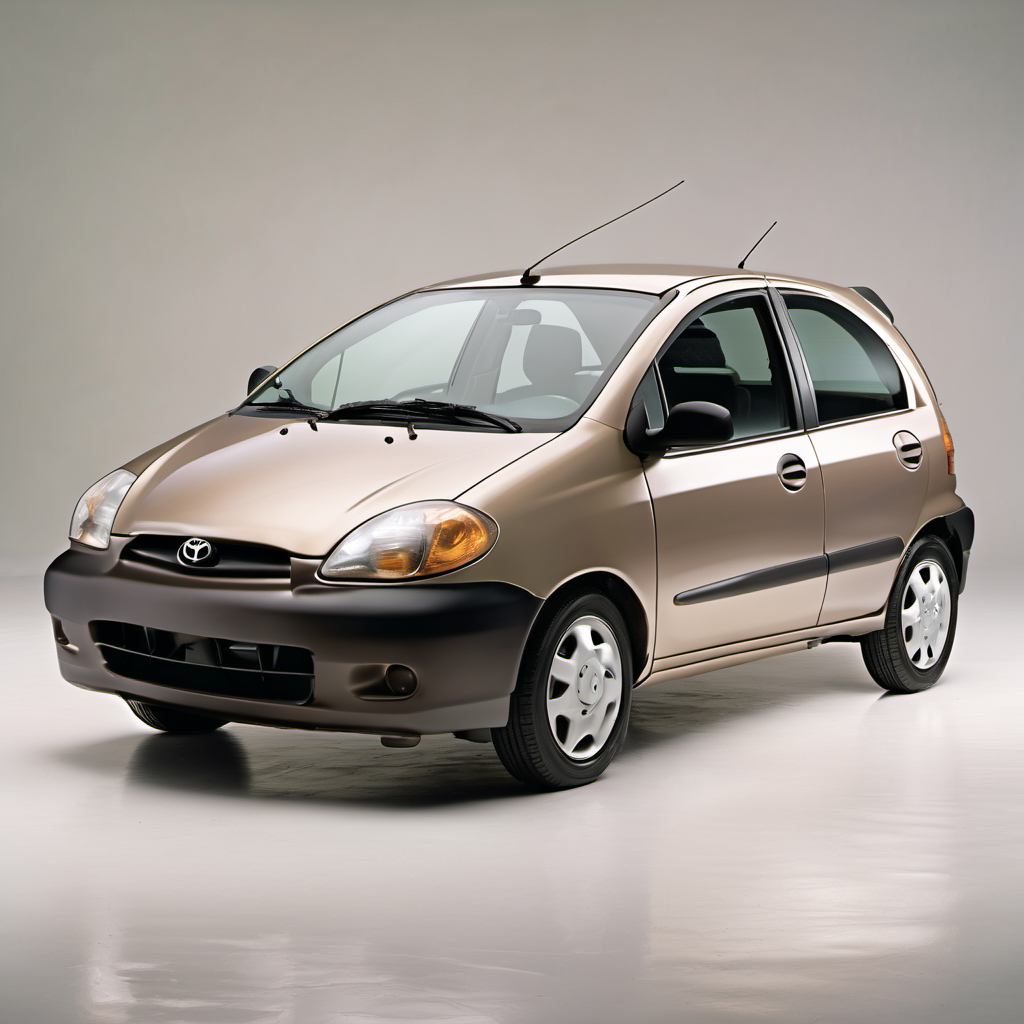
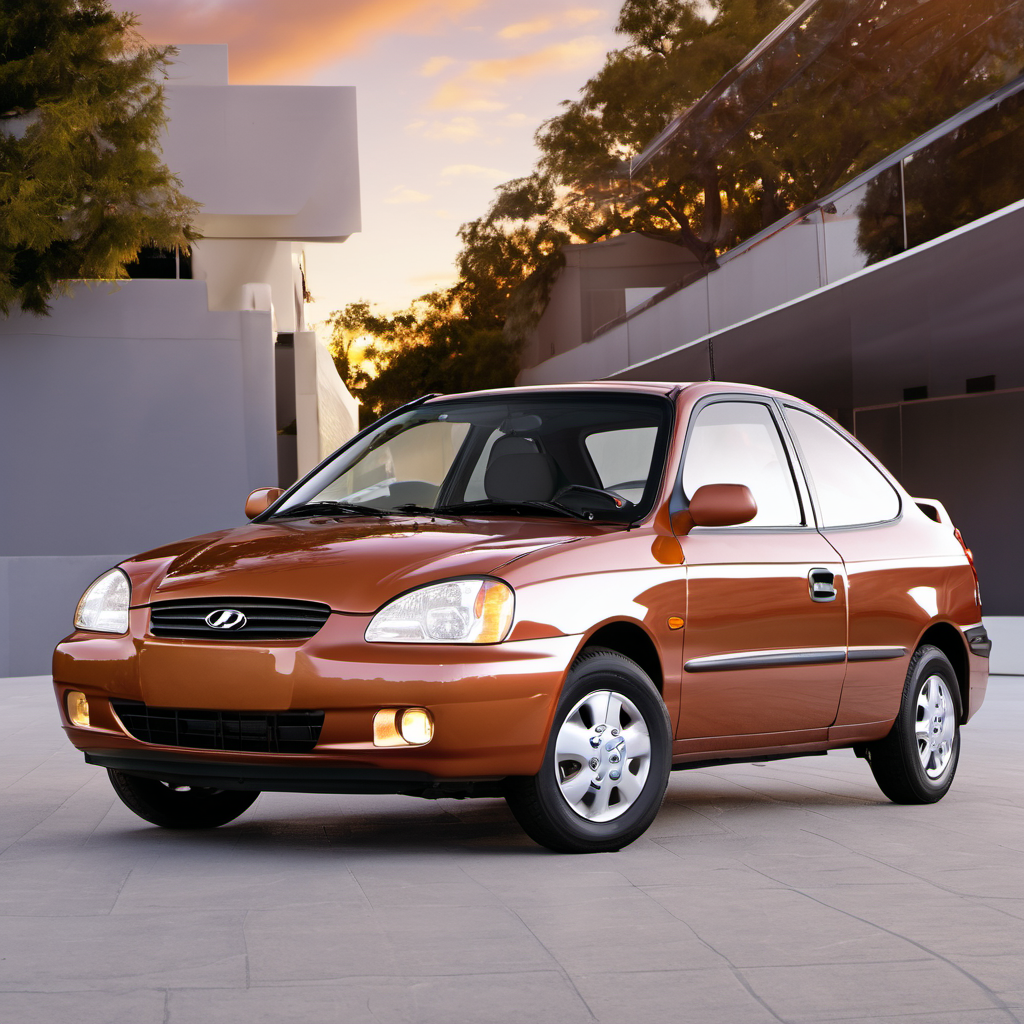
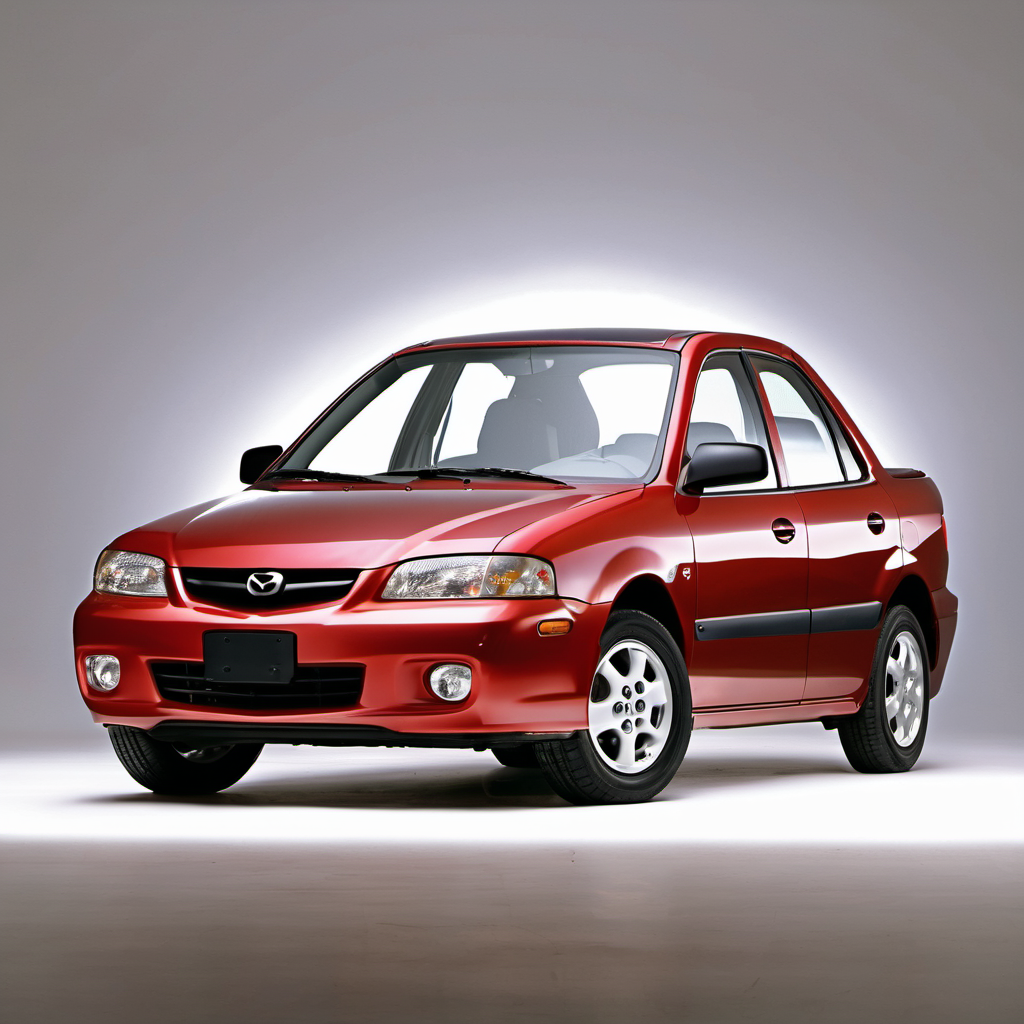
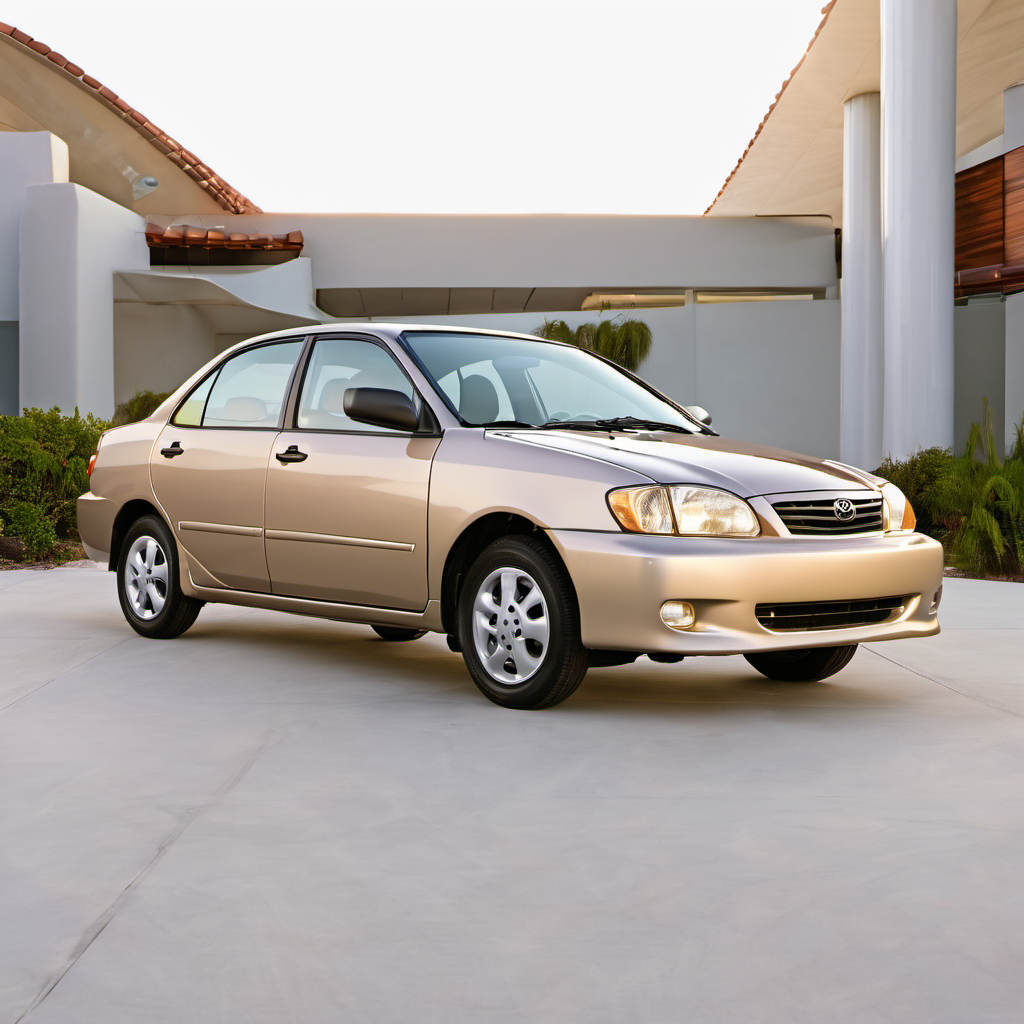
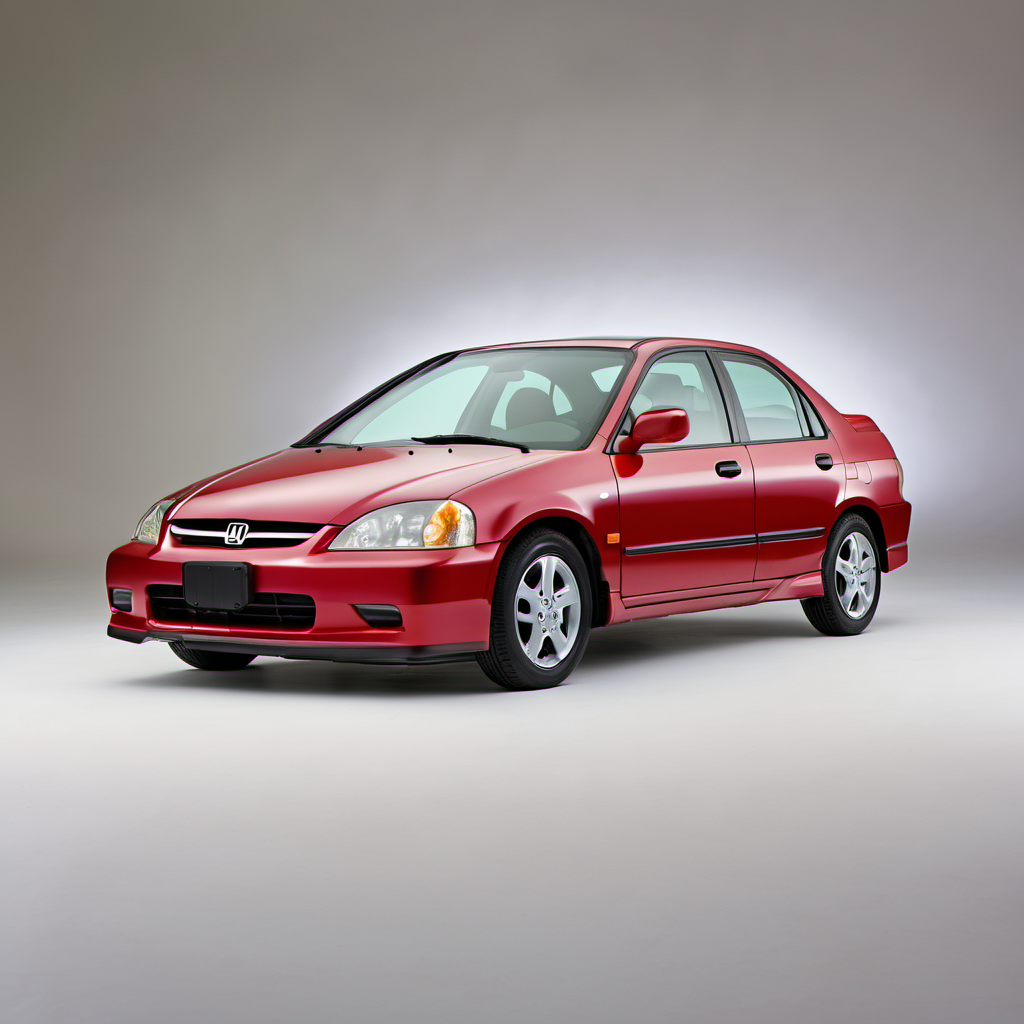
2002 Toyota Echo Sedan

2002 Toyota

EchoSedan

Sedan

The 2002 Toyota Echo is a subcompact sedan built on simplicity and durability. Powered by Toyota's 1NZ-FE 1.5L four-cylinder engine mated to either a 5-speed manual or 4-speed automatic, it was engineered to be cheap to buy, cheap to run, and hard to kill — and it largely delivered on all three promises. The Echo's interior is basic to a fault, with a centrally mounted instrument cluster that took some getting used to, and rear-seat space that's tight for adults. But the drivetrain and overall mechanicals are exceptionally well sorted. Owners who kept up with oil changes routinely pushed well past 200,000 miles without major engine work. By 2002 standards the Echo offered genuinely impressive fuel economy — numbers that still look respectable today. For a budget-minded commuter, student car, or second vehicle, it remains one of the more honest used car buys in this price range.

Reliability
4/5
Verified data
Specs shown for Echo — the most common configuration. Other trims may vary in engine, drivetrain, or fuel economy. Sign in to see your vehicle's exact specs.
Engine
[object Object]
Drivetrain
FWD
Fuel
Gasoline
MPG
27 city / 35 hwy / 30 combined
Seats
Doors
Body
Compact Cars

Overview

AI-curated

The 2002 Toyota Echo is a subcompact sedan built on simplicity and durability. Powered by Toyota's 1NZ-FE 1.5L four-cylinder engine mated to either a 5-speed manual or 4-speed automatic, it was engineered to be cheap to buy, cheap to run, and hard to kill — and it largely delivered on all three promises. The Echo's interior is basic to a fault, with a centrally mounted instrument cluster that took some getting used to, and rear-seat space that's tight for adults. But the drivetrain and overall mechanicals are exceptionally well sorted. Owners who kept up with oil changes routinely pushed well past 200,000 miles without major engine work. By 2002 standards the Echo offered genuinely impressive fuel economy — numbers that still look respectable today. For a budget-minded commuter, student car, or second vehicle, it remains one of the more honest used car buys in this price range.

Known for
  • Exceptional fuel economy for a non-hybrid
  • Bulletproof 1NZ-FE engine with minimal failure points
  • Very low cost of ownership and cheap parts
  • Quirky center-mounted gauge cluster
  • Lightweight and easy to park in tight spaces
Best for
  • High-mileage daily commuters
  • First-time car owners on a budget
  • City and suburban driving
  • Anyone prioritizing low running costs over comfort
Watch for
  • Rust on underbody, rocker panels, and wheel wells — especially in Wisconsin
  • Worn or cracked CV axle boots from age, not just mileage
  • Neglected automatic transmission fluid on 4-speed AT-equipped cars
  • Aged rubber components: motor mounts, bushings, and brake lines all 20+ years old
  • Thin body panels that show accident damage easily and rust quickly if repainted cheaply

Common issues by mileage

6 known

Rust on rocker panels, underbody, and wheel arches

high
Typically appears
Any — age-driven, not mileage-driven
Estimated repair
$400 – $2,500

Worn or torn CV axle boots / failed CV joints

high
Typically appears
80k–150k mi
Estimated repair
$150 – $450

Cracked or collapsed engine and transmission mounts

medium
Typically appears
100k+ mi
Estimated repair
$150 – $350

Oxygen sensor failure (upstream or downstream)

medium
Typically appears
90k–150k mi
Estimated repair
$100 – $280

Automatic transmission slipping or rough shifts from neglected fluid

medium
Typically appears
100k–180k mi
Estimated repair
$150 – $2,800

Brake line corrosion (external rust perforation)

medium
Typically appears
Any — age-driven in salt-belt states
Estimated repair
$250 – $900

Maintenance schedule

  1. 1
    Every 5,000 miles or 6 months Engine oil and filter change

    The 1NZ-FE is oil-sensitive. At this age, tighter intervals help catch seal weeping early and keep sludge from forming in the variable valve timing oil passages.

  2. 2
    Every 30,000 miles if unknown history Automatic transmission fluid service

    Toyota spec fluid in this unit is critical. Dark, burnt-smelling fluid is a warning sign. Do not skip this on any used Echo with unknown service history.

  3. 3
    Every 50,000 miles or 5 years Coolant flush

    Toyota Long Life Coolant degrades over time. Old coolant becomes acidic and eats away at the aluminum head and water pump seals.

  4. 4
    Every 60,000 miles (iridium OEM plugs) Spark plug replacement

    Worn plugs cause misfires that stress the catalytic converter and reduce fuel economy — both costly on a budget car.

  5. 5
    Every oil change CV boot inspection

    A torn boot caught early is a $150 fix. A failed CV joint from a torn boot left unattended is a $350–$450 axle replacement.

  6. 6
    Every spring after winter Underbody and rocker panel rust inspection

    Wisconsin road salt attacks the Echo's thin underbody sheetmetal aggressively. Catching surface rust before it perforates brake lines or the floor pan saves hundreds to thousands of dollars.

  7. 7
    Every 60,000–80,000 miles or at first sign of cracking Serpentine belt inspection and replacement

    A failed belt strands you and kills the alternator charge. At 20+ years old, replace proactively regardless of visual condition.

  8. 8
    Every 3 years Brake fluid flush

    Brake fluid absorbs moisture over time, lowering boiling point and accelerating corrosion inside brake lines and calipers — a real concern on a 20-year-old car in the salt belt.

Always defer to the manufacturer's service manual for warranty-mandated intervals.

Cost of ownership

Annual maintenance
$350 – $900
Fuel
At 30 MPG combined and 12,000 miles/year, expect roughly $1,300–$1,600/year at current Wisconsin fuel prices. One of the cheapest non-hybrid cars to fuel.
Insurance
Typically very low — low vehicle value, low horsepower, and strong safety record keep premiums minimal. Expect $600–$1,100/year for full coverage depending on driver history.

The Echo is one of the cheapest cars to own in real-world operation. Routine maintenance is inexpensive, parts are readily available, and fuel costs are minimal. The wildcard at this age is rust repair and age-related component replacement, which can spike costs in any given year. A well-maintained example with no rust issues should cost very little to keep running.
Seasonal care

Lake Geneva, WI
Winter
  • Inspect and treat rocker panels and underbody with rust inhibitor before first snow — salt exposure is the number one long-term threat to an Echo in Wisconsin.
  • Swap to dedicated winter tires. The Echo's light curb weight (about 2,000 lbs) means it loses traction quickly on all-seasons in snow and ice.
  • Test the battery before temperatures drop below 20°F. The stock battery is a small-capacity unit and cold-cranking amps drop sharply in sub-zero weather.
  • Top up washer fluid with a -20°F or colder rated formula. The Echo's small reservoir empties quickly in active winter driving.
  • Check coolant freeze protection — should be rated to at least -34°F for Wisconsin winters.
  • Allow a brief warm-up (30–60 seconds) before driving in extreme cold to let oil circulate, but avoid extended idling which wastes fuel and fouls the exhaust system.
Summer
  • Check tire pressure monthly — pressure drops roughly 1 PSI for every 10°F of temperature change, and underinflation wears tires fast on a light car.
  • Inspect the A/C system for refrigerant level and cabin filter condition. The Echo's A/C is a simple system but the condenser is low-mounted and susceptible to road debris.
  • Check coolant level and look for signs of weeping at the water pump or hose connections — heat soak is harder on aging rubber hoses.
  • Park in shade when possible. The Echo's dark dashboard plastics fade and crack under prolonged UV exposure, and cabin temps spike quickly in a small car.

Comparable vehicles

If you're shopping for one

Red flags
  • Any rust perforation on the floor pan, frame rails, or brake line runs — walk away unless you have a dedicated rust repair budget.
  • Burnt or dark brown automatic transmission fluid with no service records — potential transmission damage already done.
  • Oil that looks milky or foamy under the cap — possible head gasket seepage, unusual on the 1NZ-FE but not impossible at high mileage.
  • Accident history involving front-end damage — the Echo's front subframe and unibody are not forgiving of hard hits and repairs are often cosmetic-only.
  • No maintenance records whatsoever on a high-mileage example — the engine is tolerant, but unknowns multiply risk on a 20-year-old vehicle.
What to inspect
  • Put the car on a lift and inspect every inch of the underbody, rocker panels, frame rails, and floor pan for rust perforation — this is the single most important check on any Wisconsin-region Echo.
  • Check the brake lines for corrosion, especially at the rear axle and anywhere near the frame — replace if any bubbling or pitting is visible.
  • Listen for clicking or clunking from CV joints during low-speed turns — indicates a failed joint, not just a torn boot.
  • With the car in park, rock the engine by hand to feel for sloppy or collapsed motor mounts — common at this age.
  • On automatics, check that the transmission shifts smoothly through all gears and that the fluid is pink/red, not brown or burnt-smelling.
  • Inspect all rubber hoses, belts, and coolant lines for cracking or softness — at 20+ years, age-hardened rubber is the norm not the exception.
AI profile generated 11 days ago · claude-sonnet-4-6 · v2.