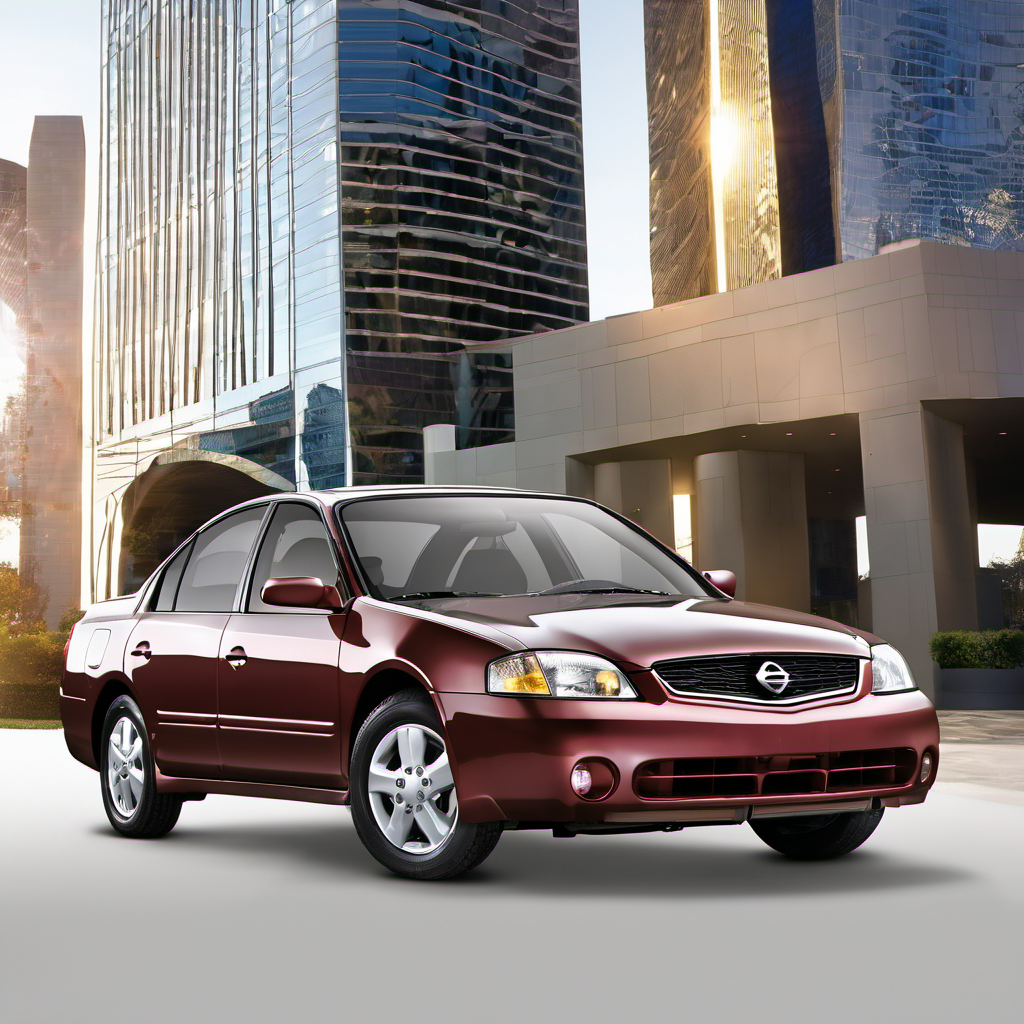
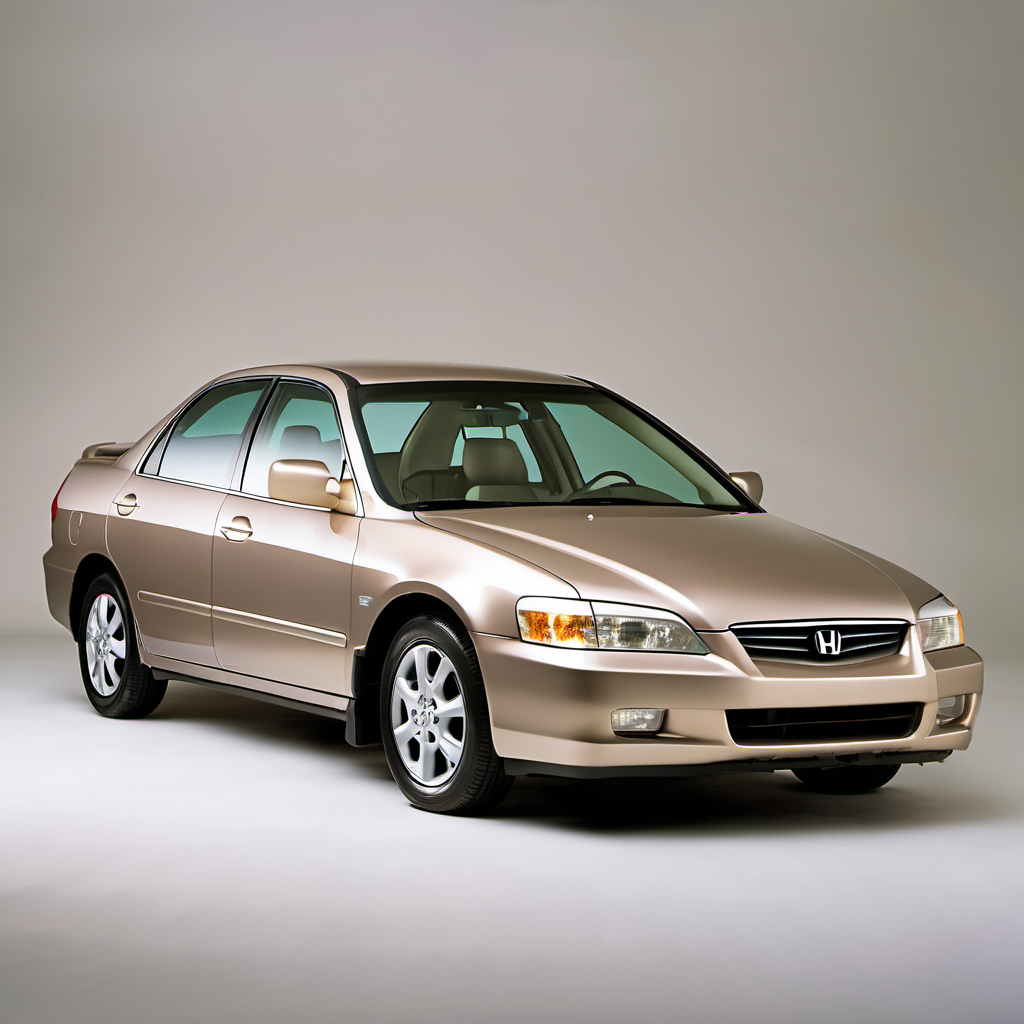
2001 Nissan Altima Sedan

2001 Nissan

AltimaSedan

Sedan

The 2001 Nissan Altima is a second-generation (1993–2001) front-wheel-drive midsize sedan built around Nissan's KA24DE 2.4L four-cylinder engine. It was the last model year before the ground-up redesign that arrived for 2002, so this generation is well-understood mechanically and parts are widely available. At this age, you're dealing with a vehicle that's 20+ years old, so condition and maintenance history matter far more than the nameplate. The KA24DE engine is a proven, robust unit shared with the Nissan 240SX and various truck applications. It responds well to basic maintenance and can go well past 200k miles when oil changes are kept current. However, the rest of the car — seals, rubber, suspension bushings, and especially rust-prone body panels — will show its age in a Wisconsin climate. Buying or maintaining a 2001 Altima is very much about what you're getting, not what the badge says. A well-kept example is a reliable, inexpensive commuter. A neglected one can become a money pit. Thoroughly inspect for rust and verify the service history before committing.

Reliability
3/5
Verified data
Specs shown for Altima — the most common configuration. Other trims may vary in engine, drivetrain, or fuel economy. Sign in to see your vehicle's exact specs.
Engine
[object Object]
Drivetrain
FWD
Fuel
Gasoline
MPG
19 city / 26 hwy / 21 combined
Seats
Doors
Body
Compact Cars

Overview

AI-curated

The 2001 Nissan Altima is a second-generation (1993–2001) front-wheel-drive midsize sedan built around Nissan's KA24DE 2.4L four-cylinder engine. It was the last model year before the ground-up redesign that arrived for 2002, so this generation is well-understood mechanically and parts are widely available. At this age, you're dealing with a vehicle that's 20+ years old, so condition and maintenance history matter far more than the nameplate. The KA24DE engine is a proven, robust unit shared with the Nissan 240SX and various truck applications. It responds well to basic maintenance and can go well past 200k miles when oil changes are kept current. However, the rest of the car — seals, rubber, suspension bushings, and especially rust-prone body panels — will show its age in a Wisconsin climate. Buying or maintaining a 2001 Altima is very much about what you're getting, not what the badge says. A well-kept example is a reliable, inexpensive commuter. A neglected one can become a money pit. Thoroughly inspect for rust and verify the service history before committing.

Known for
  • Durable KA24DE 2.4L engine with a strong long-term track record
  • Low cost of ownership when maintained — parts are cheap and plentiful
  • Spacious interior for the class at its time
  • Simple, mechanic-friendly engine bay with minimal electronic complexity
Best for
  • Budget-conscious commuters needing a reliable A-to-B car
  • DIY owners comfortable with basic maintenance
  • Buyers who want low parts costs and wide shop availability
  • Someone who already owns one and wants to keep it running
Watch for
  • Severe rust on frame rails, floor pans, and wheel wells — critical in Wisconsin
  • Automatic transmission longevity is notably weaker than the engine
  • Aging rubber: intake boots, CV axle boots, and coolant hoses crack with age
  • Exhaust system corrosion — catalytic converter and mid-pipe rot from road salt
  • At 20+ years old, any deferred maintenance compounds quickly

Common issues by mileage

6 known

Automatic Transmission Failure

high
Typically appears
100–160k mi
Estimated repair
$1,200 – $2,800

Exhaust System Rust / Catalytic Converter Failure

high
Typically appears
80–150k mi
Estimated repair
$300 – $900

Cracked Intake Air Boot / Vacuum Leaks

high
Typically appears
80k+ mi
Estimated repair
$50 – $200

CV Axle Boot Failure / CV Axle Replacement

medium
Typically appears
90–150k mi
Estimated repair
$150 – $400

Coolant Hose and Thermostat Housing Leaks

medium
Typically appears
100k+ mi
Estimated repair
$100 – $350

O2 Sensor Heater Circuit Fault (upstream sensor)

medium
Typically appears
80–130k mi
Estimated repair
$80 – $220

Maintenance schedule

  1. 1
    Every 5,000 miles or 6 months Engine oil and filter change

    The KA24DE's longevity is almost entirely dependent on clean oil. At this age, use conventional or blend 5W-30. Oil sludge is the primary engine killer on neglected examples.

  2. 2
    Every 30,000 miles — do not skip Automatic transmission fluid change

    Nissan's RE4F04A transmission is sensitive to fluid condition. If there's no documented trans service history, do it now regardless of mileage. Dark or burnt-smelling fluid is a red flag.

  3. 3
    Every 2 years or 30,000 miles Coolant flush

    Degraded coolant accelerates corrosion in the aluminum head and iron block combination. Critical for sub-zero starts in Wisconsin winters.

  4. 4
    Every 30,000 miles Inspect and replace spark plugs

    Stock plugs are standard copper-tip type. Worn plugs cause rough idle and reduced fuel economy on the KA24DE.

  5. 5
    Annually Inspect intake air boot and all vacuum hoses

    Rubber degrades badly on this vintage. A cracked air boot causes rough idle, hesitation, and hard starts — it's a $40 fix that owners often overlook for years.

  6. 6
    Every 15,000 miles or at each oil change Inspect CV axle boots

    Split boots let grease escape and allow grit in. Catching it early means a $20 boot kit; ignoring it means a full axle replacement.

  7. 7
    Annually — before winter and after Inspect undercarriage and exhaust for rust

    Wisconsin road salt is aggressive. Floor pan, frame rails, and exhaust mid-pipe should be inspected every year. Treating surface rust early is far cheaper than structural repairs.

  8. 8
    Every 15,000–20,000 miles Replace engine and cabin air filter

    Dirty air filter reduces fuel economy and strains the engine. At this age, check it visually — Wisconsin dust and debris load varies.

Always defer to the manufacturer's service manual for warranty-mandated intervals.

Cost of ownership

Annual maintenance
$400 – $900
Fuel
At 21 MPG combined and ~12,000 miles/year, expect roughly $1,500–$1,900/year at current mid-grade Wisconsin fuel prices.
Insurance
Typically $700–$1,100/year for full coverage in Wisconsin on a vehicle this age; liability-only drops that significantly given low market value.

This is a genuinely low-cost car to maintain when nothing major breaks. Routine maintenance is cheap and most jobs are DIY-friendly. The risk is the 'what breaks next' factor on a 20+ year-old vehicle — one automatic transmission job can exceed the car's market value. Budget a small contingency fund and keep up with fluid services to avoid the big-ticket surprises.
Seasonal care

Lake Geneva, WI
Winter
  • Test the battery before November — cold cranking amps drop sharply below 20°F and this engine needs a strong battery for reliable cold starts
  • Switch to 5W-30 full synthetic if you haven't already; it flows faster at sub-zero temps and protects the KA24DE better during cold starts
  • Fill washer fluid reservoir with a rated -20°F or colder formula — Lake Geneva winters will freeze standard fluid in the lines
  • Install winter wiper blades to prevent ice buildup and streaking on the curved windshield
  • Rinse the undercarriage regularly through winter — road salt accumulation accelerates rust on the exhaust, floor pans, and brake lines
  • Check tire pressure monthly; every 10°F drop in temperature costs roughly 1 PSI — underinflated tires reduce wet and icy traction significantly
Summer
  • Inspect the cooling system before summer heat — check hoses, clamps, and coolant level; a 20-year-old hose can fail without warning
  • Verify the A/C is charged and the cabin filter is clean; this vintage uses R-134a refrigerant which shops can still service
  • Check tire pressure monthly — heat causes pressure to rise, and overinflation reduces contact patch and wet-weather grip
  • Inspect the radiator for debris and bugs blocking airflow; the KA24DE runs hot under load if cooling is compromised
  • Look for oil seepage around the valve cover gasket — heat cycling ages the gasket, and small leaks drip onto the exhaust and create smoke or fire risk

Comparable vehicles

If you're shopping for one

Red flags
  • Any rust through on the floor pans, rocker panels, or frame rails — walk away
  • Automatic transmission with no service records and 100k+ miles on the clock
  • Burnt or dark brown transmission fluid
  • Significant oil consumption (more than 1 qt per 1,000 miles) — suggests worn rings or valve seals
  • Mismatched paint panels suggesting accident repair without proper disclosure
  • Coolant in the oil (milky residue on the oil cap) — head gasket or worse
What to inspect
  • Floor pans and frame rails — press on carpet and look underneath for rust perforation, especially around the rear seat area and trunk
  • Automatic transmission: test drive includes highway speeds and look for slipping, hard shifts, or delayed engagement; check fluid color and smell
  • Undercarriage exhaust routing — cat, mid-pipe, and hangers are notorious rust points in Wisconsin; a rusty exhaust can cost more than the car is worth
  • Intake air boot — squeeze it while the engine idles; a crack shows up as a rough idle change
  • CV axle boots — look for grease flung inside the wheel wells, which indicates a torn boot
  • Coolant color and level — brown or rusty coolant means the cooling system has been neglected
  • Valve cover for oil seepage onto the exhaust manifold
AI profile generated 13 days ago · claude-sonnet-4-6 · v2.