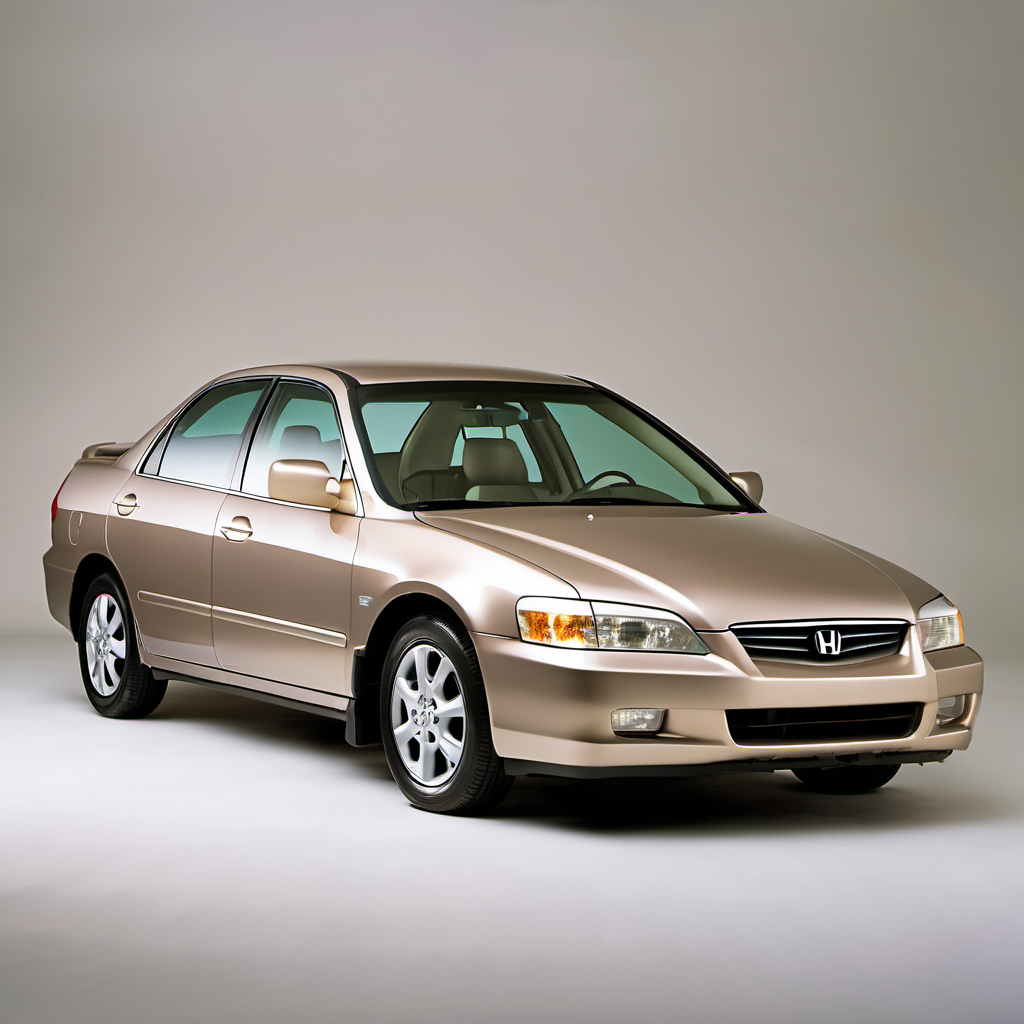
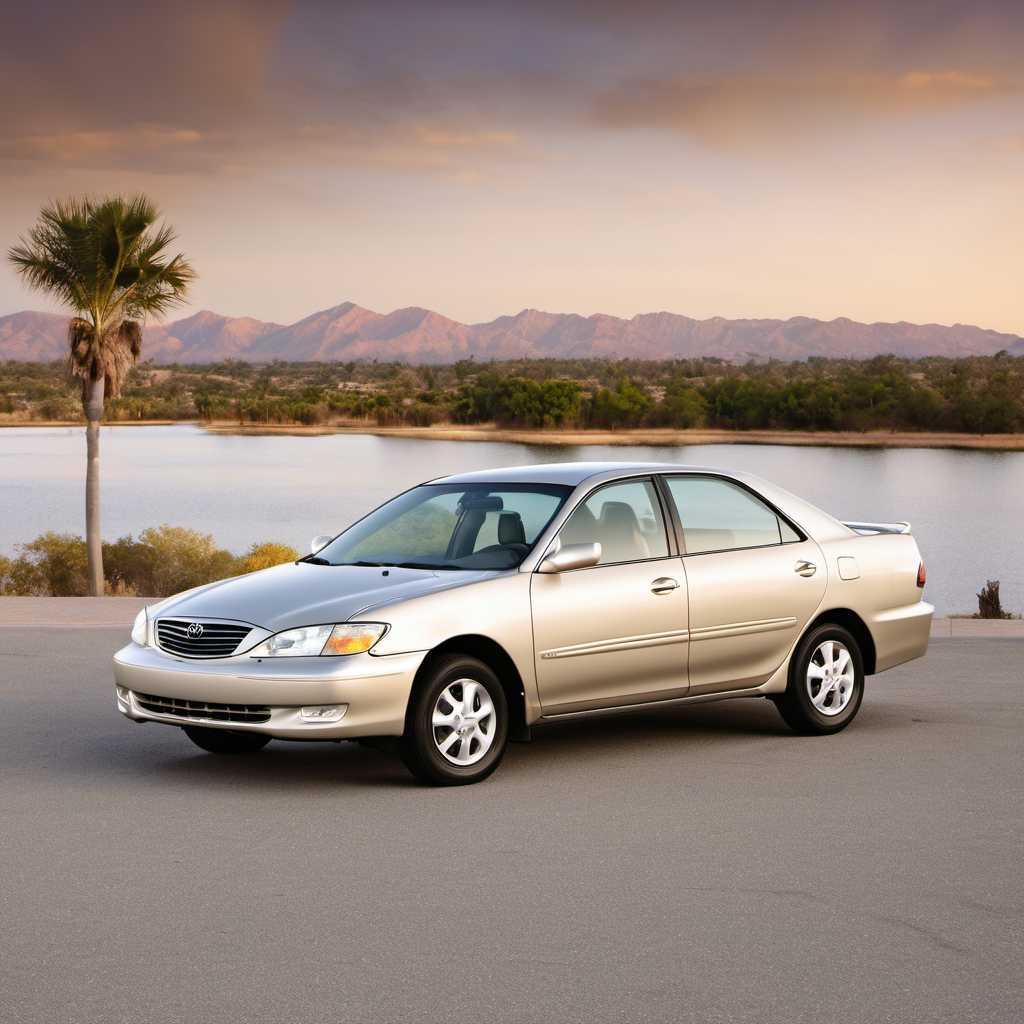
2001 Honda Accord Sedan

2001 Honda

AccordSedan

Sedan

The 2001 Honda Accord Sedan is part of the sixth-generation Accord (1998–2002), widely regarded as one of Honda's best-built eras. It earned a strong reputation for durability, balanced ride quality, and a no-nonsense ownership experience. The 2.3L VTEC four-cylinder is smooth, responsive, and remarkably long-lived when oil changes are kept up. At over two decades old, most examples on the road today have high mileage — but that's almost a testament to the platform rather than a warning. Survivors with documented maintenance histories are legitimate long-term transportation choices. Rust, deferred maintenance, and worn suspension components are the main concerns at this age, not the engine or transmission itself. For a Lake Geneva buyer, this car's age means winter road-salt exposure is the #1 threat. Inspect the undercarriage thoroughly. A clean, well-maintained example can still deliver reliable daily transportation for years to come.

Reliability
4/5
Verified data
Specs shown for Accord — the most common configuration. Other trims may vary in engine, drivetrain, or fuel economy. Sign in to see your vehicle's exact specs.
Engine
[object Object]
Drivetrain
FWD
Fuel
Gasoline
MPG
20 city / 27 hwy / 23 combined
Seats
Doors
Body
Midsize Cars

Overview

AI-curated

The 2001 Honda Accord Sedan is part of the sixth-generation Accord (1998–2002), widely regarded as one of Honda's best-built eras. It earned a strong reputation for durability, balanced ride quality, and a no-nonsense ownership experience. The 2.3L VTEC four-cylinder is smooth, responsive, and remarkably long-lived when oil changes are kept up. At over two decades old, most examples on the road today have high mileage — but that's almost a testament to the platform rather than a warning. Survivors with documented maintenance histories are legitimate long-term transportation choices. Rust, deferred maintenance, and worn suspension components are the main concerns at this age, not the engine or transmission itself. For a Lake Geneva buyer, this car's age means winter road-salt exposure is the #1 threat. Inspect the undercarriage thoroughly. A clean, well-maintained example can still deliver reliable daily transportation for years to come.

Known for
  • Bulletproof 2.3L VTEC four-cylinder with exceptional longevity
  • Smooth, comfortable ride with responsive handling
  • Straightforward maintenance and widely available parts
  • Strong resale retention even at high mileage
Best for
  • Budget-conscious daily commuters wanting proven reliability
  • First-time used car buyers on a tight budget
  • Owners comfortable with basic DIY maintenance
  • High-mileage highway driving
Watch for
  • Undercarriage and subframe rust from years of Midwest road salt
  • Automatic transmission wear if fluid was never serviced
  • Oil consumption on neglected engines (sludge buildup)
  • Worn or cracked suspension bushings at this age
  • Distributor failure — a known weak point on this generation

Common issues by mileage

6 known

Automatic Transmission Failure

medium
Typically appears
120–180k mi
Estimated repair
$1,200 – $2,800

Distributor Failure (no-start, rough idle, stalling)

high
Typically appears
100–160k mi
Estimated repair
$200 – $450

Valve Adjustment Needed (ticking, rough idle)

high
Typically appears
80k+ mi
Estimated repair
$150 – $300

Camshaft Position / VTC Oil Pressure Issues

low
Typically appears
100–200k mi
Estimated repair
$100 – $500

Oxygen Sensor Heater Circuit Fault

medium
Typically appears
100k+ mi
Estimated repair
$100 – $280

Suspension Bushings and Ball Joint Wear

high
Typically appears
100k+ mi
Estimated repair
$250 – $700

Maintenance schedule

  1. 1
    Every 5,000 miles or 6 months Engine oil and filter change

    The 2.3L VTEC relies on oil pressure for valve timing. Dirty or low oil accelerates VTEC solenoid wear and can cause sludge. Use the correct viscosity (5W-20 or 5W-30 per Honda spec).

  2. 2
    Every 30,000 miles (Honda MTF for manual, ATF-DW1 equivalent for auto) Automatic transmission fluid drain-and-fill

    This generation's automatic is heat-sensitive. Never-changed fluid is the #1 cause of premature transmission failure on these cars. Do a drain-and-fill (not a flush) if history is unknown.

  3. 3
    Every 30,000 miles or if ticking is heard Valve clearance inspection and adjustment

    Honda specifies valve adjustments on this engine. Skipping them causes rough idle, poor fuel economy, and eventually burned valves.

  4. 4
    Every 60,000 miles or at first sign of hard starts Distributor cap, rotor, and ignition wires

    The distributor is a known weak point. Worn internals cause stalling, rough cold starts, and no-start conditions. Proactive replacement is cheaper than a roadside breakdown.

  5. 5
    Every 3 years or 45,000 miles Coolant flush

    Degraded coolant becomes acidic and corrodes the aluminum engine block and heater core. Critical for Wisconsin freeze protection — verify freeze point before winter.

  6. 6
    Every 2–3 years Brake fluid flush

    Brake fluid absorbs moisture over time, lowering its boiling point and promoting internal corrosion. Wisconsin winters accelerate corrosion in the brake lines and calipers.

  7. 7
    Every 30,000 miles (standard plugs) or 60,000 miles (iridium) Spark plugs replacement

    Worn plugs cause misfires and strain the ignition coil inside the distributor, shortening its life.

  8. 8
    Every spring after winter season Undercarriage rust inspection

    Road salt in Lake Geneva area aggressively attacks brake lines, fuel lines, and the subframe on vehicles this age. Early detection allows affordable repairs before structural issues develop.

Always defer to the manufacturer's service manual for warranty-mandated intervals.

Cost of ownership

Annual maintenance
$400 – $900
Fuel
At 23 MPG combined and typical driving of 12,000 miles/year, expect roughly $1,400–$1,700/year at current mid-grade gas prices in Wisconsin.
Insurance
Typically one of the cheapest sedans to insure — expect $700–$1,100/year for full coverage depending on driver profile, though liability-only is common on vehicles this age.

A properly maintained 2001 Accord is one of the most affordable cars to own. Parts are cheap and widely available, labor is straightforward, and fuel costs are modest. The biggest wildcard is deferred maintenance from prior owners — budget for a transmission fluid service, valve adjustment, and distributor inspection when you first acquire the car.
Seasonal care

Lake Geneva, WI
Winter
  • Test the battery before first hard freeze — a battery over 4 years old should be load-tested; this car's charging system is not forgiving of a weak battery in sub-zero temps.
  • Switch to a full-synthetic 5W-20 or 5W-30 oil before winter for easier cold starts and faster VTEC oil pressure buildup.
  • Fill the washer reservoir with -20°F or colder rated fluid — Lake Geneva winters regularly drop below 0°F.
  • Inspect and replace wiper blades with winter-rated blades; the stock Accord hood line can ice-load standard blades.
  • Check coolant freeze protection — should be good to at least -34°F. A 50/50 mix is the minimum.
  • Rinse the undercarriage every 1–2 weeks during salting season, paying attention to brake line routing and the subframe mounting points, which are rust-prone on cars this age.
Summer
  • Check tire pressure monthly — every 10°F rise in temperature adds roughly 1 PSI, which can push these tires over their rated pressure.
  • Inspect the A/C system — recharge if cooling is weak, and have the cabin air filter checked as restricted airflow is common on older Accords.
  • Monitor the temperature gauge during stop-and-go driving; a 20+ year old cooling system (thermostat, radiator hoses, water pump) may struggle in heat.
  • Check serpentine belt condition — heat accelerates rubber cracking on this age of vehicle.

Comparable vehicles

If you're shopping for one

Red flags
  • Any visible rust holes in the floor, subframe, or around rear wheel wells — structural rust on a 2001 can be a total-loss situation.
  • No transmission service records and slipping or shuddering under load.
  • Blue or white exhaust smoke — indicates oil burning or coolant loss, both expensive on a vehicle this age.
  • Check engine light with codes pointing to O2 sensor heater faults (P0030–P0036) alongside a rough-running engine — may signal a larger fueling or exhaust issue.
  • Distributor has never been replaced on a 150k+ mile car — budget for it immediately.
  • Evidence of flood damage: musty smell, staining under carpet, or corrosion on underdash wiring connectors.
What to inspect
  • Undercarriage: look for rust perforation on the subframe, brake lines, and fuel lines — this is the most critical inspection point on any 20+ year old Midwest car.
  • Transmission: test for slipping, hesitation between gears, or shudder on light acceleration — all signs of a worn automatic.
  • Distributor: check for hard starts, rough idle, or stalling, especially when cold. Ask when it was last replaced.
  • Engine oil: pull the dipstick and check for sludge or a milky appearance. Either indicates serious neglect.
  • Valve train noise: a ticking sound at idle typically means valve adjustment is overdue.
  • Coolant reservoir: should be clear or slightly yellow, not rusty or oily.
AI profile generated 17 days ago · claude-sonnet-4-6 · v2.