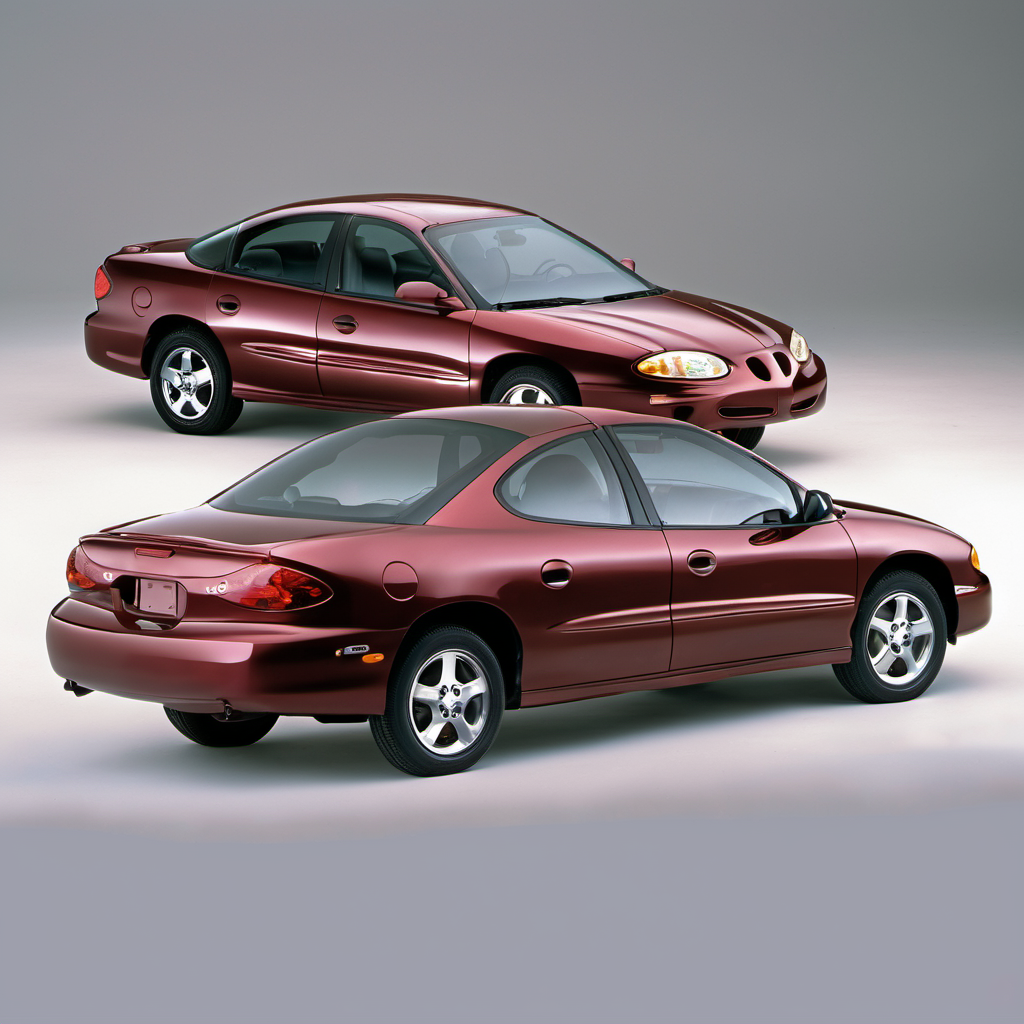
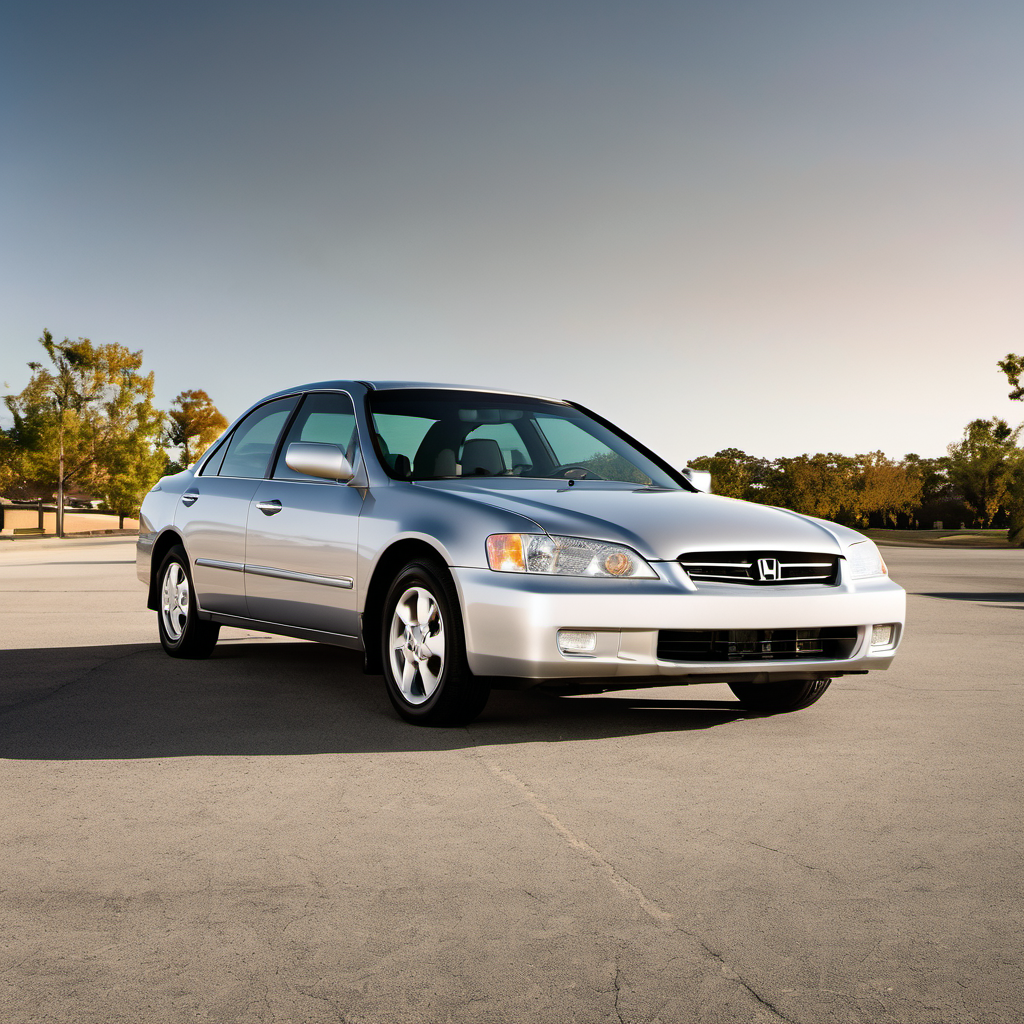
2000 Pontiac Grand Am Sedan

2000 Pontiac

Grand AmSedan

Sedan

The 2000 Pontiac Grand Am is a front-wheel-drive compact sedan that sat at the heart of GM's value lineup for nearly two decades. By 2000 it was one of the best-selling cars in America, offering sporty styling, a comfortable interior, and reasonable fuel economy at an approachable price. It was aimed squarely at young buyers and budget-conscious families who wanted something that looked sporty without sports-car running costs. Under the hood, the base engine is GM's Twin Cam 2.4L four-cylinder — a reasonably capable unit but one with a well-documented history of intake manifold gasket and coolant issues. The optional 3.4L V6 is more durable and the preferred choice for highway drivers. The 4-speed automatic transmission is generally reliable but can develop shift quality issues as mileage climbs. At 20+ years old, any surviving Grand Am should be evaluated primarily on its maintenance history and rust condition — Wisconsin winters are not kind to the N-body platform's lower control arms, subframe, and brake lines. A well-maintained example can still be a cheap, dependable daily driver; a neglected one is a money pit.

Reliability
2/5
Verified data
Specs shown for Grand Am — the most common configuration. Other trims may vary in engine, drivetrain, or fuel economy. Sign in to see your vehicle's exact specs.
Engine
[object Object]
Drivetrain
FWD
Fuel
Gasoline
MPG
19 city / 28 hwy / 23 combined
Seats
Doors
Body
Compact Cars

Overview

AI-curated

The 2000 Pontiac Grand Am is a front-wheel-drive compact sedan that sat at the heart of GM's value lineup for nearly two decades. By 2000 it was one of the best-selling cars in America, offering sporty styling, a comfortable interior, and reasonable fuel economy at an approachable price. It was aimed squarely at young buyers and budget-conscious families who wanted something that looked sporty without sports-car running costs. Under the hood, the base engine is GM's Twin Cam 2.4L four-cylinder — a reasonably capable unit but one with a well-documented history of intake manifold gasket and coolant issues. The optional 3.4L V6 is more durable and the preferred choice for highway drivers. The 4-speed automatic transmission is generally reliable but can develop shift quality issues as mileage climbs. At 20+ years old, any surviving Grand Am should be evaluated primarily on its maintenance history and rust condition — Wisconsin winters are not kind to the N-body platform's lower control arms, subframe, and brake lines. A well-maintained example can still be a cheap, dependable daily driver; a neglected one is a money pit.

Known for
  • Sporty styling that punched above its price class
  • Wide availability and low cost of ownership when maintained
  • GM's twin-cam 2.4L Quad 4 engine with known gasket issues
  • Strong parts availability even at 20+ years old
  • One of the top-selling compacts of its era
Best for
  • Budget-conscious daily drivers
  • Short urban and suburban commutes
  • First-car buyers comfortable doing light DIY maintenance
  • Buyers who want low purchase price and cheap insurance
Watch for
  • Intake manifold lower gasket failure causing coolant loss on the 2.4L
  • Heavy rust on subframe, brake lines, and floor pans from road salt
  • Passlock II anti-theft system causing no-start conditions
  • Power window regulators and door handle failures
  • High-mileage examples with neglected cooling system service

Common issues by mileage

6 known

Intake Manifold Lower Gasket Failure (2.4L)

high
Typically appears
60–130k mi
Estimated repair
$350 – $650

Passlock II Anti-Theft No-Start

high
Typically appears
Any mileage
Estimated repair
$80 – $300

Power Window Regulator Failure

high
Typically appears
80–150k mi
Estimated repair
$120 – $250

Oxygen Sensor Heater Circuit Failure

medium
Typically appears
80–120k mi
Estimated repair
$100 – $220

Lower Control Arm Bushing / Ball Joint Wear

high
Typically appears
80–140k mi
Estimated repair
$250 – $550

Brake Line and Subframe Corrosion (Salt Belt)

high
Typically appears
Any mileage on Wisconsin/salt-road cars
Estimated repair
$400 – $1,800

Maintenance schedule

  1. 1
    Every 2 years or 30,000 miles Coolant flush and cooling system inspection

    The 2.4L is especially prone to intake manifold gasket failure when coolant is neglected. Use GM-approved DEX-COOL or a compatible long-life coolant — never mix types. Inspect hoses and the radiator cap at every flush.

  2. 2
    Every 3,000–5,000 miles with conventional oil; 5,000–7,000 miles with full synthetic Engine oil change

    The 2.4L twin-cam runs hot and benefits from clean oil. Neglected oil changes accelerate timing chain wear and valve train wear on this engine.

  3. 3
    Every 15,000 miles or annually Inspect and grease front suspension (ball joints, tie rod ends)

    N-body platform lower ball joints wear faster in the Midwest due to salt and cold-weather cycling. A worn ball joint can cause sudden loss of steering control.

  4. 4
    Every year, especially before and after winter Brake line inspection

    Wisconsin road salt eats brake lines from the outside in. A rupturing brake line is a safety emergency. Inspect the full run from master cylinder to calipers.

  5. 5
    Every 30,000 miles Spark plug and ignition wire replacement

    The 2.4L twin-cam has a tight engine bay; ignition wires degrade faster with heat cycling. Worn plugs cause misfires and put extra load on the catalytic converter.

  6. 6
    Every 30,000–40,000 miles Transmission fluid change

    The 4T40-E automatic does not have a truly 'lifetime' fluid. Fresh fluid helps maintain shift quality and prevents solenoid wear, especially with the temperature swings in Wisconsin.

  7. 7
    Every 50,000 miles or at first sign of cracking Serpentine belt and tensioner inspection

    Cold Wisconsin winters accelerate rubber belt cracking. A snapped belt strands you and can cause overheating. Inspect the tensioner pulley bearing at the same time.

  8. 8
    Every fall before winter season Battery load test

    Cold-cranking demand in sub-zero Lake Geneva winters will kill a marginal battery fast. A battery that tests fine in August can fail in January.

Always defer to the manufacturer's service manual for warranty-mandated intervals.

Cost of ownership

Annual maintenance
$600 – $1,400
Fuel
At 23 MPG combined and roughly 12,000 miles/year, expect to spend around $1,400–$1,700/year on fuel at current Midwest prices.
Insurance
Typically low — the Grand Am is an older, low-value vehicle. Expect $600–$1,000/year for liability-only to basic comprehensive coverage depending on driver profile.

The Grand Am is cheap to insure and fuel, but its age means maintenance costs can spike unpredictably. Budget for at least one significant repair (intake gasket, brake lines, suspension) in the first year of ownership on a high-mileage example. Parts are inexpensive and widely available, which helps keep labor time and cost down at an independent shop.
Seasonal care

Lake Geneva, WI
Winter
  • Load-test the battery every October — the 2.4L needs strong cranking power in sub-zero temps common to Lake Geneva winters.
  • Switch to a full synthetic 5W-30 if still on conventional oil; it flows better at cold starts and reduces wear during warm-up.
  • Inspect and replace wiper blades with winter-rated blades before the first snowfall; the stock blade arms can be weak.
  • Fill washer fluid reservoir with a rated -20°F or colder solution — diluted fluid will freeze in the lines and nozzles overnight.
  • Inspect brake lines and hoses for any rust-through before winter; salt will worsen any existing corrosion rapidly.
  • Check tire tread depth and consider dedicated winter tires — the FWD Grand Am handles winter adequately with good tires but struggles with worn all-seasons.
Summer
  • Check coolant level and condition before hot weather arrives — the 2.4L runs hot and a borderline cooling system will boil over in summer traffic.
  • Inspect the A/C system for refrigerant charge and condenser blockage; the condenser sits up front and catches road debris.
  • Check tire pressure monthly — tire pressure drops about 1 PSI for every 10°F of temperature change, and summer heat causes overinflation that increases center tread wear.
  • Inspect the radiator overflow reservoir for cracks; heat cycling on a 20+ year old plastic reservoir can cause leaks.
  • Test the serpentine belt for cracking — heat and UV accelerate rubber degradation on older belts.

Comparable vehicles

If you're shopping for one

Red flags
  • Any rust on the brake lines or visible perforation in the subframe or rocker panels — walk away.
  • Coolant that is brown, rusty, or has a sweet smell inside the cabin (blown intake or head gasket).
  • A 'Security' warning light that stays on or flashes — Passlock II repairs can be tricky and intermittent.
  • Owner cannot produce any maintenance records — cooling system neglect on this engine is expensive.
  • Smoke from the exhaust on warm-up, which can indicate coolant burning from a leaking intake manifold gasket.
What to inspect
  • Crawl under and look at the subframe, brake lines, and floor pans for rust perforation — this is the single biggest deal-breaker on Wisconsin cars.
  • Check coolant color and level; milky or rusty coolant means head gasket or intake manifold gasket is already failing.
  • Test the Passlock II system: turn the key to 'on', wait and see if the security light flashes — a flashing light means imminent no-start issues.
  • Operate every power window from both the door switch and the master switch; regulators are a common failure.
  • Drive it cold from a dead stop and listen for clunking from the front suspension — worn ball joints and control arm bushings clunk loudest when cold.
  • Check for oil leaks around the valve cover and timing chain cover on the 2.4L; these seals harden with age.
AI profile generated 15 days ago · claude-sonnet-4-6 · v2.