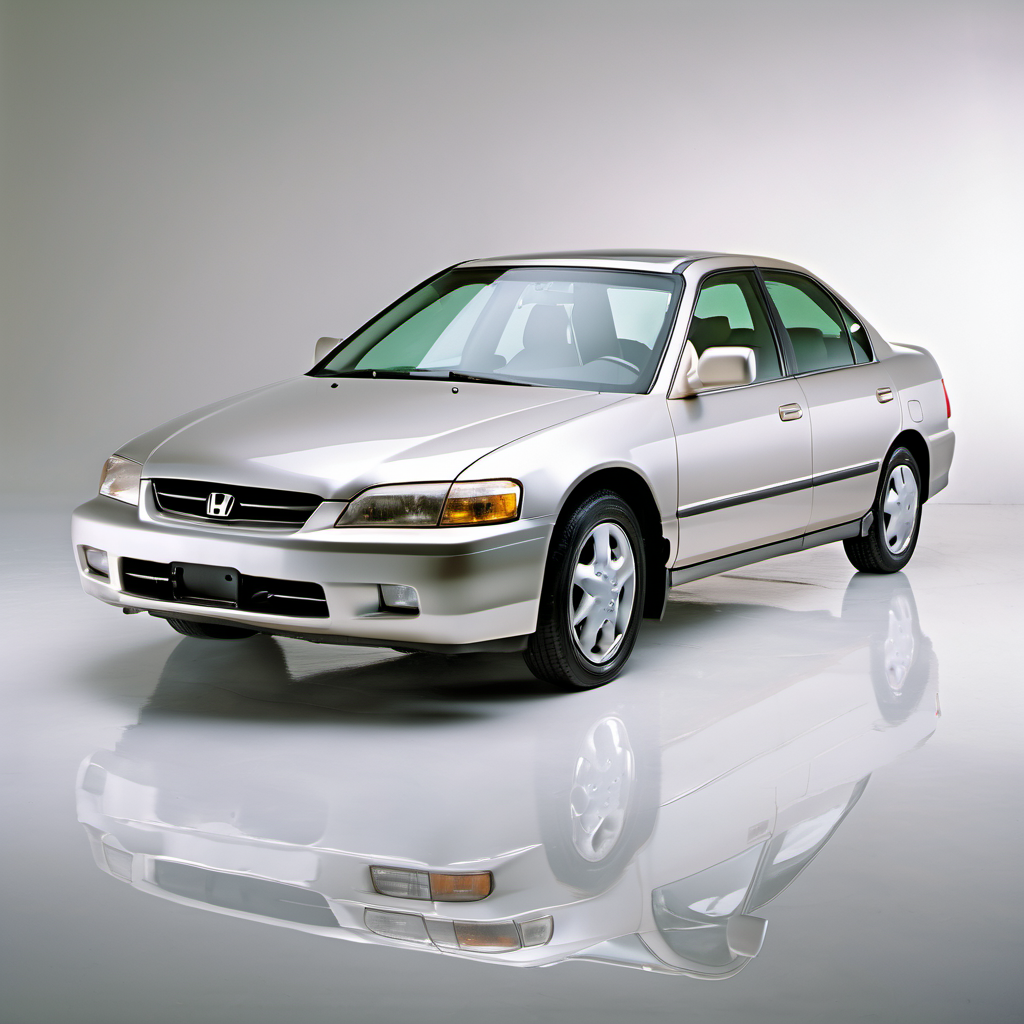
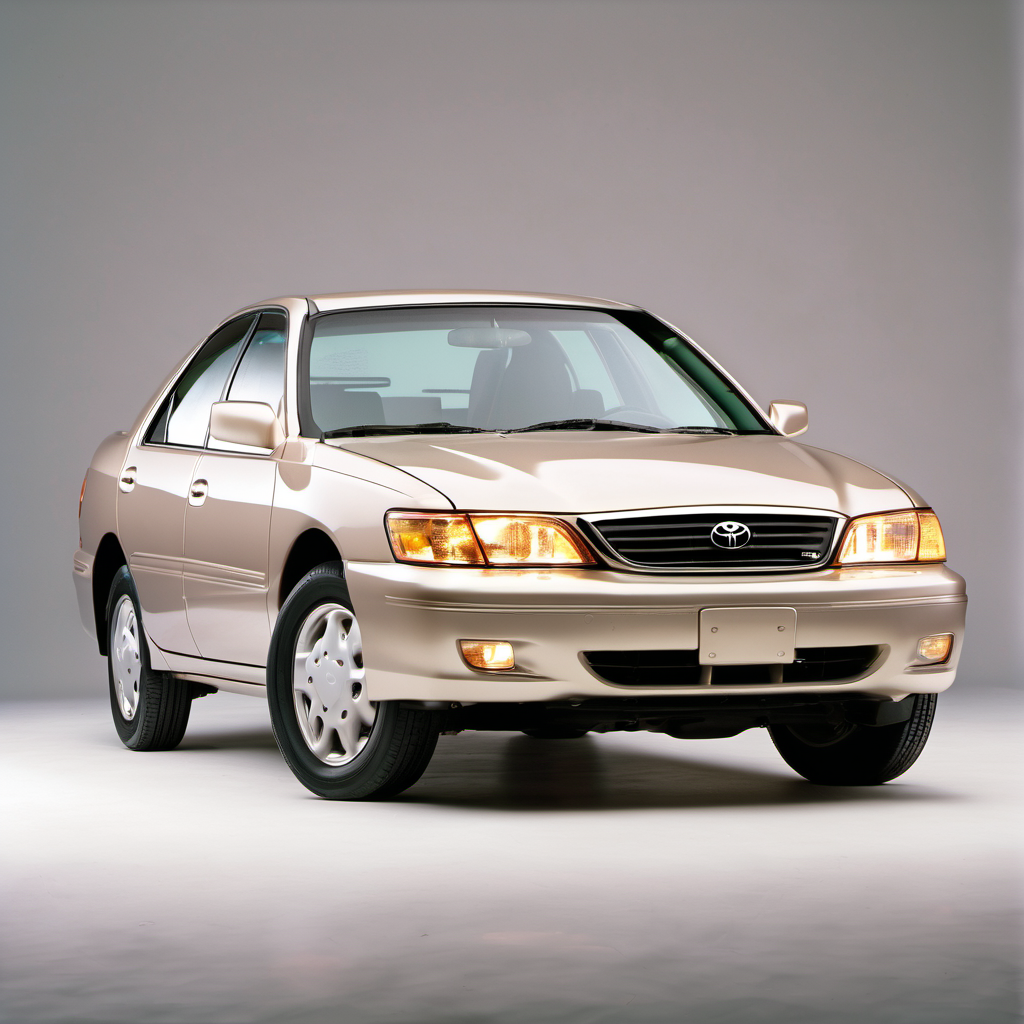
1999 Honda Accord Coupe

1999 Honda

AccordCoupe

Coupe

The 1999 Honda Accord Coupe is part of the sixth-generation Accord (1998–2002), widely regarded as one of the best-balanced cars Honda ever built. The two-door body pairs sporty looks with the practicality and durability Accord buyers expected, powered by Honda's proven 2.3L four-cylinder. At 25 years old, well-maintained examples are still plentiful and impressively capable daily drivers. This generation earned its reputation by being over-engineered for the segment. The F23A engine is nearly bulletproof with regular oil changes, the chassis feels tight well past 150k miles, and interior quality held up better than most competitors of the era. Parts availability remains excellent and independent-shop labor costs are low because mechanics know this platform cold. The catch is age. A 1999 Accord is now a quarter-century old, meaning rubber components (bushings, belts, hoses, seals), the cooling system, and the automatic transmission (if equipped) all deserve close attention regardless of mileage. Rust from Wisconsin road salt is the single biggest threat to long-term survival of any example in this region.

Reliability
4/5
Verified data
Specs shown for Accord — the most common configuration. Other trims may vary in engine, drivetrain, or fuel economy. Sign in to see your vehicle's exact specs.
Engine
[object Object]
Drivetrain
FWD
Fuel
Gasoline
MPG
20 city / 27 hwy / 22 combined
Seats
Doors
Body
Midsize Cars

Overview

AI-curated

The 1999 Honda Accord Coupe is part of the sixth-generation Accord (1998–2002), widely regarded as one of the best-balanced cars Honda ever built. The two-door body pairs sporty looks with the practicality and durability Accord buyers expected, powered by Honda's proven 2.3L four-cylinder. At 25 years old, well-maintained examples are still plentiful and impressively capable daily drivers. This generation earned its reputation by being over-engineered for the segment. The F23A engine is nearly bulletproof with regular oil changes, the chassis feels tight well past 150k miles, and interior quality held up better than most competitors of the era. Parts availability remains excellent and independent-shop labor costs are low because mechanics know this platform cold. The catch is age. A 1999 Accord is now a quarter-century old, meaning rubber components (bushings, belts, hoses, seals), the cooling system, and the automatic transmission (if equipped) all deserve close attention regardless of mileage. Rust from Wisconsin road salt is the single biggest threat to long-term survival of any example in this region.

Known for
  • Exceptionally reliable 2.3L F23A engine
  • Tight, confidence-inspiring chassis that ages well
  • Strong parts availability and low independent-shop labor costs
  • Comfortable, well-built interior for a late-90s compact coupe
  • High resale value retention among same-era Japanese cars
Best for
  • Budget-conscious drivers wanting a proven, low-drama daily driver
  • DIY-friendly owners comfortable with straightforward Honda maintenance
  • Commuters who prioritize reliability over modern tech
  • First-car buyers seeking a safe, well-documented platform
Watch for
  • Underbody and rocker panel rust from years of Wisconsin salt exposure
  • Automatic transmission failure if fluid has never been serviced
  • Timing belt neglect — interference engine means bent valves if it snaps
  • Aging rubber: cracked coolant hoses, worn motor mounts, deteriorated bushings
  • Power window regulators and door lock actuators failing with age

Common issues by mileage

6 known

Timing Belt Failure

high
Typically appears
90–105k mi (and every 90k thereafter)
Estimated repair
$350 – $650

Automatic Transmission Slipping / Harsh Shifts

medium
Typically appears
100–160k mi
Estimated repair
$400 – $2,800

Coolant System Leaks (Hoses, Thermostat, Water Pump)

high
Typically appears
80k+ mi / 15+ years
Estimated repair
$150 – $600

Power Window Regulator Failure

high
Typically appears
100k+ mi / age-related
Estimated repair
$120 – $280

Underbody / Rocker Panel Rust

high
Typically appears
Any mileage — age and geography driven
Estimated repair
$500 – $3,500

Maintenance schedule

  1. 1
    Every 90,000 miles or 7 years, whichever comes first Timing Belt & Water Pump Replacement

    Interference engine — belt failure destroys the engine. Water pump and tensioner should always be replaced at the same time since labor is already open.

  2. 2
    Every 5,000 miles or 6 months Engine Oil & Filter Change

    Conventional oil breaks down faster in cold Wisconsin starts and short-trip driving. Keeping fresh oil in this engine is the single biggest factor in reaching high mileage.

  3. 3
    Every 30,000 miles (drain & fill, not flush) Automatic Transmission Fluid Service

    Honda recommends Honda-specific ATF. Using the wrong fluid or neglecting changes leads to shuddering and early clutch pack wear in the 4-speed automatic.

  4. 4
    Every 5 years or 60,000 miles Coolant System Inspection & Flush

    Aged coolant loses its corrosion inhibitors and accelerates internal rust. At this vehicle's age, inspect all hoses and the radiator cap at every service.

  5. 5
    Every 30,000 miles Spark Plug Replacement

    Original-style copper plugs on this engine should be replaced on schedule. Worn plugs cause misfires, poor fuel economy, and extra stress on ignition coils.

  6. 6
    Every 3 years Brake Fluid Flush

    Brake fluid is hygroscopic and absorbs moisture over time, lowering its boiling point. In Wisconsin winters, contaminated fluid can also corrode ABS components and brake lines.

  7. 7
    Every spring and after heavy salt events in winter Underbody Wash & Rust Inspection

    Salt trapped in body seams and underbody crevices accelerates rust dramatically. A thorough rinse and annual inspection of the rockers, subframe, and brake lines is essential for Wisconsin vehicles.

  8. 8
    Every 60,000 miles or at signs of cracking Drive Belt (Serpentine) Inspection & Replacement

    Cold Wisconsin temperatures cause rubber belts to harden and crack. A snapped serpentine belt kills charging and power steering instantly.

Always defer to the manufacturer's service manual for warranty-mandated intervals.

Cost of ownership

Annual maintenance
$400 – $1,000
Fuel
At 22 MPG combined and ~15,000 miles/year, expect roughly $1,500–$1,900/year at current Wisconsin gas prices (~$3.20–$3.60/gal).
Insurance
Typically $700–$1,100/year for full coverage in the Lake Geneva area for a driver with a clean record. Liability-only on a 25-year-old vehicle can drop well below that.

This is one of the cheaper cars to own in its class — parts are inexpensive, labor is straightforward, and fuel economy is reasonable. The main financial wildcard is deferred maintenance: a neglected timing belt or automatic transmission can turn a $3,000 car into a $5,000 problem overnight. Stay on schedule and annual costs stay low.
Seasonal care

Lake Geneva, WI
Winter
  • Test the battery before November — cold cranking amps drop sharply below 20°F and a 3–5 year old battery may not survive a Wisconsin cold snap. Replace proactively.
  • Switch to a 5W-30 or 0W-20 full synthetic if using conventional oil — thinner cold-weather viscosity means faster oil flow on sub-zero starts, protecting the engine during those first critical seconds.
  • Inspect and top off washer fluid with a rated freeze-protection formula — at least -20°F rated for Lake Geneva winters.
  • Install winter wiper blades before first snow to prevent streaking and chattering on iced windshields.
  • Flush and inspect all brake lines and rubber brake hoses — salt accelerates corrosion on older steel lines; a pinhole leak in winter is dangerous.
  • Rinse the underbody thoroughly after any heavy salt event, paying special attention to the rockers and wheel wells on this already salt-vulnerable platform.
Summer
  • Check tire pressure monthly — tires gain roughly 1 PSI for every 10°F rise in temperature, and overinflation from summer heat increases uneven wear and blowout risk.
  • Inspect the cooling system before summer: pressure-test the radiator cap, check hose condition, and verify coolant concentration. A 25-year-old cooling system under summer heat stress can fail quickly.
  • Test A/C operation early in the season — R-134a systems this old commonly lose charge slowly; a sluggish A/C in July is a sign to have the system inspected and recharged.
  • Check the cabin air filter (if equipped) and replace if clogged — a blocked filter strains the blower motor and reduces A/C effectiveness in summer heat.

Comparable vehicles

If you're shopping for one

Red flags
  • Brown or burnt-smelling automatic transmission fluid — indicates long-term neglect and possible near-term failure.
  • Any visible rust bubbling on the rocker panels or floor — surface rust is manageable; structural rust is a deal-breaker.
  • Engine oil that is jet black and low at inspection — signals infrequent oil changes and potential internal wear.
  • Check engine light on with no explanation from seller — get a scan before committing.
  • Cooling system leaks or white residue around hose clamps — suggests a head gasket issue or longstanding slow leak.
  • Mismatched panel gaps or overspray in door jambs — signs of prior collision repair that may hide frame or structural damage.
What to inspect
  • Timing belt service record — ask for receipts. No record means assume it's overdue and budget for immediate replacement.
  • Undercarriage rust: lift the car and inspect rockers, subframe mounting points, floor pan, and rear suspension perches. Walk away if rust is structural.
  • Automatic transmission: check fluid color (should be pink/red, not brown or burnt-smelling) and test for shudder or delayed engagement.
  • All rubber coolant hoses for softness, cracking, or bulging — especially at the clamp ends.
  • Power window and door lock function — test all four windows and locks before purchase.
  • Compression test or leak-down test if the car has over 150k miles and history is unclear.
AI profile generated 12 days ago · claude-sonnet-4-6 · v2.