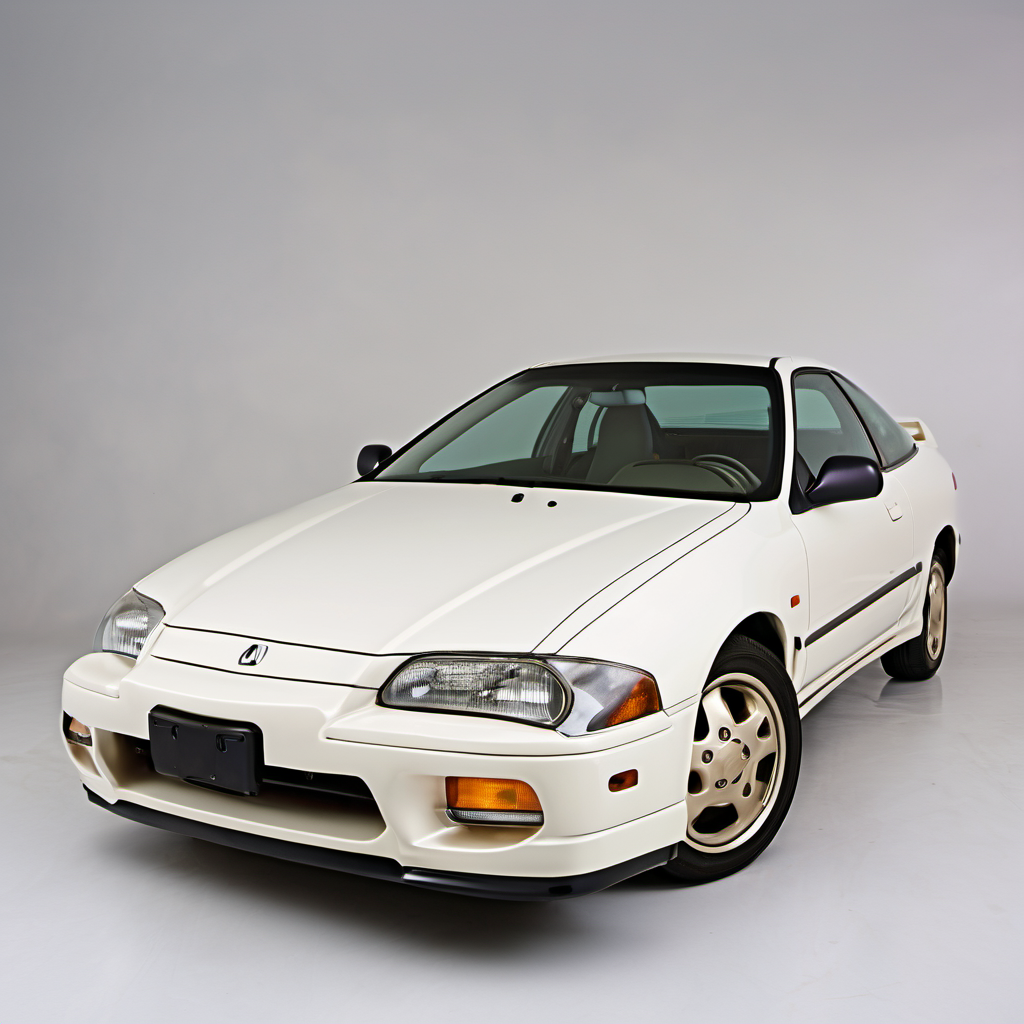
1999 Acura Integra Sedan

1999 Acura

IntegraSedan

Sedan

The 1999 Acura Integra Sedan is the final-generation (DC2/DB8 platform) Integra, a compact sports sedan that earned a devoted following for its rev-happy DOHC engine, precise manual gearbox, and chassis balance that punched well above its price class. It sits at the end of a third-generation run that began in 1994, and by 1999 it was refined, predictable, and well-sorted. The B18B1 (LS) or B18C1 (GS-R) engine is one of Honda's most celebrated four-cylinders — simple, durable, and highly serviceable by any competent independent shop. The car was available in GS, LS, GS-R, and the legendary Type R trim, though most sedan examples on the road today are LS or GS. At 25+ years old, every surviving Integra is now a used-car purchase, and condition varies wildly. Clean, unmolested examples are increasingly sought after and priced accordingly. Modified, high-mileage, or neglected examples are common and require careful pre-purchase inspection.

Reliability
4/5
Verified data
Specs shown for Integra — the most common configuration. Other trims may vary in engine, drivetrain, or fuel economy. Sign in to see your vehicle's exact specs.
Engine
[object Object]
Drivetrain
FWD
Fuel
Gasoline
MPG
21 city / 29 hwy / 24 combined
Seats
Doors
Body
Subcompact Cars

Overview

AI-curated

The 1999 Acura Integra Sedan is the final-generation (DC2/DB8 platform) Integra, a compact sports sedan that earned a devoted following for its rev-happy DOHC engine, precise manual gearbox, and chassis balance that punched well above its price class. It sits at the end of a third-generation run that began in 1994, and by 1999 it was refined, predictable, and well-sorted. The B18B1 (LS) or B18C1 (GS-R) engine is one of Honda's most celebrated four-cylinders — simple, durable, and highly serviceable by any competent independent shop. The car was available in GS, LS, GS-R, and the legendary Type R trim, though most sedan examples on the road today are LS or GS. At 25+ years old, every surviving Integra is now a used-car purchase, and condition varies wildly. Clean, unmolested examples are increasingly sought after and priced accordingly. Modified, high-mileage, or neglected examples are common and require careful pre-purchase inspection.

Known for
  • Rev-happy, naturally aspirated B-series four-cylinder engines
  • Excellent driver engagement and chassis balance for the class
  • Strong long-term reliability when properly maintained
  • High theft rate — one of the most stolen cars of its era
  • Loyal enthusiast community with widely available OEM and aftermarket parts
Best for
  • Drivers who want an engaging, fuel-efficient daily driver
  • Honda/Acura enthusiasts comfortable doing their own maintenance
  • Buyers seeking a reliable commuter with a proven powertrain
  • Those who prioritize fun-to-drive over cargo space or comfort
Watch for
  • Extremely high theft target — verify VIN history and check for signs of prior theft recovery
  • Modified or heavily tuned examples with unknown reliability history
  • Rust in rockers, rear wheel arches, and subframe mounting points (critical in Wisconsin)
  • Engine swaps and undocumented modifications are common at this age
  • Worn or collapsed motor mounts cause vibration and accelerated drivetrain wear

Common issues by mileage

6 known

Distributor failure

high
Typically appears
80–150k mi
Estimated repair
$180 – $380

Motor mount deterioration

high
Typically appears
100k+ mi
Estimated repair
$150 – $400

Valve stem seal and gasket leaks (oil consumption/leaks at rocker cover)

medium
Typically appears
100–180k mi
Estimated repair
$100 – $300

Rust in rocker panels, rear wheel arches, and subframe mounts

high
Typically appears
All mileages on Midwest cars
Estimated repair
$500 – $3,500

Clutch wear (especially on manual transmission examples)

medium
Typically appears
80–140k mi
Estimated repair
$400 – $750

Maintenance schedule

  1. 1
    Every 5,000 miles or 6 months Engine oil and filter change

    The B18 engine tolerates neglect poorly at high mileage. Consistent oil changes are the single biggest factor in longevity. Use a quality conventional or synthetic 5W-30.

  2. 2
    Every 90,000 miles or 7 years — verify it was done and when Timing belt, water pump, and tensioner replacement

    The B18 is an interference engine. A snapped timing belt destroys the engine. On a 25-year-old car, confirm documented replacement history before purchase or ownership.

  3. 3
    Every 30,000 miles Distributor cap, rotor, spark plugs, and ignition wires

    The distributor is a known weak point. Keeping the ignition system fresh prevents the most common no-start and rough-idle complaints.

  4. 4
    Every 3 years or 45,000 miles Coolant flush

    Old coolant becomes acidic and attacks the aluminum head and water pump. Wisconsin's freeze cycles make this especially important.

  5. 5
    Every 2 years Brake fluid flush

    Brake fluid absorbs moisture over time, lowering boiling point. Critical for a spirited driver's car and for hard winter stops.

  6. 6
    Inspect at every major service; replace when excessive vibration or clunking is noted Inspect and replace motor mounts

    Failed mounts cause the engine to torque excessively, accelerating wear on CV axles and drivetrain components.

  7. 7
    Every fall before winter Undercarriage rust inspection and treatment

    Wisconsin road salt is the primary killer of third-gen Integras. Inspect subframe mounting points, rocker panels, and brake lines annually. Treat bare metal before winter.

  8. 8
    Every 30,000 miles or annually CV axle boots inspection

    Torn CV boots allow grease to escape and grit to enter, destroying the joint quickly. Catching a torn boot early saves the axle.

Always defer to the manufacturer's service manual for warranty-mandated intervals.

Cost of ownership

Annual maintenance
$400 – $900
Fuel
At 24 MPG combined and typical Lake Geneva driving, expect roughly $1,400–$1,800/year at current Wisconsin gas prices for an average-mileage driver.
Insurance
Generally low-cost to insure due to age and modest value — however, the Integra's status as a top theft target can push comprehensive premiums higher than expected. Verify with your insurer.

A well-maintained Integra is genuinely affordable to own. Parts are inexpensive and widely available, and any competent Honda-familiar shop can service it. The main budget wildcard on a 25-year-old Wisconsin car is rust repair — a clean undercarriage is worth paying a premium for up front.
Seasonal care

Lake Geneva, WI
Winter
  • Switch to a 5W-30 full synthetic oil if not already — the B18 cranks easier in sub-zero temps with thinner cold-flow oil.
  • Test the battery before November. A battery over 4 years old in a car this age is a strong replacement candidate. Cold cranking amps drop sharply below 20°F.
  • Inspect the coolant freeze point — should be rated to at least -34°F for Wisconsin winters.
  • Install a dedicated winter tire set. The stock all-seasons on a lightweight FWD car offer poor snow traction; winter tires make a significant safety difference.
  • Flush and refill washer fluid with a -20°F or colder rated fluid. The washer system reservoir and lines freeze with summer fluid still in them.
  • Inspect and lubricate door seals and locks before freeze season — rubber seals on a 25-year-old car crack and allow ice to form in door gaps.
Summer
  • Check tire pressure monthly — tire pressure drops roughly 1 PSI for every 10°F of temperature change; summer heat means overinflation risk if set cold in winter.
  • Inspect the cooling system cap, hoses, and thermostat — a 25-year-old cooling system is a heat-soak risk in stop-and-go traffic.
  • Test the A/C before peak heat. R-134a systems on cars this age often need a refrigerant recharge; check for leaks at the compressor shaft seal and hose fittings.
  • Check brake fluid condition — heat cycling in summer accelerates moisture absorption in aging fluid.

Comparable vehicles

If you're shopping for one

Red flags
  • Mismatched or resprayed body panels — could indicate accident repair or theft recovery respray.
  • Missing or tampered VIN plate on the dashboard.
  • Roll cage, stripped interior, or cut wiring — signals hard track or racing use.
  • Overly clean engine bay on a high-mileage car — may indicate pressure washing to hide leaks.
  • Any structural rust on subframe mounting points — this is a safety issue and expensive to repair correctly.
  • Aftermarket ECU or standalone engine management without documentation — unknown tune reliability.
  • Brake lines that show surface rust, bubbling, or pinhole leaks — a common and dangerous Wisconsin salt failure.
What to inspect
  • VIN verification: confirm the VIN on the dash, door jamb, and engine bay all match — theft recovery and re-VINed cars exist in this model's history.
  • Timing belt documentation: ask for receipts. If unknown, budget for immediate replacement before driving it hard.
  • Undercarriage rust: put it on a lift and probe the subframe mounting points, rocker panels, rear floor pan, and brake lines. This is non-negotiable on a Wisconsin-area car.
  • Engine bay for signs of a swap: the B18 engine code should be stamped on the block. Mismatched ECU, wiring harnesses, or engine codes indicate a swap — not automatically bad, but needs disclosure.
  • Oil leaks at the valve cover, distributor o-ring, and rear main seal.
  • CV axle condition: listen for clicking on full-lock turns; inspect boots for tears.
  • Clutch feel on manual cars: slipping or high engagement point signals a worn clutch nearing replacement.
  • Distributor condition: rough idle, hesitation, or hard starts often trace back here.
AI profile generated 1 day ago · claude-sonnet-4-6 · v2.