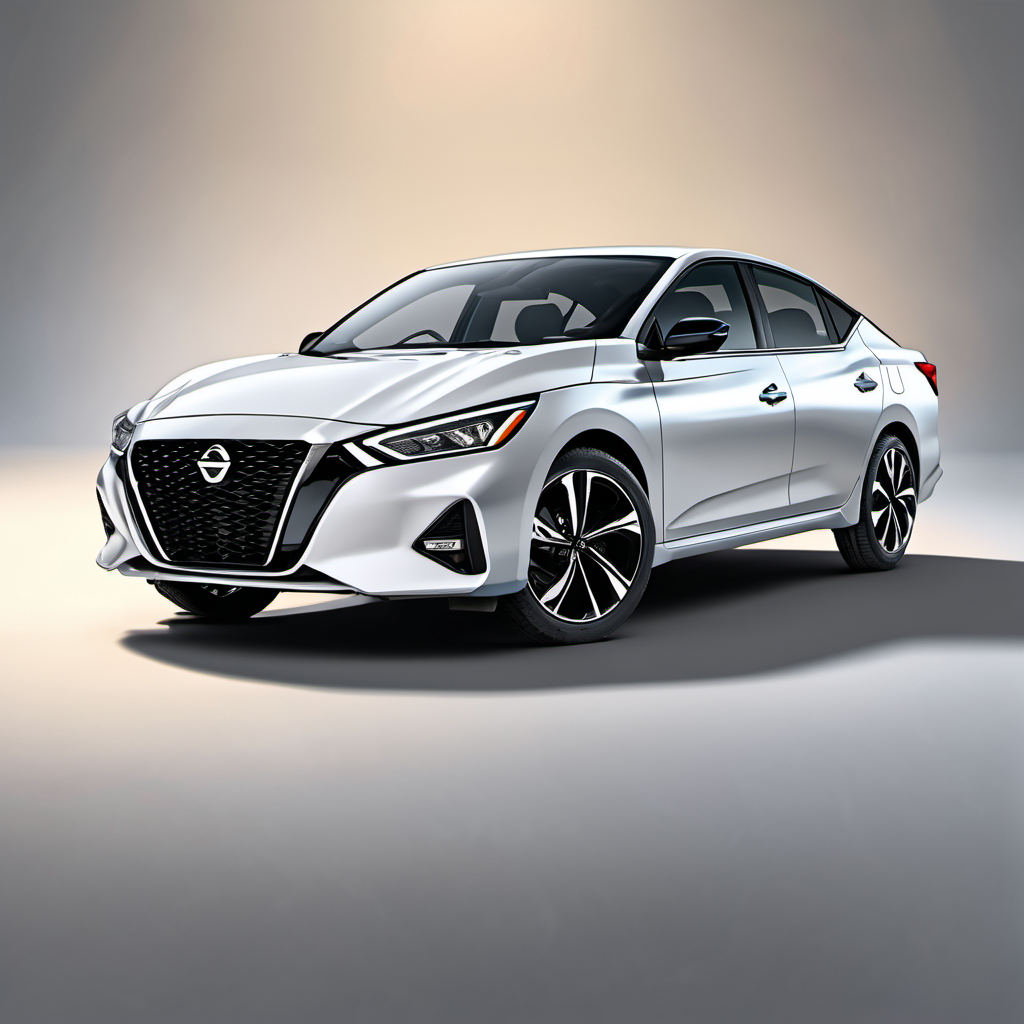
2021 Nissan Sentra Sedan

2021 Nissan

SentraSedan

Sedan

The 2021 Nissan Sentra represents a significant generational refresh — wider, lower, and better-looking than its predecessor, with a new 2.0L direct-injection engine replacing the old 1.8L. Nissan repositioned the Sentra to compete more seriously with the Honda Civic and Toyota Corolla, adding standard safety tech and upgrading interior quality meaningfully. For budget-conscious commuters, the Sentra delivers solid highway fuel economy (up to 39 mpg), a quiet ride, and a comfortable interior for the price. Standard automatic emergency braking, lane departure warning, and rear cross-traffic alert make it a genuinely safe choice for everyday driving. The elephant in the room is the CVT. Nissan's continuously variable transmission has a troubled track record across multiple models, and the Sentra is no exception. Owners should go in eyes-open about that risk, keep up with transmission fluid changes, and budget accordingly if problems arise past 50k miles.

Reliability
3/5
Verified data
Specs shown for Sentra — the most common configuration. Other trims may vary in engine, drivetrain, or fuel economy. Sign in to see your vehicle's exact specs.
Engine
[object Object]
Drivetrain
FWD
Fuel
Gasoline
MPG
29 city / 39 hwy / 33 combined
Seats
Doors
Body
Midsize Cars
Length
192.8 inches

Overview

AI-curated

The 2021 Nissan Sentra represents a significant generational refresh — wider, lower, and better-looking than its predecessor, with a new 2.0L direct-injection engine replacing the old 1.8L. Nissan repositioned the Sentra to compete more seriously with the Honda Civic and Toyota Corolla, adding standard safety tech and upgrading interior quality meaningfully. For budget-conscious commuters, the Sentra delivers solid highway fuel economy (up to 39 mpg), a quiet ride, and a comfortable interior for the price. Standard automatic emergency braking, lane departure warning, and rear cross-traffic alert make it a genuinely safe choice for everyday driving. The elephant in the room is the CVT. Nissan's continuously variable transmission has a troubled track record across multiple models, and the Sentra is no exception. Owners should go in eyes-open about that risk, keep up with transmission fluid changes, and budget accordingly if problems arise past 50k miles.

Known for
  • Comfortable, quiet ride for a compact sedan
  • Strong highway fuel economy
  • Standard safety tech (AEB, lane departure) across most trims
  • CVT reliability concerns — a known weak point
Best for
  • Daily commuters prioritizing low running costs
  • First-time car buyers on a budget
  • Drivers who spend most miles on the highway
  • Those who want standard safety features without paying a premium
Watch for
  • CVT shuddering or hesitation — especially 40–70k miles
  • Infotainment freezing or slow response
  • Undercarriage rust from road salt (critical in Wisconsin)
  • Real-world fuel economy often falls short of EPA estimates in city driving

Common issues by mileage

6 known

CVT Transmission Shudder / Failure

high
Typically appears
40–70k mi
Estimated repair
$2,500 – $4,500

Pressure Control Solenoid 'A' Performance (CVT)

medium
Typically appears
40–60k mi
Estimated repair
$2,000 – $3,500

Infotainment System Freezing / Reboot Loops

medium
Typically appears
15–40k mi
Estimated repair
$200 – $600

Lost Communication with Instrument Panel Cluster

low
Typically appears
25–50k mi
Estimated repair
$300 – $500

Undercarriage Rust (Salt Belt)

medium
Typically appears
30–80k mi
Estimated repair
$300 – $1,200

Auto Start-Stop System Malfunction

low
Typically appears
20–50k mi
Estimated repair
$150 – $600

Maintenance schedule

  1. 1
    Every 5,000 miles or 6 months Engine oil & filter change — 0W-20 full synthetic, 4.5 qt capacity

    The 2.0L DOHC engine with variable valve timing is sensitive to oil quality and change intervals. Stretching this on a CVT-equipped car accelerates wear on both the engine and transmission pump. Don't go past 5k miles.

  2. 2
    Every 7,500 miles or 6 months Tire rotation

    FWD cars wear front tires faster. Regular rotation extends tire life and keeps handling even — important on wet Wisconsin roads.

  3. 3
    Every 30,000 miles (not 'lifetime') CVT fluid change — Nissan NS-3 fluid only

    Nissan calls the CVT fluid 'lifetime,' but in real-world use — especially with Wisconsin winters and stop-and-go driving — fresh NS-3 fluid at 30k intervals is the single best thing you can do to extend CVT life. Use only Nissan NS-3; wrong fluid causes immediate damage.

  4. 4
    Every 30,000 miles or 36 months Engine air filter replacement

    Wisconsin springs bring pollen, summer brings dust. A clogged air filter hurts fuel economy and throttle response.

  5. 5
    Every 15,000 miles or 18 months Cabin air filter replacement

    Particularly important before Wisconsin winters — a clogged cabin filter reduces defrost airflow when you need it most.

  6. 6
    Every 30,000 miles or 36 months Brake fluid flush — DOT 3

    Brake fluid absorbs moisture over time, which lowers its boiling point and can cause corrosion inside the ABS module. Wisconsin salt exposure makes this more urgent.

  7. 7
    Each fall / before first freeze Inspect and treat undercarriage for rust

    Lake Geneva roads are heavily salted. The Sentra's undercarriage is vulnerable. Annual inspection and undercoating or fluid film application can prevent expensive structural rust.

  8. 8
    Every 2 years or as needed Check and service battery

    The Sentra uses an auto start-stop system that cycles the battery heavily. Cold Wisconsin winters further stress the battery. Load-test annually after year 3.

Always defer to the manufacturer's service manual for warranty-mandated intervals.

Cost of ownership

Annual maintenance
$500 – $900
Fuel
At 33 MPG combined and ~15,000 miles/year, expect roughly $1,500–$1,800/year at current Wisconsin gas prices. Highway-heavy drivers will do better; city commuters will see closer to the 29 MPG city rating.
Insurance
Typically moderate — compact sedans in this class run $1,000–$1,500/year for full coverage in the Lake Geneva area, depending on driver profile and trim.

The Sentra is an inexpensive car to run day-to-day — oil changes, tires, and filters are cheap. The risk is the CVT: one transmission replacement can cost more than a full year of normal maintenance combined. Budgeting a CVT repair fund starting around 40k miles is smart ownership. Otherwise, this is one of the more affordable compact sedans to maintain.

Seasonal care

Lake Geneva, WI
Winter
  • Switch to dedicated winter tires — the stock all-season tires lose grip below 45°F, and Lake Geneva sees significant snow and ice. FWD helps launch but won't save you in corners on ice.
  • Test the battery every fall starting at year 3. The auto start-stop system cycles the battery hard, and sub-zero temps can drop a marginal battery overnight.
  • Use winter-rated windshield washer fluid rated to at least -20°F. Standard fluid will freeze in the reservoir or on the glass at Wisconsin temps.
  • Rinse the undercarriage at a self-serve car wash every 1–2 weeks during heavy salt season. The Sentra's undercarriage rust issue is real — salt is the accelerant.
  • Check tire pressure after any significant temperature drop — expect to lose 1–2 PSI for every 10°F drop. Under-inflated tires hurt both fuel economy and handling.
  • Avoid the auto start-stop feature in very cold weather if it feels sluggish — repeated cold cranking on a weak battery accelerates its failure.
Summer
  • Check tire pressure in the morning before the car sits in the sun — heat expands air and can push tires above recommended pressure, affecting handling.
  • Run the A/C through at least one full cycle in spring to check for any refrigerant loss or musty odors from the cabin filter — replace the filter if it smells.
  • Park in shade when possible to reduce heat soak into the CVT fluid — prolonged high underhood temps over time degrade CVT fluid faster.
  • Inspect coolant level and condition. The Sentra uses Nissan Long Life blue coolant — don't top off with generic green antifreeze, it causes corrosion.

Comparable vehicles

If you're shopping for one

Red flags
  • Any shudder, hesitation, or RPM flare during acceleration — likely CVT on its way out.
  • Check engine light on or recently cleared with no explanation.
  • Rust on the subframe or brake lines — walk away unless the price reflects a major repair.
  • No record of CVT fluid service on a car with 50k+ miles.
  • Infotainment that won't boot or frequently restarts — module replacement is not cheap.
What to inspect
  • Hook up an OBD-II scanner before purchase and check for any stored or pending CVT codes (P0746 and related) — CVT issues often throw codes before symptoms become obvious.
  • Test drive at highway speeds and feel for any shuddering between 40–60 mph — classic early CVT failure symptom.
  • Check the undercarriage carefully for rust, especially on the subframe, brake lines, and fuel lines — critical on any Wisconsin-area vehicle.
  • Ask for CVT fluid service records. If it's never been done past 40k miles, factor in the cost of a flush immediately.
  • Test the infotainment system fully — connect Bluetooth, try Apple CarPlay/Android Auto, and let it run for 10+ minutes to see if it freezes or reboots.
AI profile generated 6 hr ago · claude-sonnet-4-6 · v2.