2021 Buick Encore SUV
Popular pick

2021 Buick

EncoreSUV

1.4L I4 Turbocharged · SUV

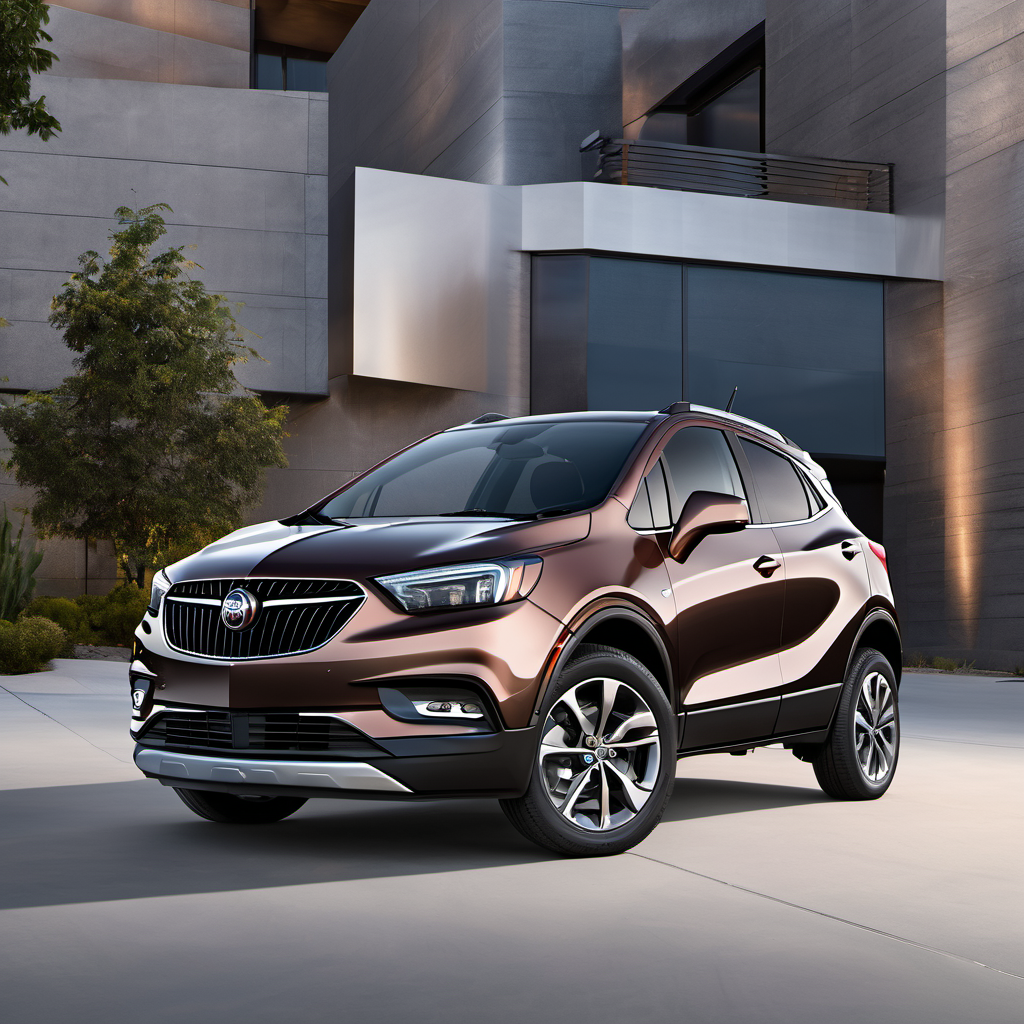
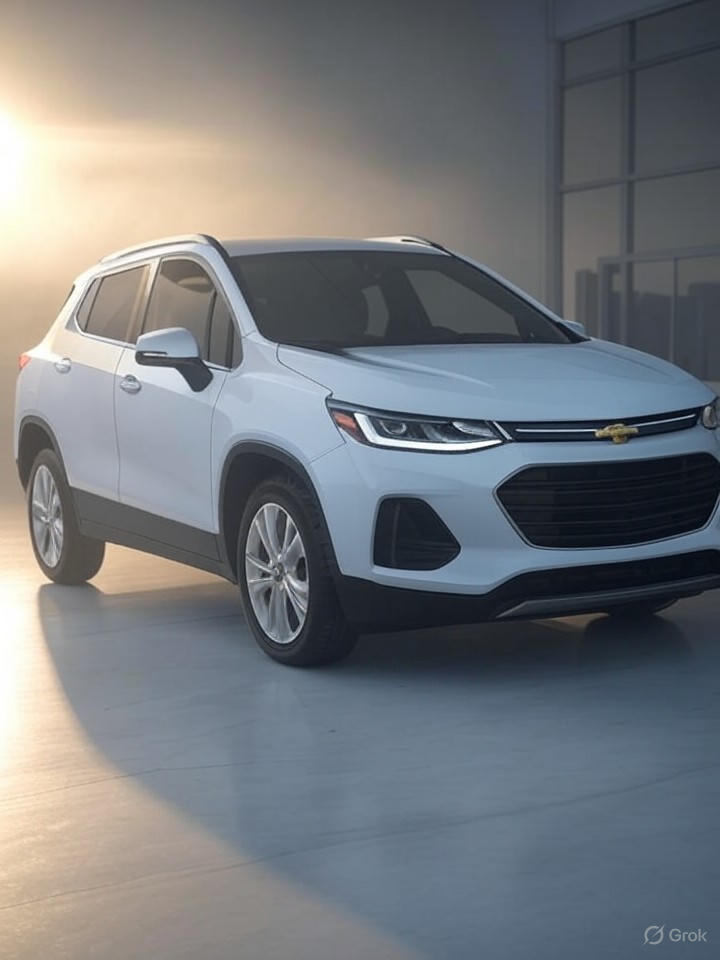
The 2021 Buick Encore is a subcompact luxury crossover that has carved out a niche for buyers who want a premium badge, easy city parking, and reasonable fuel economy without the bulk of a larger SUV. It sits on a 100.6-inch wheelbase — shorter than most compact crossovers — and carries Buick's trademark quiet cabin and upscale interior finishes at a price point that undercuts most European alternatives. Under the hood is GM's 1.4L turbocharged four-cylinder paired to a 6-speed automatic. It won't win any stoplight races (0–60 in about 9.3 seconds), but it's smooth enough for daily commuting and light highway use. The Encore has been on sale largely unchanged since 2013, so by 2021 it's a very mature platform — most gremlins are well understood and parts are widely available. Note that GM introduced the larger Encore GX alongside this model in 2020. If you're cross-shopping, the GX is a meaningfully bigger and more powerful vehicle despite the similar name. The original Encore shown here is the smaller of the two.

Reliability
3/5
Verified data
Specs shown for Encore GX FWD — the most common configuration. Other trims may vary in engine, drivetrain, or fuel economy. Sign in to see your vehicle's exact specs.
Engine
[object Object]
Drivetrain
FWD
Fuel
Gasoline
MPG
27 city / 33 hwy / 29 combined
Seats
5
Doors
4
Body
SUV
MSRP
$24,200

Overview

AI-curated

The 2021 Buick Encore is a subcompact luxury crossover that has carved out a niche for buyers who want a premium badge, easy city parking, and reasonable fuel economy without the bulk of a larger SUV. It sits on a 100.6-inch wheelbase — shorter than most compact crossovers — and carries Buick's trademark quiet cabin and upscale interior finishes at a price point that undercuts most European alternatives. Under the hood is GM's 1.4L turbocharged four-cylinder paired to a 6-speed automatic. It won't win any stoplight races (0–60 in about 9.3 seconds), but it's smooth enough for daily commuting and light highway use. The Encore has been on sale largely unchanged since 2013, so by 2021 it's a very mature platform — most gremlins are well understood and parts are widely available. Note that GM introduced the larger Encore GX alongside this model in 2020. If you're cross-shopping, the GX is a meaningfully bigger and more powerful vehicle despite the similar name. The original Encore shown here is the smaller of the two.

Known for
  • Quiet, well-insulated cabin for the price
  • Easy to park and maneuver in tight urban spaces
  • Mature, well-understood platform with good parts availability
  • Decent fuel economy from the 1.4L turbo
  • Premium features (heated seats, leather) at a modest price
Best for
  • Solo commuters or couples who rarely need rear-seat space
  • City and suburban drivers who prioritize ease of parking
  • Buyers who want a luxury-badged vehicle on a tighter budget
  • Low-mileage drivers who favor comfort over performance
Watch for
  • Transmission shudder is a documented and common complaint on this platform
  • Infotainment system freezes and reboots reported frequently
  • Engine ticking at higher mileage if oil changes are skipped
  • Very limited rear cargo and passenger space compared to newer subcompact crossovers
  • 1.4L turbo can feel strained on highway on-ramps or loaded up with passengers

Common issues by mileage

6 known

Transmission Shudder / Torque Converter Clutch Slip

high
Typically appears
25–50k mi
Estimated repair
$150 – $400

Infotainment System Freezing or Rebooting

high
Typically appears
10–40k mi
Estimated repair
$100 – $300

Engine Ticking / Timing Chain Noise

medium
Typically appears
50–100k mi
Estimated repair
$800 – $2,200

Turbo Bypass / Boost Control Issues

medium
Typically appears
60–100k mi
Estimated repair
$200 – $600

Battery Drain in Cold Weather

medium
Typically appears
All mileages
Estimated repair
$150 – $300

VVT / Camshaft Timing Solenoid Fault

low
Typically appears
70–120k mi
Estimated repair
$200 – $500

Maintenance schedule

  1. 1
    Every 7,500 miles or 12 months Oil & filter change — 5W-30 synthetic blend, 4.0 qt capacity

    The 1.4L turbo runs hot oil through the turbocharger bearings. Sticking to this interval is the single best thing you can do to prevent timing chain noise and turbo wear at higher mileage.

  2. 2
    Every 7,500 miles Tire rotation

    FWD models wear front tires faster. Rotating on the oil change schedule evens out wear and extends tire life significantly.

  3. 3
    Every 15,000 miles Cabin air filter replacement (part #13356916)

    Wisconsin road dust and pollen load up this filter quickly. A clogged cabin filter reduces defrost airflow — a real problem in winter.

  4. 4
    Every 30,000 miles Engine air filter replacement (part #13272720)

    Keeps the 1.4T breathing cleanly and supports proper fuel trim. Inspect earlier if driving on gravel or unpaved roads.

  5. 5
    Every 45,000 miles or 48 months Transmission fluid change — Dexron VI, 9.0 qt total fill

    Fresh fluid is the most effective preventive measure against the transmission shudder issue. Do not skip or extend this interval.

  6. 6
    Every 5 years or as needed Coolant flush — Dex-Cool (orange), 6.9 qt capacity

    Dex-Cool lasts longer than conventional coolant, but degraded coolant accelerates water pump and gasket wear. Check concentration each fall before Wisconsin winters.

  7. 7
    Each fall (before temps drop below 32°F) Battery load test

    Cold cranking amps drop sharply below 0°F. This platform has a known tendency for battery drain in cold climates. Catch a weak battery in October, not January.

  8. 8
    Each fall Switch to winter-rated wiper blades and top off washer fluid with -20°F or lower rated fluid

    Lake Geneva road salt spray will blind you fast. Summer washer fluid freezes on the windshield and makes visibility worse, not better.

Always defer to the manufacturer's service manual for warranty-mandated intervals.

Cost of ownership

Annual maintenance
$400 – $750
Fuel
At 29 MPG combined and ~12,000 miles/year, expect roughly $1,400–$1,700/year at current mid-grade Wisconsin pump prices.
Insurance
Typically $1,100–$1,500/year for a full-coverage policy on a 2021 Encore in Wisconsin, depending on driver profile and ZIP code. The luxury badge doesn't push insurance costs up dramatically.

The Encore is a relatively affordable vehicle to own day-to-day. Routine maintenance is the biggest controllable cost — oil changes, tires, and the 45k transmission service are the big-ticket items in the first 60,000 miles. The main financial risk is deferred maintenance leading to timing chain or transmission work, which can run $1,000–$2,500+. Stay current on fluids and this vehicle is reasonably economical.
Seasonal care

Lake Geneva, WI
Winter
  • Test the battery every fall — this platform is flagged for cold-climate battery drain, and Lake Geneva winters regularly hit single digits or below.
  • Use -20°F or colder rated windshield washer fluid; road salt spray is constant and summer fluid will freeze mid-wipe.
  • Switch to winter wiper blades before the first freeze; the Encore's wiper arms are standard and winter blades are inexpensive.
  • Check Dex-Cool coolant concentration each fall — aim for protection to at least -34°F for our climate.
  • If the vehicle sits outside, a battery maintainer or trickle charger during multi-day cold snaps can prevent a no-start.
  • Rinse the undercarriage regularly through the salt season — the Encore's unibody underpinnings and brake lines are vulnerable to accelerated corrosion from Wisconsin road brine.
Summer
  • Check tire pressure after the first hot week — pressure rises roughly 1 PSI per 10°F of temperature increase and overinflation causes center-tread wear.
  • Run the A/C system on MAX a/c occasionally even on mild days to keep the compressor seals lubricated; a summer of 'windows down' driving can lead to a seized compressor by the following August.
  • Inspect the cabin air filter in late spring — pollen season loads it up quickly and hurts defrost and A/C airflow.
  • Check coolant level when the engine is cold; heat soak after stop-and-go driving can stress the cooling system on the 1.4T.

Comparable vehicles

If you're shopping for one

Red flags
  • Any transmission shudder during test drive — don't buy without a confirmed diagnosis and repair estimate in hand.
  • No service records, especially for oil changes. Walk away or price in a timing chain job.
  • Check engine light on or recently cleared codes — pull the history with a scanner before purchase.
  • Heavy rust on underbody components — common on Wisconsin vehicles not undercoated.
  • Infotainment that won't power up or is stuck in a reboot loop — module replacement can be $400–$800+.
What to inspect
  • Test drive specifically at light throttle from 25–45 mph — transmission shudder shows up most clearly here. Any vibration or shaking is a red flag.
  • Check the infotainment screen during the test drive for sluggish response, freezing, or unexpected reboots. Ask if any software updates have been applied.
  • With the engine warm and at idle, listen for ticking from the top of the engine — an early sign of timing chain or VVT solenoid wear, especially on higher-mileage examples.
  • Inspect the undercarriage for rust on brake lines, frame, and exhaust — especially on any Wisconsin or northern-state vehicle.
  • Request oil change records. A 1.4T with skipped intervals is a much bigger risk than mileage alone suggests.
AI profile generated 20 days ago · claude-sonnet-4-6 · v2.