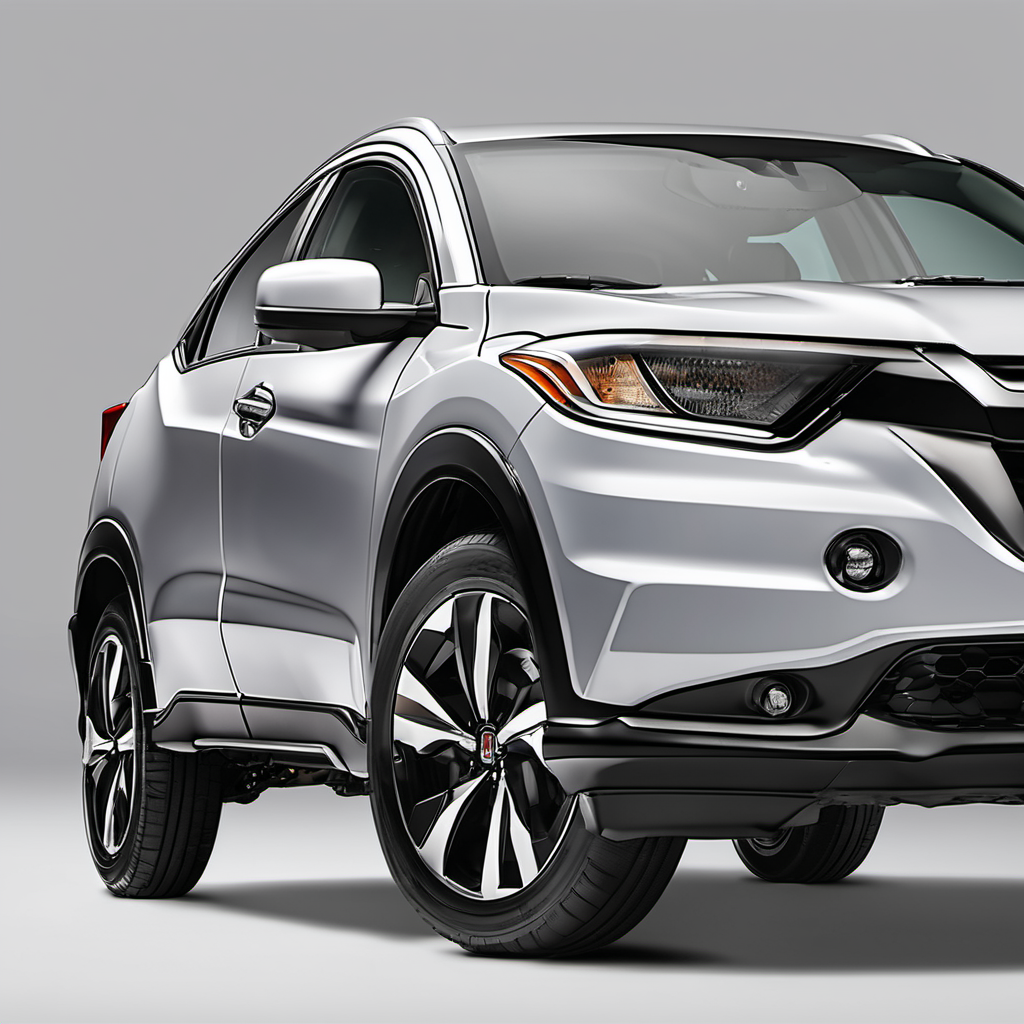
2021 Honda HR-V SUV

2021 Honda

HR-VSUV

SUV

The 2021 Honda HR-V is a subcompact crossover built on the Fit's platform, offering a surprisingly roomy interior — especially the rear seats — in a compact footprint. It's a practical urban and suburban daily driver that keeps running costs modest and parts readily available at any shop. For a small crossover, it punches above its weight on interior flexibility thanks to Honda's Magic Seat system. Under the hood is Honda's proven 1.8L i-VTEC four-cylinder, the same basic engine found in millions of Civics and Fits over the years. It's not fast, but it's been well-documented as durable with proper maintenance. The weak link on this generation is the CVT transmission, which requires strict fluid-change discipline to avoid expensive repairs down the road. The 2021 model year sits at the end of the first-generation HR-V run. It carries over without major updates, which means the infotainment system feels dated compared to competitors but the mechanical side is well understood. Buy it knowing you'll need to stay on top of CVT fluid changes and inspect the sunroof drains if equipped.

Reliability
3/5
Verified data
Specs shown for HR-V FWD — the most common configuration. Other trims may vary in engine, drivetrain, or fuel economy. Sign in to see your vehicle's exact specs.
Engine
[object Object]
Drivetrain
FWD
Fuel
Gasoline
MPG
28 city / 34 hwy / 30 combined
Seats
Doors
Body
Small Station Wagons
Length
170.4 inches

Overview

AI-curated

The 2021 Honda HR-V is a subcompact crossover built on the Fit's platform, offering a surprisingly roomy interior — especially the rear seats — in a compact footprint. It's a practical urban and suburban daily driver that keeps running costs modest and parts readily available at any shop. For a small crossover, it punches above its weight on interior flexibility thanks to Honda's Magic Seat system. Under the hood is Honda's proven 1.8L i-VTEC four-cylinder, the same basic engine found in millions of Civics and Fits over the years. It's not fast, but it's been well-documented as durable with proper maintenance. The weak link on this generation is the CVT transmission, which requires strict fluid-change discipline to avoid expensive repairs down the road. The 2021 model year sits at the end of the first-generation HR-V run. It carries over without major updates, which means the infotainment system feels dated compared to competitors but the mechanical side is well understood. Buy it knowing you'll need to stay on top of CVT fluid changes and inspect the sunroof drains if equipped.

Known for
  • Best-in-class rear passenger and cargo room for a subcompact crossover
  • Honda's Magic Seat rear folding system for maximum cargo versatility
  • Reliable 1.8L i-VTEC engine with a long service track record
  • Strong fuel economy for the class
  • Lower-than-average ownership costs when maintained properly
Best for
  • City and suburban commuters who need a small footprint with adult-friendly rear seats
  • First-time SUV buyers wanting Honda reliability without a big price tag
  • Drivers who prioritize cargo flexibility over performance
  • Anyone wanting a new or lightly used small SUV under $25k
Watch for
  • CVT transmission shudder and premature failure if fluid changes are skipped
  • Infotainment system freezes and crashes — a known nuisance on this generation
  • Sunroof drain clogs leading to interior water leaks (check drain tubes at each corner)
  • Underwhelming acceleration — 9+ seconds to 60 mph means merging on highways requires planning
  • Older battery risk in Wisconsin winters; the stock battery is adequately sized but not robust

Common issues by mileage

6 known

CVT Transmission Shudder / Failure

high
Typically appears
50–90k mi
Estimated repair
$250 – $3,800

Infotainment System Freezing or Crashing

medium
Typically appears
20–60k mi
Estimated repair
$0 – $350

Sunroof Drain Clog / Interior Water Leak

low
Typically appears
15–40k mi
Estimated repair
$100 – $600

i-VTEC VTC Actuator / Camshaft Timing Codes

low
Typically appears
80–150k mi
Estimated repair
$200 – $900

Cold-Climate Battery Drain / Weak Battery

medium
Typically appears
40–80k mi
Estimated repair
$150 – $250

A/C Compressor Failure

low
Typically appears
70–100k mi
Estimated repair
$800 – $1,600

Maintenance schedule

  1. 1
    Every 7,500 miles or 12 months, whichever comes first Engine Oil Change — 0W-20 Full Synthetic

    Honda's Maintenance Minder system can stretch intervals beyond what's wise in stop-and-go or cold-start-heavy driving. Sticking to 7,500 miles protects the i-VTEC variable valve timing system, which is oil-pressure dependent. Use 0W-20 full synthetic; capacity is 4.4 quarts with filter.

  2. 2
    Every 60,000 miles (do not wait for the factory 90k recommendation) CVT Fluid Change — Honda HCF-2

    The single most important service on this vehicle. Degraded CVT fluid is the primary driver of shudder and premature belt wear. Use only Honda HCF-2 — 3.8 quarts capacity. Going to 90k on original fluid is a gamble not worth taking.

  3. 3
    Every 12,000 miles or 12 months Tire Rotation

    FWD crossovers wear front tires significantly faster. Regular rotation evens wear and gives a tech the chance to inspect brake hardware at each corner.

  4. 4
    Every 30,000 miles or 36 months Air Filter Replacement

    Wisconsin driving — especially spring and fall with road debris — can load up a filter faster than the mileage interval suggests. Inspect at oil changes and replace early if visibly dirty.

  5. 5
    Every 30,000 miles or 36 months (inspect annually) Cabin Air Filter Replacement

    Clogged cabin filters reduce defrost airflow — a real problem in Wisconsin winters. Replace before the heating season if in doubt.

  6. 6
    Every 3 years regardless of mileage Brake Fluid Flush — DOT 3

    DOT 3 fluid is hygroscopic and absorbs moisture over time, lowering boiling point and promoting internal corrosion. With Wisconsin road salt accelerating caliper and line corrosion, fresh fluid matters.

  7. 7
    Inspect at 5 years, change at 10 years or 120,000 miles Coolant Inspection / Change — Honda Type 2 (Blue)

    Honda's Long Life Type 2 coolant is genuinely long-lived but does degrade. Do not mix with universal green coolant — it will damage the water pump seal. Capacity is 5.6 quarts.

  8. 8
    Every spring and fall Sunroof Drain Tube Cleaning (if sunroof equipped)

    Debris and algae plug the four corner drain tubes, forcing water into the headliner and onto the floor. A simple flush with water at each corner during seasonal prep prevents a costly interior water damage repair.

Always defer to the manufacturer's service manual for warranty-mandated intervals.

Cost of ownership

Annual maintenance
$400 – $750
Fuel
At 30 MPG combined and ~12,000 miles/year, expect roughly $1,300–$1,600/year at $3.25–$4.00/gallon. The HR-V is one of the more fuel-efficient options in the subcompact SUV class.
Insurance
Typically $1,100–$1,500/year for a driver with a clean record in the Lake Geneva area. Honda's strong safety ratings and low theft rate help keep premiums reasonable.

The HR-V is an inexpensive vehicle to run year to year when the CVT fluid schedule is respected. Routine maintenance — oil, tires, filters — runs $400–$750 annually at an independent shop. The risk is the CVT: a full replacement runs $3,000–$4,500 out of pocket and can dwarf years of normal maintenance savings if neglected. Budget $250–$300 every 60k miles for the CVT fluid change and avoid that scenario entirely.
Seasonal care

Lake Geneva, WI
Winter
  • Battery test every October — the stock battery handles Wisconsin cold but ages out around 4–5 years. A weak battery that starts fine at 40°F will leave you stranded at -10°F.
  • Switch to dedicated winter tires if you drive rural Walworth County roads. All-season tires lose significant grip below 45°F and the HR-V's modest ground clearance (7.3 in) won't compensate for poor traction.
  • Top off washer fluid with a -20°F or colder rated formula before the first hard freeze. The reservoir empties fast once road salt season begins.
  • Flush the sunroof drains before freeze-up. Water sitting in clogged drain tubes can freeze, crack the tubes, and divert melt water into the cabin.
  • Warm up the CVT before aggressive acceleration. CVT fluid thickens in sub-zero temps — give the transmission 2–3 minutes of gentle driving before highway speeds.
  • Rinse the undercarriage at a touchless car wash every 2–3 weeks during heavy salt season. Salt collects on the subframe and brake lines; the HR-V's FWD layout exposes those areas fully.
Summer
  • Check tire pressure monthly — every 10°F rise in ambient temperature adds roughly 1 PSI. Hot pavement can push pressures above the door placard spec, increasing wear and handling sensitivity.
  • Inspect the A/C system at the start of the season. The compressor is not a common failure, but refrigerant leaks from fittings are worth catching early before a hot July drive.
  • Check coolant concentration — a 50/50 mix of Honda Type 2 coolant handles temps well above what Wisconsin summers produce, but confirm the mix hasn't been diluted by top-offs with plain water.
  • Keep an eye on brake dust buildup on wheels during summer drives — the HR-V's brakes work harder when carrying passengers and cargo, and summer heat accelerates pad wear if the vehicle is loaded regularly.

Comparable vehicles

If you're shopping for one

Red flags
  • Any CVT fluid that looks dark brown or smells burnt — transmission wear may already be progressing.
  • Service records showing only dealer oil changes with no CVT fluid change by 90k miles — deferred maintenance on the most critical item.
  • Water stains on the rear headliner or musty smell in the cabin — sunroof leak damage is often more expensive to remediate than the repair quote suggests.
  • Check engine light present at purchase — insist on a full scan before buying; P0741 or transmission network codes are costly repairs.
  • Evidence of coolant top-offs with green universal coolant — mixing with Honda Type 2 Blue degrades the water pump seal and can cause overheating.
What to inspect
  • Connect a scan tool and check for any stored CVT-related codes (P0741) — shudder faults may have been cleared before the sale.
  • Test drive at highway speed and feel for any vibration or hunting between 40–60 mph — classic CVT shudder range on this generation.
  • Check the service records specifically for CVT fluid change history. No receipt before 60k miles is a yellow flag; no receipt before 90k miles is a red flag.
  • If sunroof equipped, pour a cup of water into each corner drain channel and confirm it exits under the vehicle — not into the headliner.
  • Cycle the infotainment fully through radio, Bluetooth, and backup camera. A slow or unresponsive screen may need a software update or head unit replacement.
  • Inspect the undercarriage and wheel wells for rust on brake lines and the rear trailing arm mounts — common on upper Midwest vehicles with salt exposure.
AI profile generated 4 days ago · claude-sonnet-4-6 · v2.