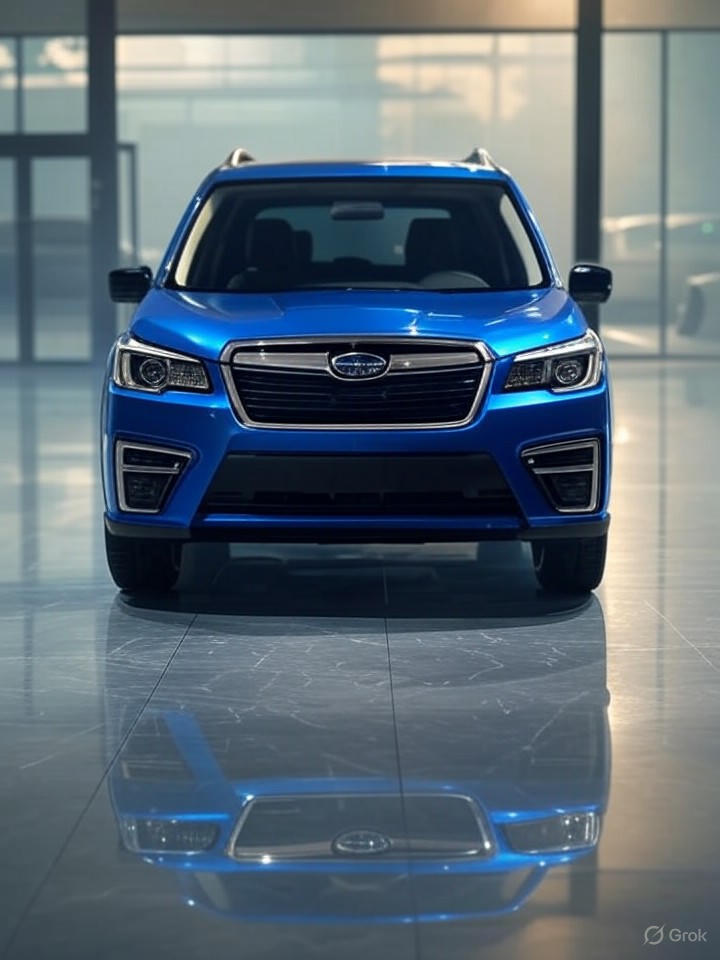
2015 Subaru Forester SUV

2015 Subaru

ForesterSUV

2.5L H4 · SUV

The 2015 Subaru Forester is the third model year of the fourth-generation (SJ) body style, which Subaru introduced in 2014. It grew noticeably over the previous generation — more headroom, more cargo space, better visibility — without losing the Forester's practical, no-nonsense character. The standard powertrain is a 2.5L naturally aspirated flat-four paired to a CVT (a 6-speed manual was available on the base trim), and symmetrical AWD is standard across the lineup, making it a natural fit for Wisconsin winters. The 2.5i trims are the sweet spot for most buyers — reliable, easy to maintain, and genuinely fuel-efficient for an AWD SUV. The 2.0XT turbo variant delivers more punch but introduces additional maintenance considerations and is less forgiving of oil change neglect. Subaru's EyeSight driver-assist system became a popular option on 2015 models and works well, though the cameras are sensitive to windshield damage. Overall the 2015 Forester has earned a strong reputation among compact SUV owners who prioritize utility, visibility, and all-weather capability over luxury. It holds its value well, parts are widely available, and independent shops can service it without issue.

Reliability
4/5
Verified data
Specs shown for Forester AWD — the most common configuration. Other trims may vary in engine, drivetrain, or fuel economy. Sign in to see your vehicle's exact specs.
Engine
[object Object]
Drivetrain
AWD
Fuel
Gasoline
MPG
26 city / 32 hwy / 28 combined
Seats
5
Doors
4
Body
SUV
MSRP
$22,595

Overview

AI-curated

The 2015 Subaru Forester is the third model year of the fourth-generation (SJ) body style, which Subaru introduced in 2014. It grew noticeably over the previous generation — more headroom, more cargo space, better visibility — without losing the Forester's practical, no-nonsense character. The standard powertrain is a 2.5L naturally aspirated flat-four paired to a CVT (a 6-speed manual was available on the base trim), and symmetrical AWD is standard across the lineup, making it a natural fit for Wisconsin winters. The 2.5i trims are the sweet spot for most buyers — reliable, easy to maintain, and genuinely fuel-efficient for an AWD SUV. The 2.0XT turbo variant delivers more punch but introduces additional maintenance considerations and is less forgiving of oil change neglect. Subaru's EyeSight driver-assist system became a popular option on 2015 models and works well, though the cameras are sensitive to windshield damage. Overall the 2015 Forester has earned a strong reputation among compact SUV owners who prioritize utility, visibility, and all-weather capability over luxury. It holds its value well, parts are widely available, and independent shops can service it without issue.

Known for
  • Symmetrical AWD standard on every trim
  • Best-in-class outward visibility for the era
  • Practical, boxy cargo area with genuine room
  • Flat-four (boxer) engine layout — low center of gravity
  • Strong long-term owner loyalty and resale value
Best for
  • Wisconsin winters and year-round all-weather driving
  • Outdoor enthusiasts needing cargo room and ground clearance
  • Families who want AWD without going to a larger, thirstier SUV
  • High-mileage commuters who prioritize reliability over flash
Watch for
  • Head gasket issues on the 2.5L engine (known Subaru weakness through this generation)
  • CVT longevity depends heavily on fluid change history — often neglected
  • Oil consumption on the 2.5L FA-series engine (2014–2015 improvement over EJ, but monitor)
  • Rust on subframe, rear suspension, and brake lines in salt-belt states like Wisconsin
  • EyeSight camera recalibration required after any windshield replacement — adds cost

Common issues by mileage

6 known

Head Gasket Seepage / Coolant Consumption

medium
Typically appears
80–140k mi
Estimated repair
$1,200 – $2,200

CVT Shudder or Overheating — Worn Fluid / Internal Wear

medium
Typically appears
80–130k mi
Estimated repair
$300 – $4,500

Oxygen Sensor / A/F Sensor Heater Failure

medium
Typically appears
80–150k mi
Estimated repair
$150 – $450

Rear Subframe and Brake Line Rust (Salt-Belt Corrosion)

high
Typically appears
60–150k mi
Estimated repair
$200 – $1,800

EyeSight Camera Dropout / Windshield Fogging

low
Typically appears
Any mileage
Estimated repair
$100 – $400

Maintenance schedule

  1. 1
    Every 5,000 miles or 6 months — do not stretch to 7,500 mi Engine Oil & Filter Change

    The FA25 engine is sensitive to oil quality. Extended intervals increase sludge risk and AVCS solenoid clogging, which triggers camshaft timing codes. Use full synthetic 0W-20.

  2. 2
    Every 30,000 miles regardless of 'lifetime' labeling CVT Fluid Change

    Subaru's CVT fluid degrades faster than the maintenance schedule implies. Fresh fluid is the single biggest factor in CVT longevity. Use genuine Subaru CVTF-II or equivalent.

  3. 3
    Every 30,000 miles or per manufacturer schedule Coolant Flush and Subaru Cooling System Conditioner

    Subaru specifies cooling system conditioner (a sealer) to protect the head gasket interface. Skipping this shortens gasket life. Use only Subaru-approved coolant.

  4. 4
    Every 60,000 miles Spark Plugs

    Iridium plugs are OEM. Worn plugs on a boxer engine cause misfires that are harder to diagnose given the unusual firing order. Don't wait for a symptom.

  5. 5
    Every 2 years Brake Fluid Flush

    Subaru's brake fluid absorbs moisture quickly. In Wisconsin freeze-thaw cycles, degraded fluid increases corrosion risk in ABS modulators and calipers.

  6. 6
    Every 30,000 miles AWD Differential and Rear Differential Fluid

    The rear differential and transfer case fluid is often overlooked. Old fluid causes wear in the AWD coupling and can lead to shudder or binding on tight turns.

  7. 7
    Every spring and fall Underbody Inspection for Rust

    Wisconsin road salt accelerates corrosion on brake lines, fuel lines, and the rear subframe. Catching surface rust early is far cheaper than replacing corroded brake lines.

  8. 8
    Every 15,000–20,000 miles Cabin and Engine Air Filter

    Cabin filters clog fast in Wisconsin's pollen season. A clogged engine air filter on a CVT-equipped Forester causes the transmission to work harder under load.

Always defer to the manufacturer's service manual for warranty-mandated intervals.

Cost of ownership

Annual maintenance
$600 – $1,200
Fuel
At 28 MPG combined and ~15,000 mi/yr, expect roughly $1,600–$1,900/yr at $3.00–$3.50/gal regular unleaded.
Insurance
Typically $900–$1,400/yr for full coverage in Wisconsin depending on driver profile. IIHS Top Safety Pick status keeps rates competitive.

The 2015 Forester is a genuinely affordable vehicle to own. Routine maintenance at an independent shop runs $600–$1,200 per year. The two costs to plan for over the long term are CVT service (every 30k mi) and head gasket monitoring — if that goes, budget $1,200–$2,200 at an independent shop. Rust mitigation (rustproofing, annual inspection) is money well spent in Wisconsin and adds $100–$300/yr.
Seasonal care

Lake Geneva, WI
Winter
  • Switch to a full-synthetic 0W-20 if not already — it flows immediately in sub-zero starts and reduces cold-start AVCS solenoid wear.
  • Test your battery every fall. Subaru's electrical load (AWD, EyeSight, heated seats) drains a marginal battery fast in cold temps. Replace if it's 4+ years old.
  • Use winter-rated washer fluid rated to -30°F or lower — Lake Geneva temps can bottom out well below that.
  • Install dedicated winter tires. AWD gets you going but doesn't help you stop — winter tires do both.
  • Spray underbody with a wax-based corrosion inhibitor before first snowfall; re-rinse after heavy salt events.
  • Check brake lines and caliper sliders each fall — salt eats them fast on this generation Forester.
Summer
  • Check tire pressure monthly — Wisconsin summer heat causes pressure to rise ~1 PSI per 10°F. Overinflation wears center tread.
  • Inspect the A/C system for refrigerant level and cabin filter condition — a clogged filter kills cooling efficiency.
  • Watch coolant level and reservoir closely. The FA25 can seep coolant at the head gasket without obvious external puddles.
  • If the car sits in sun, EyeSight cameras can fog or overheat temporarily — this is normal, but persistent issues should be inspected.
  • Check CVT fluid condition if the vehicle has never had it changed — heat degrades old CVT fluid faster than cold does.

Comparable vehicles

If you're shopping for one

Red flags
  • Any sign of overheating history — warped head gaskets are expensive and common when this engine has been overheated even once.
  • CVT hesitation, shudder at low speed, or slipping — fluid neglect at this point may mean the transmission is already damaged.
  • Mismatched tire brands or significantly different tread depths across all four — this stresses the AWD system and can cause expensive drivetrain damage.
  • Rust holes or severe scale on brake lines — replacement is mandatory and labor-intensive on these cars.
  • Check engine light present or recently cleared — pull codes before purchase; camshaft timing codes (P0012, P0015, P0022, P0025) may indicate oil neglect.
  • EyeSight windshield previously replaced without recalibration — system will not function correctly and recalibration is an added buyer cost.
What to inspect
  • Pull the oil filler cap and check for white milky residue — a sign of coolant intrusion at the head gasket.
  • Check coolant reservoir level cold and look for a brownish tint or oily film, which signals combustion gases in the cooling system.
  • Get a CVT fluid check — dark brown or burnt-smelling fluid means the transmission has been neglected and may be near failure.
  • Inspect the underside for rust on brake lines, fuel lines, and the rear subframe — critical on any Wisconsin or salt-belt Forester.
  • Start cold and listen for a ticking or rattling noise for the first 5–10 seconds — AVCS solenoid sludge or cam phaser wear sounds like this.
  • Test EyeSight at highway speed — verify both cameras are clear, system engages, and there are no warning lights.
  • Check all four tires for even wear — uneven wear on an AWD Subaru often means mismatched tire diameters, which can damage the AWD coupling.
AI profile generated 20 days ago · claude-sonnet-4-6 · v2.