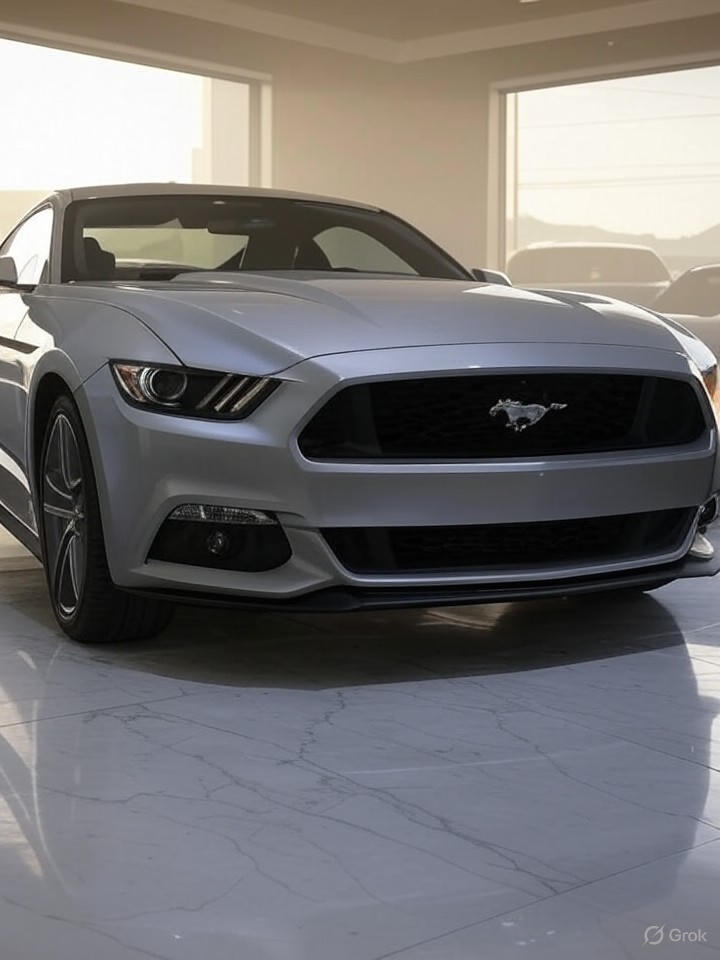
2014 Ford Mustang Coupe

2014 Ford

MustangCoupe

3.7L V6 · Coupe

The 2014 Ford Mustang is the last model year of the fifth-generation (S197) platform before the groundbreaking sixth-generation arrived for 2015. That makes it a clean, well-sorted car with ten-plus years of documented ownership patterns — any early bugs were ironed out long before this year rolled off the line. It's a classic American rear-wheel-drive pony car available with a 3.7L V6, 2.3L EcoBoost (not yet in this gen — the standard 2014 choices are V6 and V8), or the iconic 5.0L Coyote V8 in GT trim. The V6 base car is a surprisingly capable daily driver with decent fuel economy for the segment. The GT with the 5.0L Coyote V8 is the one most enthusiasts seek out — it makes 420 hp, sounds great, and has proven itself as one of the most durable Ford V8s in recent memory. The six-speed manual and automatic are both well-matched to the engines. Being a RWD coupe with a live rear axle (not independent), it is not the ideal Wisconsin winter vehicle, but many owners here do daily-drive them with a proper set of winter tires. Rust protection on this generation is adequate but not exceptional — underbody inspection is mandatory when buying used in the upper Midwest.

Reliability
4/5
Verified data
Specs shown for Mustang — the most common configuration. Other trims may vary in engine, drivetrain, or fuel economy. Sign in to see your vehicle's exact specs.
Engine
[object Object]
Drivetrain
RWD
Fuel
Gasoline
MPG
19 city / 29 hwy / 22 combined
Seats
4
Doors
2
Body
Coupe
MSRP
$23,560

Overview

AI-curated

The 2014 Ford Mustang is the last model year of the fifth-generation (S197) platform before the groundbreaking sixth-generation arrived for 2015. That makes it a clean, well-sorted car with ten-plus years of documented ownership patterns — any early bugs were ironed out long before this year rolled off the line. It's a classic American rear-wheel-drive pony car available with a 3.7L V6, 2.3L EcoBoost (not yet in this gen — the standard 2014 choices are V6 and V8), or the iconic 5.0L Coyote V8 in GT trim. The V6 base car is a surprisingly capable daily driver with decent fuel economy for the segment. The GT with the 5.0L Coyote V8 is the one most enthusiasts seek out — it makes 420 hp, sounds great, and has proven itself as one of the most durable Ford V8s in recent memory. The six-speed manual and automatic are both well-matched to the engines. Being a RWD coupe with a live rear axle (not independent), it is not the ideal Wisconsin winter vehicle, but many owners here do daily-drive them with a proper set of winter tires. Rust protection on this generation is adequate but not exceptional — underbody inspection is mandatory when buying used in the upper Midwest.

Known for
  • Iconic pony car styling with classic long-hood proportions
  • 5.0L Coyote V8 (GT) delivering 420 hp and a distinctive exhaust note
  • Solid-axle rear suspension — simpler to maintain, less sophisticated in corners
  • Broad aftermarket and enthusiast community support
  • Last year of the S197 generation — well-refined platform
Best for
  • Driving enthusiasts who want a fun, characterful weekend or fair-weather car
  • Buyers wanting strong V8 performance at an accessible used price
  • Those with access to dedicated winter tires for year-round use
  • Gearheads who enjoy working on or modifying their own vehicle
Watch for
  • Solid rear axle limits wet/icy cornering predictability vs. IRS competitors
  • RWD in Wisconsin winters requires proper winter tires — all-seasons are not enough
  • High-mileage examples with aggressive driving history may have worn clutches or diff issues
  • Underbody and subframe rust common on upper-Midwest used examples
  • Throttle-body carbon buildup on the V6 if oil changes were neglected

Common issues by mileage

6 known

Oxygen sensor or heater circuit fault

medium
Typically appears
80–140k mi
Estimated repair
$120 – $300

Clutch wear / throwout bearing noise (manual transmission)

high
Typically appears
40–90k mi
Estimated repair
$700 – $1,400

Rear differential fluid breakdown / whine under load

medium
Typically appears
50–100k mi
Estimated repair
$80 – $350

Underbody / subframe rust (upper Midwest road-salt exposure)

high
Typically appears
Any mileage on salt-belt examples
Estimated repair
$200 – $2,000

Throttle body carbon buildup (V6 direct-port injection)

low
Typically appears
70–120k mi
Estimated repair
$100 – $250

Maintenance schedule

  1. 1
    Every 5,000–7,500 mi (conventional) or 7,500–10,000 mi (full synthetic) Engine oil and filter change

    The V6 in particular is susceptible to sludge if intervals are stretched. Use full synthetic 5W-20 as Ford specifies; don't extend beyond 10k mi on a used example with unknown history.

  2. 2
    Every 30,000–45,000 mi, or immediately after water crossing or track use Rear differential fluid change

    The 8.8-inch rear end is robust but the fluid breaks down faster under spirited driving. Fresh fluid prevents whine and wear on the ring-and-pinion.

  3. 3
    Every 2 years regardless of mileage Brake fluid flush

    Brake fluid is hygroscopic — Wisconsin humidity accelerates moisture absorption. Wet fluid lowers boiling point and accelerates internal caliper corrosion.

  4. 4
    Every 60,000 mi (iridium plugs) Spark plug replacement

    Ford's iridium plugs last longer but worn plugs on the V6 cause misfires and can trigger VCT-related codes due to rough combustion affecting cam timing control.

  5. 5
    Every 60,000 mi or 5 years Coolant system inspection and flush

    Wisconsin freeze cycles stress coolant hoses and the overflow reservoir. Verify freeze protection to at least -34°F before winter.

  6. 6
    Every winter (monthly wash during salting season) Underbody wash and inspection

    Road salt on Walworth County roads aggressively attacks the Mustang's subframe, floor pans, and brake lines. Early detection of surface rust prevents structural problems.

  7. 7
    Every 45,000–60,000 mi Transmission fluid change (manual or automatic)

    Ford does not always list this as a scheduled item, but used examples with unknown history benefit greatly from fresh fluid. The MT-82 manual in particular shifts more smoothly with clean fluid.

  8. 8
    Every fall before winter season Battery load test

    Sub-zero starts in Lake Geneva winters are hard on batteries. The Mustang's electrical load at startup is significant. A battery over 4 years old should be load-tested, not just voltage-checked.

Always defer to the manufacturer's service manual for warranty-mandated intervals.

Cost of ownership

Annual maintenance
$500 – $1,100
Fuel
Premium recommended for the 5.0L V8 GT; 87 octane regular is fine for the 3.7L V6. At current Midwest prices and average 12,000 mi/yr, expect roughly $1,400–$2,200/yr depending on engine choice and driving habits.
Insurance
Expect moderately high premiums — sports coupes carry a surcharge, especially for drivers under 25. Rates in Walworth County for a clean-record adult driver typically run $1,400–$2,200/yr for full coverage on a used example at current values.

Routine maintenance on the S197 Mustang is very affordable at an independent shop — parts are widely available, nothing is exotic. The costs climb quickly with deferred maintenance (clutch replacement, VCT solenoids, rust remediation) or performance modifications that accelerate wear. Budget toward the higher end if buying an example with incomplete service history or evidence of track or autocross use.

Seasonal care

Lake Geneva, WI
Winter
  • Swap to a dedicated set of winter tires on steel wheels — RWD + solid rear axle on snow or ice is genuinely dangerous on all-seasons.
  • Confirm engine coolant freeze protection to at least -34°F before the first hard freeze; Wisconsin regularly sees sub-zero temps.
  • Load-test the battery every fall — cold cranking a V6 or V8 at 0°F is brutal on an aging battery.
  • Fill the washer fluid reservoir with a -20°F or colder rated fluid; the standard car has a low-slung hood that accumulates road grime fast.
  • Rinse the underbody (especially wheel wells, subframe, and brake lines) every 1–2 weeks during active salting season — the S197's underbody corrosion protection is only adequate.
  • Check door seals and apply a silicone protectant to prevent freeze-shut doors after wet-then-freeze weather cycles.
Summer
  • Check tire pressure monthly — the dark asphalt and Wisconsin summer heat cause pressure to climb 4–6 psi above a cold-morning reading.
  • Inspect the A/C system before Memorial Day weekend; the condenser sits low and is vulnerable to road debris damage that leaks refrigerant.
  • After a hard winter, inspect brake rotors for rust pitting — surface rust is normal, but deep pitting from salt and seasonal neglect warrants replacement.
  • Check engine coolant level cold when temperatures consistently exceed 90°F — the Mustang's cooling system works hard in stop-and-go with the hood trapping heat.
  • Inspect the convertible top seal (if applicable) or the coupe's door/window seals for UV cracking that lets water intrude.

Comparable vehicles

If you're shopping for one

Red flags
  • Any evidence of subframe or floor pan rust penetration — repair costs can exceed the car's value.
  • VCT rattles or oil consumption on the V6/V8 without documented oil change history — possible sludge or phaser damage.
  • Clutch slip or grinding gear engagement on manual cars with no record of clutch replacement.
  • Aftermarket tunes or ECU flashes without documented professional calibration — can mask sensor faults and stress the engine.
  • Mismatched paint panels or poorly aligned body gaps suggesting a prior collision repair.
  • Check engine light cleared immediately before sale — scan for stored/pending codes before purchase, not just active ones.
What to inspect
  • Lift the car and inspect the subframe, floor pans, rear axle housing, and brake lines for salt-belt rust — this is non-negotiable on any Wisconsin-titled example.
  • Check for VCT tick or rattle at cold startup on the 3.7L V6 or 5.0L V8 — a persistent rattle that doesn't clear within 30 seconds may indicate phaser or solenoid wear.
  • On manual transmission cars, feel for clutch slip (engine revs rise faster than the car accelerates) and listen for throwout bearing chirp at idle with clutch pedal depressed.
  • Inspect tires for uneven wear patterns — aggressive rear wear suggests burnout abuse; cupped front tires suggest worn struts.
  • Test the A/C fully — check that it cools to below 45°F at the center vent within a few minutes on a warm day.
  • Look for signs of track or autocross use: heat-cracked brake rotors, aftermarket brake pads, worn front sway bar end links.
AI profile generated 21 days ago · claude-sonnet-4-6 · v2.