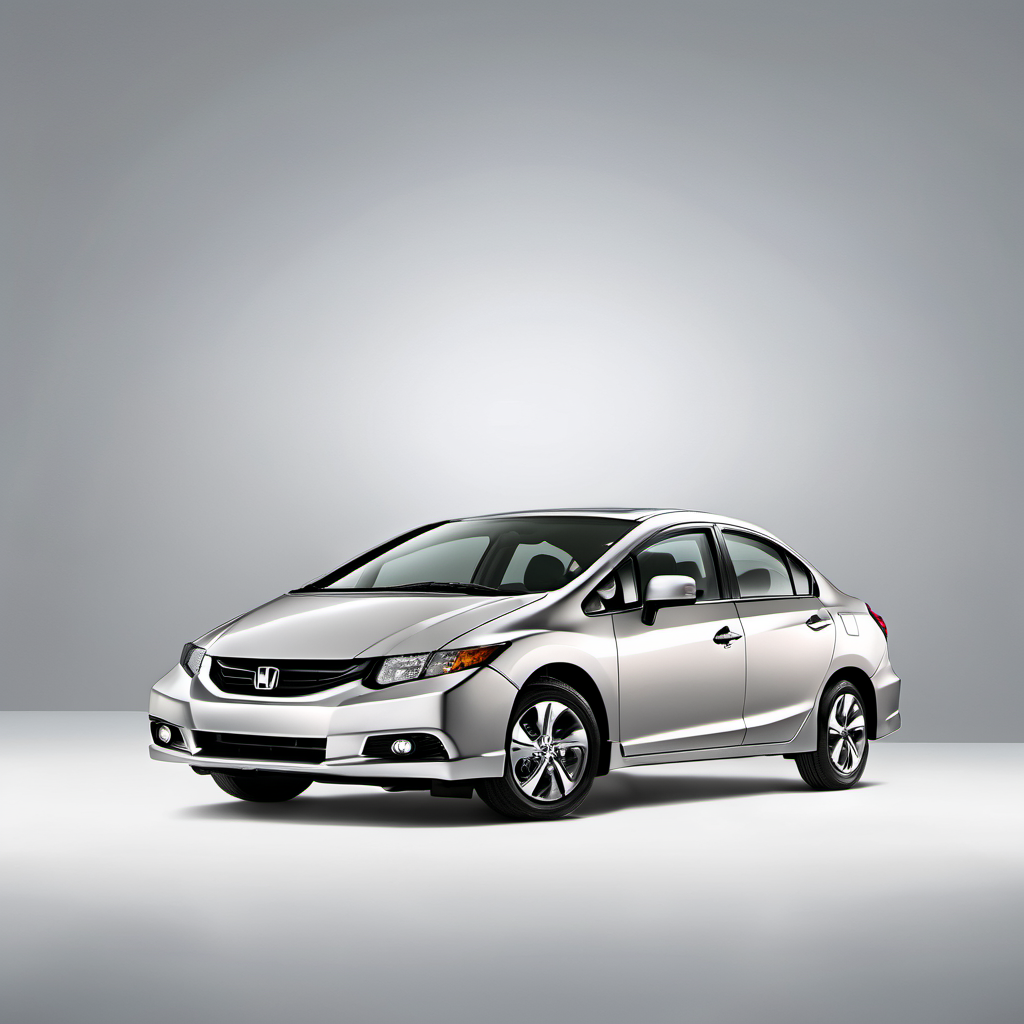
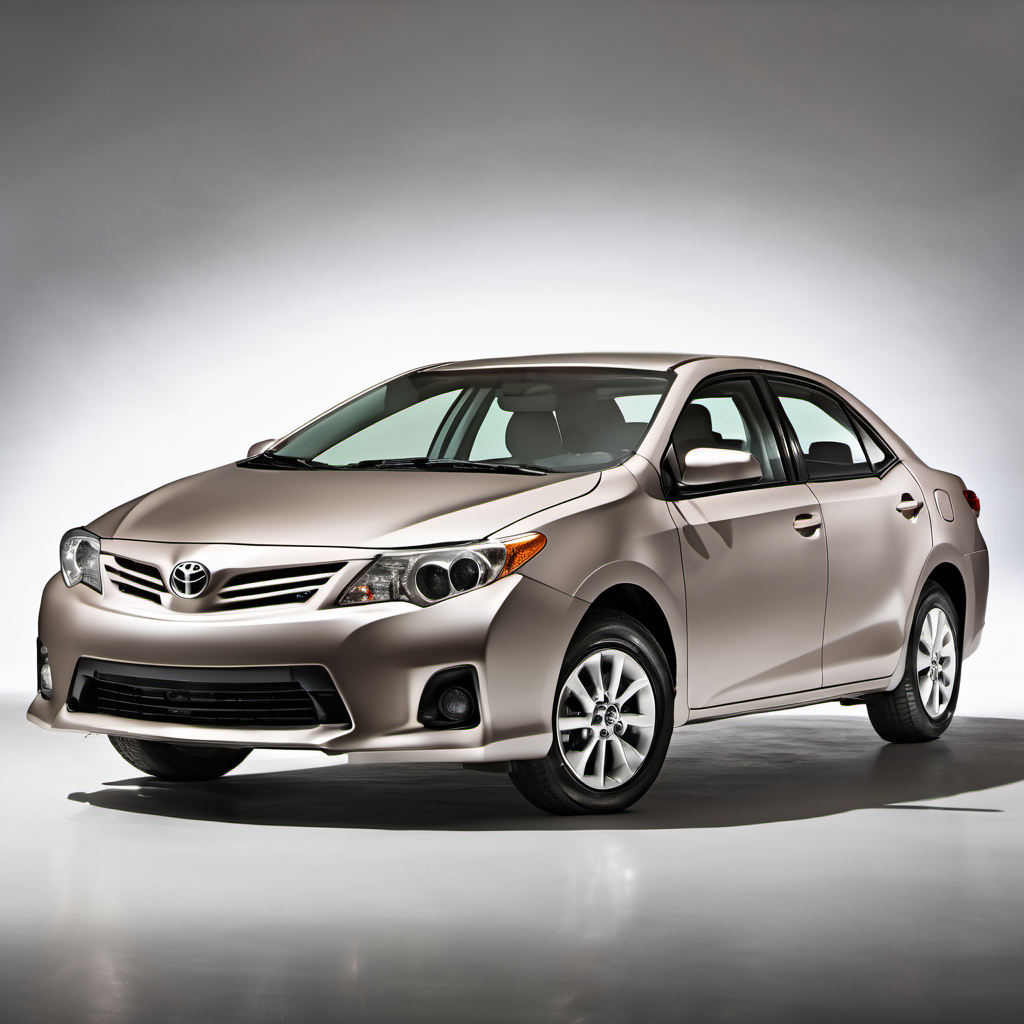
2012 Honda Civic Coupe

2012 Honda

CivicCoupe

1.8L I4 i-VTEC · Coupe

The 2012 Honda Civic Coupe is a ninth-generation (2012–2015) two-door compact that carries Honda's long-standing reputation for reliability and low running costs. When it launched, the '12 model drew some criticism for a cost-reduced interior compared to the outgoing eighth gen, but the fundamentals — efficient engines, solid build, and proven mechanicals — remain intact. Honda responded to early reviews with a mid-cycle refresh in 2013, so the 2012 is the rawest expression of the 9th gen. Power comes from Honda's proven 1.8L i-VTEC four-cylinder paired with either a 5-speed manual or a CVT-style 5-speed automatic. The coupe body keeps things sporty without sacrificing everyday usability. Fuel economy is a standout, routinely hitting 35+ mpg on the highway with the automatic. For buyers in the Lake Geneva area, the Civic Coupe is a sensible commuter and light all-season car. Its FWD platform handles Wisconsin winters adequately with a good set of snow tires, though the low-profile stock tires on sportier trims can struggle in deep snow. At this age, rust on the rocker panels and rear wheel wells is the biggest used-car concern.

Reliability
4/5
Verified data
Specs shown for Civic — the most common configuration. Other trims may vary in engine, drivetrain, or fuel economy. Sign in to see your vehicle's exact specs.
Engine
[object Object]
Drivetrain
FWD
Fuel
Gasoline
MPG
28 city / 36 hwy / 31 combined
Seats
5
Doors
2
Body
Coupe
MSRP
$18,165

Overview

AI-curated

The 2012 Honda Civic Coupe is a ninth-generation (2012–2015) two-door compact that carries Honda's long-standing reputation for reliability and low running costs. When it launched, the '12 model drew some criticism for a cost-reduced interior compared to the outgoing eighth gen, but the fundamentals — efficient engines, solid build, and proven mechanicals — remain intact. Honda responded to early reviews with a mid-cycle refresh in 2013, so the 2012 is the rawest expression of the 9th gen. Power comes from Honda's proven 1.8L i-VTEC four-cylinder paired with either a 5-speed manual or a CVT-style 5-speed automatic. The coupe body keeps things sporty without sacrificing everyday usability. Fuel economy is a standout, routinely hitting 35+ mpg on the highway with the automatic. For buyers in the Lake Geneva area, the Civic Coupe is a sensible commuter and light all-season car. Its FWD platform handles Wisconsin winters adequately with a good set of snow tires, though the low-profile stock tires on sportier trims can struggle in deep snow. At this age, rust on the rocker panels and rear wheel wells is the biggest used-car concern.

Known for
  • Excellent long-term reliability and low cost of ownership
  • Fuel-efficient 1.8L i-VTEC engine
  • Sporty coupe styling with practical daily-driver usability
  • Strong resale value relative to segment
Best for
  • Budget-conscious commuters wanting low fuel and maintenance costs
  • First-time car owners or college students
  • Drivers who want a sporty look without sports-car running costs
  • City and highway mixed-use driving
Watch for
  • Interior quality noticeably below the outgoing 8th-gen Civic — thin plastics that show wear
  • Undersized stock tires on LX/EX trims can feel vague in wet or snowy conditions
  • AC compressor failures reported in early 9th-gen examples
  • Rust on rocker panels and rear wheel arches on higher-mileage Midwestern examples

Common issues by mileage

6 known

AC Compressor Failure

high
Typically appears
60–120k mi
Estimated repair
$550 – $950

VTC Actuator / i-VTEC Oil Pressure — Camshaft Timing Faults

medium
Typically appears
80–150k mi
Estimated repair
$200 – $600

Valve Control Solenoid Failure (VTC Solenoid)

medium
Typically appears
80–150k mi
Estimated repair
$150 – $400

Oxygen Sensor / A/F Sensor Heater Circuit Failure

medium
Typically appears
100–160k mi
Estimated repair
$150 – $350

Rear Wheel Arch & Rocker Panel Rust

high
Typically appears
Any — age/salt dependent
Estimated repair
$400 – $1,500

Automatic Transmission Torque Converter Shudder

low
Typically appears
100–180k mi
Estimated repair
$300 – $1,200

Maintenance schedule

  1. 1
    Every 5,000 miles or 6 months — do NOT stretch to Honda's oil life monitor maximum on a used example Engine oil & filter change

    The 1.8L i-VTEC uses oil pressure to actuate the VTC system. Low or dirty oil is the #1 cause of camshaft timing codes (P0012, P0015) and VTC actuator wear. Fresh oil is cheap insurance.

  2. 2
    Every 30,000 miles on used vehicles Transmission fluid change (automatic)

    Honda's 'lifetime' fluid claim doesn't hold on high-mileage used cars. Fresh Honda-spec ATF reduces torque converter shudder and extends transmission life.

  3. 3
    Every 30,000 miles (iridium plugs every 60k) Spark plug replacement

    Worn plugs on the 1.8L cause rough idle and can mask or trigger camshaft timing complaints.

  4. 4
    Every 15,000–20,000 miles or annually Air filter replacement

    Wisconsin road grit and pollen load filters quickly; a clogged filter hurts fuel economy noticeably on the small-displacement engine.

  5. 5
    Every 60,000 miles or 5 years Coolant flush

    Degraded coolant raises corrosion risk in the aluminum head — important in a climate with hard winters and thermal cycling.

  6. 6
    Every 3 years Brake fluid flush

    Honda recommends this interval. Moisture-laden fluid lowers boiling point, which matters on icy Wisconsin hills where brakes work harder.

  7. 7
    Every 15,000 miles or annually Cabin air filter replacement

    Easy DIY job. A clogged cabin filter reduces heater and defroster airflow — a real problem in January.

  8. 8
    Every spring after winter season Undercarriage rust inspection & touch-up

    Lake Geneva roads are heavily salted. Annual inspection of rocker panels, wheel arches, and brake lines catches surface rust before it becomes structural.

Always defer to the manufacturer's service manual for warranty-mandated intervals.

Cost of ownership

Annual maintenance
$350 – $750
Fuel
At 31 MPG combined and ~15,000 miles/year, expect roughly $1,400–$1,700/year at current Midwest gas prices. Highway commuters will land toward the lower end.
Insurance
One of the cheaper compacts to insure — typically $900–$1,300/year for a full-coverage policy on a driver with a clean record in Walworth County. Coupe body can run slightly higher than the sedan equivalent.

The 2012 Civic Coupe is a genuinely low-cost car to own. Parts are widely available, labor is straightforward, and nothing on this car requires specialty tooling. The biggest budget wildcard on older examples is rust repair and AC work — set aside $500–$800 as a used-car contingency fund after purchase.
Seasonal care

Lake Geneva, WI
Winter
  • Switch to a dedicated set of winter tires — the stock 195/65R15 all-seasons lose grip quickly below 20°F on salted Wisconsin roads. Winter tires on a spare set of steel wheels save money long-term.
  • Check battery health every October. The OEM battery is typically marginal by 4–5 years old; a weak battery will crank poorly below 0°F.
  • Use a top-tier winter washer fluid rated to at least -20°F. The stock reservoir is adequate but fills fast on salty roads — keep a jug in the trunk.
  • Inspect and treat door and trunk seals with silicone lubricant in November to prevent freeze-shut in deep cold.
  • Flush and refill coolant to the correct 50/50 mix if it hasn't been done — provides freeze protection to -34°F and prevents internal corrosion.
  • Rinse the undercarriage at a touchless car wash every 1–2 weeks during heavy salt season. Pay special attention to the rear wheel arches, a known rust point on this generation.
Summer
  • Check tire pressure monthly — tires gain roughly 1 PSI for every 10°F of temperature rise, and over-inflation accelerates center-tread wear.
  • Inspect the AC system before Memorial Day. The 9th-gen Civic has a documented AC compressor weakness; catching a weak compressor early is far cheaper than a roadside failure.
  • Check the coolant reservoir level and inspect hoses for cracking or softness — heat cycling accelerates hose aging on a 10+ year old car.
  • Clean the cabin air filter or replace it in spring to maximize A/C airflow and defroster performance during humid Wisconsin summers.

Comparable vehicles

If you're shopping for one

Red flags
  • Any check engine light, especially P0012 or P0015 — VTC/camshaft timing faults on a cold-start are expensive if ignored and indicate possible oil neglect.
  • Rust through on rocker panels or floor — in Wisconsin this is a structural concern and a hard pass unless priced accordingly.
  • Evidence of rear-end collision repair (misaligned trunk, uneven panel gaps) — the coupe's rear quarters are expensive to straighten properly.
  • Automatic transmission that hesitates, shudders, or slips — fluid service may help but a worn unit at this mileage can cost more than the car is worth.
  • No service records at all on a 100k+ mile example — oil neglect is the biggest killer of Honda i-VTEC engines.
What to inspect
  • Run a magnet along the rocker panels and rear wheel arches — filler hides rust on many Midwestern examples. Look for bubbling paint at the base of the rear doors.
  • Start the engine cold and listen for a rattling or ticking noise in the first 10–15 seconds — this points to VTC actuator or oil pressure issues (can trigger P0012, P0015).
  • Test the AC on full blast for 5+ minutes. Weak or warm output on a car this age is a yellow flag for compressor wear.
  • Check for transmission shudder at light throttle between 40–55 mph in the automatic — a sign of torque converter or fluid degradation.
  • Pull the oil cap and look for milky residue — a sign of head gasket issues, uncommon but not unheard of on neglected examples.
  • Verify all four windows operate smoothly and the power locks cycle — cheap interior components can fail on 10+ year old examples.
AI profile generated 20 days ago · claude-sonnet-4-6 · v2.