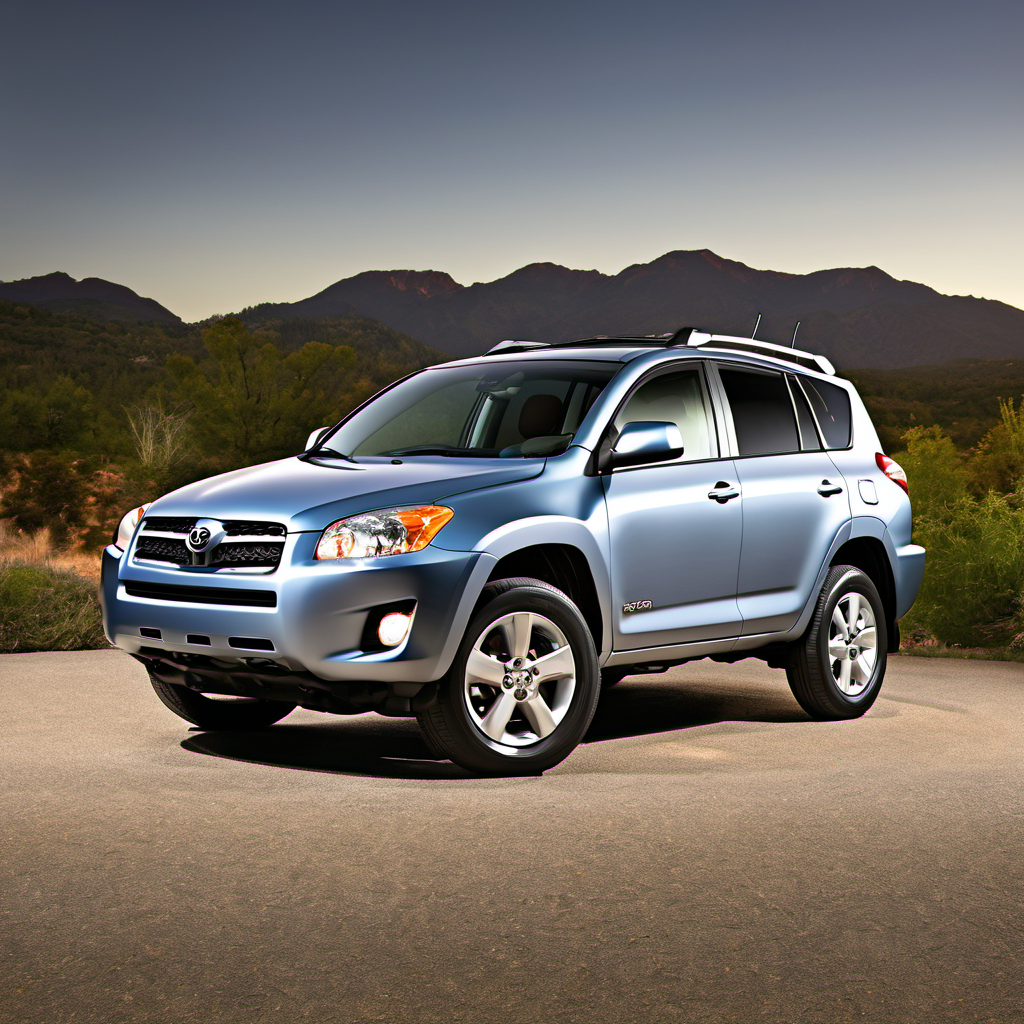
2011 Toyota RAV4 SUV

2011 Toyota

RAV4SUV

SUV

The 2011 Toyota RAV4 is a compact SUV that sits in the third generation of the nameplate (2006–2012). This model year received a mild refresh and continues to be powered by a 2.5L four-cylinder engine mated to a four-speed automatic. It strikes a practical balance between car-like driving manners and enough cargo space and ride height for light-duty family hauling. The RAV4's reputation is built on straightforward mechanicals and Toyota's well-established manufacturing standards. It doesn't have flashy tech, but it also doesn't give owners many surprises — which is exactly why so many examples are still on the road well past 150k miles with routine maintenance. For buyers in the Lake Geneva area, the FWD variant is worth considering only if the vehicle stays on maintained roads; if you want year-round confidence in Wisconsin winters, the AWD version of this generation is the smarter pick. Either way, this is a vehicle that rewards basic care with long service life.

Reliability
4/5
Verified data
Specs shown for RAV4 2WD — the most common configuration. Other trims may vary in engine, drivetrain, or fuel economy. Sign in to see your vehicle's exact specs.
Engine
[object Object]
Drivetrain
FWD
Fuel
Gasoline
MPG
21 city / 28 hwy / 24 combined
Seats
Doors
Body
Sport Utility Vehicle - 2WD

Overview

AI-curated

The 2011 Toyota RAV4 is a compact SUV that sits in the third generation of the nameplate (2006–2012). This model year received a mild refresh and continues to be powered by a 2.5L four-cylinder engine mated to a four-speed automatic. It strikes a practical balance between car-like driving manners and enough cargo space and ride height for light-duty family hauling. The RAV4's reputation is built on straightforward mechanicals and Toyota's well-established manufacturing standards. It doesn't have flashy tech, but it also doesn't give owners many surprises — which is exactly why so many examples are still on the road well past 150k miles with routine maintenance. For buyers in the Lake Geneva area, the FWD variant is worth considering only if the vehicle stays on maintained roads; if you want year-round confidence in Wisconsin winters, the AWD version of this generation is the smarter pick. Either way, this is a vehicle that rewards basic care with long service life.

Known for
  • Strong long-term reliability with routine maintenance
  • Practical, easy-to-load cargo area
  • Smooth, car-like ride quality for an SUV
  • Toyota's Dual VVT-i engine with good real-world fuel economy
  • Wide availability of affordable parts and independent-shop support
Best for
  • Families needing a dependable daily driver
  • Commuters who want SUV practicality without truck-like fuel costs
  • First-time SUV buyers who want simple, proven mechanics
  • High-mileage buyers — this platform takes miles well
Watch for
  • Oil changes skipped too long can damage VVT-i (variable valve timing) components
  • FWD-only trim can struggle on unplowed Wisconsin roads and in heavy snow
  • Third-gen RAV4s can develop rust on rear wheel arches and undercarriage in salt-belt states
  • Older automatic transmission fluid that has never been serviced leads to harsh shifting
  • Power door lock actuators and window regulators are known to fail on high-mileage examples

Common issues by mileage

6 known

VVT-i Oil Control Valve / Camshaft Timing Actuator Failure

high
Typically appears
80–150k mi
Estimated repair
$150 – $500

VVT-i Solenoid Circuit Fault (Intake/Exhaust Valve Control)

medium
Typically appears
80–140k mi
Estimated repair
$100 – $350

Oxygen / A/F Sensor Heater Circuit Fault

medium
Typically appears
100–160k mi
Estimated repair
$150 – $400

Rear Wheel Arch and Undercarriage Rust (Salt-Belt Accelerated)

high
Typically appears
60–150k mi
Estimated repair
$300 – $2,000

Power Door Lock Actuator Failure

medium
Typically appears
100–180k mi
Estimated repair
$100 – $250

Automatic Transmission Harsh Shifting / Shudder (Fluid Neglect)

medium
Typically appears
90–160k mi
Estimated repair
$100 – $800

Maintenance schedule

  1. 1
    Every 5,000 miles or 6 months Engine oil and filter change (full synthetic 0W-20)

    Clean oil is the single biggest factor in VVT-i longevity. Dirty or low oil accelerates wear on the cam actuators and can trigger P0012/P0015 codes. In Wisconsin winters, synthetic oil flows better at cold starts, which is when most VVT-i wear occurs.

  2. 2
    Every 60,000 miles Automatic transmission fluid change

    Toyota's 4-speed automatic in this generation is durable but degraded fluid causes shuddering and harsh shifts. Use Toyota WS fluid or an approved equivalent — mixing fluid types can cause foaming.

  3. 3
    At 100,000 miles or when a camshaft timing code appears Inspect and clean VVT-i oil control valve screen

    A clogged OCV screen is a common, inexpensive root cause of camshaft timing fault codes. Cleaning it before condemning the actuator saves money.

  4. 4
    Every 100,000 miles or 5 years (Toyota Super Long Life Coolant) Coolant flush

    Toyota's pink SLLC has a long service interval, but neglecting it beyond 100k leads to water pump and thermostat corrosion.

  5. 5
    Every 3 years regardless of mileage Brake fluid flush

    Brake fluid absorbs moisture over time, lowering its boiling point. In Wisconsin winters, moisture in the lines can also accelerate internal caliper corrosion.

  6. 6
    Every fall before salt season Inspect rear wheel arches, rocker panels, and undercarriage for rust

    Third-gen RAV4s are prone to rust in this area in salt-belt states. Catching surface rust early with treatment is far cheaper than bodywork or structural repair later.

  7. 7
    Every 60,000 miles Spark plug replacement (iridium)

    Stock iridium plugs have a 60k service life. Worn plugs increase misfires, reduce fuel economy, and can stress the ignition coils.

  8. 8
    Every 15,000–30,000 miles or annually Cabin and engine air filter inspection/replacement

    Wisconsin road conditions — including late-winter gravel and debris — clog filters faster than average. A dirty engine air filter hurts fuel economy and can cause idle issues.

Always defer to the manufacturer's service manual for warranty-mandated intervals.

Cost of ownership

Annual maintenance
$400 – $900
Fuel
At 24 MPG combined and ~15,000 miles/year, expect roughly $1,500–$1,900/year in fuel costs depending on gas prices. The 2.5L four-cylinder is one of the more fuel-efficient options in this segment.
Insurance
Typically moderate — compact SUVs in this class run $900–$1,400/year for full coverage for an average Wisconsin driver, though your rate will vary by age, driving record, and zip code.

The 2011 RAV4 is one of the more affordable compact SUVs to own long-term. Parts are widely available, independent shops know the platform well, and major failures are uncommon when maintenance is kept current. The main budget risk on high-mileage examples is rust repair and VVT-i component replacement, both of which can be controlled with preventive care.
Seasonal care

Lake Geneva, WI
Winter
  • Switch to full synthetic 0W-20 if not already in use — it flows immediately at sub-zero temps and reduces VVT-i wear on cold starts, which is when most timing actuator damage occurs.
  • Test the battery every fall. The 2.5L draws significant cranking amperage in cold weather; a marginal battery that starts fine in October may leave you stranded in January.
  • Fill the washer fluid reservoir with a -20°F or -40°F rated fluid before first freeze. The RAV4's fluid lines are exposed and a frozen reservoir pump is a common Wisconsin winter casualty.
  • Inspect the undercarriage and apply rust inhibitor to exposed metal before salt season starts — particularly the rear wheel arches and frame rails, which are known rust spots on this generation.
  • Check tire pressure weekly in cold snaps. Pressure drops roughly 1 PSI per 10°F of temperature change, and underinflated tires reduce traction significantly on ice.
  • If the vehicle is FWD, strongly consider a dedicated set of winter tires. The 2011 RAV4 FWD does not have the traction advantage the AWD version provides on Lake Geneva's snow-covered side streets.
Summer
  • Check tire pressure after extended hot weather — heat causes pressure to rise and overinflated tires reduce contact patch and can cause uneven wear on Wisconsin's varied road surfaces.
  • Inspect the A/C system for proper cooling. The condenser on this generation sits low and can accumulate road debris and bug buildup — a quick rinse with low-pressure water improves efficiency.
  • Watch coolant temperature on hot days, especially in stop-and-go traffic. If the temp gauge climbs higher than normal, have the cooling system (thermostat, fan clutch/electric fan operation) inspected before it becomes a breakdown.
  • Check that the cabin air filter is clean going into summer — a clogged filter noticeably reduces A/C airflow and makes the compressor work harder.

Comparable vehicles

If you're shopping for one

Red flags
  • Check engine light on with camshaft timing codes (P0012/P0015) and no documented repair — walk away unless you're ready to budget for VVT-i work.
  • No oil change records at all, or evidence of extended drain intervals — dirty oil is the #1 killer of this engine's VVT-i system.
  • Heavy rust on rear wheel arches, frame rails, or brake lines — structural rust repair on a compact SUV this age rarely makes financial sense.
  • Transmission that slips, shudders, or hesitates between gears — at this vehicle's age, a neglected automatic may need a full rebuild.
  • Any evidence of coolant intrusion into the oil (milky dipstick) — indicates a potential head gasket issue.
What to inspect
  • Pull a scan for live VVT-i codes (P0012, P0015) — these are the most common active issues on this generation and can indicate oil change neglect or a failing cam actuator.
  • Check the oil filler cap and dipstick for milky residue (head gasket concerns) or very dark, gritty oil (chronic oil change neglect — bad news for VVT-i).
  • Inspect the rear wheel arches and lower rocker panels closely for bubbling paint, flaking, or soft spots — rust in these areas is common on Wisconsin and salt-belt examples.
  • Test all power door locks and windows — actuator and regulator failures are frequent on higher-mileage examples and add up quickly.
  • Drive the vehicle in stop-and-go and confirm the 4-speed automatic shifts smoothly through all gears without shuddering, slipping, or hunting. Ask for transmission service history.
  • Verify the AWD system engages (if applicable) — on AWD models, look for the rear diff fluid service history.
  • Look for any signs of front strut leaks or worn rear suspension — the third-gen RAV4 is at the age where struts and bushings are due on high-mileage examples.
AI profile generated 4 days ago · claude-sonnet-4-6 · v2.