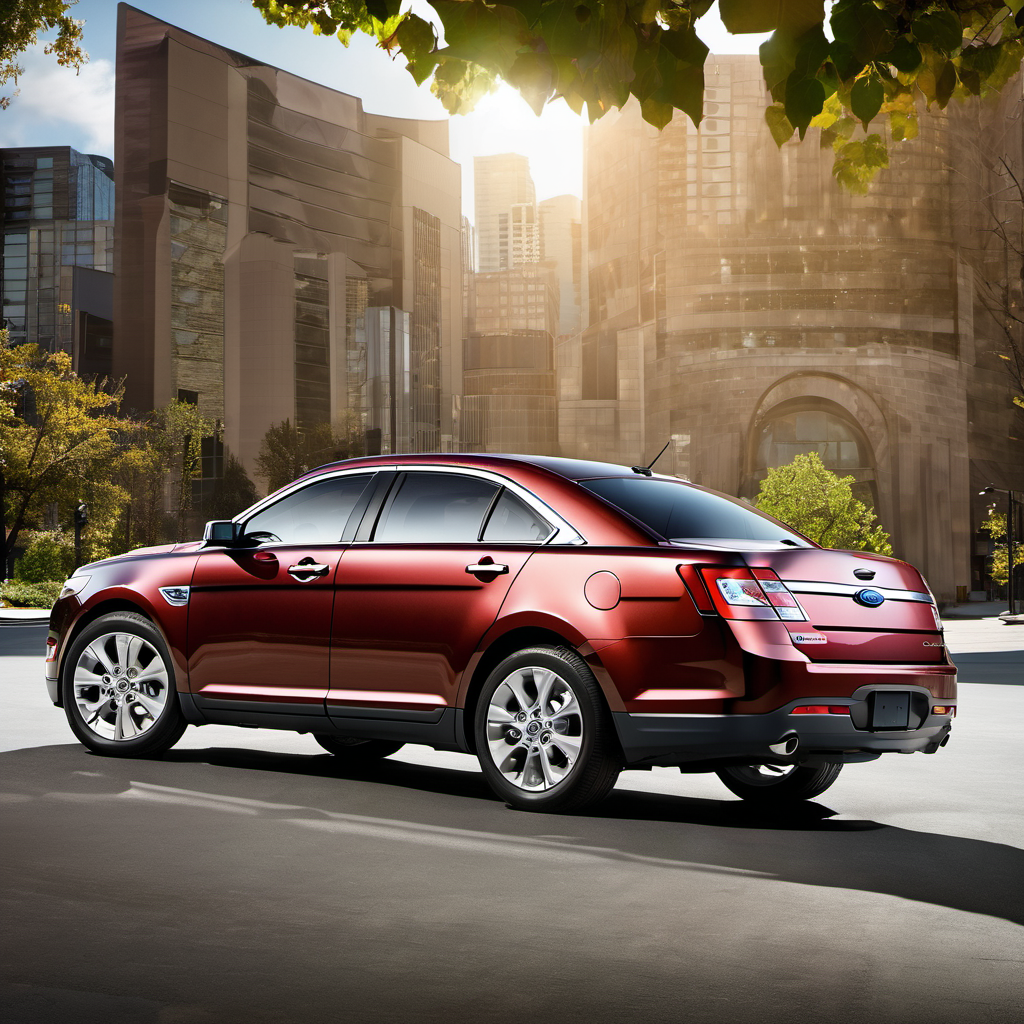
2011 Ford Taurus Sedan

2011 Ford

TaurusSedan

Sedan

The 2011 Ford Taurus is the sixth-generation version of one of America's longest-running nameplates, completely redesigned for the 2010 model year on the D4 platform shared with the Lincoln MKS. It's a full-size front-wheel-drive (or available AWD) sedan that stands out for its commanding interior space, solid road manners, and a refined 3.5L V6 under the hood. This generation was a genuine step up from the fifth-gen Taurus, offering a more upscale cabin, a wide range of available tech (including Ford's MyFord Touch infotainment on higher trims), and respectable power. The AWD variant — using Ford's Haldex-based system — adds traction confidence that makes it genuinely useful in Wisconsin winters without the penalty of a truck-sized fuel bill. At this age, the 2011 Taurus is a value buy in the used market. Ownership costs are modest for a full-size sedan, but buyers should be aware of a few recurring issues with the 3.5L's variable valve timing system and some electronics quirks tied to the MyFord Touch platform.

Reliability
3/5
Verified data
Specs shown for Taurus AWD — the most common configuration. Other trims may vary in engine, drivetrain, or fuel economy. Sign in to see your vehicle's exact specs.
Engine
[object Object]
Drivetrain
AWD
Fuel
Gasoline
MPG
17 city / 25 hwy / 20 combined
Seats
Doors
Body
Large Cars

Overview

AI-curated

The 2011 Ford Taurus is the sixth-generation version of one of America's longest-running nameplates, completely redesigned for the 2010 model year on the D4 platform shared with the Lincoln MKS. It's a full-size front-wheel-drive (or available AWD) sedan that stands out for its commanding interior space, solid road manners, and a refined 3.5L V6 under the hood. This generation was a genuine step up from the fifth-gen Taurus, offering a more upscale cabin, a wide range of available tech (including Ford's MyFord Touch infotainment on higher trims), and respectable power. The AWD variant — using Ford's Haldex-based system — adds traction confidence that makes it genuinely useful in Wisconsin winters without the penalty of a truck-sized fuel bill. At this age, the 2011 Taurus is a value buy in the used market. Ownership costs are modest for a full-size sedan, but buyers should be aware of a few recurring issues with the 3.5L's variable valve timing system and some electronics quirks tied to the MyFord Touch platform.

Known for
  • Spacious, comfortable full-size cabin
  • Smooth, capable 3.5L Duratec V6
  • Available AWD traction for winter driving
  • Strong highway cruising composure
Best for
  • Highway commuters wanting a roomy sedan
  • Wisconsin drivers wanting AWD without an SUV
  • Families needing rear-seat legroom on a budget
  • Buyers wanting a large American sedan under $15k used
Watch for
  • MyFord Touch infotainment system — frequent software glitches on early units
  • Variable valve timing (Ti-VCT) solenoids — known to cause rough running and check-engine codes
  • Coolant crossover tube on 3.5L can leak at higher mileage
  • Rust on rocker panels and subframe — serious concern in the salt belt

Common issues by mileage

6 known

Coolant Crossover Tube / Plastic Fitting Leak

medium
Typically appears
80–150k mi
Estimated repair
$200 – $600

MyFord Touch Infotainment System Freeze / Black Screen

high
Typically appears
Any mileage
Estimated repair
$100 – $800

Oxygen / O2 Sensor Heater Circuit Fault

medium
Typically appears
80–130k mi
Estimated repair
$150 – $350

Rocker Panel and Subframe Rust (Salt Belt)

high
Typically appears
Any mileage on salted roads
Estimated repair
$300 – $2,500

Power Steering Rack Leak or Noise (EPS)

medium
Typically appears
90–150k mi
Estimated repair
$600 – $1,400

Maintenance schedule

  1. 1
    Every 5,000–7,500 miles Engine oil & filter change — use 5W-20 full synthetic

    The Ti-VCT system is extremely sensitive to oil condition. Degraded or dirty oil is the primary cause of VCT solenoid clogging and the P0012/P0015/P0022/P0025 family of codes. Don't stretch intervals.

  2. 2
    Every 2 years or 30k miles Coolant system inspection — check crossover tube and hose fittings

    The plastic coolant crossover fitting on the 3.5L is a known failure point. Catching a seeping joint before it becomes a full leak prevents overheating damage.

  3. 3
    Every 60,000 miles Transmission fluid change

    Ford's 6-speed automatic is durable but benefits from fresh fluid. The 'lifetime fill' claim is optimistic for a high-mileage used vehicle — change it if history is unknown.

  4. 4
    Every 60,000 miles Spark plug replacement

    The 3.5L uses platinum plugs rated to 60k. Worn plugs stress the ignition coils and can mimic VCT timing issues.

  5. 5
    Every fall (before Wisconsin winter) Battery load test

    Cold cranking amps drop sharply below 20°F. This 3.5L V6 draws significant current on cold starts; a marginal battery will fail in January.

  6. 6
    Every spring after winter season Undercarriage rust inspection — focus on rockers, subframe, and brake lines

    Lake Geneva road salt accelerates corrosion on this generation Taurus. Brake lines are especially vulnerable — a rusted line is a safety emergency.

  7. 7
    Every 2–3 years Brake fluid flush

    Hygroscopic brake fluid absorbs moisture over time, lowering boiling point and promoting internal corrosion in ABS/stability control hardware.

  8. 8
    Every 60,000 miles or if fluid is dark/burnt AWD rear differential / PTU fluid change

    The Power Transfer Unit (PTU) on AWD models is notorious for going dry — Ford did not include a check interval in early owner's manuals. Neglected PTUs fail expensively ($1,200–$2,500).

Always defer to the manufacturer's service manual for warranty-mandated intervals.

Cost of ownership

Annual maintenance
$600 – $1,200
Fuel
At 20 MPG combined and ~12,000 miles/year, expect roughly $1,500–$1,800/year at $2.50–$3.00/gallon. AWD adds slight rolling resistance vs. FWD models.
Insurance
Typically $900–$1,400/year for a 2011 full-size sedan in Wisconsin depending on driver profile and coverage level.

The 2011 Taurus is a low-cost-of-entry used buy, but budget for deferred maintenance on older examples. The biggest financial risks are a neglected PTU (AWD models), rust-damaged brake lines, and VCT system work if oil changes were skipped. A well-documented car with fresh fluids is genuinely affordable to own.
Seasonal care

Lake Geneva, WI
Winter
  • Load-test the battery every October — sub-zero temps in Lake Geneva will expose any weakness immediately
  • Switch to full-synthetic 5W-20 if not already; it flows faster on cold starts and protects the Ti-VCT system at startup
  • Inspect and top off washer fluid with a -20°F or lower rated formula before November
  • Check tire tread depth; the AWD system helps you accelerate but does nothing for braking on ice — consider dedicated winter tires
  • Inspect brake lines and fuel lines for rust pinholes before snow season; salt accelerates failure
  • After each significant snowfall, rinse the undercarriage at a coin car wash to flush road salt from brake components and suspension
Summer
  • Check tire pressure monthly — ambient temps rising 20°F can add 2–3 PSI beyond recommended spec
  • Inspect the A/C system for refrigerant level and cabin air filter condition; MyFord Touch touchscreens are harder to read in direct sun if vents aren't working well
  • Monitor coolant level closely — the 3.5L crossover tube issue is most noticeable when the cooling system is under summer heat load
  • Inspect the serpentine belt for cracking; heat accelerates belt aging on older vehicles

Comparable vehicles

If you're shopping for one

Red flags
  • Any VCT-related check engine codes (P0012, P0015, P0022, P0025) without a documented repair — indicates oil maintenance neglect
  • Rust through on the rocker panels or visible pitting on brake lines — expensive or dangerous to remediate
  • PTU with no service history on an AWD model over 80k miles — assume it needs immediate service or is already damaged
  • MyFord Touch screen that is unresponsive or shows a black screen — can be a costly fix
  • Coolant smell in the cabin or visible residue on the intake manifold — indicates crossover tube leak
What to inspect
  • Scan for active or pending DTCs before purchase — especially P0012, P0015, P0022, P0025 (VCT timing) and P0026–P0029 (VCT solenoid circuit)
  • Get under the car and inspect rocker panels, subframe mounting points, and steel brake lines for rust perforation
  • Check the PTU (Power Transfer Unit) on AWD models — pull the fill plug and verify fluid is present and not burned black
  • Test the MyFord Touch system through a full cycle: touch response, Bluetooth, backup camera, and HVAC controls via screen
  • Verify coolant level and look for white residue around the crossover tube area near the front of the engine
  • Confirm oil change history — ask for records or inspect the dipstick for dark sludge, which signals VCT problems ahead
AI profile generated 4 days ago · claude-sonnet-4-6 · v2.