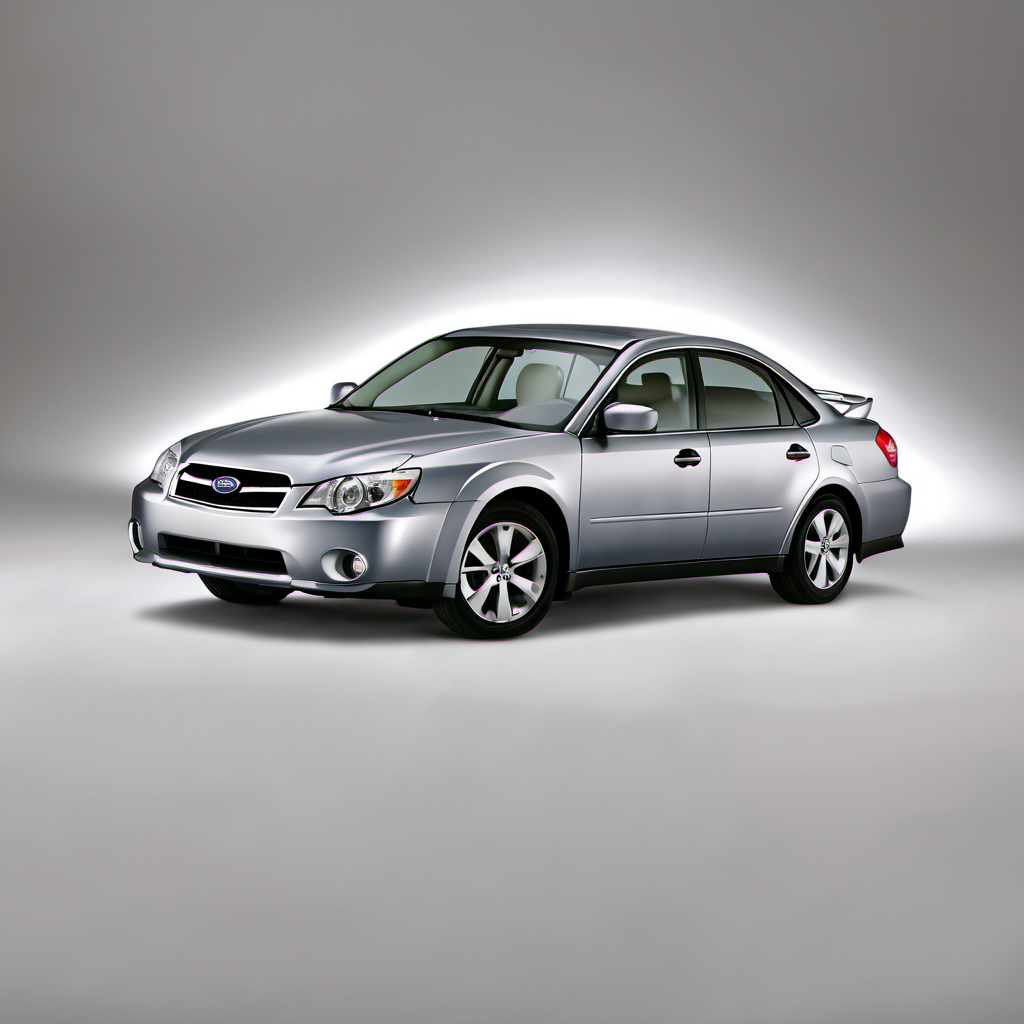
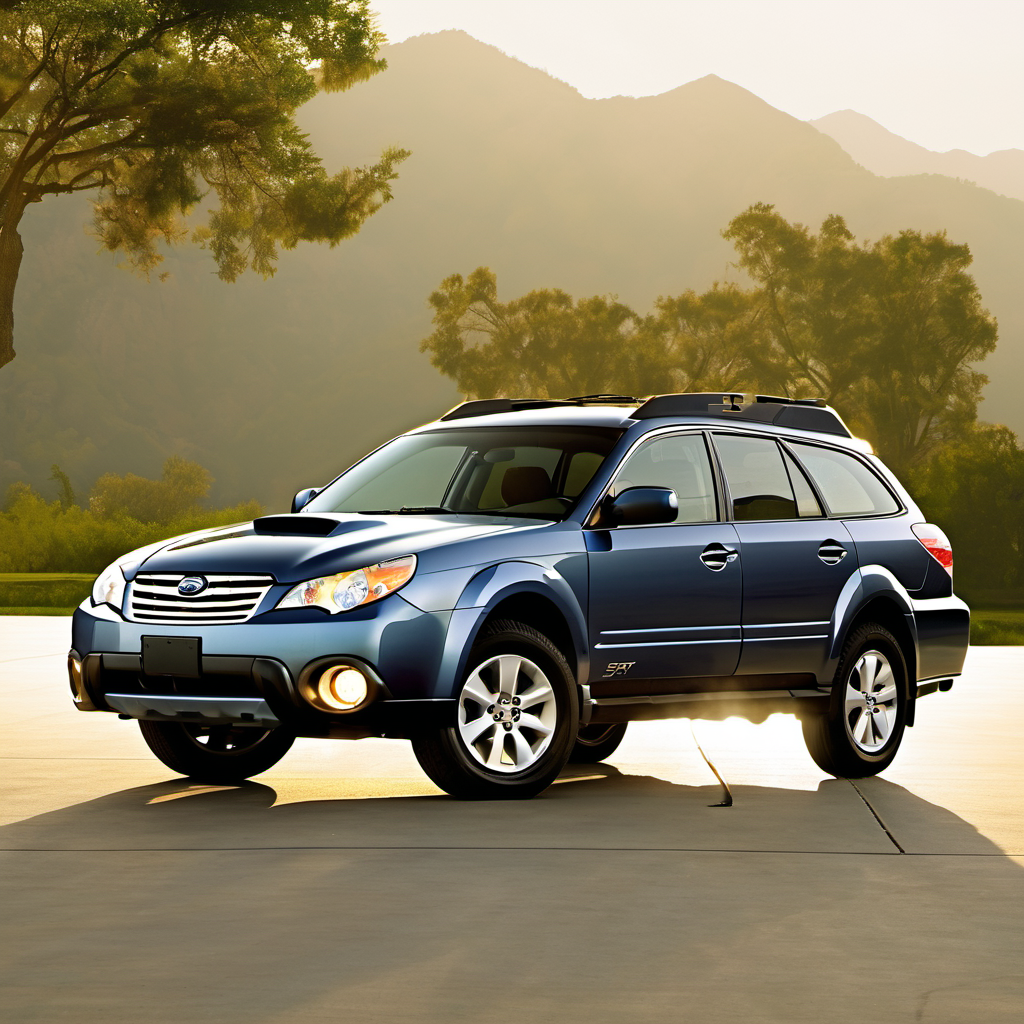
2007 Subaru Legacy Sedan

2007 Subaru

LegacySedan

2.5L H4 (EJ253) · Sedan

The 2007 Subaru Legacy is a compact sedan built around Subaru's signature symmetrical all-wheel drive system, making it a practical year-round choice in snowy climates like Lake Geneva. The fourth-generation Legacy (2005–2009) offered a balanced mix of practicality, comfort, and all-weather capability that made it a favorite among Midwestern buyers who needed more than a front-wheel-drive commuter but didn't want a full SUV. Powered primarily by Subaru's 2.5L horizontally-opposed four-cylinder (the EJ253), the 2007 Legacy is generally reliable but carries the well-documented Subaru EJ-series quirks: head gaskets and oil consumption are real concerns by high mileage. The 2.5i trim is the most common configuration; a 2.5GT turbocharged variant was also offered for those wanting more performance. At this age, examples are commonly in the 100,000–200,000-mile range. A well-maintained Legacy with documented head gasket and timing belt service history is a solid used buy. Skipped maintenance on these items, however, can turn a cheap purchase expensive fast.

Reliability
3/5
Verified data
Engine
2.5L H4 (EJ253)
Drivetrain
AWD
Fuel
Gasoline
MPG
22 city / 29 hwy / 25 combined
Seats
5
Doors
4
Body
Sedan
MSRP
$20,495

Overview

AI-curated

The 2007 Subaru Legacy is a compact sedan built around Subaru's signature symmetrical all-wheel drive system, making it a practical year-round choice in snowy climates like Lake Geneva. The fourth-generation Legacy (2005–2009) offered a balanced mix of practicality, comfort, and all-weather capability that made it a favorite among Midwestern buyers who needed more than a front-wheel-drive commuter but didn't want a full SUV. Powered primarily by Subaru's 2.5L horizontally-opposed four-cylinder (the EJ253), the 2007 Legacy is generally reliable but carries the well-documented Subaru EJ-series quirks: head gaskets and oil consumption are real concerns by high mileage. The 2.5i trim is the most common configuration; a 2.5GT turbocharged variant was also offered for those wanting more performance. At this age, examples are commonly in the 100,000–200,000-mile range. A well-maintained Legacy with documented head gasket and timing belt service history is a solid used buy. Skipped maintenance on these items, however, can turn a cheap purchase expensive fast.

Known for
  • Symmetrical AWD standard across all trims — genuine traction advantage in snow and ice
  • Flat-four (boxer) engine layout giving a low center of gravity
  • Comfortable highway cruiser with a well-proportioned trunk
  • Competitive fuel economy for an AWD sedan of its era
Best for
  • Wisconsin commuters who deal with snow and want a sedan over an SUV
  • Budget-conscious AWD shoppers who maintain their vehicles
  • Drivers logging moderate annual miles (10,000–15,000/yr)
  • Families needing reliable all-season transportation
Watch for
  • EJ253 head gasket failures — extremely common by 100k+ miles on this generation
  • Oil consumption between changes — monitor the dipstick, not just the interval
  • Timing belt service: belt-driven engine, not chain — a missed belt replacement can destroy the engine
  • Rust on underbody, subframe, and wheel wells from road salt exposure
  • CVT (if equipped on the automatic) can be costly to replace if neglected

Common issues by mileage

6 known

External Head Gasket Failure (EJ253)

high
Typically appears
90–150k mi
Estimated repair
$1,400 – $2,200

Timing Belt & Water Pump Service Overdue

high
Typically appears
60–120k mi (every ~60k mi)
Estimated repair
$500 – $850

Oxygen Sensor / O2 Sensor Heater Circuit Failure

medium
Typically appears
100–180k mi
Estimated repair
$150 – $400

Underbody / Subframe Rust (Road Salt Corrosion)

high
Typically appears
Any mileage — age-driven
Estimated repair
$300 – $2,500

Automatic Transmission / CVT Fluid Degradation

medium
Typically appears
100–150k mi
Estimated repair
$150 – $3,500

Maintenance schedule

  1. 1
    Every 60,000 miles or 5 years — whichever comes first Timing belt, water pump, and tensioner replacement

    The EJ253 is an interference engine. A snapped belt destroys the engine with no warning. On a 2007 at typical mileage today, this may already be overdue. Always do the water pump and tensioner at the same time — labor is already open.

  2. 2
    Inspect at every oil change; replace gaskets if any sign of external seepage Head gasket inspection and coolant condition check

    The EJ253's external head gaskets weep coolant or oil at the sealing surfaces. Catch it early and it's a planned repair; ignore it and you risk overheating and a warped head — far more expensive.

  3. 3
    Every 5,000 miles or 6 months Engine oil and filter change

    This engine is prone to oil consumption — check the dipstick every 1,000–1,500 miles between changes. Running low accelerates wear on the cylinder walls and head gasket areas.

  4. 4
    Every 30,000 miles AWD differential and transmission fluid change

    Subaru's AWD relies on matched fluid viscosity across all four corners. Using degraded or mismatched fluid causes binding and premature wear to the center differential and transfer clutch.

  5. 5
    Every 30,000 miles Coolant flush and refill (use Subaru Super Coolant or equivalent)

    Degraded coolant accelerates the external head gasket seepage common to this engine. Using the correct low-silicate coolant helps extend gasket life.

  6. 6
    Every 60,000 miles Spark plug replacement

    Boxer engines require removing more components to access the rear plugs. Staying on schedule avoids misfires that can foul catalytic converters.

  7. 7
    Every 2 years Brake fluid flush

    Subaru specifies this interval. Brake fluid absorbs moisture over time, lowering boiling point — a real concern on slushy Wisconsin winter stops.

  8. 8
    Every fall before salt season; mid-winter wash after heavy salt events Underbody wash and undercoating inspection

    Road salt from Lake Geneva-area roads accelerates rust on the subframe, rear trailing arms, and brake lines. Catching surface rust before it penetrates saves thousands in structural repairs.

Always defer to the manufacturer's service manual for warranty-mandated intervals.

Cost of ownership

Annual maintenance
$600 – $1,400
Fuel
At ~25 MPG combined and 12,000 miles/year, expect roughly $1,400–$1,700/year at current Wisconsin gas prices. Premium not required on the base 2.5i.
Insurance
Typically moderate — full coverage on a 2007 Legacy averages $900–$1,300/year in Wisconsin depending on driver profile and zip code.

Day-to-day running costs are reasonable for an AWD sedan. The big wildcard is deferred maintenance: a head gasket job ($1,400–$2,200) or a timing belt that wasn't done ($500–$850) can dominate a year's budget. Buy one with documented service history and the annual cost picture is much better. Avoid examples where those key services are unknown or overdue.
Seasonal care

Lake Geneva, WI
Winter
  • Switch to a dedicated winter tire set — AWD gives traction but not stopping distance. All-season tires on ice are a liability in Walworth County winters.
  • Test the battery before November. Cold-cranking amps drop sharply below 20°F and the flat-four's compression demands a strong battery. Replace anything showing less than 70% health.
  • Use a winter-rated washer fluid (good to at least -20°F). The Legacy's windshield is steeply raked and collects spray from semi trucks on I-43 and US-12.
  • Check coolant freeze protection — should be good to at least -34°F. Degraded coolant in this engine also accelerates head gasket issues.
  • Flush brake lines and inspect rubber brake hoses for cracking. Salt and cold together accelerate deterioration on a vehicle this age.
  • After each significant salt event, rinse the undercarriage at a touchless car wash — pay attention to the rear subframe and wheel well seams, which rust through first on this generation.
Summer
  • Check tire pressure monthly — pressures drop roughly 1 PSI for every 10°F of temperature change. All four tires matter equally on an AWD system.
  • Inspect the A/C system for refrigerant charge and condenser debris. The Legacy's condenser sits low and picks up road debris; check for bent fins and leaks.
  • Watch for coolant seepage at the head gasket surfaces during summer heat — external leaks often show as white residue or a faint sweet smell from the engine bay after a hot run.
  • Check transmission fluid level and condition — heat accelerates breakdown in the automatic/CVT, especially on highway driving in hot weather.

Comparable vehicles

If you're shopping for one

Red flags
  • No head gasket service record on any example over 100,000 miles
  • No timing belt record on any example over 60,000 miles — walk away or demand a significant price reduction
  • Overheating history in the Carfax or mentioned by the seller — the aluminum heads warp easily and a warped head is rarely worth the repair cost on this era vehicle
  • Rust through on the rear subframe or trailing arm mounting points — structural safety issue and expensive or impossible to repair cost-effectively
  • Mismatched tires (different brands or significantly different tread depths front vs. rear) — suggests deferred maintenance and possible AWD damage
  • Coolant that is brown, oily, or has a burnt smell — indicates head gasket compromise or a very neglected cooling system
What to inspect
  • Pull the oil filler cap and look for milky residue (coolant mixing with oil) — a classic early head gasket failure sign on the EJ253
  • Check the coolant reservoir for oil sheen or brown discoloration, indicating combustion gas intrusion
  • Look at both sides of the engine block near the head gasket seam for white crusty deposits or wet seepage
  • Ask for the timing belt service record — if the seller can't produce it, assume it's due and factor the cost into your offer
  • Inspect the underbody, rear subframe, and trailing arm mounting points for rust perforation — surface rust is normal, structural rust is a deal-breaker
  • Test all four tires for matching brand and tread depth — mismatched tires on Subaru AWD cause center differential wear
  • Check the transmission for smooth, firm shifts (auto) or hunting/surging (CVT) — both indicate fluid neglect
AI profile generated 4 days ago · claude-sonnet-4-6 · v2.