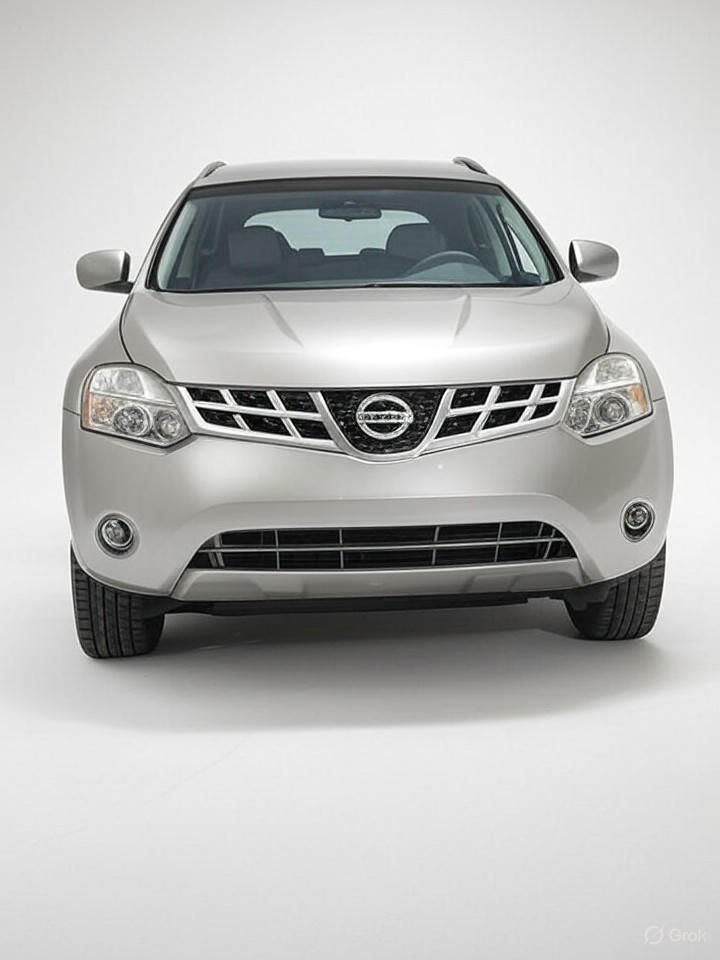
2007 Nissan Murano SUV

2007 Nissan

MuranoSUV

SUV

The 2007 Nissan Murano is a first-generation (Z50) crossover SUV that debuted Nissan's then-bold, curved styling language in a mid-size package. It slots between compact and full-size crossovers, pairing a 3.5L V6 with a CVT for a car-like driving feel. At this age, the Murano is a value buy for buyers who want a spacious, comfortable crossover on a budget — but it comes with first-gen CVT baggage that demands respect. The 2007 model was in the last full year of the first-generation run (the second generation arrived for 2009), so parts are widely available and the powertrain is well-understood by independent shops. AWD was the volume seller, but FWD versions exist and are simpler to maintain. At 15–18 years old, any surviving Murano needs a thorough pre-purchase inspection focused on CVT health, timing chain stretch, and rust — especially relevant in the Wisconsin salt belt. Budget accordingly for deferred maintenance.

Reliability
3/5
Verified data
Specs shown for Murano FWD — the most common configuration. Other trims may vary in engine, drivetrain, or fuel economy. Sign in to see your vehicle's exact specs.
Engine
[object Object]
Drivetrain
FWD
Fuel
Premium gasoline
MPG
18 city / 23 hwy / 20 combined
Seats
Doors
Body
Sport Utility Vehicle - 2WD

Overview

AI-curated

The 2007 Nissan Murano is a first-generation (Z50) crossover SUV that debuted Nissan's then-bold, curved styling language in a mid-size package. It slots between compact and full-size crossovers, pairing a 3.5L V6 with a CVT for a car-like driving feel. At this age, the Murano is a value buy for buyers who want a spacious, comfortable crossover on a budget — but it comes with first-gen CVT baggage that demands respect. The 2007 model was in the last full year of the first-generation run (the second generation arrived for 2009), so parts are widely available and the powertrain is well-understood by independent shops. AWD was the volume seller, but FWD versions exist and are simpler to maintain. At 15–18 years old, any surviving Murano needs a thorough pre-purchase inspection focused on CVT health, timing chain stretch, and rust — especially relevant in the Wisconsin salt belt. Budget accordingly for deferred maintenance.

Known for
  • Distinctive, sweeping styling that still turns heads
  • Smooth, quiet highway ride for its class
  • Spacious, upscale cabin with panoramic roof option
  • 3.5L VQ35DE V6 — one of Nissan's most proven engines
  • CVT transmission that can be costly if neglected
Best for
  • Commuters wanting a roomy, comfortable daily driver
  • Buyers who prioritize highway comfort over off-road ability
  • Those seeking a stylish SUV at a low entry price
  • Families needing a spacious cabin without minivan stigma
Watch for
  • CVT failures, especially on high-mileage or poorly maintained examples
  • Timing chain rattle on cold starts — early sign of stretch
  • Rust on frame rails, rocker panels, and brake lines in salt-belt states
  • EVAP and fuel system codes on aging examples
  • Power steering hose leaks (hydraulic system on this generation)

Common issues by mileage

6 known

CVT Transmission Failure or Shudder

high
Typically appears
100–160k mi
Estimated repair
$2,800 – $5,500

Timing Chain Stretch / Tensioner Wear

medium
Typically appears
80–130k mi
Estimated repair
$900 – $1,800

VTC (Variable Valve Timing) Solenoid Failure

medium
Typically appears
70–120k mi
Estimated repair
$200 – $550

Oxygen / A/F Sensor Heater Circuit Failure

medium
Typically appears
90–150k mi
Estimated repair
$150 – $400

Power Steering Hose / Rack Leak

medium
Typically appears
80–150k mi
Estimated repair
$250 – $700

Rust on Rocker Panels, Brake Lines, and Frame (Salt Belt)

high
Typically appears
Any mileage on Wisconsin/Midwest vehicles
Estimated repair
$300 – $2,500

Maintenance schedule

  1. 1
    Every 60k mi — do NOT skip or extend CVT Fluid Change

    Nissan's first-gen CVT is extremely sensitive to fluid condition. Many failures trace directly to degraded fluid. Use only Nissan NS-2 or NS-3 CVT fluid. If the fluid has never been changed and you're past 100k mi, change it immediately — dirty fluid shortens belt and pulley life fast.

  2. 2
    Every 5,000 mi or 6 months, whichever comes first Engine Oil Change

    The VQ35DE is oil-sensitive. Timing chain tensioners and VTC solenoids depend on clean oil pressure. In Wisconsin winters, cold-start oil delivery is critical — don't stretch intervals.

  3. 3
    Inspect at 80k mi; address any cold-start rattle immediately Timing Chain Inspection

    Timing chain stretch shows up first as a brief rattle on cold start. Catching it early avoids engine damage. If P0012, P0015, P0022, or P0025 codes appear, diagnose the chain and tensioners before driving further.

  4. 4
    Every fall before winter; every spring after snow season Brake Line Inspection for Rust

    Wisconsin road salt accelerates brake line corrosion on 15+ year old vehicles. A rotted brake line can fail suddenly. Inspect the entire run from master cylinder to rear wheels each season.

  5. 5
    Every 5 years or 60k mi Coolant Flush

    Older coolant loses its corrosion inhibitors and can attack the aluminum components in the VQ35's cooling system. A flush is cheap insurance against a cracked head gasket.

  6. 6
    Every 105k mi per factory spec; consider 80k mi on used examples with unknown history Spark Plugs (Iridium)

    Worn plugs cause rough idle and increased load on ignition coils. On a 2007 with unknown service history, replacing plugs at purchase is low-cost peace of mind.

  7. 7
    Every 15–20k mi or annually Cabin and Engine Air Filters

    Wisconsin road grime and pollen load these up quickly. A clogged engine filter can affect fuel economy and MAF sensor readings.

  8. 8
    Every 30k mi on used vehicles with unknown history AWD Transfer Clutch Fluid (if AWD-equipped)

    The Murano's AWD system uses a wet clutch coupling that needs clean fluid. Neglect causes shudder and premature failure of an expensive unit.

Always defer to the manufacturer's service manual for warranty-mandated intervals.

Cost of ownership

Annual maintenance
$700 – $1,600
Fuel
At ~20 MPG combined and Wisconsin average gas prices, expect $1,800–$2,400/year at 12,000 miles annually. The engine accepts regular unleaded despite some sources noting premium preference — regular is fine for normal driving.
Insurance
Typically $900–$1,300/year for a 2007 Murano in Wisconsin for a driver with a clean record; rates vary widely by ZIP and coverage level.

Day-to-day costs are reasonable for a V6 crossover this age — oil changes, filters, and brakes are the routine spend. The risk is a CVT replacement, which is a $3,000–$5,500 event that can easily exceed the vehicle's market value on a high-mileage example. Budget a CVT fluid change immediately at purchase if history is unknown, and set aside a repair reserve. Rust remediation is a realistic line item for any Wisconsin-operated vehicle.
Seasonal care

Lake Geneva, WI
Winter
  • Switch to a full synthetic 5W-30 if not already — cold Wisconsin starts below -10°F are hard on oil that hasn't fully circulated, and the CVT and timing chain tensioners need immediate pressure.
  • Test the battery each fall; the 3.5L V6 is a strong cranker but a marginal battery fails fast in sub-zero temps. Replace anything testing below 500 CCA.
  • Inspect and top off CVT fluid before winter — cold thickens fluid and a low or degraded level stresses the belt on cold-start engagement.
  • Fill washer fluid with a -20°F or lower rated concentrate; Wisconsin winters will freeze standard fluid solid in the reservoir overnight.
  • Check rubber brake lines and steel brake lines for salt corrosion each fall — a rusted-through line is a brake failure waiting to happen.
  • Install dedicated winter tires if using AWD for real winter driving; all-seasons lose grip below 45°F and the Murano's weight makes stopping distances worse on worn rubber.
Summer
  • Check tire pressure monthly — every 10°F rise in ambient temp adds roughly 1 PSI; hot pavement and summer heat can push pressures above door-placard spec and accelerate wear.
  • Inspect the A/C system each spring — the 2007 Murano's condenser sits low and is vulnerable to stone damage and corrosion; check for refrigerant leaks and verify the cabin filter is clean for full airflow.
  • Watch coolant temperature on hot days in stop-and-go traffic; a partially blocked radiator or aging thermostat will show itself in summer heat before it fails completely.
  • Inspect the power steering hose connections and reservoir level — heat accelerates hose aging and a leak can leave you with heavy steering quickly.

Comparable vehicles

If you're shopping for one

Red flags
  • No record of CVT fluid ever being changed
  • Any transmission shudder, hesitation, or slipping during test drive
  • Cold-start timing chain rattle
  • Visible rust holes on rockers or undercarriage brake lines
  • Check engine light on or recently cleared with no explanation
  • Overheating history or signs of coolant leaks (white residue at hose connections, milky oil)
What to inspect
  • Start the engine cold and listen for timing chain rattle in the first 10–15 seconds — any metallic chattering is a red flag.
  • Drive in a tight circle at low speed to check for AWD coupling shudder (AWD models); vibration on turns suggests a worn transfer clutch.
  • Check the CVT for smooth, seamless acceleration — any hesitation, shudder, or slipping under light throttle is a transmission warning sign.
  • Inspect rocker panels, frame rails, and undercarriage for rust perforation; probe with a screwdriver — soft or flaking metal means structural rust.
  • Pull the CVT dipstick (if accessible) or check the fluid condition: it should be pink/red and clean, not brown or smelling burnt.
  • Scan for DTCs before purchase — codes P0012, P0015, P0022, P0025 point to timing chain or VTC issues; address them before buying.
AI profile generated 1 hr ago · claude-sonnet-4-6 · v2.