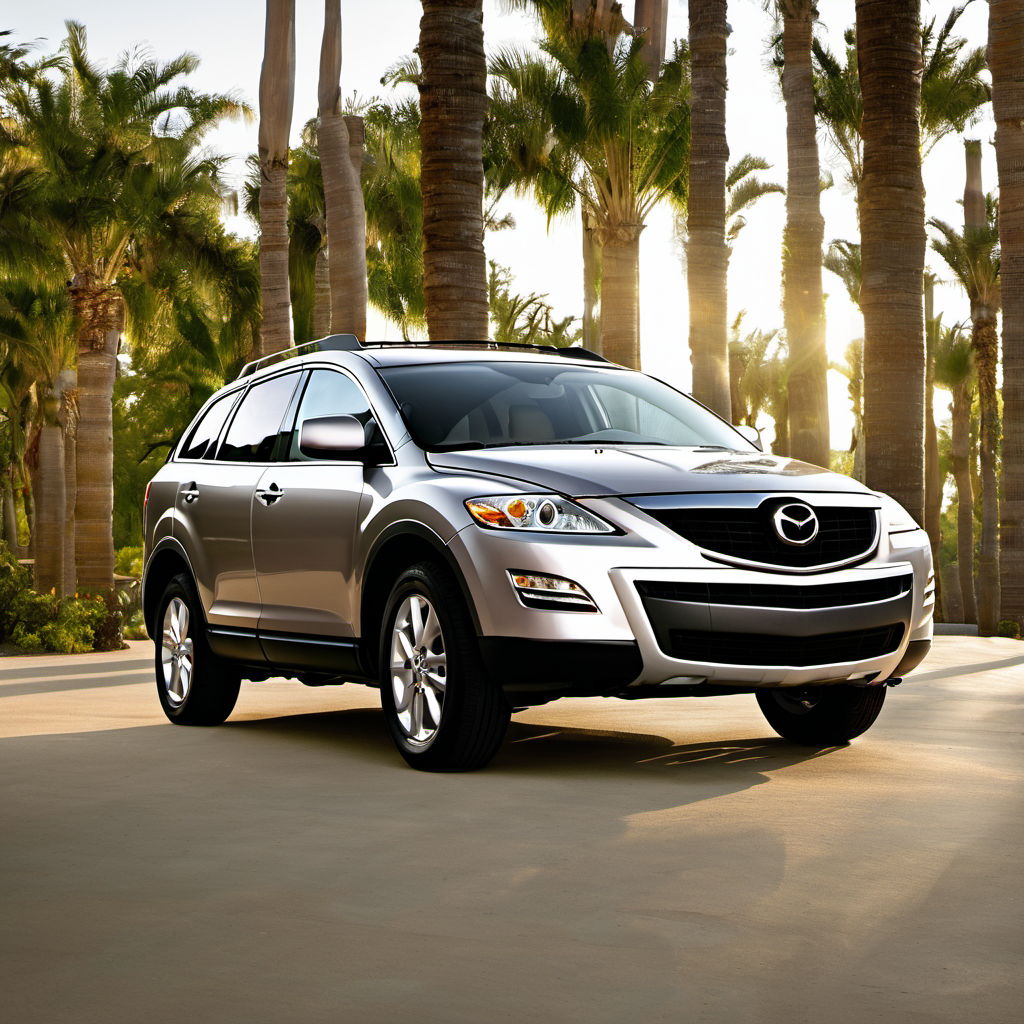
2007 MAZDA CX-9 SUV

2007 MAZDA

CX-9SUV

SUV

The 2007 Mazda CX-9 is the brand's first three-row crossover SUV, built on a stretched version of the Mazda6/Ford Edge platform. It launched as a stylish, car-like alternative to boxy family haulers, with handling that stood out in the segment thanks to Mazda's 'Zoom-Zoom' tuning philosophy. For 2007 it was a brand-new nameplate, so early production units carry some first-year quirks worth knowing. Under the hood sits a 3.5L V6 shared with the Ford Edge and Lincoln MKX, paired to a 6-speed automatic. Front-wheel drive was standard; AWD was optional. Fuel economy is mediocre by modern standards — expect real-world numbers closer to the city figure if you're doing a lot of stop-and-go around Lake Geneva. At this age (17+ years), the CX-9 is deep into used-vehicle territory. Rust from Wisconsin road salt, worn VVT components, and aged transmission fluid are the top concerns. A well-maintained example with documented oil changes can still be a solid family hauler, but deferred maintenance at this mileage is a serious red flag.

Reliability
3/5
Verified data
Specs shown for CX-9 2WD — the most common configuration. Other trims may vary in engine, drivetrain, or fuel economy. Sign in to see your vehicle's exact specs.
Engine
[object Object]
Drivetrain
FWD
Fuel
Gasoline
MPG
16 city / 22 hwy / 18 combined
Seats
Doors
Body
Sport Utility Vehicle - 2WD

Overview

AI-curated

The 2007 Mazda CX-9 is the brand's first three-row crossover SUV, built on a stretched version of the Mazda6/Ford Edge platform. It launched as a stylish, car-like alternative to boxy family haulers, with handling that stood out in the segment thanks to Mazda's 'Zoom-Zoom' tuning philosophy. For 2007 it was a brand-new nameplate, so early production units carry some first-year quirks worth knowing. Under the hood sits a 3.5L V6 shared with the Ford Edge and Lincoln MKX, paired to a 6-speed automatic. Front-wheel drive was standard; AWD was optional. Fuel economy is mediocre by modern standards — expect real-world numbers closer to the city figure if you're doing a lot of stop-and-go around Lake Geneva. At this age (17+ years), the CX-9 is deep into used-vehicle territory. Rust from Wisconsin road salt, worn VVT components, and aged transmission fluid are the top concerns. A well-maintained example with documented oil changes can still be a solid family hauler, but deferred maintenance at this mileage is a serious red flag.

Known for
  • Sharp, car-like handling for a three-row crossover
  • Distinctive styling that aged well compared to contemporaries
  • Smooth 3.5L V6 with adequate power for family use
  • Spacious third row relative to class at launch
Best for
  • Families needing occasional third-row seating
  • Buyers who prioritize driving dynamics over utility
  • Highway commuters (better MPG than city)
  • Budget-conscious three-row shoppers
Watch for
  • VVT (variable valve timing) system failures — oil change history is critical
  • Transmission fluid degradation causing shift quality issues
  • Rust on underbody, wheel wells, and frame rails from road salt exposure
  • First-year (2007) models had some teething issues before mid-cycle refinements

Common issues by mileage

6 known

Transmission Shift Shudder / Delayed Engagement

medium
Typically appears
100–160k mi
Estimated repair
$150 – $3,500

Oxygen Sensor / O2 Sensor Heater Failure

medium
Typically appears
80–130k mi
Estimated repair
$150 – $400

Underbody / Subframe Rust

high
Typically appears
Any — age-dependent
Estimated repair
$300 – $2,500

Power Steering Rack Leak / Noise

medium
Typically appears
100–150k mi
Estimated repair
$500 – $1,200

Timing Chain Tensioner Wear

medium
Typically appears
120–180k mi
Estimated repair
$600 – $1,500

Maintenance schedule

  1. 1
    Every 5,000 miles or 6 months — do not stretch intervals Engine oil and filter change

    The VVT system is oil-pressure-dependent. Dirty or low oil is the single fastest way to destroy the camshaft timing components on this engine. Use the manufacturer-specified 5W-20.

  2. 2
    Every 45,000 miles, or immediately if history is unknown Transmission fluid and filter service

    Mazda specs this as a long-life fluid, but on a vehicle this age, a fresh service is cheap insurance against a costly rebuild. Use Mazda-approved ATF.

  3. 3
    Every 60,000 miles or if cam timing DTCs appear VVT solenoid inspection and cleaning

    Solenoids clog with sludge before they fail outright. Cleaning can restore function without full replacement.

  4. 4
    Every 60,000 miles or 5 years Coolant flush

    Degraded coolant becomes acidic and attacks the aluminum components in this engine. Critical in a climate with freeze/thaw cycles.

  5. 5
    Every 2–3 years Brake fluid flush

    Brake fluid absorbs moisture over time, lowering its boiling point. Wisconsin winters with hard stopping in cold temps make this especially important.

  6. 6
    Every fall before road salt season Underbody inspection and undercoating

    Lake Geneva roads get heavily salted. Annual undercoating and a visual check of brake lines, exhaust hangers, and subframe welds extends the vehicle's life significantly.

  7. 7
    Every 60,000 miles or at signs of cracking/glazing Serpentine belt and accessory belt inspection

    Cold Wisconsin winters harden rubber belts. A failure in subzero temps leaves you stranded. Replace proactively at this vehicle's age.

  8. 8
    Every 6,000–7,500 miles Tire rotation and alignment check

    FWD vehicles wear front tires faster. Proper rotation evens wear and helps maintain predictable handling on snowy or wet roads.

Always defer to the manufacturer's service manual for warranty-mandated intervals.

Cost of ownership

Annual maintenance
$700 – $1,800
Fuel
At 18 MPG combined and ~12,000 miles/year, expect roughly $1,800–$2,200/year at current Upper Midwest gas prices. Highway driving improves this noticeably.
Insurance
Typically moderate — full coverage on a 2007 CX-9 in Wisconsin runs approximately $900–$1,400/year depending on driving record and coverage level.

A well-maintained 2007 CX-9 is a relatively affordable three-row SUV to own, but its age means you should budget for unscheduled repairs. If maintenance has been deferred, the first year of ownership can easily run $2,500–$4,000 in catch-up work (transmission fluid, VVT service, brakes, tires, rust treatment). Fuel costs are the largest ongoing expense given the 3.5L V6's appetite.
Seasonal care

Lake Geneva, WI
Winter
  • Switch to a full synthetic 5W-20 if not already — it flows faster at sub-zero temps and protects the VVT system during cold starts when it's most vulnerable.
  • Test the battery before November. Cold weather dramatically reduces cranking amps; a marginal battery that works in October will fail in January.
  • Fill the washer fluid reservoir with a rated -20°F or colder fluid. The CX-9's large windshield collects spray quickly on Wisconsin highways.
  • Inspect and replace wiper blades with winter-rated blades before the first snowfall. The standard blades ice up and streak.
  • Check tire tread depth and tire pressure weekly in winter — every 10°F drop costs roughly 1 PSI. Underinflated tires reduce traction significantly on snow and ice.
  • Rinse the undercarriage at a touchless car wash every 2 weeks during heavy salt season to slow brake line and subframe corrosion.
Summer
  • Check coolant concentration and condition — the 3.5L runs warm under load, and degraded coolant raises the risk of overheating on hot days.
  • Inspect the A/C system for proper cooling. Recharge or repair before peak heat; a faulty compressor is a costly surprise in August.
  • Monitor tire pressure closely — tires gain about 1 PSI for every 10°F increase in temperature. Overinflated tires reduce contact patch and wet-weather grip.
  • Check the cabin air filter — a clogged filter chokes A/C airflow and makes the system work harder in summer heat.
  • Inspect belts and hoses for heat cracking or swelling, especially if the vehicle sat through a long winter.

Comparable vehicles

If you're shopping for one

Red flags
  • No oil change records or evidence of long intervals — the VVT system may already be compromised.
  • Any cam timing or VVT solenoid DTCs present — repair cost could offset vehicle value quickly.
  • Rust-through on brake lines or subframe — this is a safety issue and can be prohibitively expensive to repair properly.
  • Transmission that hesitates, shudders, or slips — fluid service may not be enough if wear is advanced.
  • Evidence of overheating (white smoke, bubbling coolant overflow reservoir, warped thermostat housing) — head gasket repairs on this engine are expensive.
What to inspect
  • Pull oil fill cap and inspect for milky sludge — a sign of overheating or neglected oil changes that can indicate VVT damage already done.
  • Check for cam timing or VVT-related codes (P0012, P0015, P0022, P0025) with an OBD-II scanner before purchasing.
  • Inspect the undercarriage carefully — lift it and look at brake lines, exhaust, and subframe mounting points for rust-through, not just surface rust.
  • Test the transmission through all gears: look for slipping, delayed engagement, or shudder between 35–45 MPH.
  • Run the A/C and heat simultaneously — verify both work, check for musty odors indicating a clogged cabin filter or mold in the evaporator.
  • Look for power steering fluid leaks around the rack and hose connections.
AI profile generated 18 days ago · claude-sonnet-4-6 · v2.