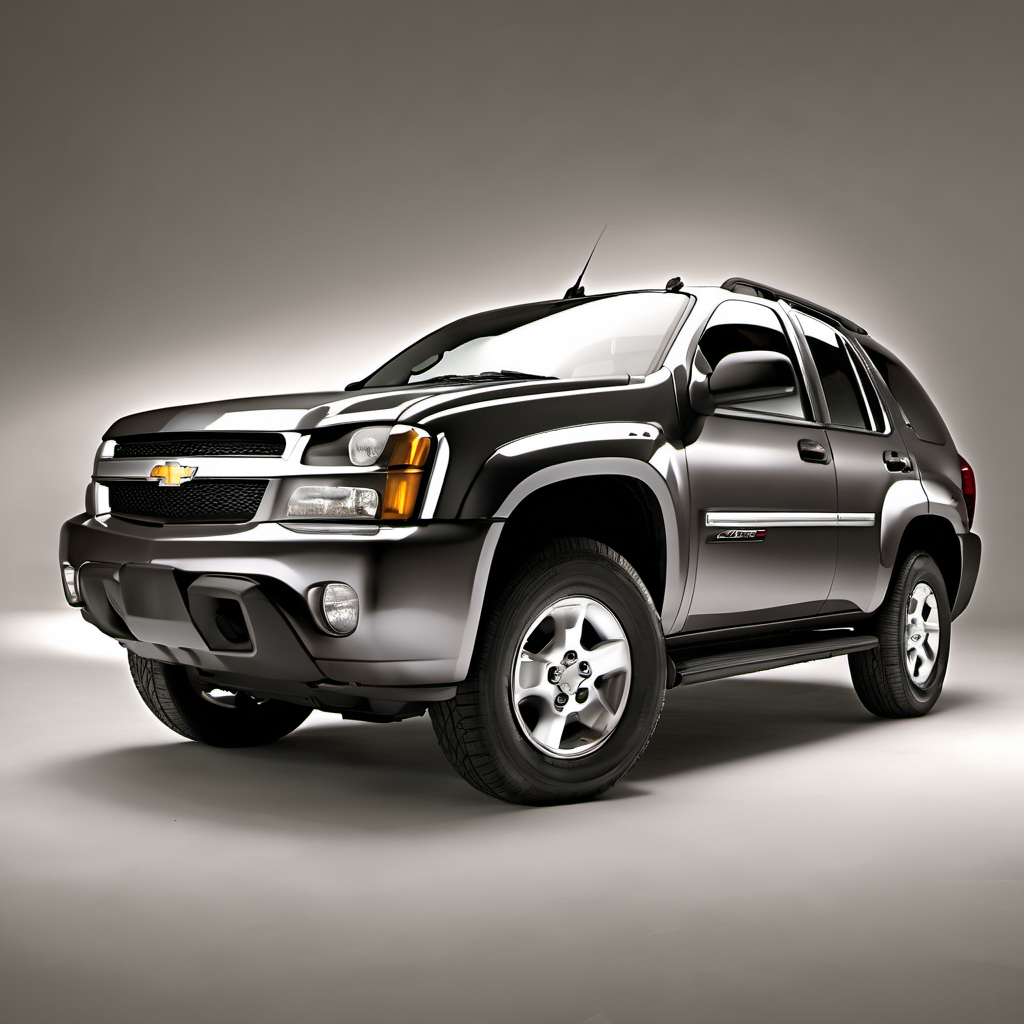
2007 Chevrolet TrailBlazer SUV

2007 Chevrolet

TrailBlazerSUV

SUV

The 2007 Chevrolet TrailBlazer is a full-size, body-on-frame SUV built on GM's GMT360 platform — the same bones shared with the GMC Envoy and Buick Rainier. By 2007 it was in its final model year before discontinuation, so you're buying a mature but aging platform. The standard engine is GM's stout 4.2L inline-six, which is one of the strongest points of this truck: smooth, torquey, and known to go well past 150k miles with proper oil changes. That said, the TrailBlazer carries some well-documented baggage from this generation. The Active Fuel Management (AFM) system doesn't apply here, but the vortec inline-six does have valve timing and oil consumption quirks that become expensive if ignored. Interior quality was average for the era, and the platform is thirsty by modern standards — budget accordingly. For a Lake Geneva-area owner, the RWD base configuration is worth noting: this is not an ideal daily driver in heavy snow without adding winter tires or upgrading to the 4WD-equipped trim. The platform is rugged, parts are inexpensive and widely available, and any competent independent shop can work on it.

Reliability
3/5
Verified data
Specs shown for TrailBlazer 2WD — the most common configuration. Other trims may vary in engine, drivetrain, or fuel economy. Sign in to see your vehicle's exact specs.
Engine
[object Object]
Drivetrain
RWD
Fuel
Gasoline
MPG
14 city / 20 hwy / 16 combined
Seats
Doors
Body
Sport Utility Vehicle - 2WD

Overview

AI-curated

The 2007 Chevrolet TrailBlazer is a full-size, body-on-frame SUV built on GM's GMT360 platform — the same bones shared with the GMC Envoy and Buick Rainier. By 2007 it was in its final model year before discontinuation, so you're buying a mature but aging platform. The standard engine is GM's stout 4.2L inline-six, which is one of the strongest points of this truck: smooth, torquey, and known to go well past 150k miles with proper oil changes. That said, the TrailBlazer carries some well-documented baggage from this generation. The Active Fuel Management (AFM) system doesn't apply here, but the vortec inline-six does have valve timing and oil consumption quirks that become expensive if ignored. Interior quality was average for the era, and the platform is thirsty by modern standards — budget accordingly. For a Lake Geneva-area owner, the RWD base configuration is worth noting: this is not an ideal daily driver in heavy snow without adding winter tires or upgrading to the 4WD-equipped trim. The platform is rugged, parts are inexpensive and widely available, and any competent independent shop can work on it.

Known for
  • Strong, smooth 4.2L inline-six engine
  • Rugged body-on-frame construction
  • Generous interior and cargo space for its class
  • Shared platform with GMC Envoy and Buick Rainier — parts are plentiful
  • Towing capability up to 6,500 lbs
Best for
  • Buyers who want a capable truck-based SUV at a low purchase price
  • Light towing and hauling duties
  • Owners comfortable with DIY or independent-shop maintenance
  • Rural and semi-rural driving where ground clearance matters
Watch for
  • RWD-only models are poor in Wisconsin winters without proper snow tires
  • Fuel economy is genuinely poor — expect real-world mid-to-high teens combined
  • Cam phaser and valve timing solenoid issues on higher-mileage examples
  • Rust on frame, rocker panels, and brake lines — a serious concern on any upper-Midwest example
  • Fan clutch failures are common and can cause overheating or excessive noise

Common issues by mileage

6 known

Cam Phaser / Valve Timing Solenoid (VLOM) Failure

high
Typically appears
80–150k mi
Estimated repair
$300 – $900

Fan Clutch Failure

high
Typically appears
60–120k mi
Estimated repair
$200 – $450

Throttle Body / Electronic Throttle Control Issues

medium
Typically appears
80–130k mi
Estimated repair
$150 – $400

Intake Manifold Gasket Leak

medium
Typically appears
100–160k mi
Estimated repair
$250 – $600

Transfer Case / 4WD Encoder Motor Failure (4WD-equipped models)

medium
Typically appears
80–140k mi
Estimated repair
$300 – $700

Brake Line and Frame Rust (Upper Midwest Salt Exposure)

high
Typically appears
Any mileage on aged examples
Estimated repair
$400 – $2,000

Maintenance schedule

  1. 1
    Every 5,000 miles or 6 months — do not stretch to the OLM maximum on a high-mileage engine Engine Oil & Filter Change

    The 4.2L inline-six's VLOM/cam phaser system is oil-pressure sensitive. Dirty or low oil accelerates cam phaser wear and triggers timing codes.

  2. 2
    Every 30,000 miles on used examples regardless of prior history Transmission Fluid Service

    The 4L60-E/4L65-E is durable but fluid neglect shortens its life significantly. If history is unknown, service it now.

  3. 3
    Every 5 years or 50,000 miles Coolant Flush

    Degraded coolant accelerates water pump and thermostat wear — both are moderately expensive repairs on this platform.

  4. 4
    Every 60,000 miles or at any sign of roaring noise or overheating Fan Clutch Inspection

    Fan clutch failure is one of the most common issues on this engine. A failing clutch causes overheating and loud bearing noise.

  5. 5
    Every spring after winter salt season Brake Line and Undercarriage Rust Inspection

    Wisconsin road salt destroys brake lines and frame rails. Catching a soft or pitted brake line early is the difference between a cheap fix and a dangerous failure.

  6. 6
    Every 60,000 miles (iridium) or 30,000 miles (standard) Spark Plug Replacement

    The inline-six is not difficult to access, and fresh plugs maintain fuel economy and prevent misfires that stress the catalytic converter.

  7. 7
    Every fall before winter Battery Load Test

    Lake Geneva winters regularly hit sub-zero temps. A battery that tests marginal in October will likely fail to start the truck in January.

  8. 8
    Every fall — engage all 4WD modes before you need them 4WD System Function Check (if equipped)

    Encoder motors and actuators seize when not cycled regularly. Test 4Hi and 4Lo before the first snowfall, not during it.

Always defer to the manufacturer's service manual for warranty-mandated intervals.

Cost of ownership

Annual maintenance
$600 – $1,400
Fuel
At ~16 mpg combined and Wisconsin gas prices, expect $2,200–$3,000/year at 12,000 miles driven annually. Premium is not required; regular 87 octane is fine.
Insurance
Typically $900–$1,400/year for full coverage in the Lake Geneva area on a vehicle of this age and value, depending on driver profile.

The TrailBlazer is cheap to buy but not cheap to own. Fuel costs are its biggest recurring expense — this is a legitimately thirsty truck. Parts are inexpensive and available everywhere, which keeps routine maintenance costs reasonable at an independent shop. The risk is deferred maintenance: cam phaser, fan clutch, and rust repairs can add up quickly on a neglected example. Budget an extra $500–$1,000 as a repair reserve in year one on any used purchase.
Seasonal care

Lake Geneva, WI
Winter
  • Load-test the battery every October — sub-zero starts in Lake Geneva will expose any weak cell; replace if below 70% capacity
  • Switch to a full synthetic 5W-30 if you haven't already — it flows immediately at cold start, reducing cam phaser wear during startup
  • Inspect and replace windshield wipers with winter-rated blades; refill washer fluid with a -20°F or lower rated formula
  • Undercoat or apply rust inhibitor to the frame and rocker panels before first salt exposure if not already done
  • If RWD-only, fit a dedicated set of winter tires — this platform is genuinely difficult to control on packed snow in rear-wheel drive
  • Verify all four-wheel-drive modes engage properly before the first snowfall if equipped with 4WD
Summer
  • Monitor coolant temperature closely — a failing fan clutch will cause overheating that may not appear until sitting in traffic on a hot day
  • Check tire pressure monthly; summer heat causes pressure to creep up, affecting handling and wear
  • Inspect the A/C system — the 4.2L puts real heat into the engine bay; a weak A/C system will be noticeable quickly in a Wisconsin July
  • Flush and inspect brake fluid if it hasn't been done in 2+ years; heat accelerates moisture absorption
  • Check all rubber cooling hoses for cracks or soft spots — age and heat cycling degrade them on vehicles of this vintage

Comparable vehicles

If you're shopping for one

Red flags
  • Any cam phaser rattle on cold start — budget $300–$900 minimum and walk away if the seller won't negotiate
  • Frame rust that has penetrated through the metal — structural repair is rarely cost-effective on a truck this age
  • Unknown or incomplete oil change history — cam phaser and VLOM failures are directly linked to oil neglect
  • Milky or foamy oil — indicates coolant intrusion, likely a head gasket or intake manifold issue
  • Check engine light with active P0012, P0015, P0026, or P0027 codes — these indicate valve timing system problems that need immediate attention
  • Any sign of overheating history (stained overflow tank, warped thermostat housing, coolant residue on block)
What to inspect
  • Crawl under and look at every inch of brake line from front to rear — rust-through is common and dangerous on Wisconsin-driven examples
  • Warm the engine fully, then listen for cam phaser rattle on cold start (a metallic ticking that fades as oil pressure builds) — this is a sign of VLOM wear
  • Test the fan clutch: with the engine fully warmed up and off, the fan should not spin freely — if it freewheels easily by hand, it's worn out
  • Check for coolant smell or milky residue on the oil cap — signs of a leaking intake manifold gasket
  • Test all 4WD modes if equipped — encoder motor failures are common and the switch should engage cleanly without grinding or delays
  • Inspect rocker panels, wheel wells, and frame rails for rust perforation, not just surface rust
AI profile generated 1 mo ago · claude-sonnet-4-6 · v2.