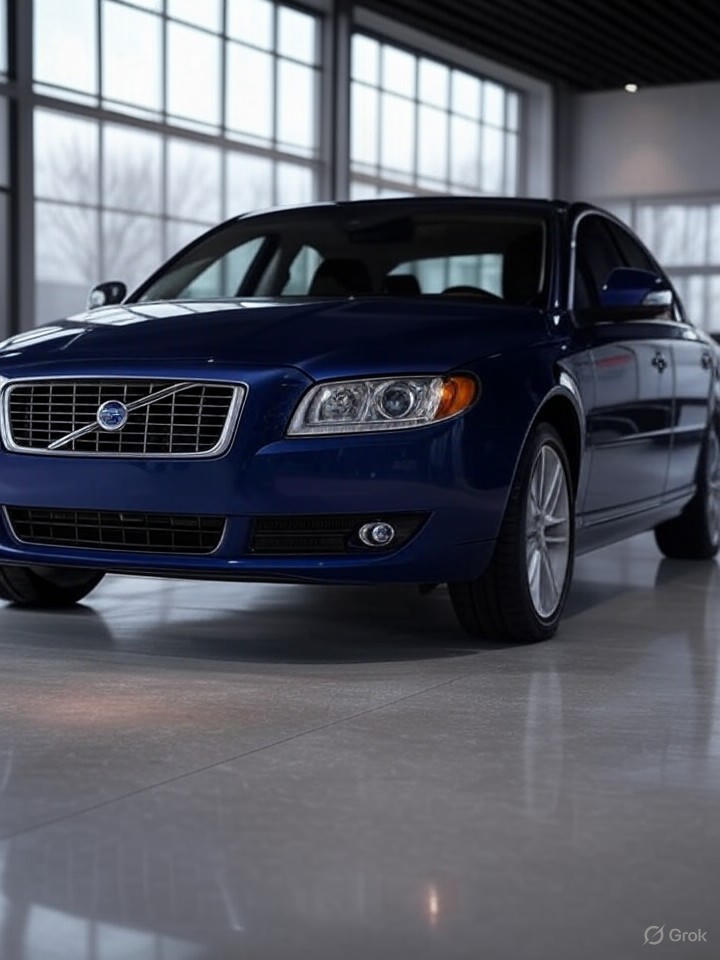
2006 Volvo S80 Sedan

2006 Volvo

S80Sedan

Sedan

The 2006 Volvo S80 is a full-size European-flavored luxury sedan built on Volvo's P2 platform, shared with the XC90 and V70. This generation (1999–2006) closed out with the T6 twin-turbo inline-6 being phased out in favor of the turbocharged 2.5L inline-5, which proved to be the more reliable long-term choice. It offers a genuinely comfortable, safe, and well-appointed cabin at a fraction of its original sticker price on the used market. The S80 was Volvo's flagship sedan, and it shows in the feature content — side curtain airbags, WHIPS whiplash protection, and advanced stability systems were standard long before competitors caught up. The interior holds up well over time, and the driving feel is refined if not sporty. The catch: this is still a European luxury car, and repair costs reflect that. Parts availability is decent through independent sources, but specialty knowledge matters. A well-maintained example is a solid used buy; a neglected one can become expensive quickly. For Lake Geneva winters, the AWD T5 variant is worth seeking out.

Reliability
3/5
Verified data
Specs shown for S80 AWD — the most common configuration. Other trims may vary in engine, drivetrain, or fuel economy. Sign in to see your vehicle's exact specs.
Engine
[object Object]
Drivetrain
AWD
Fuel
Premium gasoline
MPG
17 city / 25 hwy / 20 combined
Seats
Doors
Body
Midsize Cars

Overview

AI-curated

The 2006 Volvo S80 is a full-size European-flavored luxury sedan built on Volvo's P2 platform, shared with the XC90 and V70. This generation (1999–2006) closed out with the T6 twin-turbo inline-6 being phased out in favor of the turbocharged 2.5L inline-5, which proved to be the more reliable long-term choice. It offers a genuinely comfortable, safe, and well-appointed cabin at a fraction of its original sticker price on the used market. The S80 was Volvo's flagship sedan, and it shows in the feature content — side curtain airbags, WHIPS whiplash protection, and advanced stability systems were standard long before competitors caught up. The interior holds up well over time, and the driving feel is refined if not sporty. The catch: this is still a European luxury car, and repair costs reflect that. Parts availability is decent through independent sources, but specialty knowledge matters. A well-maintained example is a solid used buy; a neglected one can become expensive quickly. For Lake Geneva winters, the AWD T5 variant is worth seeking out.

Known for
  • Class-leading passive safety systems and structural integrity
  • Smooth, torquey 2.5L turbo inline-5 on T5 models
  • Comfortable, durable interior that ages well
  • AWD availability on T5 trim for year-round traction
  • Higher-than-average European luxury repair costs
Best for
  • Buyers wanting European luxury at a steep used-car discount
  • Families prioritizing safety ratings and structural protection
  • Wisconsin winters — AWD T5 handles snow and ice confidently
  • Highway commuters who value a quiet, refined ride
Watch for
  • Throttle body and ETM (electronic throttle module) failures — a known P2-platform issue
  • PCV oil trap/breather system clogs causing oil consumption and sludge
  • Expensive suspension and AWD rear differential service
  • Aging DSTC and SRS modules that can generate spurious warning lights
  • High cost of Volvo-specific scan tools needed for full diagnostics

Common issues by mileage

6 known

PCV / Oil Trap Clogging

high
Typically appears
80–150k mi
Estimated repair
$200 – $500

Electronic Throttle Module (ETM) Failure

medium
Typically appears
60–120k mi
Estimated repair
$400 – $900

VVT / Camshaft Position Actuator Solenoid Failure

medium
Typically appears
80–130k mi
Estimated repair
$300 – $700

Turbocharger Bypass (Diverter) Valve Failure

medium
Typically appears
70–120k mi
Estimated repair
$150 – $400

Front Control Arm Bushings and Ball Joints Wear

high
Typically appears
90–140k mi
Estimated repair
$600 – $1,400

Oxygen / Heated O2 Sensor Heater Circuit Failure

medium
Typically appears
100–160k mi
Estimated repair
$200 – $500

Maintenance schedule

  1. 1
    Every 5,000 miles or 1 year (do not stretch to OLM recommendations on a used example) Engine oil and filter change — use full synthetic 0W-30 or 5W-30 meeting Volvo VCC-RBS2AE spec

    The 2.5T is prone to oil sludge when intervals are stretched. Clean oil directly protects the turbo, VVT actuators, and cam phaser solenoids.

  2. 2
    Every 50,000 miles or at first sign of oil consumption or rough idle PCV / oil trap (flame trap) inspection and replacement

    A clogged PCV trap is the #1 cause of oil consumption and sludge buildup on this engine. Inexpensive part; expensive to ignore.

  3. 3
    Every 30,000 miles Spark plug replacement — use OEM-spec plugs only

    The inline-5 turbo is sensitive to spark plug condition. Worn plugs cause misfires and can stress the ignition coils.

  4. 4
    Every 60,000 miles Serpentine belt and tensioner inspection/replacement

    Belt failure on this engine is catastrophic. Replace the tensioner at the same time — it's cheap insurance.

  5. 5
    Every 45,000–60,000 miles Transmission fluid service (AW55-50SN automatic)

    Volvo spec'd this as 'lifetime' fluid, but used S80s with original fluid show accelerated shift wear past 100k. An independent drain-and-fill extends transmission life significantly.

  6. 6
    Every 30,000 miles Haldex AWD rear differential fluid change

    The Haldex coupling is the heart of the AWD system. Degraded fluid causes coupling wear and AWD engagement hesitation — especially noticeable in winter conditions.

  7. 7
    Every 2 years regardless of mileage Brake fluid flush

    Volvo's ABS/DSTC systems are moisture-sensitive. Fresh fluid prevents corrosion in ABS modulators and maintains consistent pedal feel in cold weather.

  8. 8
    Every 50,000 miles or 5 years Coolant system inspection and thermostat check

    The 2.5T runs a narrow thermal window. A sluggish thermostat causes rich running, increased wear, and poor heat output — a real problem in Wisconsin winters.

Always defer to the manufacturer's service manual for warranty-mandated intervals.

Cost of ownership

Annual maintenance
$900 – $2,200
Fuel
Premium fuel recommended; expect $2,000–$2,800/yr at typical Wisconsin driving distances (~15k mi/yr) based on 20 MPG combined
Insurance
Moderate to slightly above average for a luxury sedan of this age; full coverage typically $900–$1,400/yr in the Lake Geneva area depending on driver history

The S80 is inexpensive to buy but carries ongoing European luxury maintenance costs. Budget $900–$1,200/yr for routine upkeep in good years; expect $1,500–$2,200+ in years when suspension components, VVT hardware, or the turbo diverter valve need attention. Parts are generally available through independent suppliers at reasonable prices, but labor time on some jobs (PCV system, front suspension) adds up. A healthy used S80 is still more affordable to own than a same-era BMW 5-Series or Mercedes E-Class.

Seasonal care

Lake Geneva, WI
Winter
  • Switch to a full synthetic 0W-30 oil if not already used — cold cranking with 5W oil in sub-zero temps stresses the turbo before oil pressure builds
  • Test and replace the battery proactively if it's older than 4 years; Volvo's electronics draw significant parasitic current and cold-start demands are high
  • Flush wiper fluid reservoir and refill with a -40°F-rated fluid; the S80's cowl design traps moisture and a frozen reservoir is a common nuisance
  • Inspect and treat underbody, subframe, and suspension control arm attachment points for road salt corrosion — Lake Geneva roads are heavily salted
  • Verify Haldex AWD fluid is fresh before winter; degraded fluid means the rear axle may not engage promptly on icy starts
  • Use dedicated winter tires — the S80's AWD helps traction but does not improve braking; all-seasons on this platform are marginal below 20°F
Summer
  • Check tire pressure monthly — ambient temperature swings of 40°F between Wisconsin spring nights and summer days cause significant pressure variation
  • Inspect the A/C compressor belt and cabin air filter; a dirty cabin filter starves the evaporator and makes the A/C work harder in heat
  • Monitor coolant temperature closely on hot days — a partially failing thermostat or low coolant level that was masked in winter will show up under summer heat loads
  • Check turbo intercooler hose connections; heat cycling causes rubber hose ends to soften and slip, leading to boost leaks and hesitation

Comparable vehicles

If you're shopping for one

Red flags
  • No service records and high mileage — PCV and oil sludge issues are invisible until they cause real damage
  • Check Engine light cleared immediately before sale — use a scanner to check readiness monitors
  • Sluggish or jerky AWD engagement on a slow-speed figure-8 — indicates worn Haldex coupling
  • Any P0012, P0015 or VVT-related codes in history — may indicate oil starvation damage to cam phasers
  • Excessive oil consumption (more than 1 qt per 2,000 miles) without external leaks — severe PCV or ring wear
What to inspect
  • Pull the oil filler cap and check for creamy residue or heavy sludge — evidence of a neglected PCV system or coolant intrusion
  • Request full service records; specifically look for evidence of oil change intervals under 7,500 miles and Haldex fluid changes
  • Scan with a Volvo-capable tool (not just a generic OBD-II reader) — many Volvo-specific faults won't show on generic scanners
  • Test drive at highway speed and feel for hesitation or surging under boost — early signs of a failing throttle body or diverter valve
  • Inspect underbody and subframe mounting points for rust perforation — salt damage is common on Midwestern examples
AI profile generated 1 hr ago · claude-sonnet-4-6 · v2.