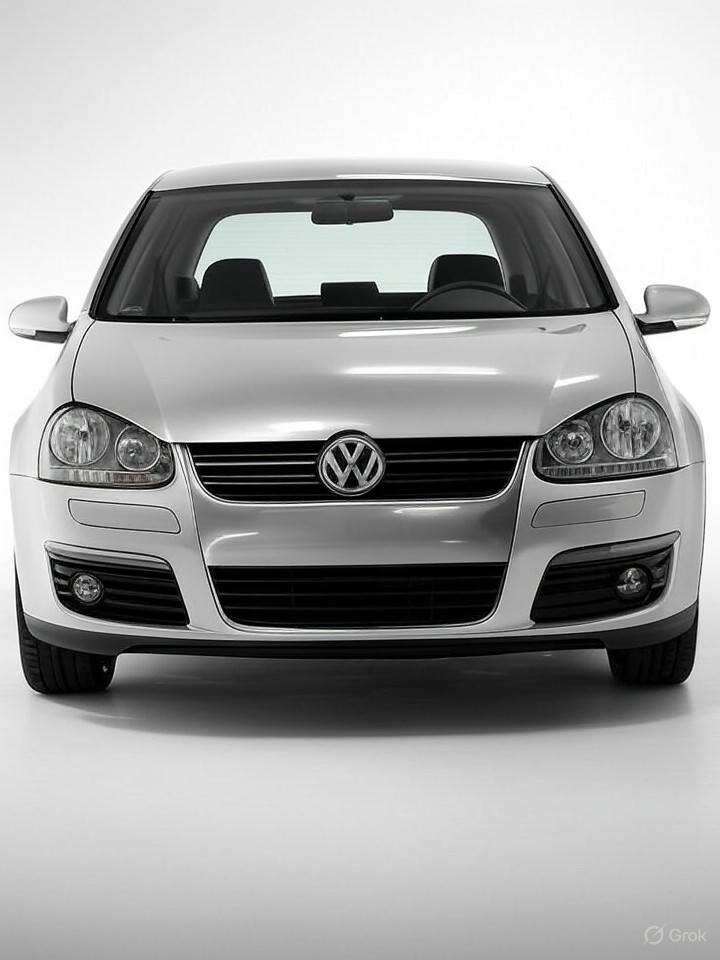
2006 Volkswagen Golf Hatchback

2006 Volkswagen

GolfHatchback

2.5L I5 · Hatchback

The 2006 Volkswagen Golf (Mk5 generation, sold in North America as the Rabbit) is a compact hatchback that punches above its class in driving dynamics and build quality. VW's 2.5L inline-five engine was the standard U.S. powerplant for this generation, pairing a rev-happy character with reasonable fuel economy. The interior feels noticeably more solid than most competitors at this price point, and the suspension tuning earns genuine praise from enthusiasts. At nearly 20 years old, this Golf is firmly in high-mileage territory. German engineering is excellent when maintained, but maintenance costs at this age are higher than Japanese competitors. Cooling system components, oil sludge from infrequent changes, and window regulator failures are the ownership realities buyers need to accept going in. For the right buyer — someone who enjoys driving and commits to staying on top of service — the Mk5 Golf is rewarding and relatively practical. Skip the maintenance and you'll spend more than the car is worth on repairs.

Reliability
3/5
Verified data
Engine
2.5L I5
Drivetrain
FWD
Fuel
Gasoline
MPG
22 city / 29 hwy / 25 combined
Seats
5
Doors
4
Body
Hatchback
MSRP
$16,990

Overview

AI-curated

The 2006 Volkswagen Golf (Mk5 generation, sold in North America as the Rabbit) is a compact hatchback that punches above its class in driving dynamics and build quality. VW's 2.5L inline-five engine was the standard U.S. powerplant for this generation, pairing a rev-happy character with reasonable fuel economy. The interior feels noticeably more solid than most competitors at this price point, and the suspension tuning earns genuine praise from enthusiasts. At nearly 20 years old, this Golf is firmly in high-mileage territory. German engineering is excellent when maintained, but maintenance costs at this age are higher than Japanese competitors. Cooling system components, oil sludge from infrequent changes, and window regulator failures are the ownership realities buyers need to accept going in. For the right buyer — someone who enjoys driving and commits to staying on top of service — the Mk5 Golf is rewarding and relatively practical. Skip the maintenance and you'll spend more than the car is worth on repairs.

Known for
  • Sharp, European-tuned handling for a compact hatchback
  • Solid, rattle-free interior build quality
  • Torquey 2.5L inline-five engine with good low-end pull
  • Efficient packaging — big interior in a small footprint
  • Strong enthusiast community and parts availability
Best for
  • Commuters who want a fun-to-drive daily driver
  • Buyers who prioritize driving feel over low running costs
  • City drivers who value tight parking and a hatchback's practicality
  • DIY-capable owners comfortable with German car maintenance
Watch for
  • Oil sludge from extended drain intervals — check service history carefully
  • Window regulator failures (very common at this age)
  • Cooling system components (water pump, thermostat housing) need proactive replacement
  • Electrical gremlins as wiring ages — especially sunroof and power windows
  • Rust on door bottoms, rocker panels, and wheel arches in rust-belt climates like Wisconsin

Common issues by mileage

6 known

Window regulator failure

high
Typically appears
60–150k mi
Estimated repair
$150 – $350

Cooling system failure (water pump, thermostat housing, coolant hose)

high
Typically appears
80–130k mi
Estimated repair
$300 – $700

Oxygen sensor heater circuit failure

medium
Typically appears
80–150k mi
Estimated repair
$150 – $400

Coil pack failure (misfires, rough idle)

medium
Typically appears
70–130k mi
Estimated repair
$120 – $320

Door bottom and rocker panel rust (especially in salt-belt states)

high
Typically appears
100k+ mi / 10+ years
Estimated repair
$400 – $2,500

Maintenance schedule

  1. 1
    Every 5,000 miles — do not follow the OBC long-life interval on a high-mileage car Engine oil change with VW 502.00-spec full-synthetic oil

    The 2.5L I5 is sensitive to oil quality and change frequency. Using the wrong spec or stretching intervals accelerates sludge buildup in VVT passages and can cause camshaft timing codes.

  2. 2
    Every 40,000 miles or at first signs of temperature fluctuation Coolant flush and cooling system inspection (water pump, thermostat housing, hoses)

    The plastic thermostat housing and water pump impeller are known weak points. A failure here can cause rapid overheating and serious engine damage — proactive replacement is far cheaper than the alternative.

  3. 3
    Every 40,000 miles Spark plugs replacement

    The I5 is sensitive to worn plugs. Misfires on this engine can also trigger coil pack failures — staying on schedule is inexpensive insurance.

  4. 4
    Every 40,000–50,000 miles Transmission fluid change (manual gearbox)

    VW does not always list this as a required service, but the fluid degrades. Fresh fluid noticeably improves shift quality and protects synchros in cold Wisconsin starts.

  5. 5
    Every 2 years regardless of mileage Brake fluid flush

    VW specifies this interval for a reason — brake fluid absorbs moisture over time, lowering the boiling point. Critical given Wisconsin's demanding stop-and-go winter driving.

  6. 6
    Every 20,000 miles or annually Cabin air filter replacement

    Cheap and easy on this generation. A clogged filter strains the blower motor — a much more expensive fix.

  7. 7
    Annually, before or after winter Underbody and door-seam rust inspection and treatment

    Wisconsin road salt is aggressive. Check door bottoms, rocker panels, wheel arches, and subframe mounting points. Treat bare metal immediately — rust spreads fast on this body.

  8. 8
    Every fall, before first hard freeze Battery load test

    The 2.5L I5 draws significant current on cold starts. A marginal battery that passes a summer test can fail at -10°F. Replace proactively if the battery is 4+ years old.

Always defer to the manufacturer's service manual for warranty-mandated intervals.

Cost of ownership

Annual maintenance
$600 – $1,400
Fuel
At ~25 MPG combined and Wisconsin average gas prices, expect roughly $1,400–$1,800/year for a typical 12,000-mile driver. Premium fuel is not required.
Insurance
Generally low — compact hatchback class. Expect $900–$1,400/year for full coverage depending on driver profile and zip code.

A well-maintained 2006 Golf is not an expensive car to operate in routine years. The risk is deferred maintenance catching up all at once — cooling system, window regulators, and coil packs can pile up to $1,500–$3,000 in a single year if ignored. Budget on the higher end of the maintenance range for a car this age unless you have full service records.
Seasonal care

Lake Geneva, WI
Winter
  • Load-test the battery every October — cold cranking amps drop sharply below 0°F and the I5 is a hard starter on a weak battery
  • Switch to a full-synthetic 5W-30 or 5W-40 (VW 502.00-spec) if you haven't already — it flows immediately at sub-zero temperatures
  • Use a name-brand -40°F-rated washer fluid; the reservoir and lines freeze with diluted fluid and the repair is annoying and avoidable
  • Install winter wiper blades — standard blades ice up and streak in heavy Wisconsin snow
  • Inspect door seals and treat with silicone lubricant to prevent freezing doors; also check drain holes in door bottoms to prevent ice buildup that accelerates rust
  • After driving on salted roads, rinse the underbody whenever temps are above freezing — salt accumulation on the subframe and rocker panels causes fast structural rust on these cars
Summer
  • Check tire pressure monthly — tires lose and gain ~1 PSI per 10°F of temperature change; summer heat causes overinflation relative to a cold-morning set
  • Inspect the cooling system before hot-weather driving — this generation is prone to overheating if the thermostat housing or water pump is marginal
  • Run the A/C on MAX for 5 minutes weekly even if you don't need it — keeps the compressor seals lubricated and catches refrigerant leaks before they become full recharges
  • Check cabin air filter — pollen and road dust from spring accumulate and reduce A/C airflow noticeably

Comparable vehicles

If you're shopping for one

Red flags
  • No service records or evidence of extended oil change intervals — sludge damage is often irreversible without expensive teardown
  • Cooling system warning lamp history or evidence of overheating (white staining on overflow tank, warped coolant cap)
  • Rust through on rocker panels or floor seams — structural rust on a compact this age can exceed the car's value to repair properly
  • Camshaft timing DTCs (P0012, P0015, P0022, P0025) stored as permanent codes — indicates VVT system damage from oil neglect
  • Mismatched paint on door bottoms or rear quarters — may indicate poorly repaired rust or collision damage
  • Sunroof that leaks or drains slowly — water intrusion causes expensive electrical and structural damage over time
What to inspect
  • Pull the oil cap and look for white sludge or a 'mayonnaise' buildup — sign of poor maintenance or possible head gasket issue
  • Check all four window regulators — operate every window fully and listen for grinding or slow movement
  • Inspect door bottoms, rocker panels, and rear wheel arches for rust bubbles or filler (probe soft spots with a magnet)
  • Test the cooling system: check coolant color (should be pink/purple VW G12+, not brown), look for white residue around hose connections, and verify the temp gauge stabilizes at normal operating temp
  • Scan for DTCs before purchase — camshaft timing codes (P0012, P0015) on a sludged engine are a major red flag
  • Verify the timing chain system is quiet at idle — a rattling chain on cold start points to stretched chain or worn tensioner
  • Check sunroof operation (open, close, tilt) — sunroof drain clogs cause headliner and floor water intrusion on this generation
AI profile generated 1 hr ago · claude-sonnet-4-6 · v2.