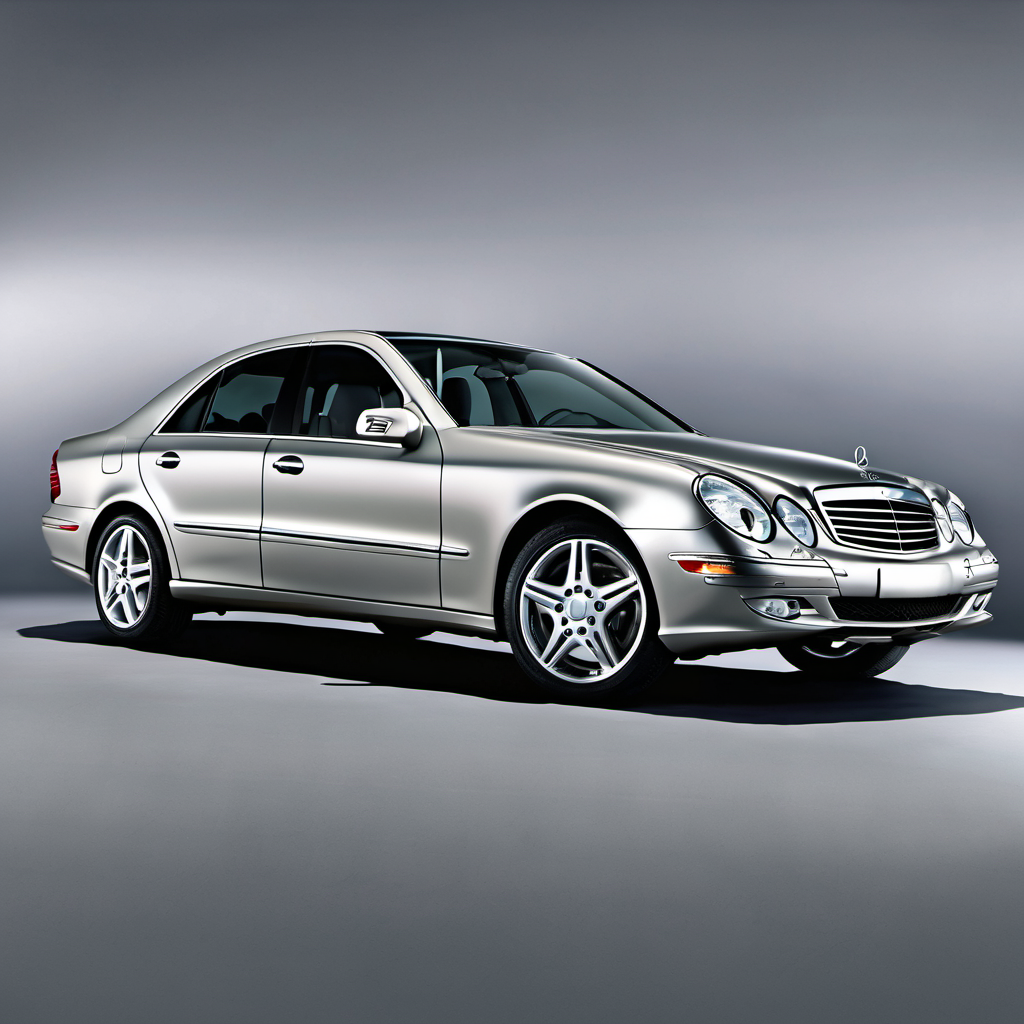
2006 Mercedes-Benz E-Class Sedan

2006 Mercedes-Benz

E-ClassSedan

Sedan

The 2006 Mercedes-Benz E-Class (W211 chassis) in E320 CDI trim is a full-size luxury sedan powered by a 3.2L turbocharged inline-6 diesel — one of the few diesel luxury sedans sold new in the U.S. during this era. It combines genuinely comfortable long-distance cruising with fuel economy numbers that beat most compact cars of the same period. At highway speeds, it's smooth, quiet, and effortless. The E320 CDI has earned a devoted following among high-mileage drivers who keep up with the maintenance schedule. Owners regularly push past 300,000 miles on the original engine when oil changes and fuel filter service are done on time. The diesel drivetrain is the car's strongest asset; the supporting electronics and air suspension components are where the ownership story gets complicated. Buying one of these at this age means accepting that you are purchasing a 20-year-old European luxury vehicle. Deferred maintenance, ignored warning lights, and cheap repairs compound quickly on the W211 platform. A well-documented, single-owner example can be a remarkable value; a neglected one can become a money pit fast.

Reliability
3/5
Verified data
Specs shown for E320 Cdi — the most common configuration. Other trims may vary in engine, drivetrain, or fuel economy. Sign in to see your vehicle's exact specs.
Engine
[object Object]
Drivetrain
RWD
Fuel
Diesel
MPG
23 city / 33 hwy / 27 combined
Seats
Doors
Body
Midsize Cars

Overview

AI-curated

The 2006 Mercedes-Benz E-Class (W211 chassis) in E320 CDI trim is a full-size luxury sedan powered by a 3.2L turbocharged inline-6 diesel — one of the few diesel luxury sedans sold new in the U.S. during this era. It combines genuinely comfortable long-distance cruising with fuel economy numbers that beat most compact cars of the same period. At highway speeds, it's smooth, quiet, and effortless. The E320 CDI has earned a devoted following among high-mileage drivers who keep up with the maintenance schedule. Owners regularly push past 300,000 miles on the original engine when oil changes and fuel filter service are done on time. The diesel drivetrain is the car's strongest asset; the supporting electronics and air suspension components are where the ownership story gets complicated. Buying one of these at this age means accepting that you are purchasing a 20-year-old European luxury vehicle. Deferred maintenance, ignored warning lights, and cheap repairs compound quickly on the W211 platform. A well-documented, single-owner example can be a remarkable value; a neglected one can become a money pit fast.

Known for
  • Exceptional real-world diesel fuel economy (27+ mpg combined)
  • Extremely durable OM648 diesel engine when maintained
  • Smooth, refined highway ride and low-effort long-distance driving
  • High feature content for its era (COMAND, air suspension, memory seats)
  • Distinctive styling that has aged well
Best for
  • High-mileage highway commuters
  • Drivers who want luxury without gasoline fuel costs
  • Owners comfortable with European car maintenance schedules
  • Someone who wants a conversation-starting sedan with genuine longevity potential
Watch for
  • Air suspension (AIRMATIC) failures are common and expensive
  • Rust on underbody and subframe from road salt — critical in Wisconsin
  • Complex electronics: SBC brake system, ABC suspension control units
  • Expensive diesel-specific service parts (fuel filters, injectors, glow plugs)
  • SBC (Sensotronic Brake Control) system failure — a known safety issue on this generation

Common issues by mileage

6 known

SBC (Sensotronic Brake Control) Pump / Control Unit Failure

high
Typically appears
70–120k mi
Estimated repair
$1,200 – $3,000

Diesel Fuel Injector Wear / Leaking Injector Seals

medium
Typically appears
100–180k mi
Estimated repair
$600 – $2,800

Glow Plug Failure (Hard Cold Starts)

medium
Typically appears
60–120k mi
Estimated repair
$300 – $700

Instrument Cluster Pixel Failure / Electrical SAM Module Issues

medium
Typically appears
80–160k mi
Estimated repair
$400 – $1,500

Underbody / Subframe Rust (Road Salt Corrosion)

high
Typically appears
Any mileage on Midwest/Northeast vehicles
Estimated repair
$500 – $4,000

Maintenance schedule

  1. 1
    Every 7,500–10,000 miles or 1 year — do not stretch to the car's oil life monitor on used examples Engine oil change with MB-approved diesel spec oil (MB 229.51 or equivalent)

    The OM648 thrives on clean oil. Extended intervals on a high-mileage diesel accelerate injector and turbo wear. Using non-approved oil spec voids the fuel economy advantage and risks injector fouling.

  2. 2
    Every 20,000 miles or 2 years Diesel fuel filter replacement

    U.S. diesel fuel quality varies. A clogged fuel filter starves the high-pressure injection system and can lead to expensive injector and pump damage — far costlier than the filter itself.

  3. 3
    Every 2 years / brake fluid change every 2 years regardless of mileage SBC brake fluid and system inspection

    The SBC system is hydraulic-electric and extremely sensitive to contaminated fluid. Moisture-absorbed fluid accelerates pump and actuator wear. This system is the single biggest safety concern on this car.

  4. 4
    Annually, or any time the car sits lower on one corner AIRMATIC suspension inspection (struts, compressor, lines)

    Air leaks worsen quickly, especially in cold weather. The compressor runs overtime trying to compensate and burns out. Catching a single failed air strut early is a $800–1,200 repair; waiting until the compressor also fails doubles the bill.

  5. 5
    Every 60,000–80,000 miles, proactively before winter Glow plug inspection and replacement

    Wisconsin sub-zero starts put maximum demand on glow plugs. A failing glow plug causes hard starts, white smoke, and misfires in cold weather. Replacing them before they fail (and break off in the head) saves hundreds in extraction labor.

  6. 6
    Each spring after road salt season; annual undercoating recommended Underbody wash and rust-proofing inspection

    W211 subframes and suspension mounting points are known rust targets. Lake Geneva roads are heavily salted. Catching surface rust early with a coat of rust-inhibiting undercoating is far cheaper than subframe repair.

  7. 7
    Every 40,000 miles — Mercedes marked this 'lifetime fill' but that is optimistic on a used car Transmission fluid service (7G-Tronic)

    Used transmission fluid contributes to harsh shifts and valve body wear on the 7G-Tronic. On a used vehicle where service history is unknown, a fluid drain-and-fill is cheap insurance.

  8. 8
    Every 3–4 years, always before first Wisconsin winter Battery load test and replacement if needed

    The W211 has a high electrical load from the SBC system, AIRMATIC compressor, seat heaters, and COMAND. A weak battery in sub-zero temps can leave you stranded and trigger a cascade of electronic fault codes.

Always defer to the manufacturer's service manual for warranty-mandated intervals.

Cost of ownership

Annual maintenance
$1,200 – $3,500
Fuel
Diesel — at typical Midwest diesel prices, expect 25–30% savings over a comparable V6 gasoline sedan. Budget roughly $1,500–$2,200/year at 15,000 miles depending on diesel pump prices.
Insurance
Expect mid-to-upper tier full coverage rates for a luxury sedan. Typically $1,200–$1,800/year in southern Wisconsin depending on driver profile — the age of the vehicle helps offset the luxury surcharge.

The E320 CDI's fuel economy genuinely offsets its premium diesel fuel costs versus gasoline alternatives. The wildcard is repair costs: the engine is cheap to maintain, but suspension, brake system, and electronic repairs carry European luxury pricing even at an independent shop. A fully sorted, documented example in normal years might run $1,200–$1,800 in maintenance. A neglected example catching up on deferred work can easily exceed $4,000–$6,000 in a single year. Reserve fund matters more on this car than almost any other in its class.

Seasonal care

Lake Geneva, WI
Winter
  • Test and load-test the battery before temps drop below 20°F — the SBC system, AIRMATIC compressor, and heated seats will kill a weak battery fast
  • Verify all glow plugs are functional before winter; cold diesel starts in Wisconsin rely entirely on them
  • Switch to a winter-grade diesel anti-gel additive or confirm the fuel station is blending winter diesel; gelled fuel will strand you
  • Inspect AIRMATIC air lines and struts — cold temps harden rubber seals and turn slow leaks into sudden failures overnight
  • Use -40°F-rated washer fluid; the long hood and low cowl angle means ice-streaked windshields are a real visibility hazard
  • Rinse the underbody after every significant salt event — the W211 subframe rust problem is directly worsened by salt accumulation
Summer
  • Check tire pressure monthly — RWD + heat means rear tire wear accelerates if pressure is low; E-Class tires are not cheap
  • Inspect the A/C system before peak heat; the cabin is large and the system works hard — a refrigerant recharge is common on 20-year-old vehicles
  • Check coolant condition and level; the diesel runs hot under load in summer highway driving
  • Inspect AIRMATIC compressor intake filter if equipped; summer dust clogs it and leads to compressor overheating
  • Watch for heat-soak hard starts after short stops in extreme heat — diesel injection timing sensors can be finicky when hot-soaked on high-mileage examples

Comparable vehicles

If you're shopping for one

Red flags
  • Any sag in the air suspension or 'sports mode' message displayed at startup — compressor or strut failure already in progress
  • SBC warning light on dash or recent brake system codes with no documented repair
  • No diesel fuel filter service records and high mileage (over 80k)
  • Visible rust on subframe or rear suspension mounting points — walk away
  • Mismatched or excessively worn rear tires on a RWD car — suggests alignment or suspension geometry problem
  • Cheap non-MB-spec oil in the engine or oil that looks dark and gritty — diesel engines on wrong oil spec suffer injector and turbo damage quietly
What to inspect
  • Get a pre-purchase inspection from a Mercedes-familiar independent shop — this is non-negotiable on a W211
  • Check SBC brake system: pull codes, ask for service history, confirm the recall was addressed
  • Test AIRMATIC: let the car sit overnight on a level surface and check if it has sagged on any corner by morning
  • Look for fuel filter service records; if unknown, budget a fuel filter replacement immediately
  • Crawl under the car and inspect the subframe, control arm mounts, and floor pans for rust — especially on any vehicle with Wisconsin/Illinois/Minnesota history
  • Check for white or blue smoke at cold startup (injector or glow plug issues) and at warm idle (turbo seals)
  • Verify COMAND navigation, all power seat functions, sunroof, and window regulators — repair costs on W211 interior electronics are disproportionately high
AI profile generated 1 hr ago · claude-sonnet-4-6 · v2.