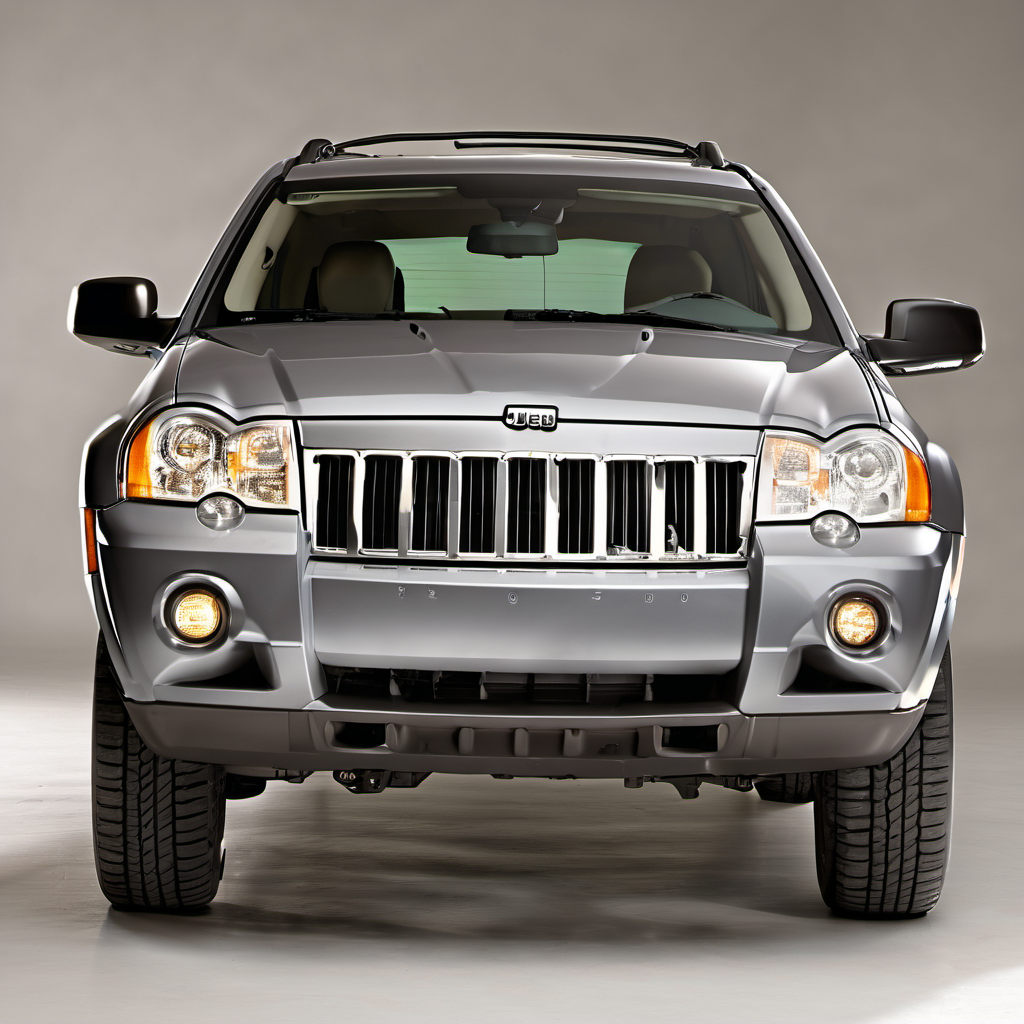
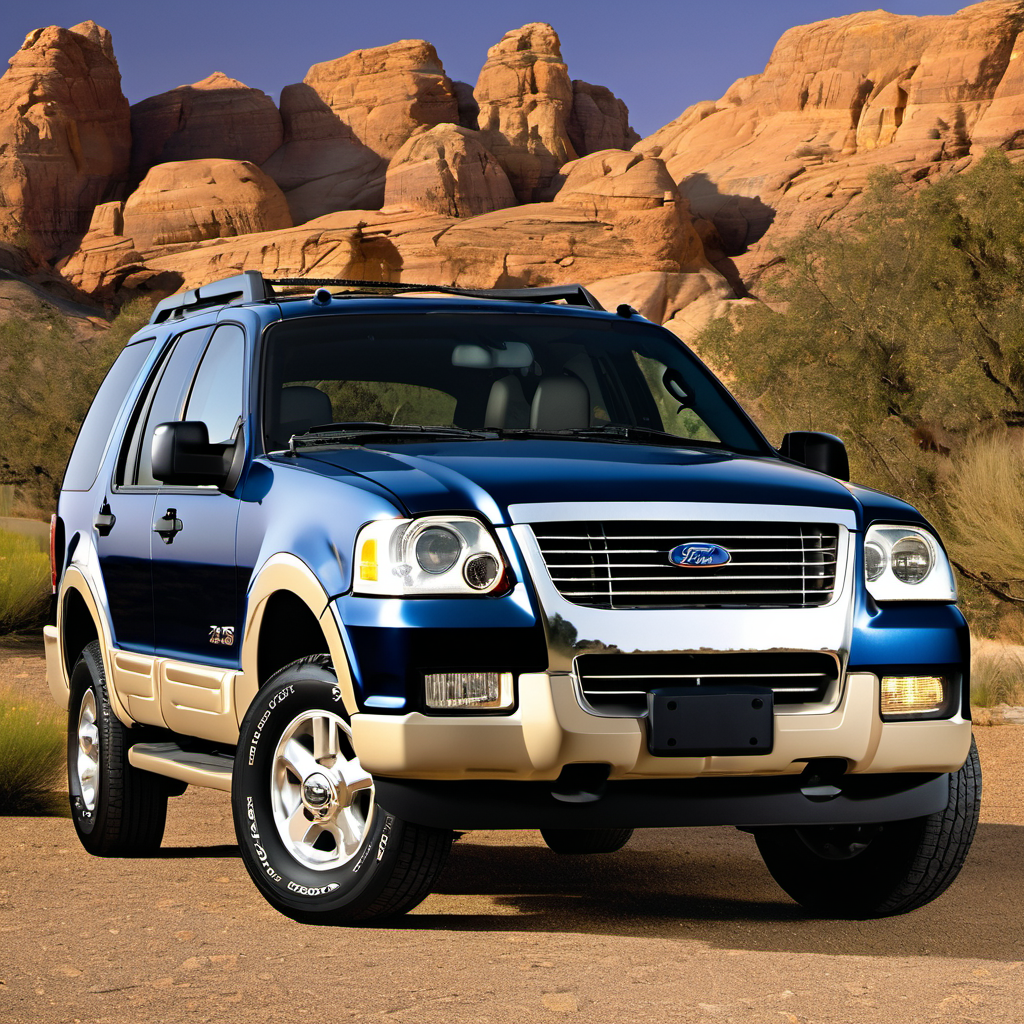
2006 Jeep Grand Cherokee SUV

2006 Jeep

Grand CherokeeSUV

SUV

The 2006 Jeep Grand Cherokee is the second year of the WK-generation (2005–2010), a mid-size SUV that struck a balance between genuine off-road capability and a reasonably comfortable on-road experience. The WK generation was a major departure from its predecessor, with a more car-like unibody-influenced design, independent front suspension, and a quieter cabin — though Jeep retained solid off-road credentials through its Quadra-Drive II and Quadra-Trac systems. The 3.7L V6 is the base engine, adequate for everyday use but noticeably underpowered when loaded or towing. It was paired with a 5-speed automatic and available in rear-wheel or four-wheel drive. Fuel economy is modest at best for a 3.7L — expect real-world numbers closer to the low end of the EPA estimates in stop-and-go driving or cold Wisconsin winters. At nearly 20 years old, a 2006 Grand Cherokee is solidly in the high-mileage / value-buy category. The platform is reasonably proven, but electrical gremlins, cooling system wear, and rust from road salt are the dominant concerns at this age. Buy one with eyes open and budget for deferred maintenance.

Reliability
3/5
Verified data
Specs shown for Grand Cherokee 2WD — the most common configuration. Other trims may vary in engine, drivetrain, or fuel economy. Sign in to see your vehicle's exact specs.
Engine
[object Object]
Drivetrain
RWD
Fuel
Gasoline
MPG
15 city / 21 hwy / 17 combined
Seats
Doors
Body
Sport Utility Vehicle - 2WD

Overview

AI-curated

The 2006 Jeep Grand Cherokee is the second year of the WK-generation (2005–2010), a mid-size SUV that struck a balance between genuine off-road capability and a reasonably comfortable on-road experience. The WK generation was a major departure from its predecessor, with a more car-like unibody-influenced design, independent front suspension, and a quieter cabin — though Jeep retained solid off-road credentials through its Quadra-Drive II and Quadra-Trac systems. The 3.7L V6 is the base engine, adequate for everyday use but noticeably underpowered when loaded or towing. It was paired with a 5-speed automatic and available in rear-wheel or four-wheel drive. Fuel economy is modest at best for a 3.7L — expect real-world numbers closer to the low end of the EPA estimates in stop-and-go driving or cold Wisconsin winters. At nearly 20 years old, a 2006 Grand Cherokee is solidly in the high-mileage / value-buy category. The platform is reasonably proven, but electrical gremlins, cooling system wear, and rust from road salt are the dominant concerns at this age. Buy one with eyes open and budget for deferred maintenance.

Known for
  • Capable off-road performance for a mid-size SUV
  • Comfortable, quiet cabin for its era
  • Wide engine lineup (3.7L V6, 4.7L V8, 5.7L HEMI V8, 3.0L diesel)
  • Solid resale and parts availability
  • Quadra-Drive II 4WD system with electronic locking differentials
Best for
  • Buyers needing light-to-moderate off-road or winter AWD capability
  • Families wanting a roomy SUV on a used-car budget
  • Drivers in snow-heavy areas who want 4WD traction
  • Towing light loads (up to ~5,000 lbs with V6)
Watch for
  • Rust on frame, rocker panels, and undercarriage — especially Wisconsin examples
  • 3.7L V6 head gasket and oil consumption issues at higher mileage
  • Electrical and module communication faults (TIPM, BCM)
  • Transfer case and rear differential seal leaks
  • Cooling system neglect leading to overheating

Common issues by mileage

6 known

3.7L V6 Oil Consumption / Head Gasket Seepage

medium
Typically appears
100–180k mi
Estimated repair
$800 – $2,200

Cooling System Failure (Thermostat, Water Pump, Radiator)

high
Typically appears
80–140k mi
Estimated repair
$250 – $750

Transfer Case Seal / Output Shaft Seal Leaks

medium
Typically appears
70–130k mi
Estimated repair
$200 – $600

Rear Differential and Axle Seal Leaks

medium
Typically appears
80–150k mi
Estimated repair
$150 – $450

O2 Sensor Heater Circuit Faults

medium
Typically appears
60–120k mi
Estimated repair
$150 – $350

Maintenance schedule

  1. 1
    Every 5,000 miles or 6 months Engine oil and filter change

    The 3.7L V6 is sensitive to oil quality and level. At higher mileage, consumption may increase — check the dipstick monthly and never let it run low.

  2. 2
    Every 2 years or 30,000 miles Coolant flush and system inspection

    WK-generation cooling systems are prone to neglect-driven failures. Old coolant becomes acidic and attacks the water pump and radiator. Inspect hoses for brittleness at every oil change.

  3. 3
    Every 30,000 miles Transfer case fluid change

    Especially important in a Wisconsin winter-use vehicle. Contaminated or low fluid accelerates wear on internal components and is a common source of leaks.

  4. 4
    Every 30,000 miles Front and rear differential fluid change

    Inspect seals at the same time. Catching a weeping seal early is a $150–200 fix; ignoring it until fluid is gone can cost $1,000+ in differential rebuild.

  5. 5
    Every 30,000–40,000 miles Transmission fluid and filter service

    Chrysler's 545RFE 5-speed automatic is generally reliable but benefits from regular fluid changes. Burned or contaminated fluid accelerates solenoid wear.

  6. 6
    Every 30,000 miles Spark plugs and ignition coil inspection

    The 3.7L V6 can develop misfires from worn plugs or failing individual coil-on-plug coils. Replacing plugs on schedule prevents coil overwork.

  7. 7
    Every fall before winter season Battery load test

    Cold Wisconsin winters are hard on aging batteries. A battery that passes a basic voltage test in summer can fail a load test at -10°F. Test it before the first hard freeze.

  8. 8
    Every spring after winter Undercarriage rust and brake line inspection

    Lake Geneva roads are heavily salted. Inspect brake lines, fuel lines, frame mounting points, and rocker seams annually. Rusty brake lines are a safety issue and an MOT-fail in waiting.

Always defer to the manufacturer's service manual for warranty-mandated intervals.

Cost of ownership

Annual maintenance
$700 – $1,800
Fuel
At 17 MPG combined and ~12,000 miles/year, expect roughly $1,400–$1,700/year in fuel at current Midwest gas prices. City-heavy or towing use pushes this higher.
Insurance
Typically $900–$1,400/year for a 2006 Grand Cherokee in Wisconsin for a typical adult driver with good history. Varies significantly by driver profile and coverage level.

The 2006 Grand Cherokee is a relatively affordable used SUV to own, but it's not cheap to operate. Fuel costs are the biggest ongoing expense given the 3.7L V6's modest efficiency. Budget an extra $500–$1,000 in a purchase-year buffer for deferred maintenance (fluids, brakes, tires, belts) — most examples this age will need several items caught up on day one. A well-maintained example with documented service history is worth significantly more than one with unknown history.
Seasonal care

Lake Geneva, WI
Winter
  • Switch to a full synthetic 5W-30 or 0W-40 if not already used — cold starts below 0°F are hard on the 3.7L with conventional oil.
  • Load-test the battery every fall. Cold-cranking demands spike in sub-zero temps and a marginal battery will leave you stranded.
  • Fill the washer fluid reservoir with a rated -20°F or colder formula — Lake Geneva winters regularly hit single digits.
  • Inspect the 4WD system before first snowfall: engage 4Hi and 4Lo in a safe area to confirm smooth engagement and no warning lights.
  • Check tire tread depth and consider dedicated winter tires — the stock all-season tires on most examples this age are often worn and inadequate for icy conditions.
  • Flush the undercarriage regularly through winter or at least twice per season to slow salt-driven rust on frame rails and brake lines.
Summer
  • Inspect the A/C system — the refrigerant charge and condenser on a nearly 20-year-old vehicle often need attention before summer heat arrives.
  • Check tire pressure monthly; tires gain roughly 1 PSI for every 10°F rise in ambient temperature, which can push older tires past their max rating.
  • Inspect the cooling system before summer heat: verify the thermostat opens correctly, check coolant concentration (should handle up to 265°F boiling point), and look for weeping hose connections.
  • Check power steering fluid and inspect hoses for cracking — heat accelerates rubber degradation in an older vehicle.

Comparable vehicles

If you're shopping for one

Red flags
  • Any rust penetrating through the frame rails or rocker panels — structural rust on a 2006 is a deal-breaker.
  • Check engine light on at purchase — scan it before buying; TIPM or powertrain codes can signal expensive repairs.
  • Transmission slipping or hunting between gears — 545RFE rebuilds run $1,500–$2,500 at an independent shop.
  • No service history or documentation — at 80k+ miles with unknown maintenance, budget for a full fluid service immediately.
  • Overheating history noted by seller or evidence of recent coolant work without explanation — the 3.7L does not tolerate overheating well.
  • Cracked or melted interior trim around the fuse/TIPM box or signs of prior electrical fire/repair.
What to inspect
  • Undercarriage: frame rails, rocker panels, brake lines, and fuel lines for salt rust — this is the #1 concern on any Wisconsin-area WK Grand Cherokee.
  • Check engine oil level and condition on a cold engine — milky or frothy oil suggests head gasket seepage on the 3.7L.
  • Engage 4Hi and 4Lo during the test drive and listen for grinding or binding from the transfer case.
  • Check all power windows, locks, and accessories — TIPM issues can cause random electrical failures and are expensive to diagnose and repair.
  • Look for coolant seepage around the thermostat housing, upper radiator hose connection, and water pump.
  • Inspect differential covers and transfer case skid plate area for fluid seepage or fresh undercoating that might hide a leak.
AI profile generated 4 days ago · claude-sonnet-4-6 · v2.