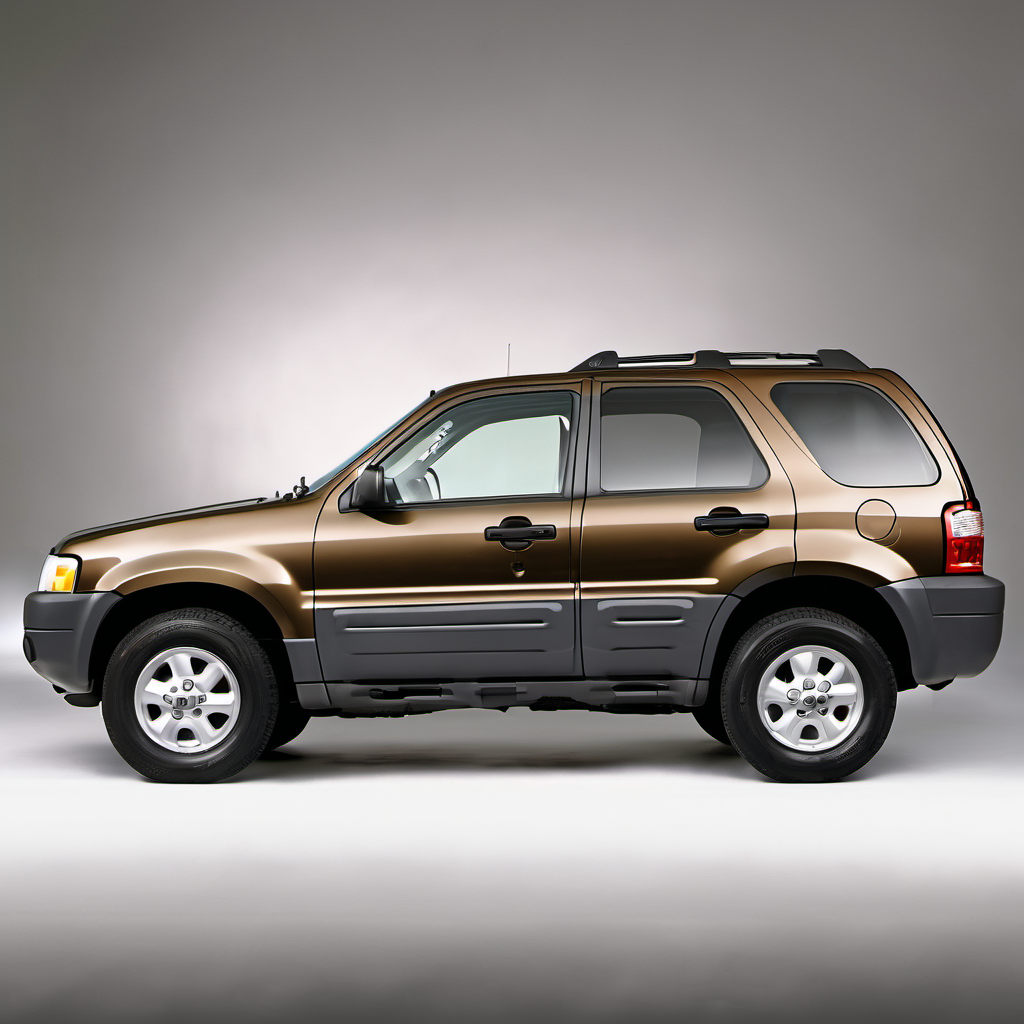
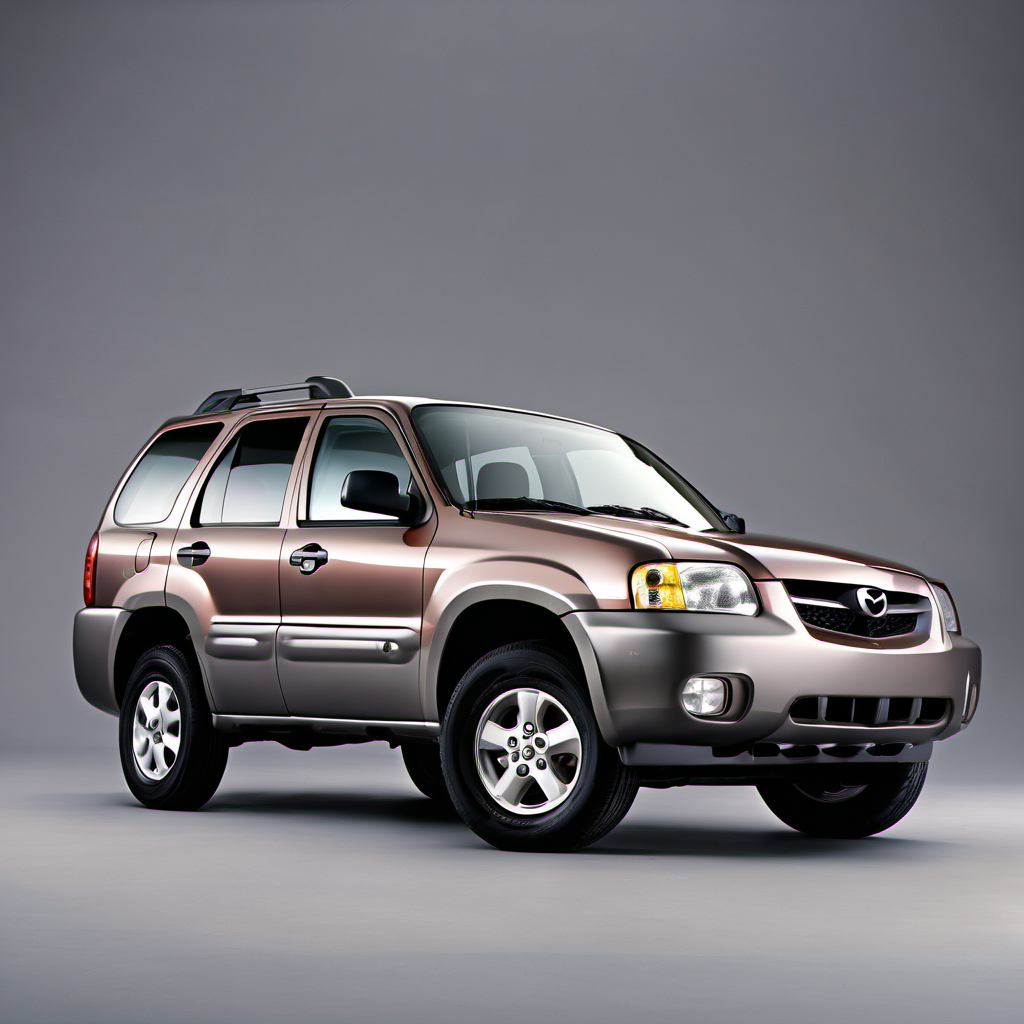
2006 Ford Escape SUV

2006 Ford

EscapeSUV

SUV

The 2006 Ford Escape is a compact SUV that was a joint development between Ford and Mazda, sharing its platform with the Mazda Tribute. By 2006 the Escape was well into its second generation (2005–2007 refresh) and had carved out a solid niche as an affordable, practical small utility vehicle. The 2.3L four-cylinder is the base powerplant, delivering adequate around-town performance without great fuel economy by today's standards. It rides on a car-based platform which means a more car-like driving experience than a truck-based SUV, but still offers reasonable cargo room and optional AWD (this example is FWD). At nearly 20 years old, most surviving examples have high mileage, and the cost of keeping one on the road depends heavily on how diligently it was maintained. For a Lake Geneva driver, the FWD configuration is worth noting — it handles typical Wisconsin winters adequately with good tires, but AWD owners will have a meaningful edge in deep snow. Rust is a legitimate concern on any 2006 Escape in the upper Midwest, especially around the rear wheel arches, subframe, and brake lines.

Reliability
3/5
Verified data
Specs shown for Escape FWD — the most common configuration. Other trims may vary in engine, drivetrain, or fuel economy. Sign in to see your vehicle's exact specs.
Engine
[object Object]
Drivetrain
FWD
Fuel
Gasoline
MPG
20 city / 23 hwy / 21 combined
Seats
Doors
Body
Sport Utility Vehicle - 2WD

Overview

AI-curated

The 2006 Ford Escape is a compact SUV that was a joint development between Ford and Mazda, sharing its platform with the Mazda Tribute. By 2006 the Escape was well into its second generation (2005–2007 refresh) and had carved out a solid niche as an affordable, practical small utility vehicle. The 2.3L four-cylinder is the base powerplant, delivering adequate around-town performance without great fuel economy by today's standards. It rides on a car-based platform which means a more car-like driving experience than a truck-based SUV, but still offers reasonable cargo room and optional AWD (this example is FWD). At nearly 20 years old, most surviving examples have high mileage, and the cost of keeping one on the road depends heavily on how diligently it was maintained. For a Lake Geneva driver, the FWD configuration is worth noting — it handles typical Wisconsin winters adequately with good tires, but AWD owners will have a meaningful edge in deep snow. Rust is a legitimate concern on any 2006 Escape in the upper Midwest, especially around the rear wheel arches, subframe, and brake lines.

Known for
  • Car-based platform shared with Mazda Tribute — better ride than truck-based competitors
  • One of the first mainstream small SUVs with a hybrid option (though this is the non-hybrid gas model)
  • Practical hatchback cargo access and folding rear seats
  • Affordable purchase price and wide parts availability
  • Decent towing capacity for a compact SUV (up to 1,500 lbs with 4-cyl)
Best for
  • Commuters and light errand runners who need occasional cargo flexibility
  • Budget-conscious buyers who want SUV practicality without SUV fuel costs
  • City and suburban driving where tight parking matters
  • Buyers comfortable with basic DIY maintenance on a high-mileage used vehicle
Watch for
  • Significant rust on subframe, rear wheel arches, and brake lines in salt-belt states
  • Throttle body and idle air control issues common at higher mileage
  • Automatic transmission reliability declines sharply without regular fluid changes
  • Cooling system neglect (thermostat housing, coolant leaks) is common on high-mileage examples
  • Worn engine and transmission mounts cause noticeable vibration and should be inspected on any used purchase

Common issues by mileage

6 known

Throttle Body Carbon Buildup / Idle Surge

high
Typically appears
80–150k mi
Estimated repair
$100 – $350

Automatic Transmission Slipping or Harsh Shifts

high
Typically appears
100–160k mi
Estimated repair
$200 – $3,200

Thermostat Housing Coolant Leak

high
Typically appears
70–130k mi
Estimated repair
$150 – $400

Oxygen Sensor Heater Circuit Failure

medium
Typically appears
80–140k mi
Estimated repair
$100 – $300

Subframe and Brake Line Rust (Salt-Belt)

high
Typically appears
Any mileage after 10+ years in Wisconsin
Estimated repair
$300 – $2,500

Maintenance schedule

  1. 1
    Every 5,000 mi or 6 months Engine oil and filter change

    The 2.3L I4 is oil-change sensitive. Extended intervals accelerate sludge buildup and can clog VCT solenoids, leading to P0012/P0015-type faults.

  2. 2
    Every 30,000–40,000 mi on used vehicles Automatic transmission fluid change

    Ford's 4-speed automatic is highly sensitive to fluid condition. If service history is unknown on a used purchase, change it immediately — this is the single best insurance against an expensive transmission repair.

  3. 3
    Every 50,000 mi or 5 years Coolant flush and thermostat inspection

    The thermostat housing on the 2.3L is plastic and prone to cracking. Fresh coolant and early detection of seepage saves a full overheat event.

  4. 4
    Every 60,000 mi Spark plugs replacement

    Worn plugs on the 2.3L can cause misfires and rough idle. At this vehicle's age, plugs are likely overdue regardless of mileage.

  5. 5
    Every year — every fall before winter Brake line inspection for rust

    Salt-belt brake lines on a 2006 Escape are a safety-critical rust point. Inspect for pitting, bubbling, and soft spots every autumn. Replacement before failure is far safer and cheaper than a blowout.

  6. 6
    Every 60,000–80,000 mi or at first sign of squealing Serpentine belt and tensioner inspection

    Belt failure leaves you stranded. The tensioner spring weakens with age and is inexpensive to replace proactively.

  7. 7
    Every 20,000–30,000 mi Air filter replacement

    A clogged filter reduces power and fuel economy noticeably on the low-displacement 2.3L.

  8. 8
    Every fall, before road salt season Undercarriage rust treatment / inspection

    Annual inspection of subframe, control arm brackets, and fuel/brake lines can catch surface rust before it becomes structural. Annual undercoating on older vehicles extends service life significantly in Wisconsin.

Always defer to the manufacturer's service manual for warranty-mandated intervals.

Cost of ownership

Annual maintenance
$600 – $1,800
Fuel
At 21 MPG combined and ~12,000 miles/year, expect roughly $1,500–$1,900/year at $2.60–$3.30/gallon. More if mostly city driving.
Insurance
Typically $900–$1,400/year for full coverage in Wisconsin on a vehicle this age, depending on driver profile. Liability-only drops significantly lower given the vehicle's low market value.

A 2006 Escape is a low-cost vehicle to buy but not a zero-cost vehicle to keep. Routine maintenance on a well-cared-for example runs $600–$1,000/year. However, if the transmission, cooling system, or rust issues surface simultaneously — which is common on high-mileage Wisconsin examples — costs can spike to $1,500–$3,000+ in a single year. Know the service history before committing.
Seasonal care

Lake Geneva, WI
Winter
  • Switch to a winter-weight oil (5W-20 or 5W-30 full synthetic) before temperatures drop below 0°F — cold starts are harder on the 2.3L's VCT system with thick oil.
  • Test the battery in October. A battery over 4 years old that passes a summer test can still fail at -10°F. Replace proactively.
  • Inspect and replace wiper blades with winter-rated blades. Refill washer fluid with a -20°F or lower rated fluid — standard fluid freezes on the windshield at highway speed.
  • Check brake lines and brake hoses for rust and cracking before salt season begins. This is not optional on an 18+ year old vehicle.
  • Confirm the cooling system has a 50/50 antifreeze mix rated to at least -34°F. Old coolant loses its freeze protection.
  • If parking outside overnight in sub-zero temps, consider a block heater or battery tender to ensure reliable cold starts and protect the transmission fluid.
Summer
  • Check tire pressure after the first hot week — pressures rise 1 PSI for every 10°F increase in temperature. Over-inflated tires reduce wet-road traction.
  • Inspect the A/C system for proper cooling. Refrigerant leaks are common on vehicles this age; a weak A/C in Wisconsin July heat is a comfort and safety issue on long drives.
  • Check coolant level and look for seepage around the thermostat housing during summer heat — the plastic housing expands and existing hairline cracks can open up.
  • Inspect radiator and condenser fins for bug debris and road grime buildup, which reduces cooling efficiency in stop-and-go traffic.

Comparable vehicles

If you're shopping for one

Red flags
  • Rust bubbles on rear wheel arches or visible holes in the floor — structural rust on an 18-year-old salt-belt vehicle can make the car uneconomical to repair.
  • Any check engine light that the seller explains away without a proper scan. Pull the codes yourself before purchase.
  • Shuddering or hesitation on acceleration with no known repair history — could signal a transmission on its way out.
  • Milky or frothy oil on the dipstick or inside the oil cap — signs of a head gasket issue or coolant intrusion.
  • Missing or incomplete service records on a high-mileage example — assume the worst on transmission fluid and cooling system condition.
  • Soft or spongy brake pedal — on an older vehicle with suspect brake lines, this is a safety emergency, not a negotiating point.
What to inspect
  • Full undercarriage inspection for subframe rust, brake line condition, and fuel line integrity — this is the most important check on any Wisconsin 2006 Escape.
  • Pull the transmission dipstick: fluid should be reddish-pink and not smell burnt. Dark brown or black fluid signals neglect and potential internal damage.
  • Check for coolant seepage around the thermostat housing (front of engine, below the throttle body area).
  • Warm the engine fully and watch for rough idle, idle surging, or stalling — signs of throttle body carbon buildup or failing IAC.
  • Look for oil leaks around the valve cover gasket and oil pan; these are common and affordable to fix but indicate overall maintenance level.
  • Check all four wheels for uneven tire wear, which can indicate alignment issues from worn front-end components (ball joints, tie rod ends).
  • Test the A/C and heat thoroughly — blower motors and heater cores are age-sensitive on this platform.
AI profile generated 17 days ago · claude-sonnet-4-6 · v2.