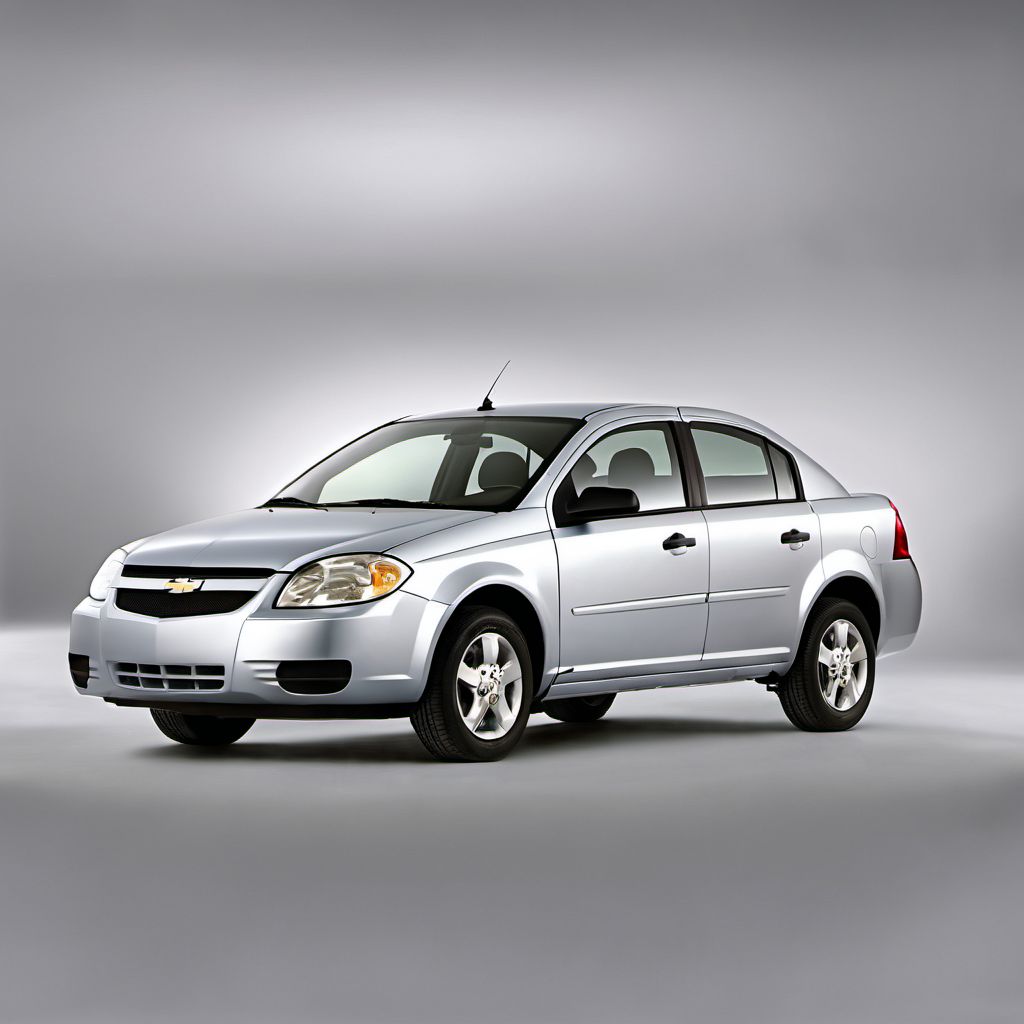
2006 Chevrolet Cobalt Coupe

2006 Chevrolet

CobaltCoupe

Coupe

The 2006 Chevrolet Cobalt Coupe is a compact front-wheel-drive car that replaced the aging Cavalier in GM's lineup. Built on the Delta platform, it was GM's answer to the Honda Civic and Toyota Corolla, offering decent fuel economy and a low entry price. The Cobalt came in SS trim with a supercharged or turbocharged 2.0L engine, but the volume-selling base and LT trims used a naturally aspirated 2.2L Ecotec — the 2.0L engine in the supplied data points to the SS Supercharged variant. For a 2006, the Cobalt is now nearly 20 years old. The mechanicals are simple and parts are cheap, but age-related issues — rust (especially in Wisconsin), worn suspension components, and ignition switch problems — are nearly universal at this point. It was never a prestige car, and GM cut corners on interior quality and long-term corrosion protection. If you're buying one used, do a thorough rust inspection underneath before anything else. If you already own one, stay on top of maintenance because deferred work on a high-mileage Cobalt compounds quickly. Parts availability is still good, and independent shops can service it without special tools.

Reliability
2/5
Verified data
Specs shown for Cobalt — the most common configuration. Other trims may vary in engine, drivetrain, or fuel economy. Sign in to see your vehicle's exact specs.
Engine
[object Object]
Drivetrain
FWD
Fuel
Premium gasoline
MPG
20 city / 27 hwy / 23 combined
Seats
Doors
Body
Subcompact Cars

Overview

AI-curated

The 2006 Chevrolet Cobalt Coupe is a compact front-wheel-drive car that replaced the aging Cavalier in GM's lineup. Built on the Delta platform, it was GM's answer to the Honda Civic and Toyota Corolla, offering decent fuel economy and a low entry price. The Cobalt came in SS trim with a supercharged or turbocharged 2.0L engine, but the volume-selling base and LT trims used a naturally aspirated 2.2L Ecotec — the 2.0L engine in the supplied data points to the SS Supercharged variant. For a 2006, the Cobalt is now nearly 20 years old. The mechanicals are simple and parts are cheap, but age-related issues — rust (especially in Wisconsin), worn suspension components, and ignition switch problems — are nearly universal at this point. It was never a prestige car, and GM cut corners on interior quality and long-term corrosion protection. If you're buying one used, do a thorough rust inspection underneath before anything else. If you already own one, stay on top of maintenance because deferred work on a high-mileage Cobalt compounds quickly. Parts availability is still good, and independent shops can service it without special tools.

Known for
  • Low purchase and parts cost
  • Peppy SS Supercharged variant with the 2.0L Ecotec
  • Simple, serviceable drivetrain
  • Replaced the Cavalier as GM's compact workhorse
Best for
  • Budget-conscious commuters
  • Drivers wanting an inexpensive sporty coupe (SS trim)
  • Owners who do their own basic maintenance
  • Short-trip city driving on a tight budget
Watch for
  • Ignition switch failures — a known and serious safety defect on this generation
  • Subframe and underbody rust accelerates fast in salt-belt states like Wisconsin
  • Power steering pump failures on higher-mileage examples
  • Intake manifold gasket weeping coolant on high-mileage engines
  • Timing chain tensioner wear on the 2.0L Ecotec SS engine

Common issues by mileage

6 known

Ignition Switch Failure / Unintended Engine Shutoff

high
Typically appears
Any mileage
Estimated repair
$150 – $400

Timing Chain Tensioner Wear (2.0L SS Ecotec)

medium
Typically appears
80–150k mi
Estimated repair
$400 – $900

Power Steering Pump Failure

medium
Typically appears
70–130k mi
Estimated repair
$300 – $600

Subframe and Underbody Rust (salt-belt corrosion)

high
Typically appears
Any mileage on Wisconsin vehicles
Estimated repair
$200 – $1,500

Intake Manifold Gasket Coolant Seep

medium
Typically appears
90–140k mi
Estimated repair
$250 – $550

Front Strut and Control Arm Bushing Wear

high
Typically appears
60–100k mi
Estimated repair
$300 – $800

Maintenance schedule

  1. 1
    Every 5,000 miles Oil and filter change — 5W-30 API SN; use Fram PH3387 or Wix 51348, drain plug torque 18 ft-lb

    The supercharged 2.0L Ecotec runs higher oil temps than the base engine. Extending oil changes beyond 5k mi accelerates timing chain tensioner wear.

  2. 2
    Every 30,000 miles Inspect and replace spark plugs

    Worn plugs on a boosted engine cause misfires and can stress the supercharger. Don't run these long.

  3. 3
    Every 30,000 miles Inspect serpentine belt and supercharger drive belt

    The 2.0L SS has an additional belt for the supercharger. Belt failure leaves you with no boost and can strand the car.

  4. 4
    Every 2 years or 30,000 miles Flush coolant (use GM DEX-COOL orange coolant only)

    DEX-COOL degrades past its service life and becomes acidic, attacking gaskets — a direct contributor to intake manifold gasket failures.

  5. 5
    Every year (fall, before winter) Inspect undercarriage, subframe, and suspension mounting points for rust

    Wisconsin road salt eats Cobalt subframes aggressively. Catching surface rust early with a wire brush and rust converter is far cheaper than subframe repair.

  6. 6
    Every 2 years Inspect front struts, control arm bushings, and sway bar end links

    Cobalt suspension components wear quickly and degrade handling. At 18+ years old, most examples are overdue.

  7. 7
    Every 30,000 miles or 2 years Flush brake fluid

    Brake fluid absorbs moisture over time, lowering boiling point. Critical for a car used in Wisconsin winters where moisture intrusion is high.

  8. 8
    Every fall Test battery and charging system; replace battery if older than 4 years

    Cold cranking a supercharged engine at sub-zero temps demands a healthy battery. Cobalt electrical issues can also stem from weak battery voltage.

Always defer to the manufacturer's service manual for warranty-mandated intervals.

Cost of ownership

Annual maintenance
$600 – $1,400
Fuel
Premium fuel required for the SS 2.0L. At ~23 MPG combined and 15,000 mi/yr, expect $1,800–$2,200/yr depending on pump prices. Running regular in the SS is not recommended — it can cause knock.
Insurance
Generally low — compact coupes in this segment are inexpensive to insure. Expect $900–$1,400/yr for a typical driver in southeastern Wisconsin.

The Cobalt is cheap to buy and cheap to insure, but a neglected example can quickly rack up repair bills that exceed its market value. Budget $600–$1,400/yr for routine maintenance on a well-kept car, more if suspension, cooling system, or rust repairs are needed. Parts are widely available and affordable. The main risk is deferred maintenance on a high-mileage vehicle — the ignition switch should be verified as addressed (check NHTSA recall completion) before anything else.
Seasonal care

Lake Geneva, WI
Winter
  • Verify the NHTSA ignition switch recall has been completed — a heavy keychain or bump in the road can kill engine power and disable airbags in below-freezing conditions when the switch is worn.
  • Test and replace the battery if it's over 4 years old; cold cranking a supercharged engine at -10°F demands a strong battery.
  • Switch to a winter-rated windshield washer fluid rated to at least -20°F — Wisconsin winters will freeze standard fluid solid in the reservoir.
  • Inspect wiper blades and consider winter-specific wiper blades; the Cobalt's cowl traps ice and debris that can damage standard blades.
  • Check underbody and wheel wells after the first major salting of the season; rinse underneath monthly to slow subframe corrosion.
  • Confirm tire tread depth is at least 5/32" — all-season tires on a FWD compact are marginal in heavy snow; dedicated winter tires make a significant safety difference in Lake Geneva conditions.
Summer
  • Check tire pressure monthly — summer heat causes pressure to rise 1–2 PSI per 10°F; overinflated tires on a stiff SS suspension wear unevenly.
  • Inspect the A/C system for refrigerant level and compressor operation; the Cobalt's A/C condenser sits low and is vulnerable to road debris impact.
  • Monitor coolant level closely — heat soak in stop-and-go traffic stresses the cooling system, and a weeping intake manifold gasket will worsen fast in summer heat.
  • Check the supercharger intercooler (SS only) for debris blockage after highway driving season; a clogged intercooler raises intake temps and triggers knock.

Comparable vehicles

If you're shopping for one

Red flags
  • Ignition switch recall NOT completed — check NHTSA.gov with the VIN before purchase; this is a safety-critical item.
  • Any rust on the subframe mounting points, rear trailing arm brackets, or floor pans — these are structural and expensive to fix properly.
  • Oil sludge visible on the underside of the oil cap — sign of infrequent oil changes that accelerate timing chain wear on the SS engine.
  • Check engine light with VTCs or camshaft timing codes (P0012, P0015) — likely timing chain or tensioner wear, budget $400–$900.
  • Coolant that looks rusty or has a milky appearance — potential head gasket or intake manifold gasket failure.
  • Any clunking over bumps without a recent front suspension inspection — struts and bushings are likely worn and will need immediate replacement.
What to inspect
  • Undercarriage: subframe, floor pans, trailing arm mounting points — get it on a lift.
  • Ignition switch: confirm recall completion via VIN on NHTSA.gov.
  • Engine bay: look for coolant seeping around the intake manifold, cracked supercharger intercooler hoses (SS), and belt condition.
  • Scan for DTCs even if no check engine light is present — some faults are stored without illuminating the MIL.
  • Test all power accessories — windows, locks, mirrors — electrical gremlins are common on aging examples.
  • Drive over rough pavement and listen for clunking from the front suspension; also feel for steering pull or vibration.
AI profile generated 24 days ago · claude-sonnet-4-6 · v2.