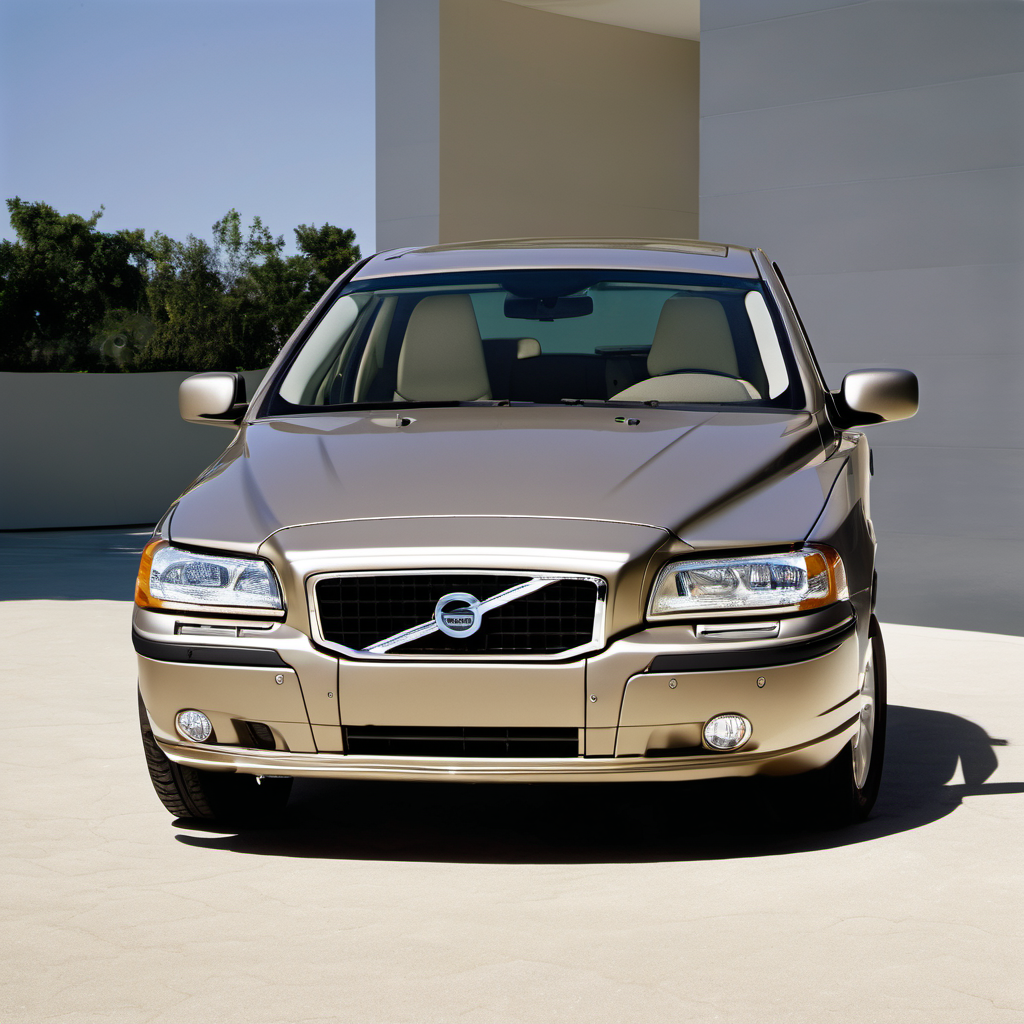
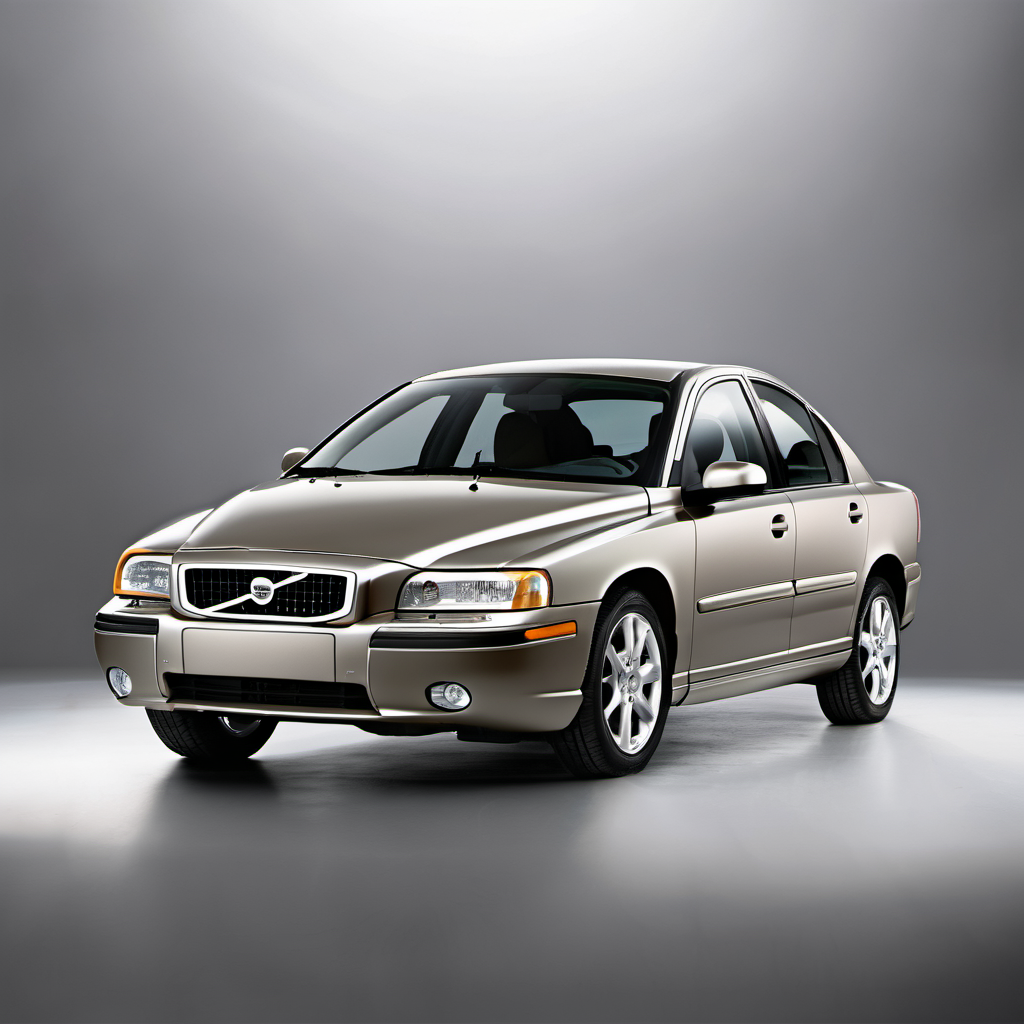
2005 Volvo S80 Sedan

2005 Volvo

S80Sedan

Sedan

The 2005 Volvo S80 is a full-size European luxury sedan built on Volvo's P2 platform, shared with the XC90 and S60. In 2005, the AWD T6 and the turbocharged 5-cylinder T5 were the volume sellers in the U.S. market. The S80 positioned itself as Volvo's flagship: quieter and more refined than the S60, with a focus on passive and active safety that Volvo had long been known for. The 2.5L turbocharged inline-5 (T5) with AWD is a practical pairing for four-season driving. It delivers adequate power without the complexity and cost of the inline-6 T6 twin-turbo that preceded it. That said, this is still a European luxury car approaching 20 years old, and repair costs reflect that — parts are pricier than a comparable domestic sedan and some jobs require specialist knowledge. If you buy one and maintain it properly, an S80 of this vintage can be a comfortable, safe, and reasonably reliable daily driver. If you defer maintenance or buy one with unknown service history, costs can escalate quickly. Know what you're getting into before purchase.

Reliability
2/5
Verified data
Specs shown for S80 AWD — the most common configuration. Other trims may vary in engine, drivetrain, or fuel economy. Sign in to see your vehicle's exact specs.
Engine
[object Object]
Drivetrain
AWD
Fuel
Premium gasoline
MPG
17 city / 24 hwy / 20 combined
Seats
Doors
Body
Midsize Cars

Overview

AI-curated

The 2005 Volvo S80 is a full-size European luxury sedan built on Volvo's P2 platform, shared with the XC90 and S60. In 2005, the AWD T6 and the turbocharged 5-cylinder T5 were the volume sellers in the U.S. market. The S80 positioned itself as Volvo's flagship: quieter and more refined than the S60, with a focus on passive and active safety that Volvo had long been known for. The 2.5L turbocharged inline-5 (T5) with AWD is a practical pairing for four-season driving. It delivers adequate power without the complexity and cost of the inline-6 T6 twin-turbo that preceded it. That said, this is still a European luxury car approaching 20 years old, and repair costs reflect that — parts are pricier than a comparable domestic sedan and some jobs require specialist knowledge. If you buy one and maintain it properly, an S80 of this vintage can be a comfortable, safe, and reasonably reliable daily driver. If you defer maintenance or buy one with unknown service history, costs can escalate quickly. Know what you're getting into before purchase.

Known for
  • Strong passive safety reputation and solid crash-test scores
  • Smooth, refined cabin with high-quality interior materials for the era
  • Turbocharged 5-cylinder engine with AWD traction in Wisconsin winters
  • Higher-than-average maintenance and repair costs for a 20-year-old car
  • Volvo-specific electronics and modules that can be expensive to diagnose and repair
Best for
  • Owners who want European luxury feel on a used-car budget
  • Four-season drivers who need AWD in a sedan package
  • Buyers who can afford periodic specialist-level maintenance
  • Highway commuters who prioritize ride comfort and safety
Watch for
  • Deferred timing belt service — catastrophic engine damage if belt snaps
  • Electronic throttle body and ETM failures common on this generation
  • Oil sludge from infrequent oil changes damages the turbo and engine internals
  • Suspension and strut wear adds up quickly on Wisconsin salt-treated roads
  • Age-related wiring, module, and CAN bus issues that are expensive to trace

Common issues by mileage

6 known

Electronic Throttle Module (ETM) Failure

high
Typically appears
60–130k mi
Estimated repair
$400 – $900

Timing Belt & Tensioner Service (interference engine — belt failure = engine destruction)

high
Typically appears
70–105k mi (or 7 years by age)
Estimated repair
$700 – $1,200

Turbocharger Failure (often caused by oil sludge / infrequent oil changes)

medium
Typically appears
100–160k mi
Estimated repair
$1,200 – $2,800

Oxygen / Heated O2 Sensor Failure

medium
Typically appears
80–130k mi
Estimated repair
$150 – $400

CAN Bus / Module Communication Faults (aging wiring and control units)

medium
Typically appears
120k+ mi
Estimated repair
$300 – $1,500

Maintenance schedule

  1. 1
    Every 5,000 mi or 6 months, whichever comes first Engine oil and filter change — use full synthetic 0W-30 or 5W-30 meeting Volvo spec

    Turbo engines run hot and oil breaks down faster. Sludge from extended intervals is the #1 cause of turbo and engine damage on these cars. Do not stretch intervals.

  2. 2
    Every 70,000 mi or 7 years — whichever comes first Timing belt, tensioner, idler, and water pump replacement

    This is an interference engine. A snapped timing belt destroys the engine immediately. On a 2005 car, this is almost certainly overdue if you don't have paper records proving it was done.

  3. 3
    Every 30,000 mi Spark plug replacement

    The 5-cylinder with a turbo is sensitive to plug condition. Worn plugs stress the ignition coils and can cause misfires under boost.

  4. 4
    Every 45,000–60,000 mi Transmission fluid change (automatic)

    Volvo marks this as 'lifetime' fluid but independent shops see transmission failures in high-mileage S80s that never had a fluid change. Change it proactively.

  5. 5
    Every 50,000 mi or 5 years Coolant flush

    Old coolant becomes acidic and attacks aluminum components. The 5-cylinder has aluminum construction throughout.

  6. 6
    Every 60,000 mi or at timing belt service Serpentine belt and accessory belt inspection/replacement

    Replace together with the timing belt service — labor is already open and belts are cheap insurance.

  7. 7
    Every 2 years regardless of mileage Brake fluid flush

    Brake fluid absorbs moisture over time, lowering boiling point. Critical for safe winter driving in Lake Geneva where hills and stop-and-go in snow stress brakes.

  8. 8
    Every spring (after winter salt exposure) Undercarriage inspection for corrosion — focus on subframe, brake lines, and fuel lines

    Wisconsin road salt accelerates rust on brake lines and subframe mounting points. Catch rust early before it becomes a safety issue or a very expensive structural repair.

Always defer to the manufacturer's service manual for warranty-mandated intervals.

Cost of ownership

Annual maintenance
$900 – $2,200
Fuel
Premium gasoline recommended. At 20 MPG combined and ~15,000 mi/yr, expect roughly $2,400–$2,900/yr at current upper Midwest pump prices for premium.
Insurance
Typically moderate for a used luxury sedan in this age range — expect $900–$1,400/yr for full coverage depending on your profile and zip code in Walworth County.

The S80 is deceptively cheap to buy used but not cheap to own. Routine maintenance runs higher than a domestic sedan because Volvo-specific parts and fluid specs cost more. One unplanned repair — a turbo, a timing belt done by the wrong shop, or a module — can easily exceed the car's market value. Budget a maintenance reserve of at least $100/month above your routine oil change costs. A pre-purchase inspection by a shop familiar with Volvos is money well spent.

Seasonal care

Lake Geneva, WI
Winter
  • Switch to a full synthetic 0W-30 oil before temps drop below 0°F — the turbo needs immediate oil flow on cold starts and thicker oil won't circulate fast enough in sub-zero weather.
  • Test the battery before November. Cold-cranking a turbocharged 5-cylinder in a Wisconsin winter demands a strong battery; anything over 4 years old should be load-tested.
  • Fill the washer fluid reservoir with a -20°F or lower rated fluid. The S80's large windshield means constant spray use — summer fluid will freeze in the lines and nozzles.
  • Install dedicated winter tires. AWD helps you go, but it does nothing to help you stop. Winter tires on all four corners make a measurable difference on Lake Geneva's icy roads.
  • Allow a 2–3 minute warm-up before driving hard in temps below 20°F. The turbocharger needs oil pressure and temperature before boost is applied; short-shifting a cold turbo accelerates wear.
  • Inspect and treat exposed brake lines and the undercarriage with a rust inhibitor before the first salt application of the season.
Summer
  • Check tire pressure monthly — tires gain roughly 1 PSI for every 10°F increase in ambient temperature, which can push a properly inflated tire into overinflation territory in July heat.
  • Inspect the A/C system before summer — recharge if cooling is marginal, and check the cabin air filter, which is commonly neglected and restricts airflow significantly when clogged.
  • Watch coolant temperature gauge on hot days, especially in stop-and-go traffic. If the S80 is running toward the high end of normal, have the cooling system inspected — a failing thermostat or weak water pump can push it over the edge.
  • Check that the turbo intercooler is free of debris. Heat soak in summer reduces turbo efficiency; a clean intercooler and intake path helps the engine breathe properly.

Comparable vehicles

If you're shopping for one

Red flags
  • No timing belt records on a car over 70k miles or more than 7 years since last service
  • Any active VVT or camshaft timing DTCs (P0012, P0015, P0022, P0025) — these can indicate oil starvation damage already done
  • CAN bus / U-code faults (U0100–U0104) without a clear diagnosis — can mean expensive module replacement or wiring repair
  • Visible oil leaks around the turbo, valve cover, or oil cooler
  • A seller who cannot answer basic questions about the car's oil change frequency
What to inspect
  • Demand complete service records — specifically documentation of timing belt replacement with date and mileage. No records = assume it's never been done and budget for immediate replacement.
  • Check oil filler cap and dipstick for mayonnaise-colored sludge — a direct sign of infrequent oil changes and a likely indicator of turbo or engine damage.
  • Test the throttle response from a standing start — hesitation, surging, or a jerky tip-in are classic signs of ETM (electronic throttle module) failure.
  • Scan for all stored and pending DTCs before purchase, not just active codes. Pay particular attention to VVT, camshaft timing, and CAN bus codes.
  • Inspect underneath for rust on brake lines, the subframe, and fuel lines — Wisconsin salt history means corrosion is a real concern on any car this age in this region.
  • Listen for turbo whine or boost lag at highway speeds. A worn turbo will often whistle or hesitate before coming on boost.
AI profile generated 8 days ago · claude-sonnet-4-6 · v2.